
Construction injuries happen fast, but understanding your rights in Ohio doesn’t have to be complicated. We at Robin J Peterson Company, LLC know that workers need clear answers about what they’re entitled to after an accident on the job.
This guide walks you through Ohio’s workers’ compensation system, the benefits available to you, and how to navigate obstacles that might come your way. You’ll learn exactly what to expect at every stage of the claims process.
What Ohio’s Workers’ Compensation System Actually Covers
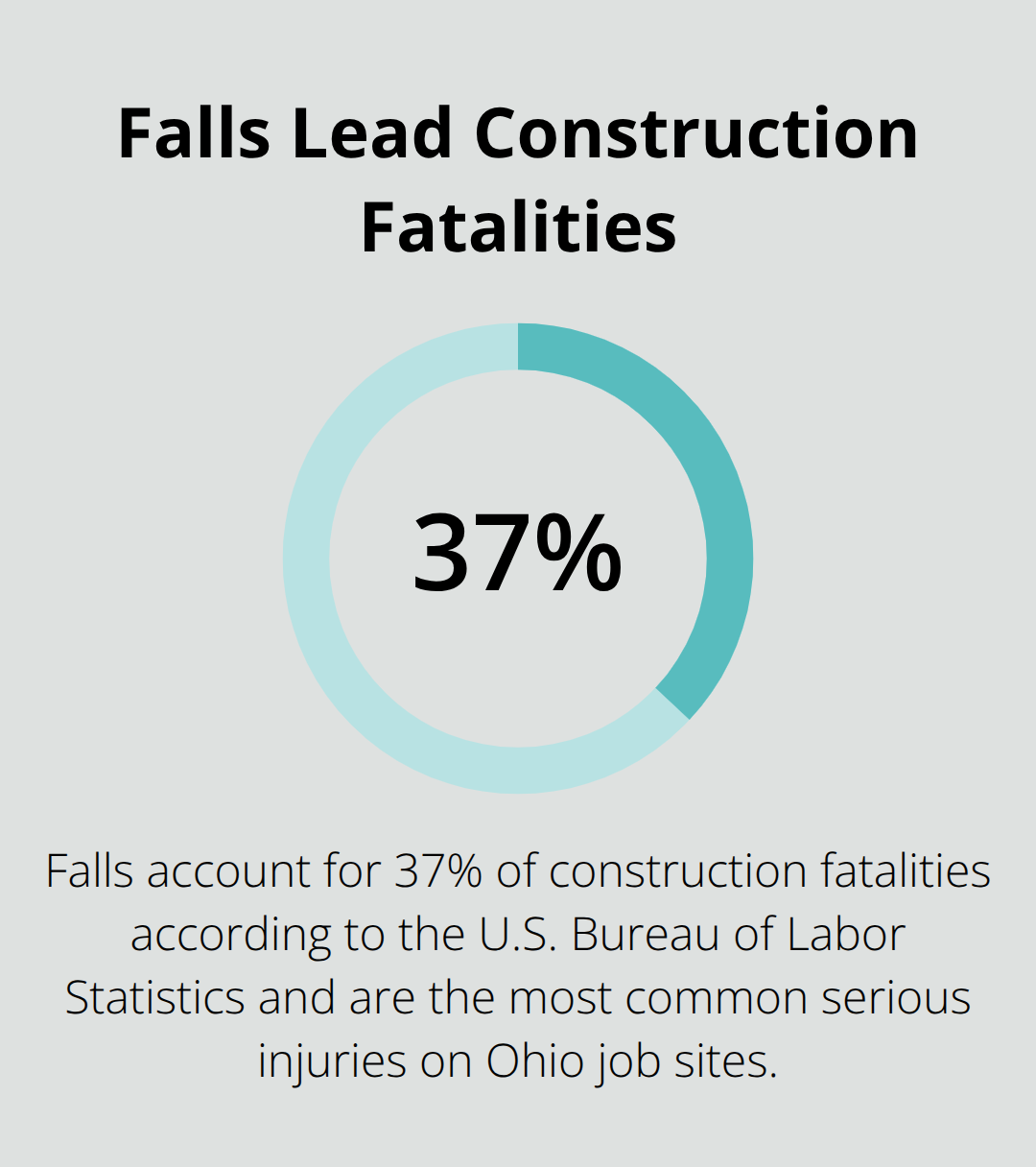
Ohio’s workers’ compensation operates as a no-fault system, which means you don’t need to prove your employer was negligent to receive benefits. This is a significant advantage-the injury simply needs to arise out of and occur during the course of your employment. The Ohio Bureau of Workers’ Compensation administers this system as a state fund, and it covers private employers with at least one employee. If you suffer an injury on a construction site in Ohio, you likely qualify for coverage regardless of whether you work full-time, part-time, or seasonally. The system covers medical treatment, rehabilitation, therapy, medications, and wage replacement while you cannot work. Falls account for 37% of construction fatalities according to the U.S. Bureau of Labor Statistics, and they represent the most common serious injuries on Ohio job sites. Being struck by objects, electrocutions, and caught-in incidents round out the deadliest hazards.
If you suffer any of these injuries, the BWC system exists to support your recovery without requiring you to win a fault-based lawsuit against your employer.
Medical Benefits and Wage Replacement
The BWC covers all reasonable and necessary medical expenses related to your injury, including doctor visits, surgeries, emergency care, and ongoing treatment. You avoid out-of-pocket costs for these services if your claim receives approval. Wage replacement, called Temporary Total Disability benefits, is calculated based on your Average Weekly Wage at the time of injury. For construction workers, this calculation matters significantly because your earnings may fluctuate seasonally or between projects. The system uses formulas that account for actual earnings during your employment period, prior-year earnings in similar work, or combined wages from multiple jobs to reflect your real earning capacity. This means seasonal workers don’t face automatic penalties-the calculation adapts to your actual income pattern. You must file your claim within one year of the injury, though reporting within 24 to 48 hours to your employer strengthens your case and protects your credibility with the BWC.
Third-Party Claims and Additional Recovery
Ohio’s workers’ compensation provides essential coverage, but it doesn’t cover all losses from a serious injury. If someone other than your employer caused or contributed to your accident-a contractor, equipment manufacturer, or another company’s negligence-you can pursue a separate third-party personal injury claim. These claims recover damages for pain and suffering, loss of future earning capacity, and other losses that workers’ comp doesn’t address. This dual-recovery approach is critical for construction workers because job sites often involve multiple contractors and vendors. You have two years from the injury date to file a third-party claim, so acting quickly preserves your options. OSHA violations and safety standard breaches strengthen third-party claims significantly, as they demonstrate negligence. Collecting witness information, photos of the scene, and evidence of unsafe conditions immediately after the injury supports both your workers’ comp claim and any third-party action.
What Happens When Obstacles Emerge
The claims process doesn’t always move smoothly. Employers or insurance carriers sometimes dispute claims, and the BWC may deny your application initially. Understanding what triggers these obstacles helps you prepare your response and gather the right evidence from the start. The next section walks you through the specific steps to report your injury, file your claim, and navigate the investigation phase that follows.
How to Report and File Your Injury Claim
Report Your Injury in Writing Immediately
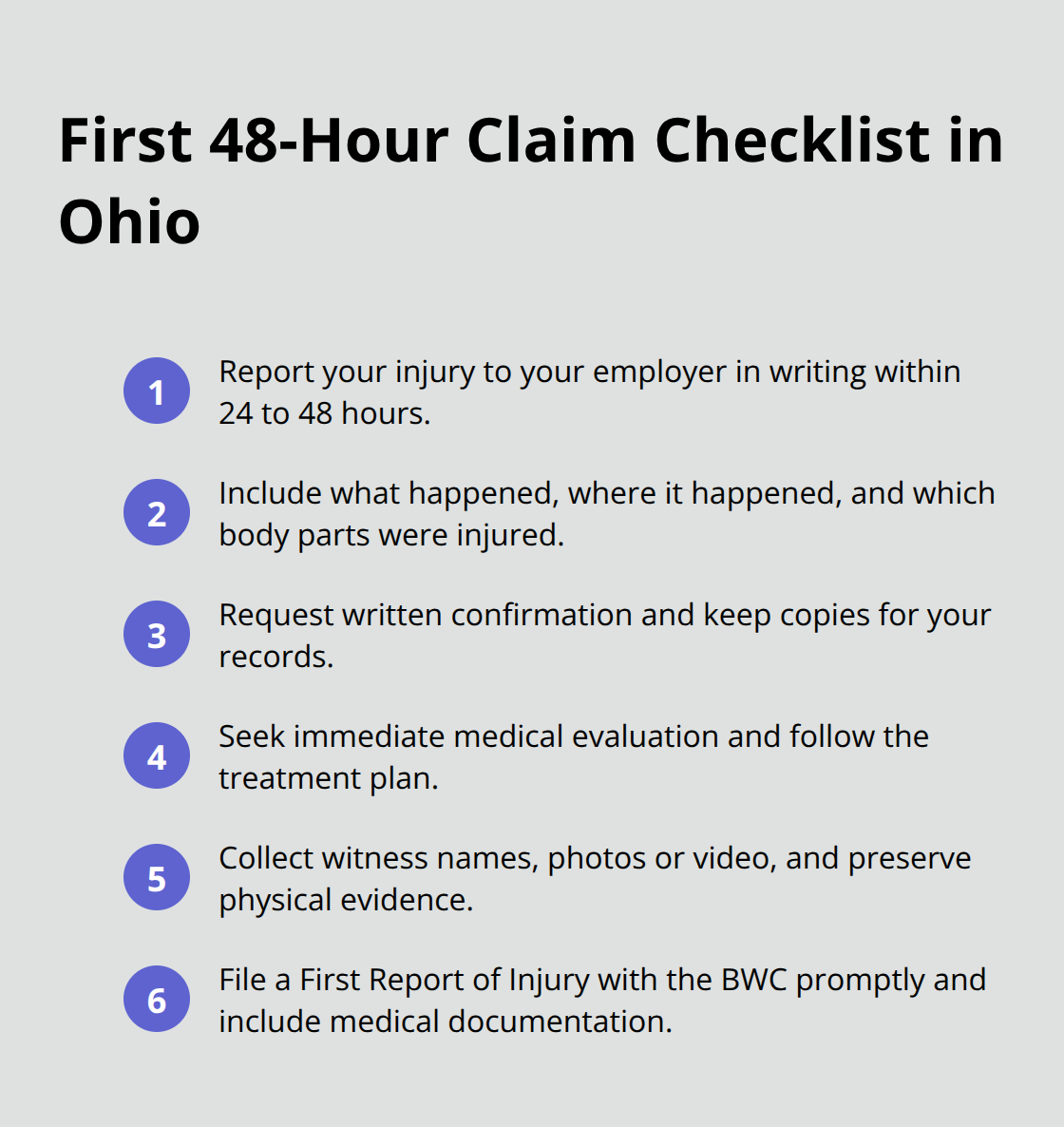
Report your injury to your employer in writing as soon as possible, ideally within 24 to 48 hours of the accident. This timing matters more than most workers realize. The Ohio Bureau of Workers’ Compensation expects prompt notification, and delays create credibility problems that can jeopardize your claim later. When you report, provide specific details about what happened, where it happened, and which body parts you injured. Request written confirmation from your employer that they received your report, and keep a copy for your records.
Many construction workers make the mistake of reporting verbally and assuming their employer will handle the paperwork. Don’t do this. Written documentation protects you because it establishes an official timeline and prevents your employer from claiming they never heard about the injury.
If your employer resists providing written confirmation, send them an email with the same information and save the sent message. This creates a permanent record that the BWC can reference during investigation.
Seek Medical Care and Collect Evidence
Seek medical evaluation immediately, even if the injury seems minor. Some conditions like head trauma or internal injuries don’t show symptoms right away, and medical records establish the connection between your injury and the accident. Collect witness names and contact information while people remember details clearly. Take photos or video of the scene, equipment involved, and any visible hazards. Preserve physical evidence like damaged safety equipment or maintenance logs that show equipment failures. These first 48 hours determine whether you have strong documentation or weak evidence later.
File Your Claim with the BWC
File your claim with the BWC by submitting the First Report of Injury form. Don’t wait for your employer to file on your behalf, even though Ohio law requires them to submit a report within 14 days if you miss work or incur medical expenses. Filing your own claim promptly ensures the BWC has your version of events and your medical documentation. The BWC will investigate your claim and either allow or deny it based on whether your injury arose out of and occurred during the course of employment.
Understand the Investigation Process
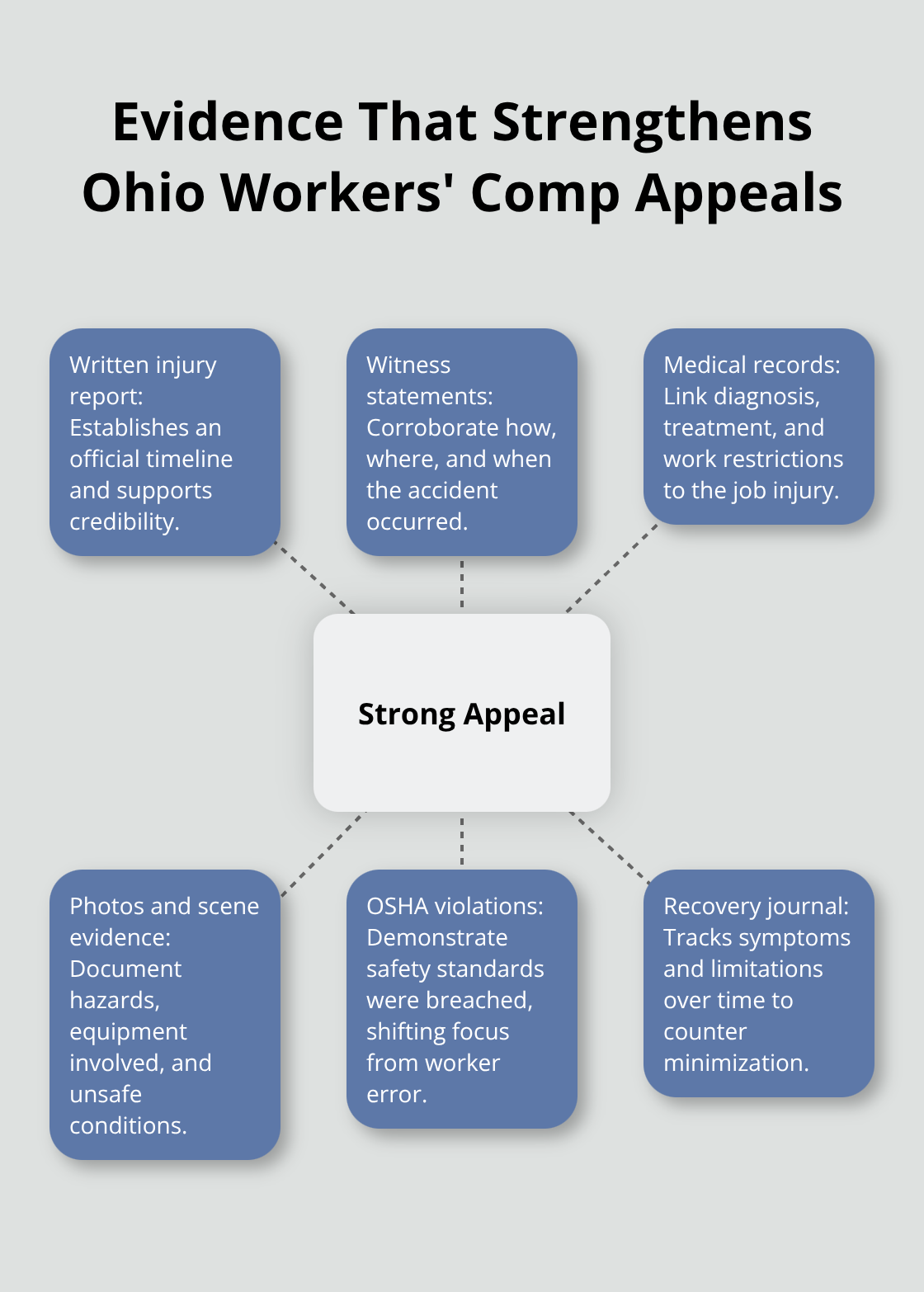
During the investigation phase, the BWC reviews your medical records, your employer’s safety practices, witness statements, and OSHA compliance records. If OSHA violations exist at your site, this strengthens your claim significantly because it demonstrates that safety standards weren’t met. Maintain all medical documentation throughout this process, keep copies of receipts and bills, and track your recovery with a detailed journal noting your symptoms, treatment appointments, and how your injury affects daily activities. This medical documentation is your strongest evidence.
Navigate Denials and Next Steps
The Industrial Commission of Ohio will review the claim if the BWC denies it, and you can appeal with additional evidence. If your claim gets denied and you believe the decision is wrong, consulting with a construction accident attorney experienced in Ohio workers’ compensation law helps identify OSHA violations, assess whether third-party liability exists, and pursue full compensation. Obstacles in the claims process often emerge at this stage, and understanding how to respond separates workers who recover full benefits from those who accept inadequate settlements.
What Stops Claims From Getting Approved
The BWC denies or delays claims far more often than workers expect. According to the Industrial Commission of Ohio, initial denials occur regularly, and many workers assume a denial means the end of their case. This assumption costs them. The most common reason for denial is insufficient evidence that your injury arose out of and occurred during the course of employment. If you reported your injury verbally without documentation, or if weeks passed before you filed your claim, the BWC struggles to connect your injury to your job. Insurance carriers exploit these gaps aggressively. They request additional medical records, demand clarification on minor details, and stretch out investigations hoping you’ll abandon your case or accept a lower settlement. Employers sometimes dispute whether you were actually working at the time of injury, whether the accident happened on company property, or whether your injury pre-existed the incident. These disputes delay benefits precisely when you need them most.
Documentation Wins Claims
The first 48 hours after your injury determine whether you have documentation strong enough to overcome obstacles. If you collected witness names, took photos of the scene, and reported the injury in writing immediately, you have leverage. If you waited and reported verbally, the insurance carrier will use that delay against you. Written reports create an official timeline that prevents your employer from claiming they never heard about the injury. Witness statements and scene photos establish what actually happened, not what the insurance carrier claims happened. OSHA inspection reports (if violations exist at your site) provide independent verification that unsafe conditions caused your accident, not worker error.
Appealing a BWC Denial
Denials from the BWC force you to appeal to the Industrial Commission of Ohio, which reviews your case with fresh evidence. This appeal process requires stronger documentation than your initial claim because the Industrial Commission expects you to address the specific reasons for denial. If the BWC said your injury didn’t arise from employment, you need witness testimony, photos, or OSHA inspection reports proving otherwise. If the denial cited insufficient medical evidence, you need detailed medical records showing the injury connection.
Medical Records as Your Strongest Evidence
Medical documentation is your strongest tool in an appeal. Attend every medical appointment, follow your treatment plan completely, and request copies of all records immediately. Insurance carriers count on injured workers skipping appointments or stopping treatment, which they then cite as evidence the injury wasn’t serious. A recovery journal documenting your symptoms, limitations, and treatment progress creates a narrative that contradicts the carrier’s minimization. Construction accident attorneys experienced in Ohio workers’ compensation law identify OSHA violations that strengthen your case dramatically. If your employer failed to provide guardrails on heights over six feet, didn’t maintain equipment properly, or didn’t provide required safety training, these violations demonstrate negligence and support your claim even if the initial facts seemed unclear.
How OSHA Violations Strengthen Your Appeal
The Industrial Commission weighs OSHA violations heavily because they show the injury resulted from unsafe conditions, not worker error. Safety standard breaches (such as missing guardrails, improper equipment maintenance, or absent safety training) provide concrete evidence that your employer created the hazard. This evidence shifts the focus away from minor details about your injury report and toward the employer’s failure to maintain a safe workplace. When OSHA violations exist at your site, your appeal transforms from a credibility dispute into a negligence case backed by federal safety standards.
Final Thoughts
Construction injury rights in Ohio depend on one critical action: you must act fast and document everything. The first 48 hours after your injury determine whether you have the evidence needed to overcome obstacles and secure approval from the BWC. Written injury reports, witness statements, medical records, and scene documentation transform a weak claim into a strong one that insurance carriers cannot easily dismiss.
Obstacles will emerge during your claim process, and denials happen more often than workers expect. These setbacks do not mean your case is lost-they mean you need stronger evidence and experienced guidance to navigate the system. Construction accident attorneys experienced in Ohio workers’ compensation law identify OSHA violations, assess third-party liability, and fight for the full compensation you deserve.
Report your injury in writing immediately, seek medical care without delay, and file your claim with the BWC. If obstacles emerge or your claim gets denied, contact an attorney who understands construction injury rights in Ohio and knows how to overcome the specific barriers that delay or deny claims.