
Medical benefits Ohio BWC can be confusing, especially when you’re recovering from a work injury. Understanding what your coverage includes, how to file claims, and what to do when benefits are denied makes a real difference in your recovery.
We at Robin J Peterson Company, LLC help injured workers navigate these benefits every day. This guide walks you through the essentials so you know exactly what you’re entitled to.
What Medical Services Does Ohio BWC Actually Cover
Ohio’s workers’ compensation system covers far more medical services than most injured workers realize, but understanding the specifics matters because coverage gaps can derail your recovery. The Ohio Bureau of Workers’ Compensation covers emergency hospital care from the moment of injury, with the BWC handling all billing directly so you never receive an invoice. Inpatient hospital stays, diagnostic testing like X-rays and MRIs, surgical procedures, prescription medications, medical devices such as crutches and braces, physical therapy, and medical transportation including ambulance services all fall under your benefits.
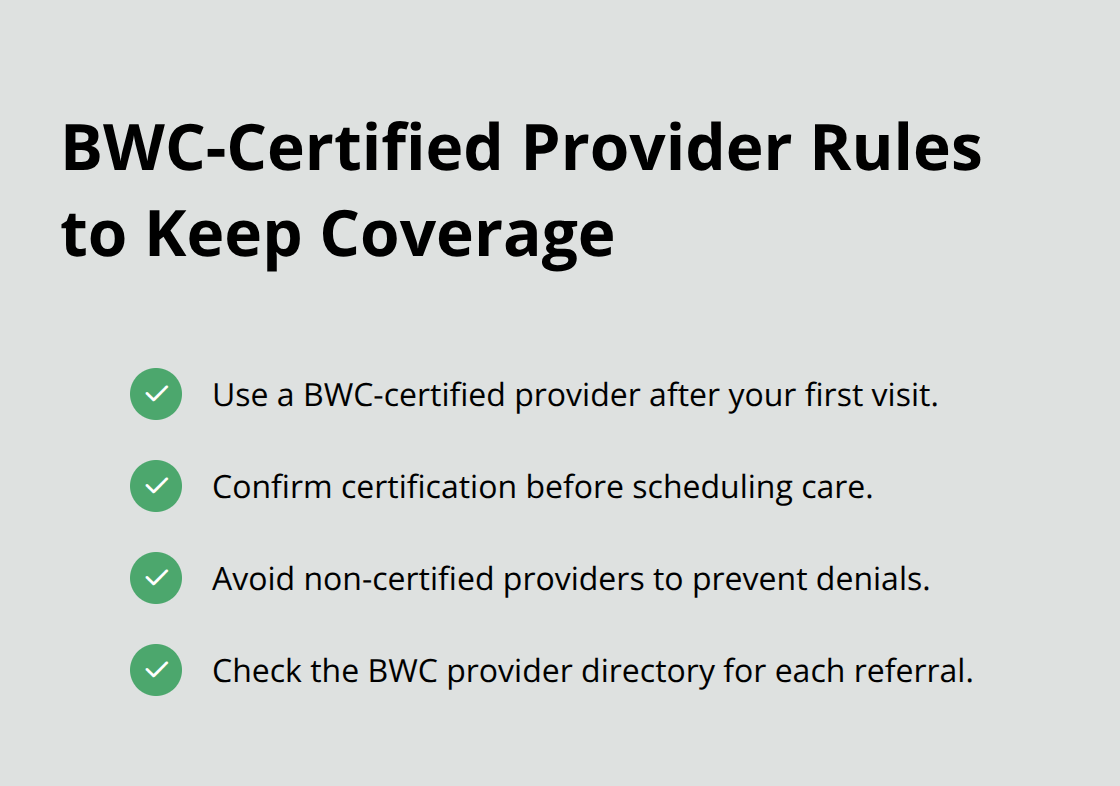
The Enhanced Care Program exists specifically for workers with knee injuries to accelerate return-to-work timelines, showing that Ohio’s system offers specialized pathways for certain conditions. One critical detail most injured workers miss: after your initial medical visit, you must use a BWC-certified provider to maintain coverage. Using a non-certified provider after that first visit results in coverage denial, which is why checking the BWC provider directory before scheduling ongoing treatment is non-negotiable.
Finding and Using Authorized Providers
The managed care organization overseeing your claim coordinates the entire medical network, which means your provider options depend on MCO arrangements and BWC protocols. This coordination affects which providers are in-network, how referrals work, and how quickly you access specialists. Out-of-state medical care can be covered if medically necessary and pre-approved by the MCO, but you must obtain authorization before traveling for treatment to prevent claim denials.
Pre-authorization requirements vary depending on the service type and your specific claim, so contact your MCO before scheduling non-emergency procedures to protect your coverage. The Alternative Dispute Resolution process through the Industrial Commission exists if a treatment receives denial, allowing you to present evidence that the care is reasonable and necessary without litigation. This matters because experimental treatments and cosmetic procedures receive zero coverage (keeping the system focused on recovery-oriented care).
What Happens When Coverage Gets Denied
If your claim faces denial, you have appeal rights through the Ohio Industrial Commission Ombuds Office, which operates independently from the BWC. The ADR process provides a structured path to contest coverage decisions without the time and expense of formal litigation. Understanding these protections helps you advocate effectively for the medical care your injury requires, and knowing when to seek professional guidance can make the difference between denied claims and approved benefits.
Managing Your Medical Benefits Effectively
Report Your Injury and File Your Claim Immediately
Filing a medical claim under Ohio’s workers’ compensation system requires more precision than most injured workers expect. You must report your workplace injury to your employer immediately, then file your claim with the Ohio Bureau of Workers’ Compensation as soon as possible to initiate your claim and avoid delays. When you seek medical care, you should inform every treating provider that the injury is work-related so billing routes directly to the BWC rather than your personal insurance. After your initial medical visit, you contact the BWC’s managed care organization to identify a certified provider for ongoing treatment, then verify that provider’s certification status before scheduling your appointment.
Document Everything From Day One
Maintaining detailed records matters significantly from the moment your injury occurs. You must document every medical visit, treatment date, medication prescribed, and communication with your employer and the BWC. You should keep copies of medical bills, prescriptions, and receipts for any out-of-pocket expenses, plus maintain a personal injury journal tracking your symptoms and daily functioning.
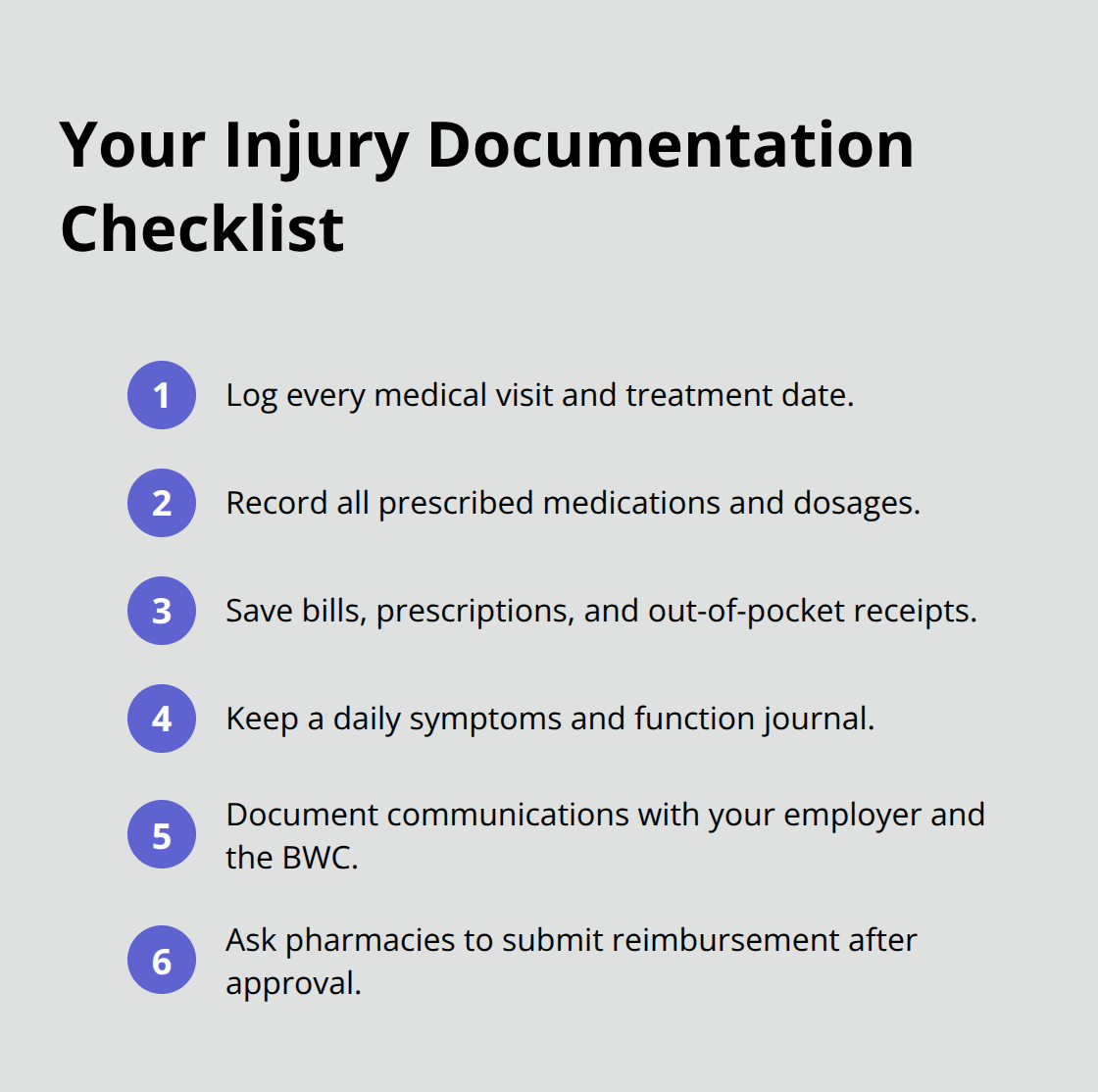
If you pay for any treatment out-of-pocket before claim approval, most pharmacies can file reimbursement claims directly with the BWC after your coverage activates.
Understand Your Rights as an Injured Worker
Your rights as an injured worker under Ohio law are stronger than most people realize, though many workers fail to assert them effectively. The Ohio Industrial Commission Ombuds Office operates independently from the BWC and offers confidential assistance for coverage disputes and questions about medical benefits at no cost to you. If your claim faces denial, the Alternative Dispute Resolution process allows you to present evidence that the treatment is reasonable and necessary without formal litigation, potentially saving months of delay.
Know When to Seek Legal Representation
Most injured workers underestimate the value of consulting a workers’ compensation attorney early in the process, particularly for complex claims or disputed coverage decisions. Attorneys familiar with Ohio workers’ compensation law can review your claim, identify coverage gaps, and handle appeals while you focus on recovery. When you face a treatment denial, you should request written explanation of the specific reasons and ask your provider’s office to help gather medical documentation supporting why the care is necessary for your injury. Do not sign any settlement documents without understanding their full implications, especially regarding how the agreement accounts for current and future medical expenses related to your injury.
The complexity of medical benefit denials and coverage disputes often requires professional guidance to protect your interests. We at Robin J Peterson Company, LLC help injured workers navigate these challenges throughout Ohio, and understanding when to seek that support can transform your claim outcome.
How We Help You Win Your Medical Benefits
Medical benefit denials from the Ohio BWC often stem from procedural mistakes rather than legitimate coverage exclusions, which means many denials can be overturned with proper documentation and legal strategy. We at Robin J Peterson Company, LLC work with injured workers throughout Cleveland, Akron, and Canton to challenge these denials by gathering medical evidence that shows disputed treatments are reasonable and necessary for your specific injury. When the BWC denies physical therapy, refuses a specialist referral, or rejects diagnostic imaging, we request the written explanation of denial from the BWC and cross-reference it against Ohio workers’ compensation law and established medical standards.
Challenging Denials Through the Alternative Dispute Resolution Process
The Alternative Dispute Resolution process through the Industrial Commission provides your path forward when coverage decisions fail. We present evidence that transforms vague denial reasons into concrete rebuttals backed by your medical provider’s professional opinion. Many injured workers accept the first denial without realizing that challenging a workers’ comp decision exists precisely to address these denials without litigation costs, and experience shows that documented appeals succeed far more often than workers expect when they have proper legal representation.
Building a Comprehensive Case for Coverage
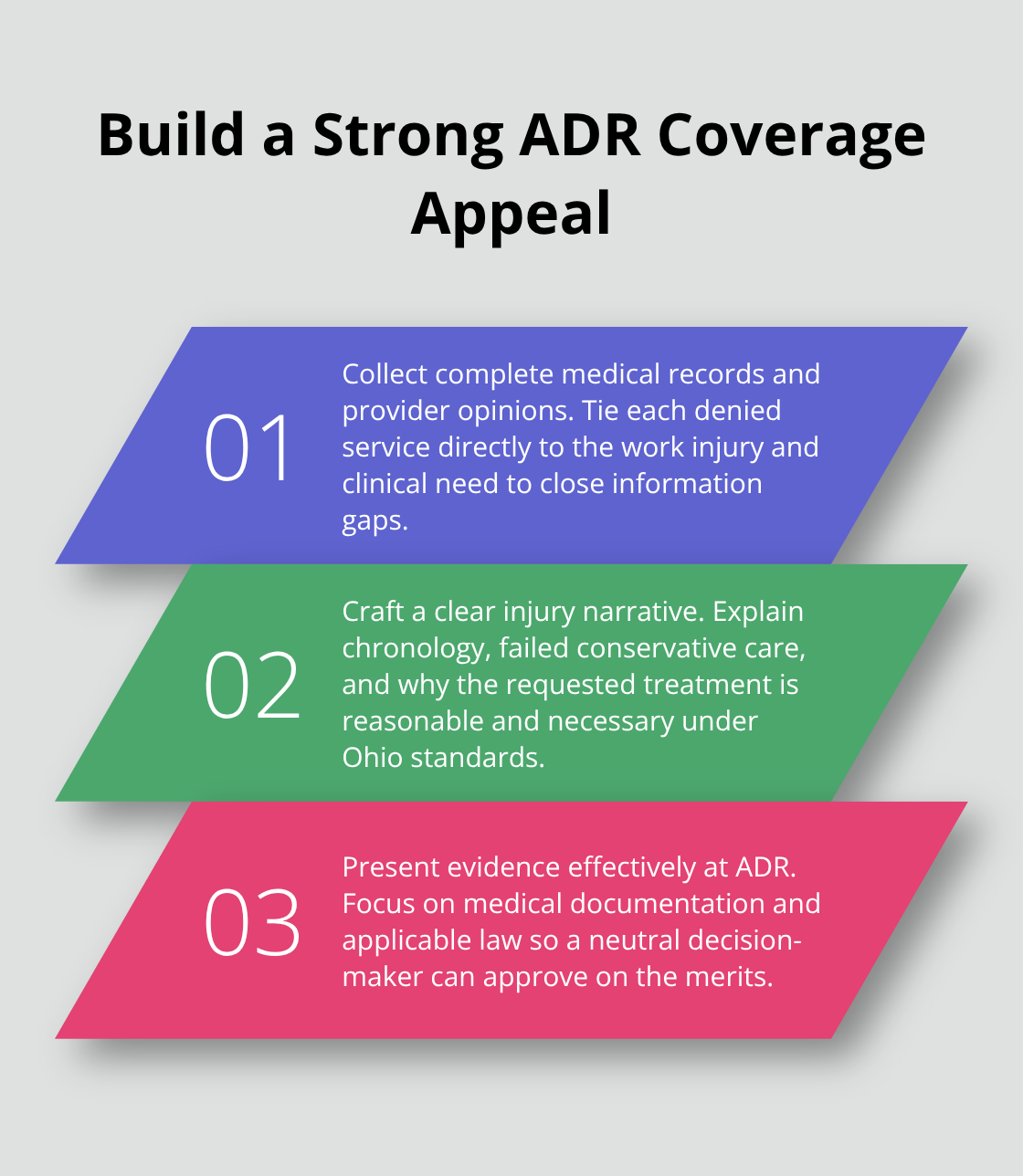
Coverage decisions often fail because the BWC’s managed care organization lacks complete information about your injury’s severity or the specific medical reason your provider recommended treatment. We obtain full medical records from all treating providers and compile a comprehensive injury narrative showing how each denied service connects directly to your work injury. This evidence presentation during the ADR hearing occurs before a neutral decision-maker who evaluates your case based on medical documentation and Ohio law rather than administrative convenience.
Securing Precedent for Future Medical Care
The Ohio Industrial Commission Ombuds Office offers confidential assistance for free, but having an attorney who understands exactly which medical documentation strengthens your position makes the difference between partial coverage and full approval. We fight to secure not just approval for the currently denied treatment, but also to establish precedent for future related care so you don’t face repeated denials for the same injury.
Final Thoughts
Understanding medical benefits Ohio BWC provides protects your recovery after a workplace injury. The system covers far more than most injured workers realize, from emergency hospital care through physical therapy and specialized programs like Enhanced Care for knee injuries. Yet coverage gaps happen regularly because workers miss procedural requirements like using certified providers or fail to document their claims thoroughly from day one.
Your responsibility as an injured worker extends beyond receiving treatment-you must report injuries immediately to your employer, file your claim promptly with the Ohio Bureau of Workers’ Compensation, and maintain meticulous records of every medical visit, medication, and communication related to your injury. When denials occur, the Alternative Dispute Resolution process exists specifically to challenge them without litigation costs, and the Ohio Industrial Commission Ombuds Office provides free confidential assistance for coverage disputes. Medical benefit denials frequently stem from procedural mistakes rather than legitimate coverage exclusions, which means many can be overturned with proper strategy and evidence.
The difference between partial coverage and full approval often comes down to having someone who understands exactly which medical documentation strengthens your position and how Ohio workers’ compensation law applies to your specific situation. If your claim faces denial or you’re uncertain whether you’re receiving maximum medical benefits, contact our firm to discuss your situation. Your recovery matters, and understanding your full entitlement under Ohio’s workers’ compensation system ensures you receive the medical care your injury requires.