
A factory injury claim in Ohio can feel overwhelming when you’re dealing with pain and lost wages. At Robin J Peterson Company, LLC, we’ve helped countless injured workers understand their rights and navigate the workers’ compensation system.
This guide walks you through filing your claim, handling denials, and securing the benefits you deserve.
Understanding Ohio Workers’ Compensation
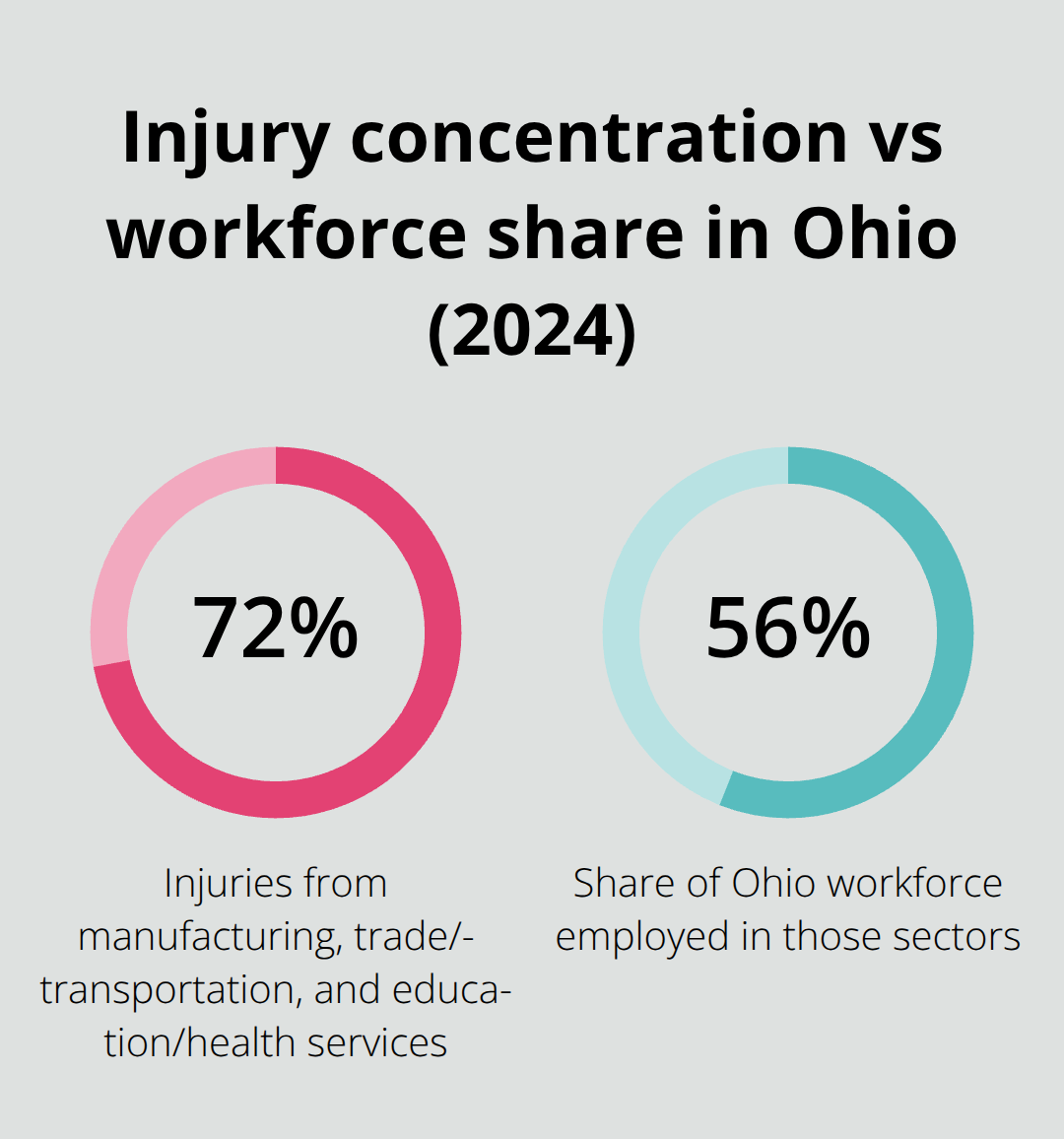
The Ohio Bureau of Workers’ Compensation operates differently than most people expect. It’s not a court system-it’s an administrative program where employers pay into a state fund, and injured workers receive benefits without proving fault. This matters because you don’t need to show your employer was negligent to get paid. In 2024, Ohio private industry reported 77,100 nonfatal workplace injuries and illnesses, according to the U.S. Bureau of Labor Statistics. Of those cases, 40,600 involved days away from work or job restrictions. Manufacturing, trade and transportation, and education and health services together accounted for 72 percent of Ohio’s injuries despite employing only 56 percent of the workforce, which tells you these sectors face serious safety challenges.
What the System Covers
The system covers injuries that arise out of and in the course of your employment. Machinery accidents, falls from heights, and chemical exposures all qualify. The system also covers some medical conditions if your job directly caused them-certain respiratory illnesses in manufacturing, for example. What it doesn’t cover are injuries from gross negligence on your part, injuries from intoxication, or pre-existing conditions that your job simply made worse without creating the condition itself. Manufacturing in Ohio had a 2.4 injury rate in 2024, down from 2.7 in 2023, indicating some improvement but still elevated risk compared to other sectors.
Your Rights as an Injured Worker
Your right to benefits is automatic if your injury qualifies, but claiming those rights requires action. Ohio law protects you from termination for filing a workers’ compensation claim. You can select your own doctor after the initial treatment if you’re dissatisfied, though the employer chooses the first provider. You also have the right to an independent hearing if your claim is denied, and you can bring an attorney to represent you. Many injured workers don’t know this last point and accept denials they could have fought.
Why Timing and Reporting Matter
Report your injury to your employer within one day-not one week, not when you feel like it, but immediately. Delays create disputes and stall your benefits. The Ohio Bureau of Workers’ Compensation, located at 30 W. Spring St., Columbus, OH 43215-2256, administers all benefits. The system has strict deadlines and detailed requirements that you must follow to protect your claim. Education and Health Services had the highest injury rate in Ohio at 2.8 per 100 full-time workers in 2024, while Information and Professional Services had the lowest at 0.8, showing that your industry matters for understanding your risk profile and what recovery support looks like.
Once you understand how the system works and what protections you have, the next step is taking action. Filing your claim correctly and on time determines whether you receive the benefits you’re entitled to.
Filing Your Claim the Right Way
Report Your Injury Immediately
The moment you get injured at work, your next 24 hours determine whether your claim moves forward smoothly or gets tangled in delays. You must report the injury to your employer immediately-not at the end of your shift, not the next morning, but as soon as it happens. Ohio’s system requires prompt notification, and employers have specific obligations to document what you report. When you delay, you give the system room to question whether the injury actually happened at work or whether it was as serious as you claim. A one-day reporting window isn’t a suggestion; it’s the difference between a claim that gets processed and one that gets scrutinized.
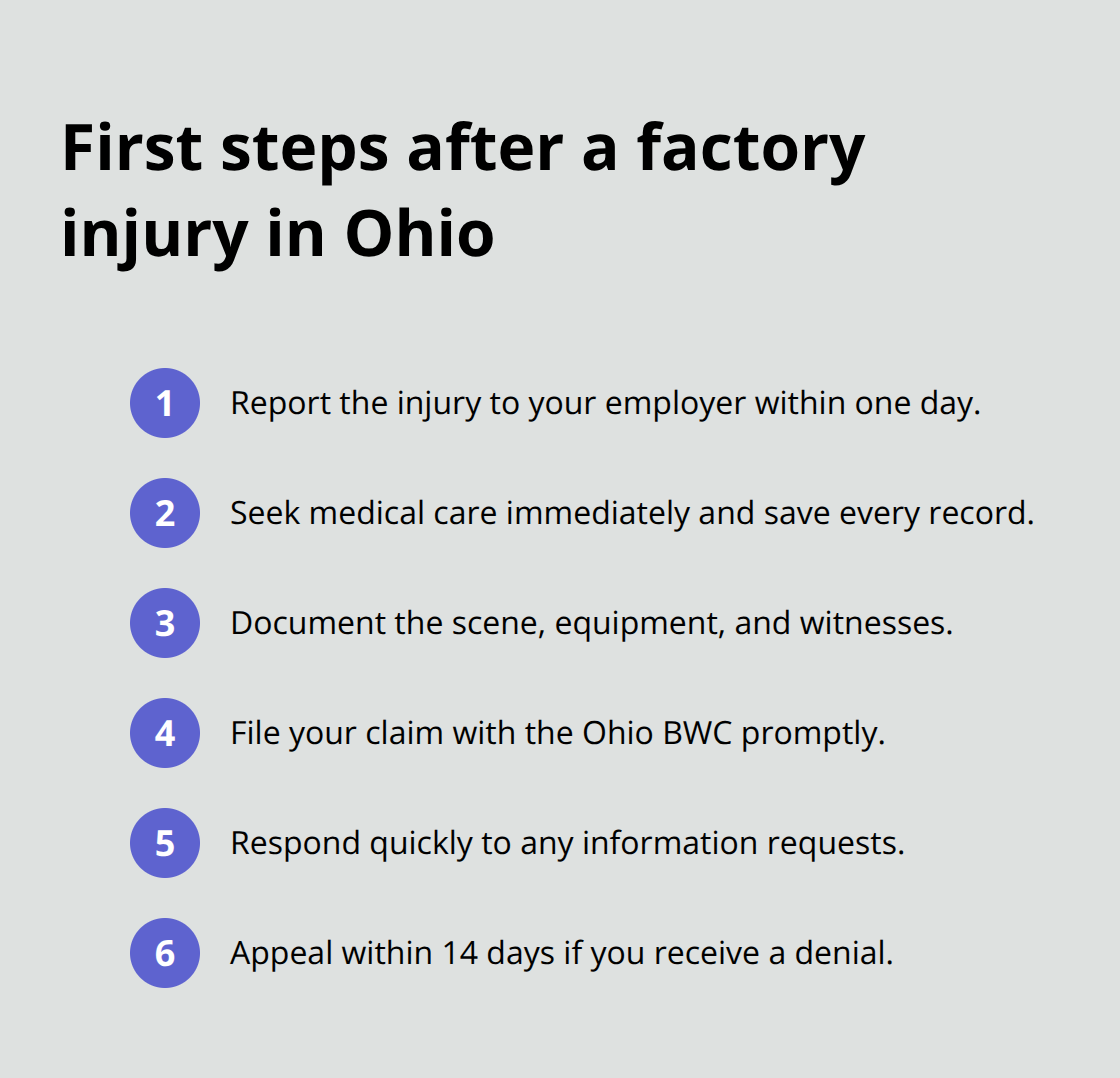
Your employer should provide you with a claim form or direct you to file online with the Ohio Bureau of Workers’ Compensation. If your employer resists or discourages reporting, that’s a red flag-and it’s also illegal under Ohio law.
Gather Complete Documentation
Documentation separates approved claims from denied ones. After you report to your employer, you should seek medical attention from a licensed provider and keep every record: medical reports, test results, prescriptions, and notes about your symptoms and limitations. You should take photographs of the accident scene, the equipment involved, and any visible injuries if possible. You should write down the names and contact information of witnesses while their memories are fresh. The U.S. Bureau of Labor Statistics data shows that 40,600 Ohio workplace injury cases in 2024 involved days away from work or job restrictions, and thorough documentation is what gets you into that approved category rather than a disputed one.
Submit Your Claim to the Ohio BWC
You must file your claim directly with the Ohio Bureau of Workers’ Compensation at 30 W. Spring St., Columbus, OH 43215-2256, or submit it online through their website. You should include your medical records, the incident report, witness statements, and any photographs. You must be specific about how the injury occurred, what body parts were affected, and which job duties you can no longer perform. The BWC processes claims faster when they have complete information from the start.
Navigate the Next Phase
Once you submit your claim with complete documentation, the BWC enters its review phase. The agency will contact you about your claim status, request additional information if needed, and make an initial determination. Some claims move through approval quickly; others face questions or denials that require your response. Understanding what happens after you file-and knowing when to challenge a decision-separates workers who receive their full benefits from those who accept incomplete outcomes.
Navigating Disputes and Appeals
A denial from the Ohio Bureau of Workers’ Compensation isn’t the end of your case-it’s often the beginning of a real fight. The BWC denies claims for specific reasons, and those reasons matter because they determine your next move. Common denials cite that the injury didn’t arise out of employment, medical evidence doesn’t support a work connection, or you failed to report within the required timeframe. When you receive a denial letter, read it carefully to identify the exact reason.
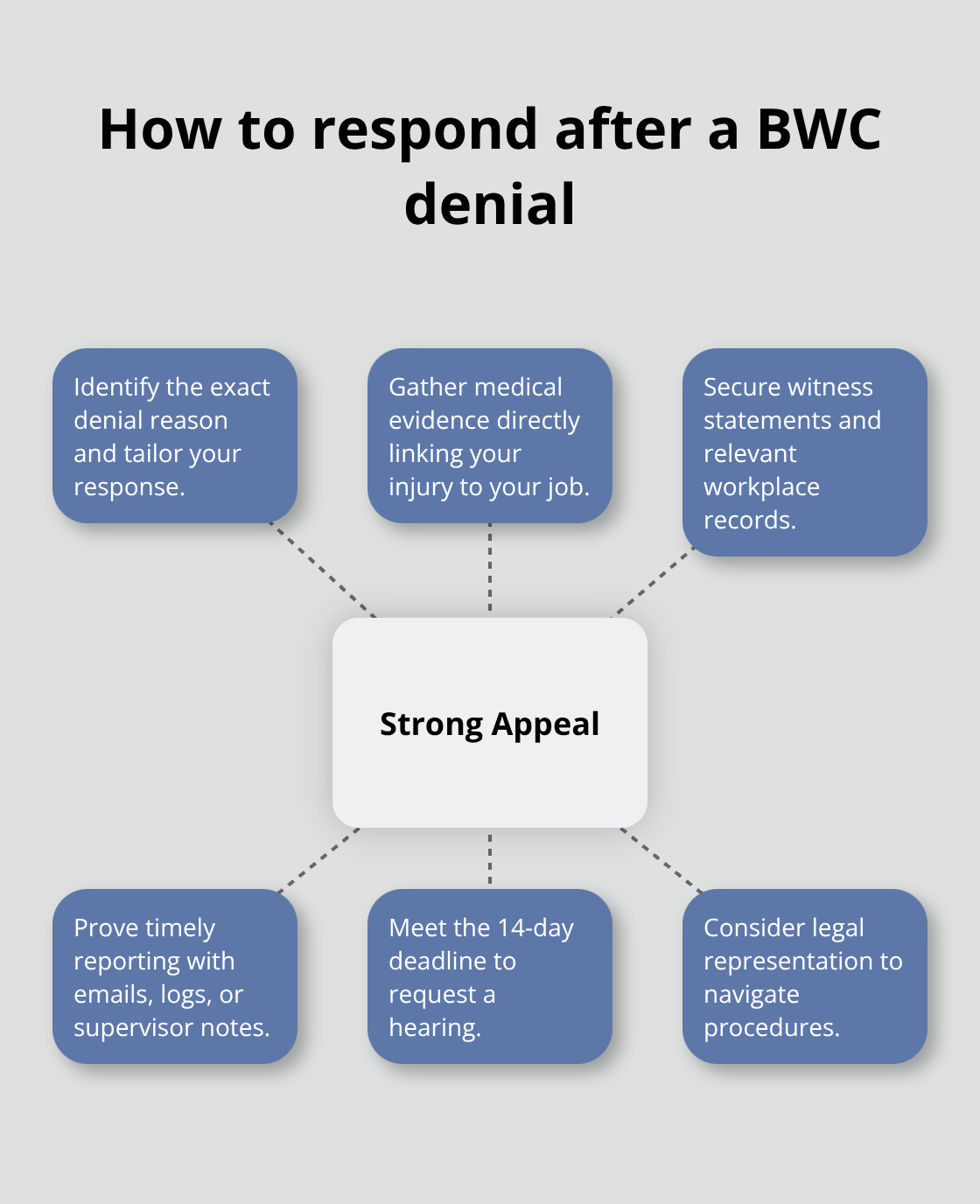
The letter will tell you whether the BWC questions the injury itself, disputes that your job caused it, or found a procedural problem like late reporting. This distinction determines whether you appeal based on new medical evidence, witness testimony, or documentation of timely reporting you can prove. Don’t assume the denial is final-Ohio law gives you a clear path to challenge it through the Industrial Commission of Ohio, which functions as an independent review body separate from the BWC. You have 14 calendar days from the denial date to request a hearing, so act immediately when you receive that letter.
Building Your Appeal Case
Your appeal succeeds when you present evidence the BWC missed or misinterpreted. Collect additional medical documentation from your treating physician that directly connects your injury to your job duties. Request written statements from coworkers who witnessed the incident or can confirm the hazardous conditions you reported. Obtain maintenance records or safety inspection reports that show equipment problems or unsafe conditions existed at the time of your injury. If the denial cited late reporting, produce evidence of your prompt notification to your employer-email confirmations, witness statements from supervisors, or incident logs with timestamps. The Industrial Commission of Ohio reviews these materials and makes an independent determination based on what you present. Many injured workers lose appeals because they submit weak evidence or fail to address the BWC’s stated reason for denial directly. Your appeal must answer their specific objection with concrete proof. If your employer or the BWC claims you didn’t report quickly enough, show documentation proving you did. If they question whether your job caused the injury, provide medical records explicitly stating the work connection.
Understanding the Industrial Commission Process
The Industrial Commission of Ohio operates as a formal hearing body with specific procedures and rules of evidence. You can represent yourself, but the process favors those who understand procedure, evidence rules, and how to examine witnesses effectively. An attorney knows which medical experts carry weight with the Commission, how to challenge the BWC’s medical evidence, and when to request depositions from employer witnesses. The Commission allows attorneys to represent injured workers, and many operate on contingency, meaning you pay nothing unless you win. If your claim involves significant lost wages or serious injury, the stakes justify professional representation. A law firm with experience in Ohio workers’ compensation understands how to navigate these hearings and present your case effectively. The difference between a successful appeal and another denial often comes down to how effectively your case is presented to the Commission.
When to Seek Legal Representation
You can represent yourself in an appeal, but certain situations demand professional help. If the BWC’s denial seems questionable, if your employer actively opposed your claim, or if your injury prevents you from returning to your previous job, professional representation protects your interests. An attorney examines the BWC’s reasoning, identifies weaknesses in their decision, and builds a targeted response. They also handle procedural deadlines and filing requirements that, if missed, can result in dismissal of your appeal. The Industrial Commission process involves technical rules that trip up unrepresented workers regularly. If you’re uncertain about your next steps or the strength of your case, consulting with an attorney early in the appeal process prevents costly mistakes. Many injured workers wait too long to seek help, and by then procedural opportunities have passed.
Final Thoughts
Filing a factory injury claim in Ohio requires immediate action, thorough documentation, and persistence when obstacles arise. The steps outlined in this guide-reporting within one day, gathering complete evidence, submitting your claim to the Ohio Bureau of Workers’ Compensation, and appealing denials through the Industrial Commission-form a clear path to securing the benefits you deserve. Most injured workers who follow this process and maintain detailed records see their claims approved.
The reality of Ohio workers’ compensation is that the system works, but only when you work it correctly. Complete information moves faster than incomplete submissions, and timely reporting prevents disputes that delay payment. Professional representation at the appeal stage significantly increases approval rates, particularly when the BWC’s initial decision seems wrong or when your injury clearly connects to your job duties.
If your factory injury claim in Ohio has been denied or you’re unsure whether you’re receiving full benefits, contact Robin J Peterson Company, LLC to discuss your situation. Our firm focuses specifically on workers’ compensation law and understands how the Industrial Commission evaluates evidence and how to challenge the BWC’s reasoning effectively. An experienced attorney protects your rights and prevents procedural mistakes that can cost you.