
A workplace head injury can change everything in an instant. You face medical decisions, lost wages, and uncertainty about your future-all while recovering from a serious injury.
We at Robin J Peterson Company, LLC help injured workers understand their head injury Ohio rights and navigate both medical treatment and legal options. This guide walks you through the benefits available to you and the steps to protect your interests.
What Happens After a Workplace Head Injury
Immediate Impact and Clinical Domains
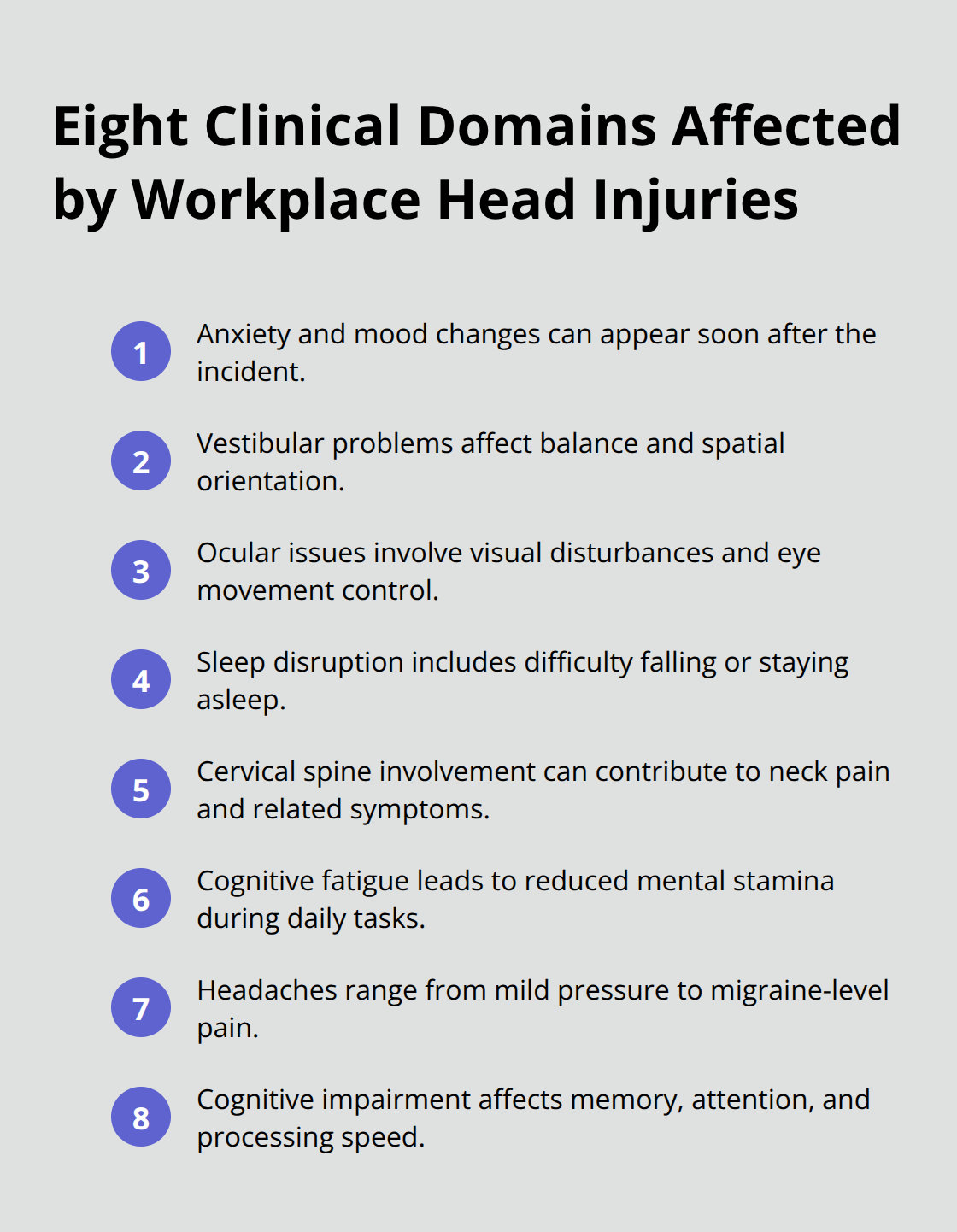
A blow to the head at work demands immediate action. Within hours of impact, your brain can swell, fluid can accumulate, and symptoms may worsen. The Ohio Bureau of Workers’ Compensation recognizes eight distinct clinical domains affected by head injuries: anxiety and mood changes, vestibular problems affecting balance, ocular issues with vision, sleep disruption, cervical spine involvement, cognitive fatigue, headaches, and cognitive impairment. Not every injured worker experiences all eight, but understanding which domains affect you shapes your recovery path.
Types of Head Injuries You May Sustain
Head injuries range from concussions-traumatic brain injuries caused by external force like a bump or blow-to more severe injuries including contusions, brain hemorrhage, hematoma, and skull fractures. Standard imaging studies like CT scans or MRI often appear normal even after a significant concussion, which is why clinical assessment matters far more than imaging results alone. Your doctor must document the mechanism of injury, the signs and symptoms you experience, and how those symptoms manifest within six weeks of the incident.
Why Immediate Medical Evaluation Matters
You should seek medical evaluation immediately after any head impact, even if you feel fine. Many symptoms emerge hours or days later, including dizziness, memory problems, concentration difficulties, mood changes, and sensitivity to light or noise. The sooner a physician documents your condition, the stronger your workers’ compensation claim becomes. Treatment within Ohio’s framework must start within six months of injury to qualify for reimbursement, and the state allows up to six months of treatment duration under standard provisions.
Treatment and Rehabilitation Pathways
If your recovery extends beyond that timeline, your physician can request additional allowance through the Ohio Bureau of Workers’ Compensation. Rehabilitation typically involves multidisciplinary care addressing your specific clinical domains-vestibular therapy for balance issues, cognitive rehabilitation for memory and concentration problems, sleep management strategies, and psychological support for mood or anxiety symptoms. You should report your injury to your supervisor immediately and inform your treating provider that the injury occurred at work, as this documentation directly supports your claim eligibility and treatment authorization.
Understanding your medical options sets the foundation for protecting your legal rights. The next section explains what workers’ compensation benefits you can access and how the Ohio system covers your treatment and lost wages.
What Your Ohio Workers’ Compensation Claim Actually Covers
Medical Treatment Coverage for Head Injuries
Ohio’s no-fault workers’ compensation system eliminates the need to prove your employer was negligent to receive benefits after a head injury at work. The Ohio Bureau of Workers’ Compensation covers medical treatment directly related to your injury, including physician visits, diagnostic imaging, therapy sessions, and prescription medications. If your concussion or head injury requires treatment across the eight clinical domains recognized by Ohio law, reimbursement applies to vestibular therapy for balance problems, cognitive rehabilitation for memory or concentration issues, sleep management interventions, psychological counseling for mood changes, and cervical spine treatment when neck injuries accompany your head trauma. Your physician submits treatment requests to the Bureau, which reviews them against medical evidence and clinical necessity standards. This means your doctor’s judgment controls the medical decisions, not the insurance system.
Timing Requirements for Treatment Authorization
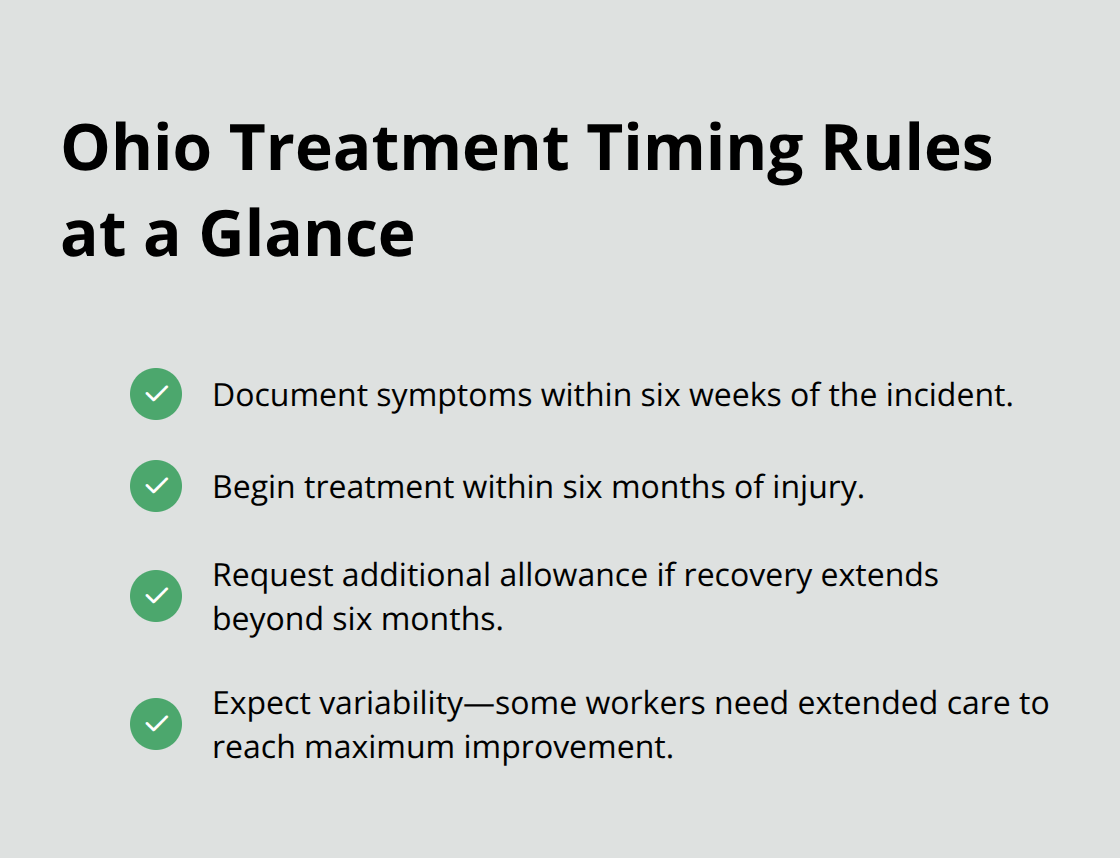
The critical requirement is that your symptoms must manifest within six weeks of the incident and treatment must begin within six months of injury. If your recovery extends beyond six months, your treating physician can request additional allowance from the Bureau, so ongoing needs don’t automatically disqualify you from coverage. This flexibility recognizes that head injury recovery varies significantly from person to person and that some workers require extended care to reach maximum medical improvement.
Wage Replacement and Disability Benefits
Wage replacement begins immediately when you cannot work due to your head injury. Temporary total disability benefits pay two-thirds of your average weekly wage while you recover, calculated based on your earnings history at the time of injury. Once you reach maximum medical improvement or can return to modified work, the Bureau may transition you to permanent disability benefits if residual impairment remains. Vocational rehabilitation services help you return to your previous job or transition to new work that accommodates your permanent limitations. The Bureau funds job training, education programs, and work-hardening activities to support your return-to-work goal.
Documentation and Claim Initiation
Keep meticulous records of all medical bills, treatment invoices, and mileage or transportation costs related to authorized treatment, since these expenses qualify for reimbursement. Report your injury to your supervisor immediately and document everything in writing. Contact the Ohio Bureau of Workers’ Compensation directly at 30 W. Spring St., Columbus, OH 43215-2256 or through their online application system to initiate your claim officially. Proper documentation at every stage strengthens your position and prevents delays in benefit processing.
Understanding what coverage applies to your specific injury sets the stage for the next critical step: filing your claim correctly and knowing when legal representation becomes necessary to protect your interests.
How to File Your Claim and Protect Your Legal Rights
Speed and Precision in Filing Your Claim
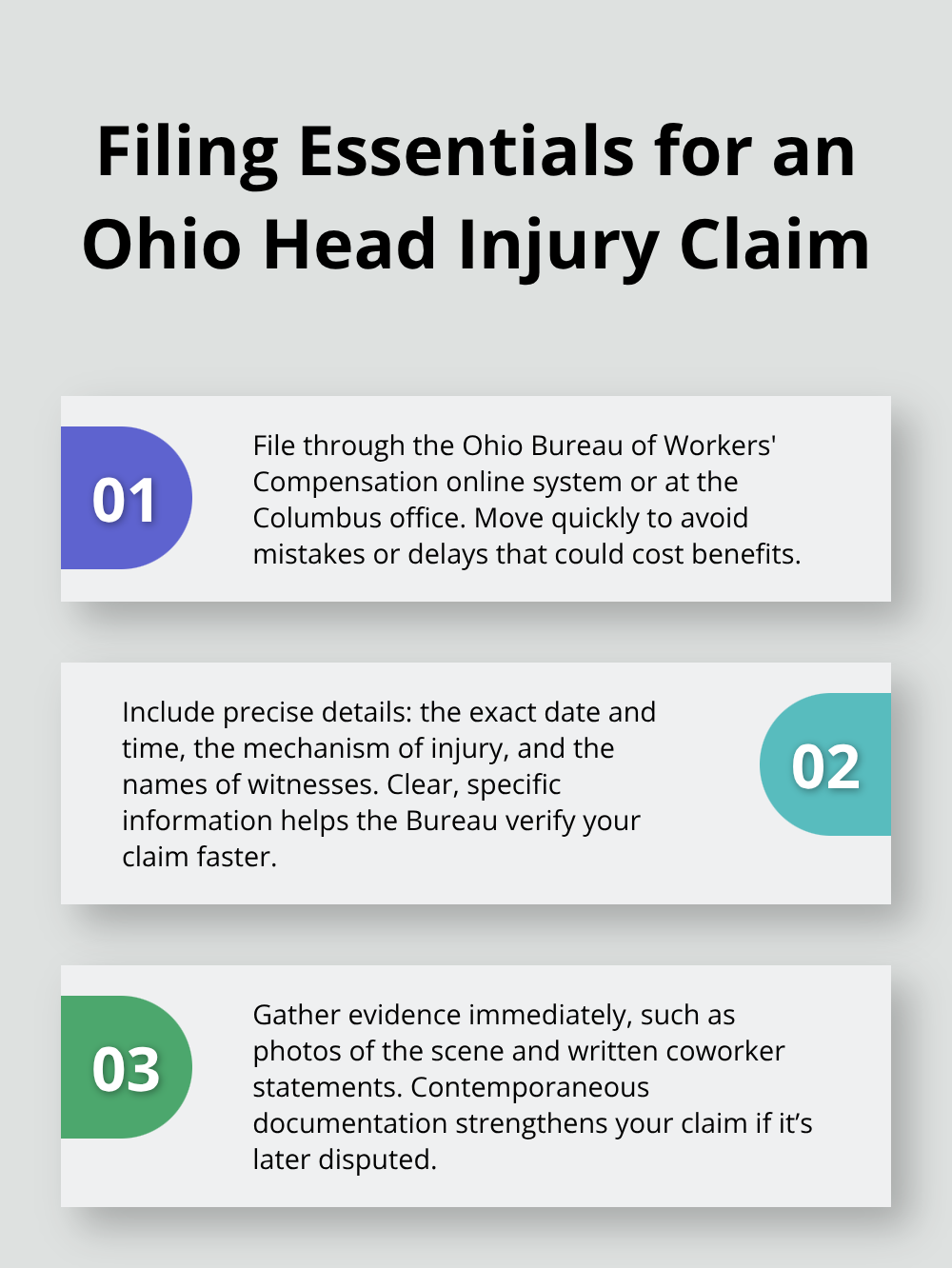
Filing your workers’ compensation claim in Ohio requires speed and precision. You have a limited window to act, and mistakes or delays can cost you benefits. The Ohio Bureau of Workers’ Compensation processes claims through their online application system or at their Columbus office at 30 W. Spring St., Columbus, OH 43215-2256. When you file, provide the exact date and time of your head injury, the mechanism of injury (the bump, blow, or jolt that caused it), and the names of any witnesses present. Photograph the accident scene if possible and collect written statements from coworkers who saw what happened.
Documentation That Strengthens Your Claim
Your supervisor must document the incident in the company’s injury log within 24 hours of your report. This written record becomes critical evidence if your claim is later disputed. Submit your initial claim form within 30 days of the injury to preserve your rights, though Ohio law allows claims filed up to two years after the incident. Keep copies of everything you submit and request written confirmation of receipt. The Bureau assigns a claims adjudicator to review your submission against medical evidence and the mechanism-of-injury requirement. Your treating physician’s documentation of your symptoms within six weeks of injury directly influences whether the Bureau approves treatment reimbursement under the Health Partnership Program framework.
Third-Party Claims and Additional Compensation
Third-party claims arise when someone other than your employer caused your head injury. If a delivery driver struck you while making a company pickup, or a faulty piece of equipment manufactured by another company caused your head injury, you may pursue a claim against that responsible party separate from workers’ compensation. This distinction matters because third-party settlements do not reduce your workers’ compensation benefits in Ohio. You can recover from both sources simultaneously. However, third-party claims involve complex liability investigations, statute of limitations requirements that vary by situation, and insurance company negotiations that demand skilled legal representation.
When to Consult an Attorney
An attorney handles the investigation, demand letters, settlement negotiations, and litigation if necessary, allowing you to focus on recovery. Workers’ compensation claims alone may not fully compensate you for permanent disability, lost earning capacity, or pain and suffering. Third-party claims fill that gap. If you sustained a serious head injury at work, consult an attorney within 60 days of the incident to preserve evidence and meet filing deadlines. The statute of limitations for personal injury claims in Ohio is generally two years, but evidence degrades and witnesses’ memories fade quickly. Acting fast protects your position.
Final Thoughts
A workplace head injury demands immediate action on two fronts: medical recovery and legal protection. Report your injury to your supervisor within 24 hours, seek immediate medical evaluation, and file your workers’ compensation claim within 30 days. Document everything in writing, photograph the accident scene, and collect witness statements before memories fade, since the statute of limitations for personal injury claims in Ohio is generally two years but evidence deteriorates quickly.
Your treating physician must document your symptoms within six weeks of injury to qualify for the six-month reimbursement window under Ohio’s Health Partnership Program framework. If your head injury involves a third-party defendant, you need legal representation to preserve evidence and meet filing requirements. Acting fast protects your head injury Ohio rights and strengthens your position against employers and the Ohio Bureau of Workers’ Compensation.
We at Robin J Peterson Company, LLC represent injured workers throughout the Cleveland, Akron, and Canton metropolitan areas who face head injuries and other workplace trauma. Contact us for a free case evaluation to discuss your specific situation and learn how we can help you recover both medically and financially.