
Filing an industrial claim in Ohio can feel overwhelming, especially when you’re dealing with an injury. We at Robin J Peterson Company, LLC understand the confusion around workers’ compensation benefits and the steps required to secure them.
This guide walks you through the entire process, from reporting your injury to avoiding costly mistakes that delay your benefits.
What Injuries Does Ohio Workers’ Compensation Actually Cover
Two Categories of Compensable Injuries
Ohio’s workers’ compensation system covers far more than most injured workers realize, which is why understanding what qualifies matters before you file. The Ohio Bureau of Workers’ Compensation processes roughly 300,000 claims annually, and the system recognizes two distinct categories of compensable injuries: traumatic injuries and occupational diseases. Traumatic injuries happen suddenly-slips and falls, machinery accidents, heavy lifting incidents, or being struck by falling objects. Occupational diseases develop over time from workplace exposure or repetitive tasks, including respiratory problems, carpal tunnel, hearing loss, and skin conditions.
No-Fault Protection Removes Blame
The critical distinction is that you don’t need to prove your employer was at fault. Ohio operates on a no-fault basis, meaning you can receive benefits even if you were partly responsible for the accident. This removes the blame game entirely and focuses on whether your injury arose from work.
Who Qualifies for Coverage
Eligibility hinges on a few straightforward factors. Most employers must carry coverage for full-time, part-time, temporary, and even public safety volunteers-misclassified workers may still qualify despite employer classification errors. You must report your injury within one year of the incident or when you became unable to work; for occupational diseases, the deadline is six months from diagnosis.
What Benefits You Receive
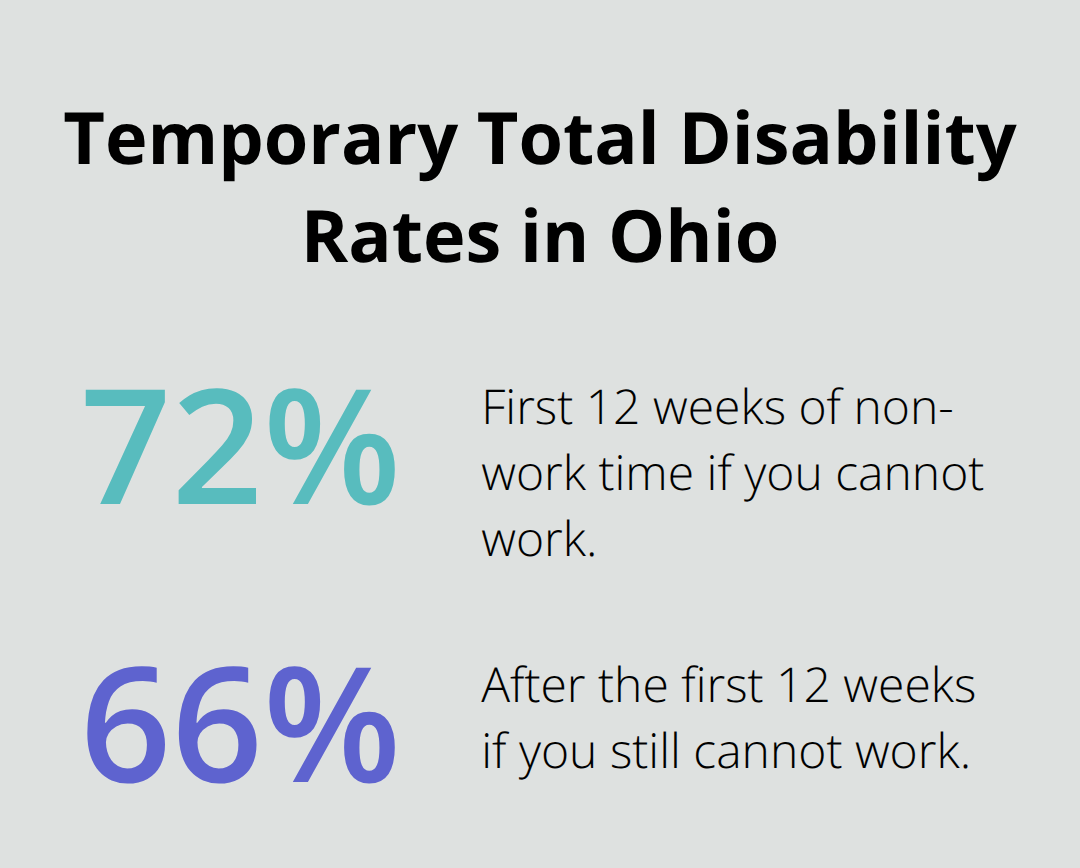
The Ohio Industrial Commission emphasizes that many denials stem from incomplete filings or missing medical documentation rather than ineligibility itself. Medical benefits cover doctors, hospitals, surgeries, physical therapy, prescriptions, and diagnostic tests with no set cap when treatment is necessary and provided by a BWC-certified provider. Wage replacement comes in multiple forms: Temporary Total Disability pays 72 percent of your pre-injury average weekly wage for the first 12 weeks of non-work time, then 66 percent thereafter. Permanent Partial Disability applies to long-term impairment while allowing some work, whereas Permanent Total Disability covers workers unable to return to any job.
Additional Claims Beyond Workers’ Compensation
If your injury was caused by employer negligence or a third party, you may pursue a separate civil claim alongside workers’ compensation, potentially recovering additional compensation. Acting within 30 days of injury dramatically strengthens your claim and prevents causation disputes from derailing approval-a reality that becomes even more apparent when you understand how to properly report your injury to your employer.
How to File Your Claim and Get Approved
Report Your Injury Immediately
Speed matters more than perfection when filing your claim in Ohio. The Ohio Bureau of Workers’ Compensation states that reporting your injury within 30 days strengthens your case and prevents causation disputes from derailing approval. Notify your employer immediately-ideally the same day the injury occurs or within 24 hours at the latest. Tell them specifically how you were injured, which body parts are affected, and when it happened. Follow up with a written email summarizing what you told them to create documentation. Your employer then has 30 days to select a Managed Care Organization to oversee your medical treatment; if they fail, the BWC assigns one automatically.
Seek Treatment from a BWC-Certified Provider
Next, seek medical treatment from a BWC-certified provider and explicitly state it’s a workers’ compensation case. This step links your medical records directly to your claim from day one. Your doctor can help you complete the First Report of Injury form, which officially starts the process with the BWC. Once submitted, you receive a claim number and identification card needed to access medical services during recovery.
Gather Complete Documentation
Documentation determines whether your claim gets approved or denied. Gather your complete medical records, all bills from treatment, wage statements from your employer showing your pre-injury earnings, and any correspondence from the BWC or your employer. The Industrial Commission of Ohio reports that many denials stem from incomplete filings rather than ineligibility, so obtain copies of everything the Managed Care Organization submits to the BWC to catch errors before they become problems. Organize all documents chronologically and keep them in one secure location.
Handle Third-Party Claims Separately
If your injury involves a third party (a negligent contractor, defective equipment, or another driver), document those details separately because you may pursue an additional civil claim alongside workers’ compensation. This parallel path can recover additional compensation beyond what workers’ compensation provides.
Understand Your Wage Replacement
When the BWC approves your claim, wage replacement begins based on your disability category. Temporary Total Disability pays 72 percent of your average weekly wage for the first 12 weeks if you cannot work, then 66 percent thereafter. Acting quickly and maintaining thorough records eliminates delays and positions your claim for approval. However, many injured workers make costly mistakes during this process that can jeopardize their benefits entirely.
Mistakes That Kill Your Ohio Workers’ Compensation Claim
The Ohio Industrial Commission reports that many claims face denial or delay not because workers are ineligible, but because they sabotage their own filing through avoidable mistakes. The most damaging error is missing deadlines entirely. You have one year from injury onset to file your claim, but waiting that long creates serious problems. The BWC processes roughly 300,000 claims annually, and their system flags late filings as suspicious because causation becomes harder to prove months after an injury occurs. Report within 30 days and file the First Report of Injury immediately after reporting to your employer. Waiting even a few weeks weakens your position and invites the BWC to question whether your injury actually happened at work.
Incomplete Medical Documentation Tanks Claims
A second critical mistake is submitting incomplete medical documentation. Your doctor’s records must clearly link your injury to your job duties and describe your condition in detail. If your medical file contains vague notes or gaps in treatment, the BWC assumes the injury wasn’t serious or wasn’t work-related. Obtain copies of everything your Managed Care Organization submits to the BWC before it goes in, because errors in those documents become part of your permanent file. The Industrial Commission of Ohio has noted that incomplete filings lead to denials far more often than medical ineligibility does.
Settlement Offers Lock You Into Lower Benefits
Third, many workers accept settlement offers without understanding what they surrender. Insurance companies and employers often present early settlement offers that seem reasonable but actually lock you into lower benefits permanently. If you accept a settlement for permanent partial disability, you cannot later claim you’ve become permanently totally disabled even if your condition worsens. An experienced workers’ compensation attorney can evaluate whether a settlement covers your actual losses and future medical needs-something injured workers cannot assess alone when they’re dealing with pain and lost income.
Gaps in Medical Treatment Destroy Your Credibility
Rushing medical decisions compounds these mistakes. Some injured workers skip follow-up appointments or stop treatment early to return to work faster, then later discover their condition worsened. Once you stop treatment voluntarily, the BWC may deny future medical claims related to that injury, assuming it was resolved. Your medical records must show continuous, appropriate treatment aligned with your injury severity. Keep all receipts, bills, and appointment confirmations organized chronologically because the BWC cross-references dates to verify your claim narrative. If your medical records show a gap of several months with no treatment, then suddenly you file for permanent disability benefits, the BWC questions your credibility.
Third-Party Claims Require Immediate Documentation
Finally, failing to document third-party involvement costs you additional recovery. If someone other than your employer caused your injury, you have separate civil claims available alongside workers’ compensation. Many workers never mention the third party’s role, missing the opportunity to pursue additional compensation. Document exactly who or what caused the injury, obtain witness contact information immediately after the incident, and photograph the hazard or scene if possible. These details matter months later when you need evidence for a third-party lawsuit.
Final Thoughts
Filing an industrial claim in Ohio requires speed, accuracy, and persistence. Report your injury to your employer within 24 hours, seek treatment from a BWC-certified provider, and submit complete documentation within 30 days to strengthen your position with the Ohio Bureau of Workers’ Compensation. The system processes roughly 300,000 claims annually, and workers who act fast and organize their evidence thoroughly receive faster approvals and higher benefits.
Your medical records must clearly connect your injury to your job duties and show continuous, appropriate treatment throughout your recovery. Gaps in treatment or vague medical notes invite the BWC to question your credibility and deny future benefits, while third-party involvement (if another person or entity caused your injury) opens additional compensation pathways that many workers overlook. Document everything immediately after your incident because these details matter months later when you need evidence to support your claim or appeal a denial.
Many injured workers benefit from legal guidance early in the process rather than waiting until a claim faces denial. An experienced workers’ compensation attorney understands how the Ohio Industrial Commission evaluates evidence, knows which medical documentation strengthens your file, and can negotiate with insurers on your behalf to maximize your industrial claims Ohio benefits. Contact our firm for a consultation to discuss your situation and map a strategy that secures the recovery you deserve.