
If you’ve suffered a work injury in Ohio, understanding your BWC medical benefits is the first step toward getting the care you need.
We at Robin J Peterson Company, LLC know that navigating workers’ compensation can feel overwhelming. This guide walks you through what coverage you’re entitled to, how to access it, and what to do if your claim gets denied.
What the BWC Actually Covers
Ohio’s Bureau of Workers’ Compensation provides medical benefits that extend far beyond basic first aid. The coverage is comprehensive, but knowing exactly what qualifies makes the difference between getting approved quickly and facing unnecessary delays. We at Robin J Peterson Company, LLC work with injured workers constantly, and one thing we’ve learned is that many people don’t realize how extensive their medical coverage actually is under the BWC system.
Emergency and Hospital Care
The BWC covers emergency room visits, hospital admissions, and inpatient care when your injury requires it. This includes the full cost of emergency treatment, diagnostic imaging like CT scans and MRIs, and all hospital fees associated with your stay. When you’re admitted to the hospital following a work injury, the BWC pays the bill directly to the hospital, so you won’t receive a surprise medical bill months later. Many injured workers worry about affording hospitalization, but this is one area where the BWC’s coverage is absolute. The key is reporting your injury promptly and having your healthcare provider document that the injury occurred at work. Delays in reporting can complicate the approval process, even though the injury itself qualifies for full coverage.
Surgical Procedures and Related Treatment
Surgery covered under the BWC includes both emergency procedures and scheduled operations deemed medically necessary for your work injury. Anesthesia, surgical supplies, and post-operative care all fall under this coverage. The BWC doesn’t require you to get multiple quotes or justify why surgery is necessary if your authorized doctor recommends it. However, the surgery must take place at an approved healthcare provider within the BWC network, which brings us to an important practical point: authorization matters. Before any surgical procedure, your healthcare provider should obtain BWC authorization. Most hospitals and surgical centers handle this step automatically, but confirming this beforehand prevents claim denials. If your surgeon isn’t in the approved network, the BWC can deny coverage even if the procedure itself is necessary, so verifying provider status before scheduling is worth the phone call.
Medications and Medical Supplies
Prescription medications directly related to your work injury receive coverage by the BWC without copays or deductibles. This includes painkillers, anti-inflammatories, antibiotics, and any other medication your authorized doctor prescribes. Medical supplies like braces, wraps, compression sleeves, and mobility aids also receive coverage when medically necessary. The practical reality is that the BWC maintains a formulary, meaning certain medications may require prior authorization before your pharmacy can fill them. Generic medications typically receive approval immediately, while brand-name drugs sometimes need additional justification. If your doctor prescribes a brand-name medication and the pharmacy tells you it needs authorization, don’t assume you’ll have to pay out of pocket. Have your doctor’s office contact the BWC to explain why the brand-name version is necessary (authorization usually comes through within a few business days).
What Happens Next in Your Claim
Understanding what the BWC covers is only half the battle. The real challenge lies in actually accessing these benefits and navigating the approval process that stands between you and the care you need.
Getting Your Claim Approved
Filing for medical benefits through the BWC requires more than just submitting paperwork and waiting. The process has specific steps, and skipping even one can delay your care for weeks.
Report Your Injury Immediately
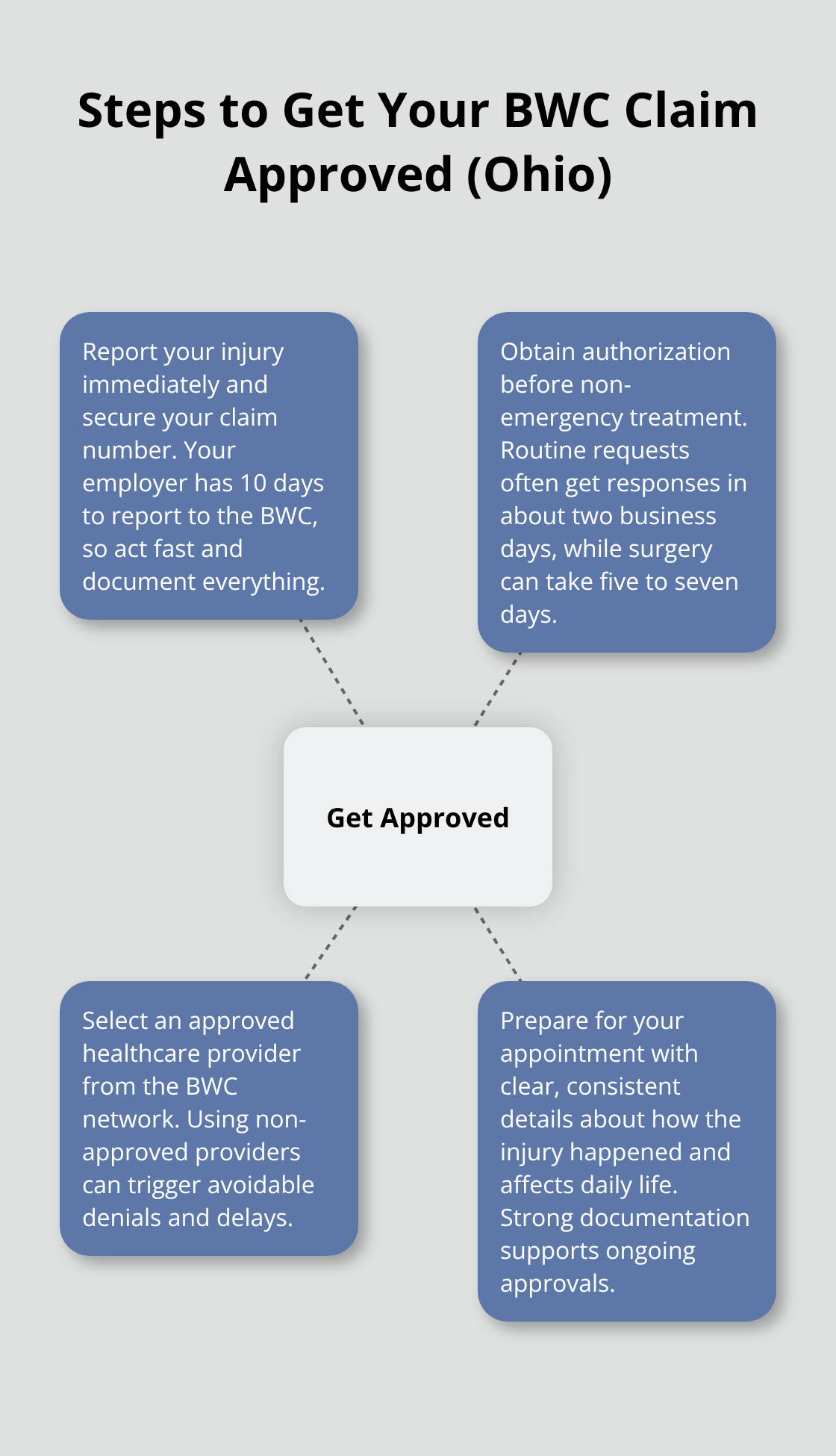
Start by reporting your injury to your employer immediately, ideally within 24 hours. Your employer has 10 days to report the injury to the BWC under Ohio law. Once your employer files, you’ll receive a claim number. This number is your lifeline through the entire process. Write it down, save it, and use it for every communication with the BWC.
If your employer delays reporting or claims the injury isn’t work-related, file a claim directly with the BWC yourself. You can do this online through the BWC website or by submitting Form OHIOBWC 0103. The sooner you file, the sooner your medical benefits begin.
Obtain Authorization Before Treatment
Authorization is where most injured workers stumble. Before receiving treatment beyond emergency care, your healthcare provider must obtain BWC authorization. This isn’t optional, and it isn’t bureaucratic red tape. The BWC typically responds to authorization requests within two business days for routine care like office visits or physical therapy. Surgical procedures take longer, sometimes five to seven business days.
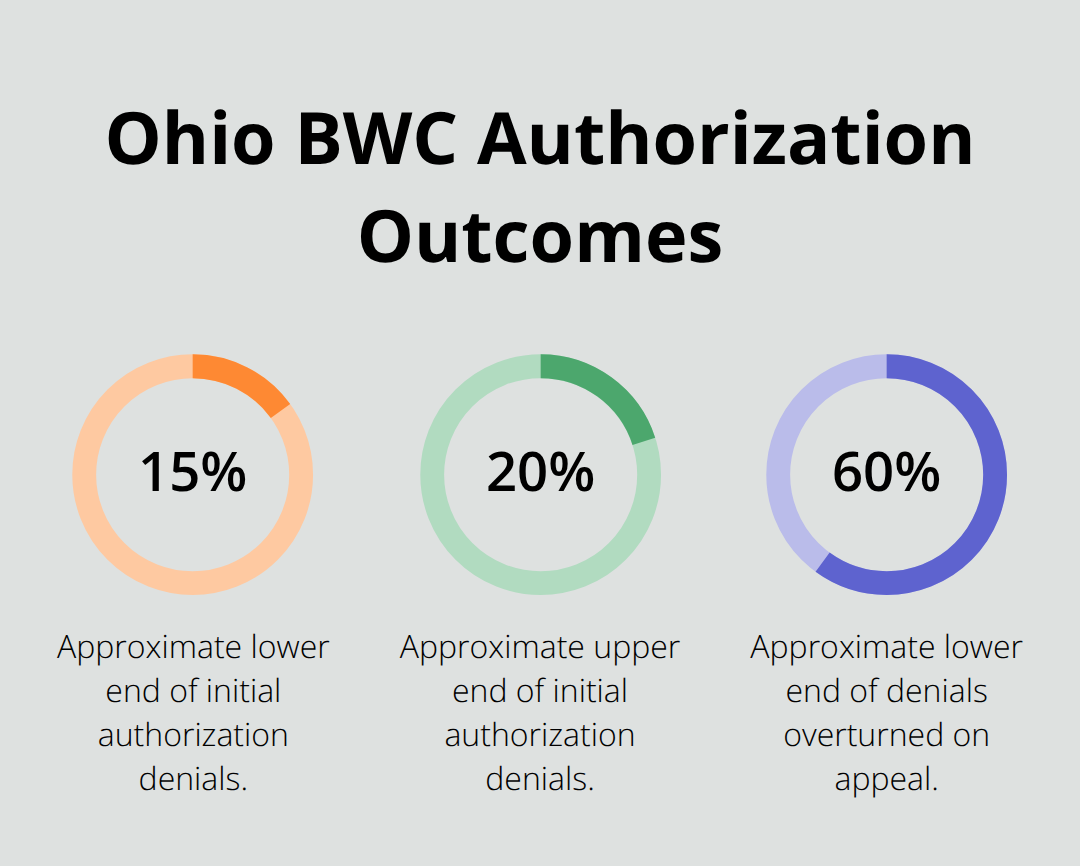
Your healthcare provider’s office should handle this step, but confirm they’ve requested authorization before your appointment. If authorization gets denied, ask your doctor to appeal immediately with additional medical documentation explaining why the treatment is necessary. The BWC denies authorization requests roughly 15 to 20 percent of the time initially, but most of these denials get overturned on appeal when proper justification is provided.
Select an Approved Healthcare Provider
Working within the approved provider network saves time and prevents claim complications. The BWC maintains a list of approved healthcare providers, and treatment from non-approved providers often gets denied even if the care itself is necessary. Check the provider list before scheduling your appointment.
If your preferred doctor isn’t approved, you have options. You can request an exception through the BWC, though this adds processing time. Alternatively, your employer or the BWC may assign you a specific healthcare provider if you don’t select one yourself within a reasonable timeframe.
Prepare for Your Initial Medical Appointment
Your initial medical appointment sets the tone for your entire claim. During this visit, the healthcare provider documents the injury, examines you, and creates the medical record the BWC uses to approve ongoing treatment. Be honest about how the injury occurred and how it affects your daily activities. Vague or inconsistent descriptions create problems later.
If your doctor prescribes treatment, ask them to explain why it’s medically necessary. This documentation helps if the BWC questions the treatment later. Most injured workers in Ohio receive approval for medically necessary treatment without major obstacles, but those who follow the process correctly move through it faster. The authorization timeline matters because delayed approvals mean delayed treatment, and delayed treatment can worsen your condition.
What happens when the BWC denies your claim, though? Understanding your appeal rights becomes essential when initial approvals don’t come through.
Common Denials and How to Appeal
The BWC rejects medical coverage claims far more often than injured workers expect, and most denials stem from preventable mistakes rather than legitimate coverage gaps. According to data from the Ohio Industrial Commission, authorization issues account for the majority of initial denials. Specifically, treatment provided without prior BWC approval tops the list, followed by claims involving non-approved healthcare providers and incomplete injury documentation.
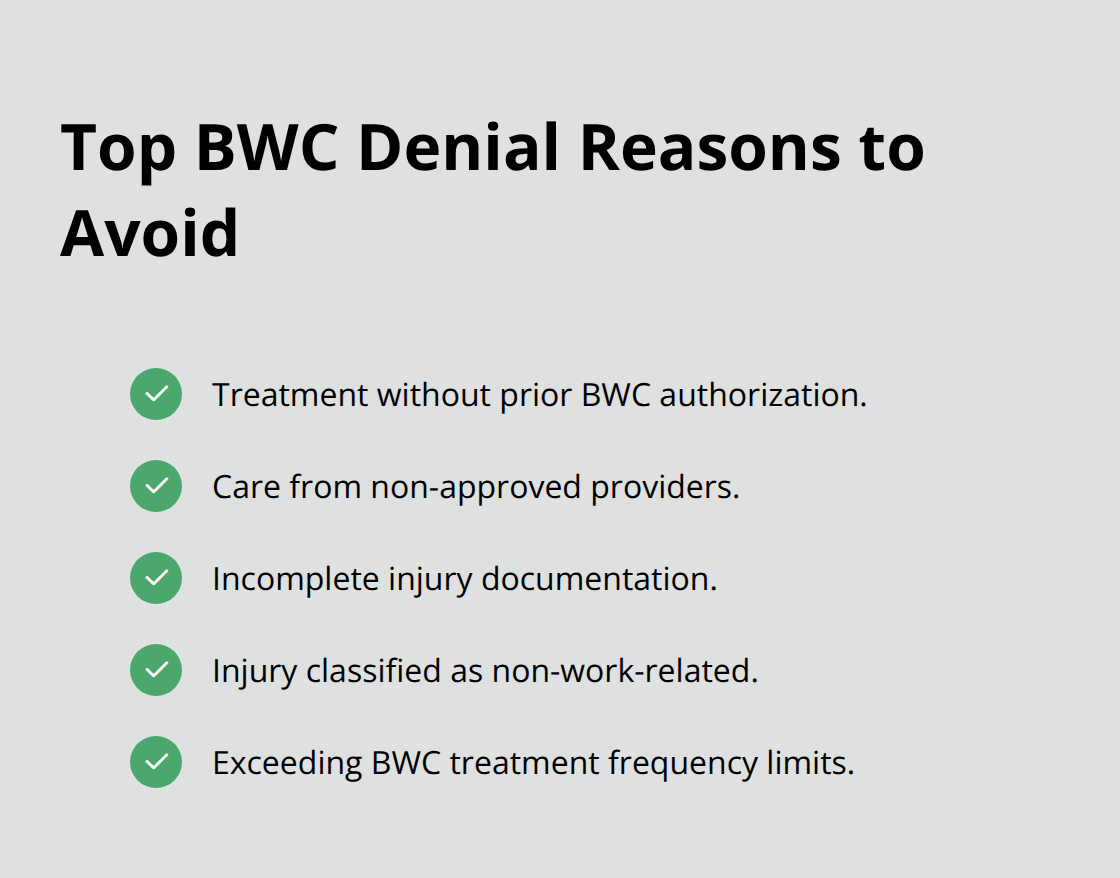
The third most common reason involves treating injuries the BWC classifies as non-work-related, which happens when your initial report lacks sufficient detail connecting the injury directly to your job duties. A fourth category includes treatment deemed not medically necessary for your specific injury, though the BWC applies this standard inconsistently across similar cases. The fifth reason involves exceeding treatment frequency limits the BWC has established for certain conditions, though these limits aren’t always communicated clearly to injured workers upfront.
Why the BWC Actually Rejects Your Claim
Most injured workers assume the BWC rejects claims because the injury doesn’t qualify for coverage, but that’s rarely the actual problem. The real issue is procedural. You obtained treatment without authorization, your provider wasn’t approved, or your medical records don’t clearly establish that work caused the injury. The BWC’s rejection rate for initial medical authorization requests hovers around 15 to 20 percent according to Ohio Industrial Commission reporting, but roughly 60 to 70 percent of those denials get overturned on appeal when proper documentation is submitted. This means the first denial often reflects incomplete information rather than ineligibility.
If the BWC rejects your claim, request the specific reason in writing. The denial letter should explain exactly why coverage was rejected. If it doesn’t, contact the BWC’s customer service line and ask for clarification. Vague denial reasons make appeals harder, so pushing for specificity matters from the start.
How to File an Appeal Successfully
Filing an appeal with the BWC requires submitting additional medical documentation, not just restating your original claim. Your healthcare provider’s written statement explaining why the denied treatment is medically necessary carries significant weight. Ask your doctor to write a letter addressing the specific reason the BWC cited for denial. If the BWC claimed the treatment wasn’t necessary, your doctor should explain the clinical reasoning behind the recommendation. If authorization was denied due to provider status, request that your doctor explain their qualifications and why they’re the appropriate specialist for your condition. The appeal process typically takes 30 to 45 days from submission to decision. During this time, you can continue seeking treatment, though you’ll pay out of pocket if the appeal is still pending. Most appeals succeed when medical documentation is thorough and directly addresses the denial reason.
When You Need Legal Representation
If your appeal gets rejected a second time or if the BWC rejects coverage for a serious injury requiring expensive treatment, legal representation becomes worthwhile. An attorney can file a claim with the Industrial Commission of Ohio, which supersedes the BWC’s initial decision-making authority. This formal hearing before an administrative law judge gives you a legitimate chance to present evidence and testimony. You should consider legal representation if the rejected treatment significantly impacts your recovery or if the BWC’s position seems medically unreasonable. Many workers’ compensation attorneys in Ohio work on contingency, meaning you pay nothing unless you win your case. We at Robin J Peterson Company, LLC represent injured workers throughout the Cleveland, Akron, and Canton areas who face denied claims and need experienced advocacy before the Industrial Commission of Ohio.
Final Thoughts
Your BWC medical benefits represent a safety net that covers the full cost of work-related injury care, from emergency treatment through recovery. Report your injury to your employer immediately, secure authorization before receiving treatment beyond emergency care, and verify that your healthcare provider holds BWC approval. Most injured workers who follow these steps receive approval for medically necessary care without major obstacles, while those who skip authorization, use non-approved providers, or fail to document how their injury connects to their job duties face preventable delays.
When the BWC denies your claim despite following proper procedures, or when you face a second denial on appeal, legal representation becomes essential. The Industrial Commission of Ohio exists specifically to review cases where the BWC’s decisions seem unreasonable or when injured workers need experienced advocacy. An attorney can file a claim with the Industrial Commission, which supersedes the BWC’s initial decision-making authority and gives you a legitimate chance to present evidence before an administrative law judge.
We at Robin J Peterson Company, LLC represent injured workers throughout Cleveland, Akron, and Canton who navigate denied claims and complex BWC disputes. If your claim has been rejected or if you’re uncertain whether you’re receiving the full benefits you’re entitled to, contact our office for a consultation about your situation. Your recovery matters, and you shouldn’t face the BWC’s bureaucracy alone.