
When you’re injured at work in Ohio, understanding your medical treatment rights is essential. The Ohio Bureau of Workers’ Compensation (BWC) provides specific protections that shape how you access care and which providers you can see.
We at Robin J Peterson Company, LLC help injured workers navigate these rights every day. This guide walks you through what the law guarantees, how to access benefits, and what to do when problems arise.
What Ohio Workers’ Compensation Actually Covers
Coverage for Work-Related Medical Care
The Ohio Bureau of Workers’ Compensation covers medical care directly tied to your work injury, and this coverage extends further than many workers expect. Doctor visits, diagnostic imaging, lab tests, prescription medications, physical therapy, and surgical procedures all qualify if they treat your injury. The BWC applies the Official Disability Guidelines to evaluate whether treatment is medically necessary and effective for your specific condition. This means your care follows evidence-based standards rather than arbitrary decisions.
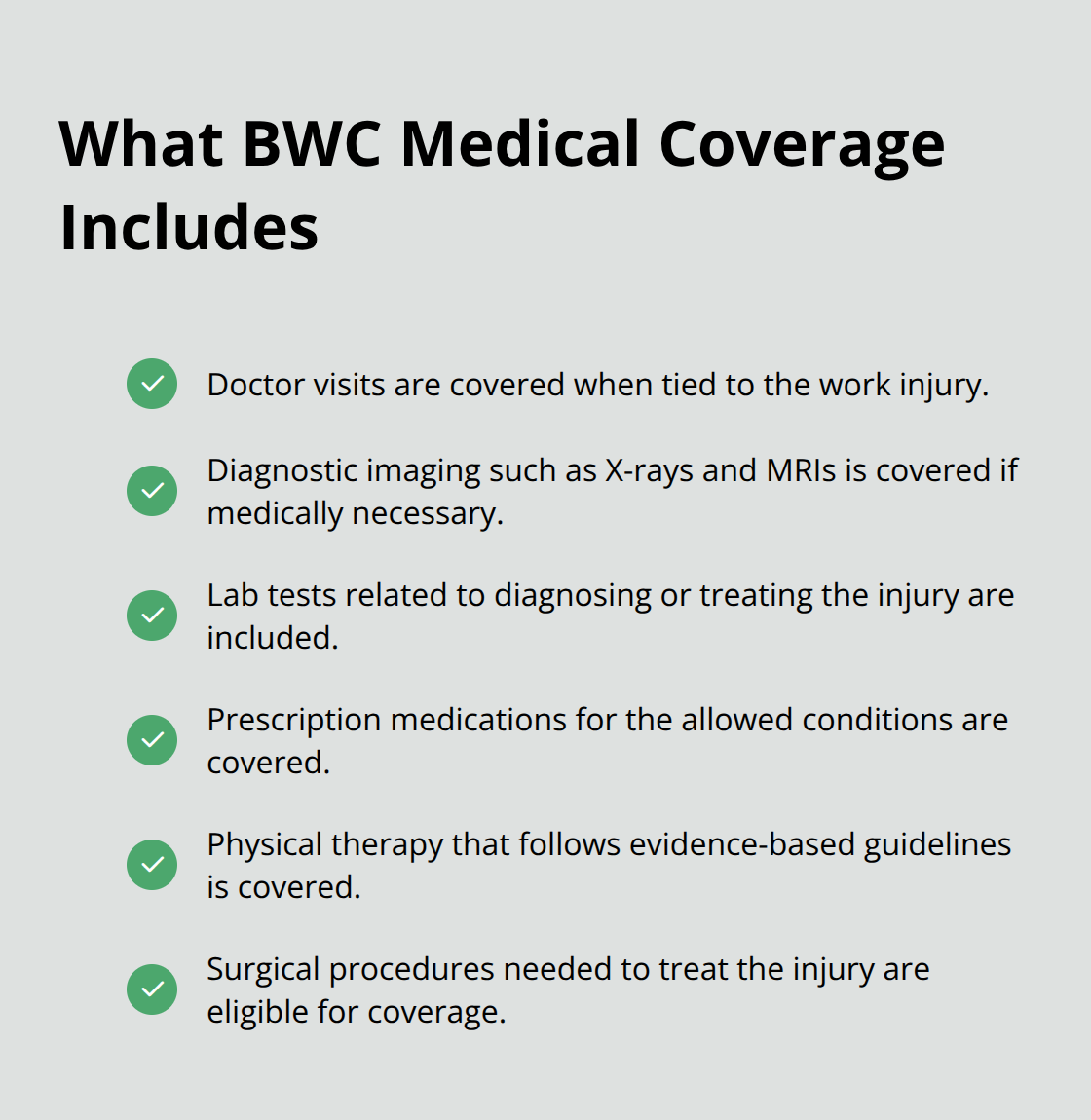
However, the BWC will not cover treatments unrelated to your workplace injury, even if you need them for other health reasons.
Filing Your Claim and Selecting Providers
File your claim promptly after the injury occurs; delayed reporting weakens your position and complicates approval timelines. Once approved, you have the right to select from authorized medical providers in the BWC network, though your employer may designate a specific provider initially. You can switch providers if you’re unsatisfied, but verify the new provider is BWC-certified before making the change. Documentation matters significantly-maintain detailed records of every medical visit, prescription, and treatment recommendation because the BWC uses these records to determine claim allowance.
Understanding the Approval Timeline
The timeline for approval typically spans 30 days from when your claim is filed, though the BWC can extend this period if they need additional medical records or clarification. Your case manager, assigned by the managed care organization handling your claim, reviews your medical documentation and either approves or denies treatment. If approved, treatment can begin immediately. If denied or delayed beyond reasonable timeframes, you have grounds to request a review through the Ohio Industrial Commission.
Expedited Processing and Communication
The Enhanced Care Program, operated by the BWC, prioritizes faster treatment decisions and better coordination for eligible injuries (reducing wait times compared to standard processing). Contact the BWC Help Center directly if your approval takes longer than expected-they can investigate delays and push for resolution. Many workers do not realize they can request plain-language explanations of treatment decisions, which clarifies why something was approved or denied. If you work with an authorized representative or attorney, they can accelerate communication with the BWC and verify your medical records are complete before submission.
When treatment decisions remain unclear or disputes arise over what the BWC will cover, understanding your next steps becomes critical to protecting your benefits.
How to Navigate the Medical Treatment Process
Report Your Injury Immediately
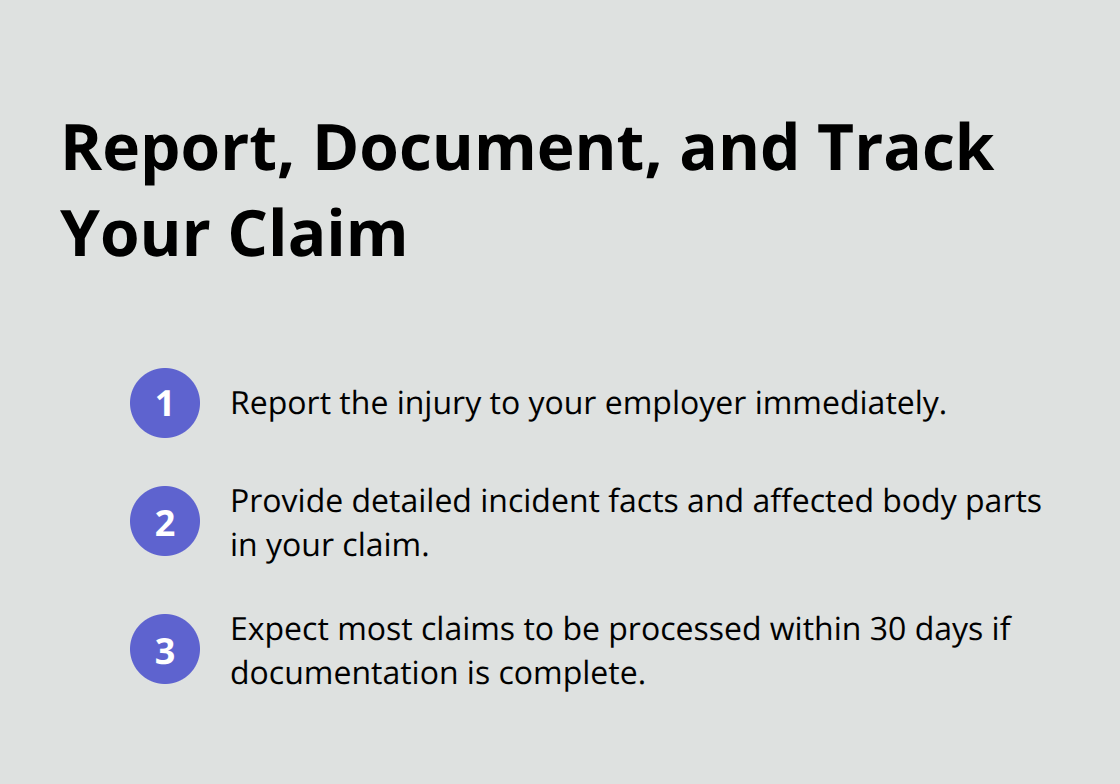
Report your injury to your employer as soon as it occurs-the BWC considers prompt reporting essential for claim approval, and delays create unnecessary barriers to accessing care. When you file your claim, provide detailed information about how the injury happened, what body parts were affected, and when it occurred. The BWC processes most claims within 30 days, but incomplete documentation extends this timeline significantly.
Gather Complete Medical Documentation
Collect medical records from your initial visit, diagnostic test results, and any prior treatment notes related to the injury. The managed care organization assigned to your case reviews these documents to determine medical necessity using the Official Disability Guidelines, which means your records must clearly show the connection between your injury and the recommended treatment. If your claim gets denied or delayed beyond 30 days, contact the BWC Help Center directly and request a written explanation for the delay. Many workers assume silence means approval, but the BWC requires explicit notification.
Work with Authorized Providers
You have the legal right to choose from BWC-certified authorized providers, though your employer may initially designate one. If that provider lacks experience with your specific injury type or communicates poorly, switch providers-verify the new provider is BWC-certified before scheduling your first appointment. The Ohio Industrial Commission enforces this right, so do not accept pressure to stay with an unsuitable provider.
Medical documentation standards require your provider to record specific findings, observations, and clinical reasoning that justify each treatment decision. Request copies of all medical reports after each visit and review them for accuracy; errors in documentation can trigger claim denials or treatment delays. If your provider recommends advanced treatment like surgery or extended physical therapy, the managed care organization will request additional documentation justifying the necessity and cost-effectiveness of that treatment under Ohio code criteria.
Understand Treatment Decisions and Resolve Disputes
Ask your provider to explain their clinical reasoning in plain language so you understand why they recommend specific treatments. If disputes arise over whether treatment is medically necessary, the Ombuds Office at the Ohio Industrial Commission provides free confidential assistance to help resolve disagreements without litigation. An authorized representative or attorney can accelerate communication with the BWC and verify your medical records are complete before submission, which prevents delays and strengthens your position when treatment decisions remain unclear.
What Happens When the BWC Denies or Delays Your Treatment
The BWC denies medical treatment claims far more often than most injured workers realize, and understanding exactly why your claim was rejected transforms your ability to fight back. The managed care organization handling your case applies the Official Disability Guidelines to evaluate whether treatment is medically necessary. If your medical records lack specific clinical findings or fail to establish a clear connection between your injury and the recommended treatment, denial follows automatically. Delayed approvals are equally problematic because treatment postponement worsens outcomes and complicates recovery timelines.
Taking Action Against Delays
If your claim sits unapproved beyond 30 days, contact the BWC Help Center immediately and request a written explanation for the delay rather than assuming silence means approval. Many workers lose valuable treatment time waiting passively when the law entitles them to push for resolution. Workers who actively request status updates and written explanations resolve delays significantly faster than those who wait quietly.
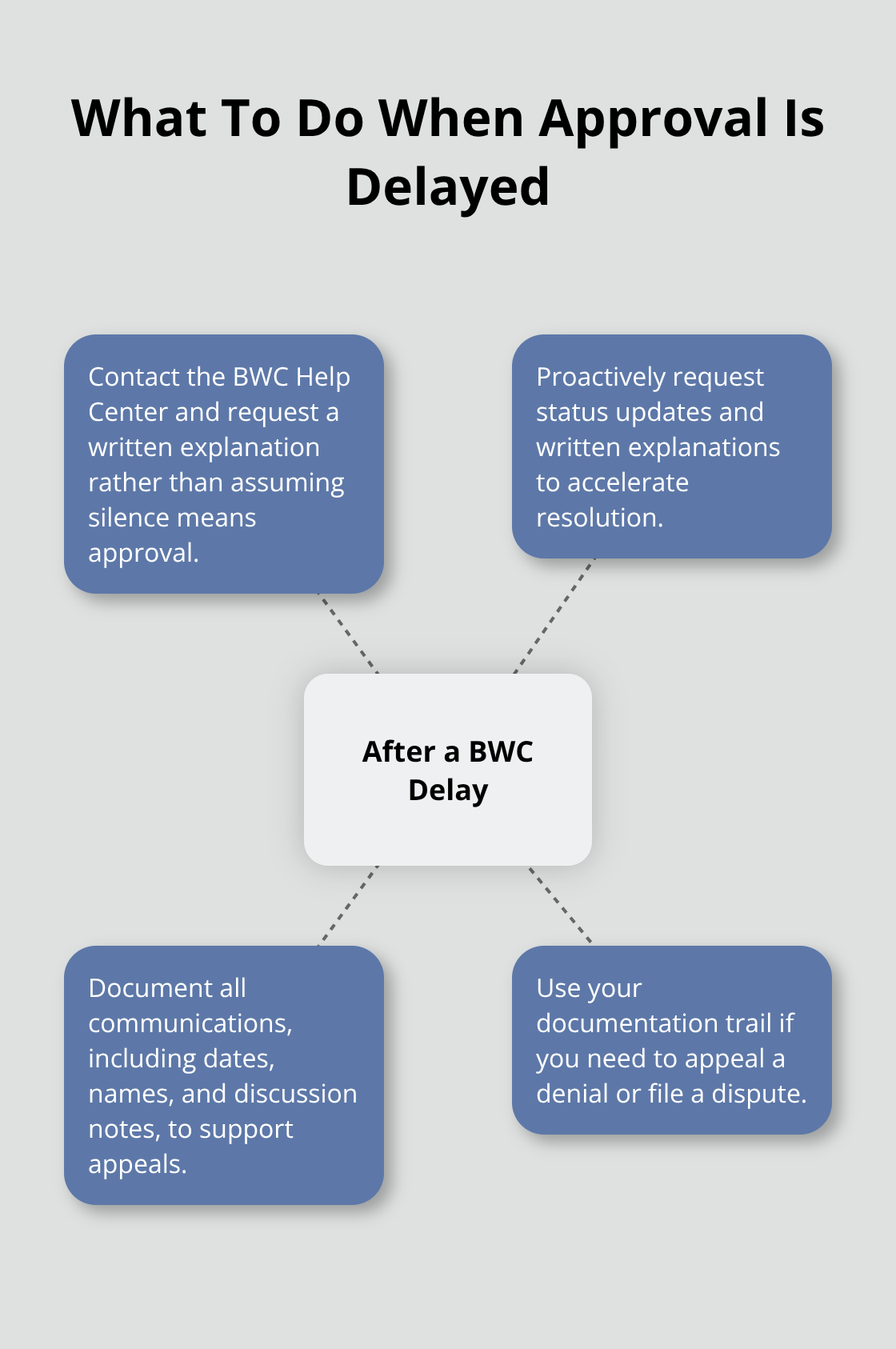
Document every communication with the BWC (including dates, names of representatives, and what was discussed) because this documentation becomes critical if you need to appeal a denial or file a dispute.
Fighting a Treatment Denial
When treatment is denied, your first step is requesting a detailed written explanation from the managed care organization explaining which specific medical necessity criteria were not met. The Ombuds Office at the Ohio Industrial Commission provides free confidential assistance to injured workers challenging treatment denials and can help you understand whether the denial followed proper procedures under Ohio law. If your medical provider believes the denial was incorrect, ask them to submit additional clinical documentation justifying the treatment’s necessity and cost-effectiveness using the Official Disability Guidelines framework. Resubmission with stronger documentation succeeds frequently because initial denials often result from incomplete records rather than legitimate medical disagreement.
An authorized representative or attorney can review the denial letter, identify documentation gaps, and coordinate with your provider to submit a more compelling resubmission within the BWC’s appeal window. These professionals understand how to frame treatment necessity arguments using Official Disability Guidelines language, which significantly increases approval odds compared to worker-submitted appeals alone.
Resolving Disputes Over Medical Necessity
Disputes frequently arise when the managed care organization questions whether advanced treatments like surgery or extended physical therapy meet medical necessity standards under Ohio code criteria. Request that your medical provider document their clinical reasoning in plain language showing how the recommended treatment directly addresses your specific injury and expected outcomes. If disagreement persists between your provider and the managed care organization, the Ombuds Office can facilitate communication and help both parties reach agreement without formal litigation. The Ohio Industrial Commission oversees these disputes and can order a review if you believe the managed care organization applied guidelines incorrectly or ignored relevant medical evidence.
Final Thoughts
Understanding your medical treatment rights in Ohio protects your recovery and prevents costly delays when you need care most. The Ohio Bureau of Workers’ Compensation covers medically necessary treatment directly tied to your work injury, from initial doctor visits through surgery and rehabilitation. You have the legal right to choose authorized providers, request plain-language explanations of treatment decisions, and challenge denials through the Ombuds Office or Ohio Industrial Commission.
When the BWC denies or delays treatment, action matters more than patience. Request written explanations for delays beyond 30 days, ask your provider to resubmit with stronger clinical documentation, and contact the Ombuds Office for free confidential assistance. Many workers successfully overturn initial denials by reframing their treatment necessity arguments using Official Disability Guidelines language or by identifying documentation gaps that caused the original rejection.
The complexity of Ohio’s workers’ compensation system means injured workers benefit from professional guidance navigating claims, appeals, and disputes. We at Robin J Peterson Company, LLC represent injured workers throughout Cleveland, Akron, and Canton, fighting to secure the benefits you deserve from the BWC and Industrial Commission of Ohio. If your claim faces delays, denials, or disputes over medical treatment rights in Ohio, contact our firm to discuss your situation and explore how we can help protect your rights.