
A work injury that leaves you with lasting effects changes everything. At Robin J Peterson Company, LLC, we help injured workers understand permanent partial disability in Ohio and what it means for your future.
The Ohio Bureau of Workers’ Compensation has specific rules about how your benefits are calculated and paid. This guide walks you through your rights, your options, and the steps you need to take next.
What Is Permanent Partial Disability in Ohio?
The Definition and Legal Framework
Permanent partial disability in Ohio is a specific workers’ compensation benefit paid when a work injury causes lasting damage that reduces your ability to function or earn income, even if you return to work. The Ohio Revised Code Section 4123.57 defines PPD as compensation based on your percentage of permanent impairment, determined by an independent medical examiner. This benefit recognizes that permanent effects of your injury-whether chronic pain, reduced strength, limited mobility, or sensory loss-prevent you from returning to your pre-injury job or earning level.
How PPD Differs from Temporary Disability
Temporary total disability ends when you can work again, while PPD recognizes that even when you do return to work, the permanent effects of your injury remain and warrant compensation. With PPD, you may be working in some capacity, but the injury has created permanent limitations that affect your function. Temporary disability requires that you cannot work at all during recovery, whereas PPD applies to workers who have returned to some form of employment yet still experience lasting impairment.
The Role of the Ohio Bureau of Workers’ Compensation
The Ohio Bureau of Workers’ Compensation administers the entire PPD process, from filing your claim to scheduling your medical evaluation. The BWC determines whether you qualify for PPD and calculates your benefit amount based on the impairment percentage assigned by their appointed doctor. You cannot qualify for PPD benefits until at least 26 weeks pass since either your last temporary total disability payment or the date of your injury if you received no benefits. This waiting period allows the BWC to observe whether your condition stabilizes or improves before declaring an impairment permanent.
Filing Your PPD Application and Medical Evaluation
Once you file your PPD application using Form C-92, the BWC schedules you for an independent medical examination. The evaluating physician assesses your impairment on a scale from zero to 100 percent, and this rating directly determines your total benefit amount. The BWC issues a tentative order based on that rating, and you then have 20 days to object if you believe the percentage is too low. If you do not object, the tentative order becomes final. If you object, the Industrial Commission of Ohio reviews the medical evidence and issues a final decision. Missing deadlines or failing to gather strong medical evidence can cost you significant benefits, which is why understanding what happens next in the appeals process matters greatly.
Calculating Your Impairment Rating and Benefit Amount
How the BWC Appoints Medical Examiners
The BWC appoints an independent medical examiner to assess your permanent impairment on a scale from zero to 100 percent. This percentage is the single most important number in your PPD case because it directly determines your total benefit amount. The evaluating physician reviews your medical records, conducts a physical examination, and documents functional losses such as pain, weakness, limited mobility, swelling, or sensory loss caused by your work injury.
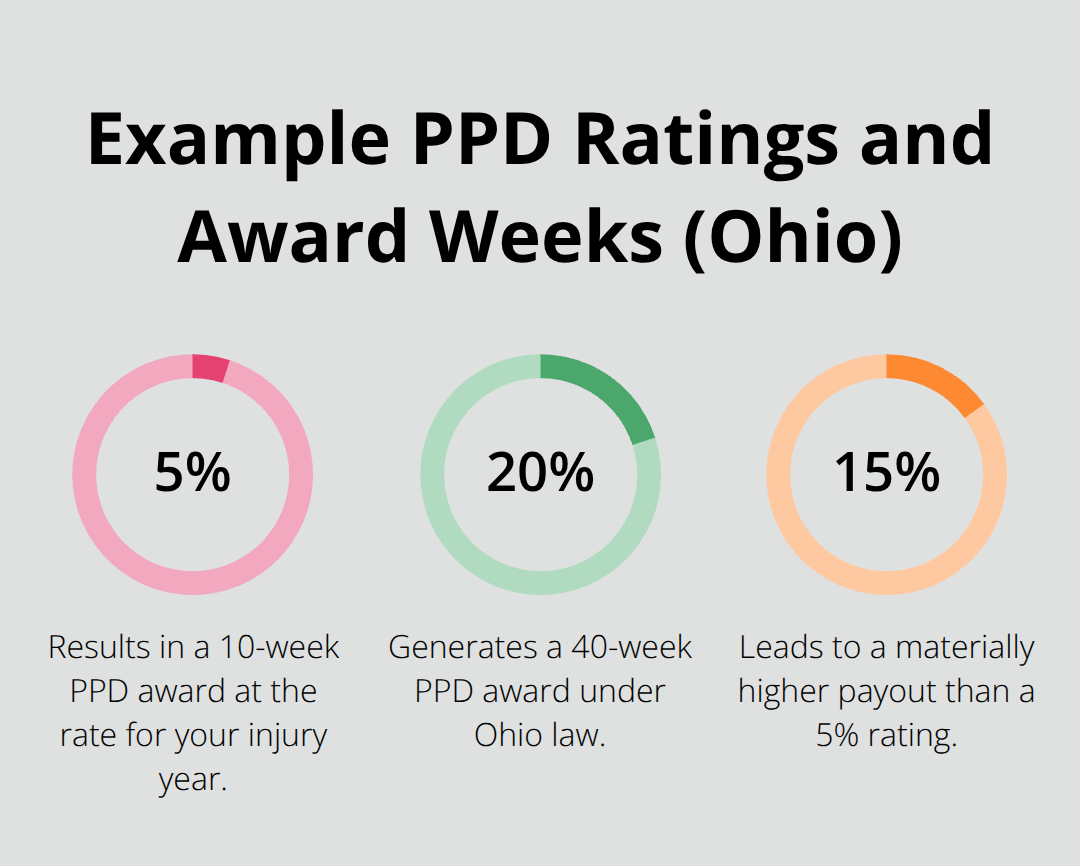
The Ohio Revised Code Section 4123.57 ties your benefit calculation to this impairment percentage, meaning a five percent rating yields a fundamentally different outcome than a 15 percent rating.
Why Low Ratings Are Common
BWC doctors assign relatively low impairment percentages in many cases, and zero percent ratings occur frequently. This reality matters because you have only 20 days to object and request a second opinion or challenge the assessment through the Industrial Commission of Ohio. Missing this deadline eliminates your opportunity to dispute the rating, so prompt action is essential.
How the BWC Calculates Your Benefit Amount
Your benefit amount equals two weeks of compensation for every percentage point of impairment at the PPD rate established for your injury year. A five percent rating results in a 10-week award, while a 20 percent rating generates a 40-week award. The maximum weekly benefit and annual limits depend on your year of injury, so the statutory framework varies based on when you were hurt.
Factors That Influence Your Impairment Rating
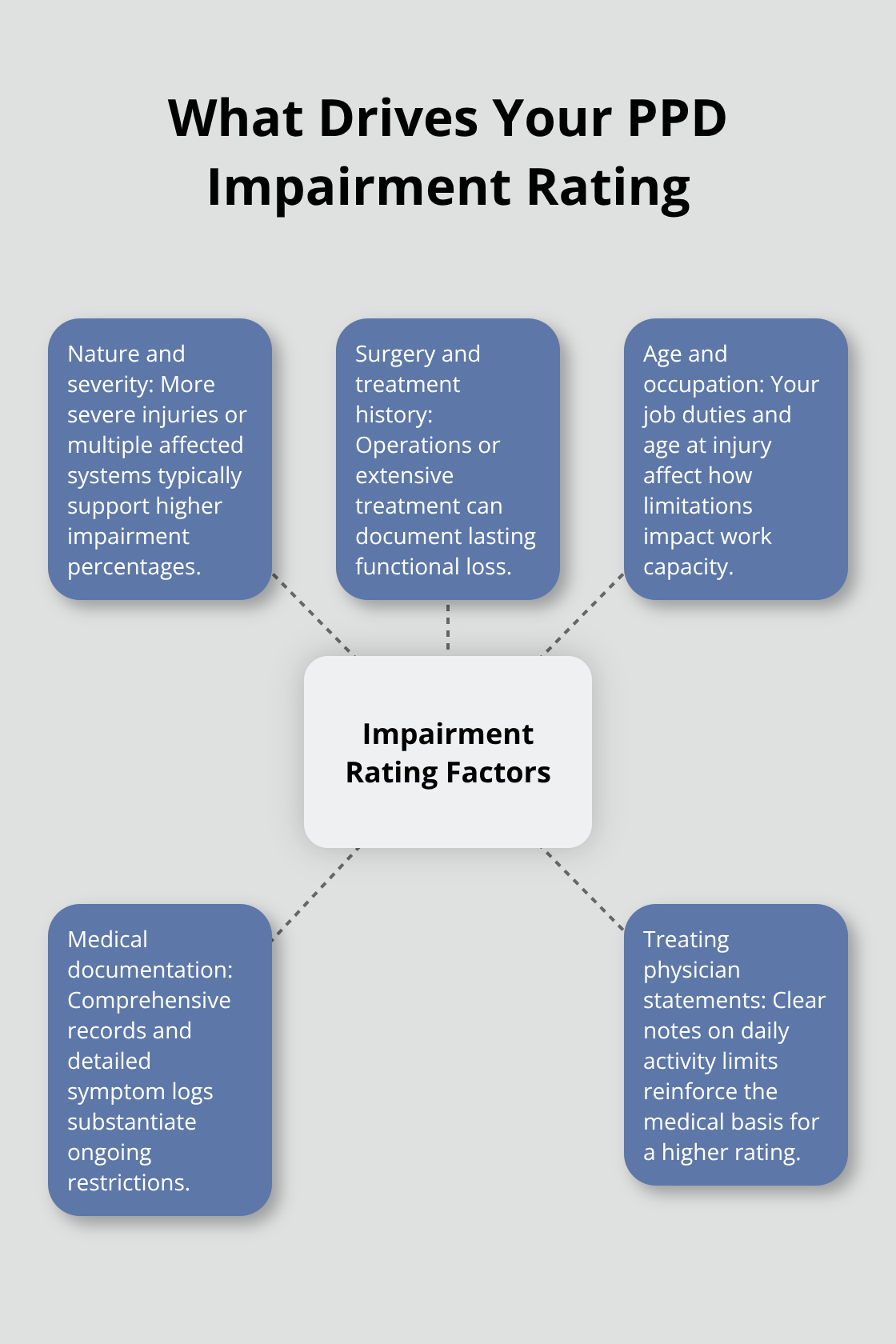
Several factors influence what rating you ultimately receive: the nature and severity of your injury, whether you underwent surgery or extensive treatment, your age and occupation at the time of injury, and the strength of your medical documentation showing ongoing functional limitations. Comprehensive medical records, detailed symptom documentation, and statements from your treating physicians about how your injury affects your daily activities strengthen your case significantly. These elements provide the medical evidence that supports a higher impairment percentage.
Challenging Your Rating Through the Appeals Process
If you object to the tentative order issued by the BWC, the Industrial Commission of Ohio reviews all medical evidence and issues a final decision. This appeals process is technically complex. An attorney experienced in Ohio workers’ compensation law can help you challenge low ratings, pursue higher impairment percentages, or pursue loss-of-use awards for functional loss of a body part (even when no amputation occurred). Understanding what happens after you receive your rating determines whether you accept the initial assessment or take action to increase your benefits.
What Happens After Your PPD Rating Arrives
Once the Industrial Commission of Ohio issues a final PPD determination, your claim remains open and you continue to receive medical treatment under it. This is critical: a PPD award is not a settlement that closes your case. You keep access to ongoing medical care for your work injury, which means future surgeries, physical therapy, or specialist visits related to your injury remain covered by the BWC. Many injured workers misunderstand this point and believe a PPD payment ends their claim entirely, when in reality it simply compensates you for permanent impairment while preserving your right to future medical benefits.
Understanding Settlement Offers and Medical Coverage
Self-insured employers sometimes offer lump-sum settlements that appear attractive, but accepting one without legal review can eliminate your right to medical treatment down the road. Once you sign a settlement agreement, you may lose access to medical coverage for the injury. An attorney should review any settlement offer before you agree to it, because the long-term consequences of accepting inadequate terms can affect your health care for years.
Vocational Rehabilitation Services Available to You
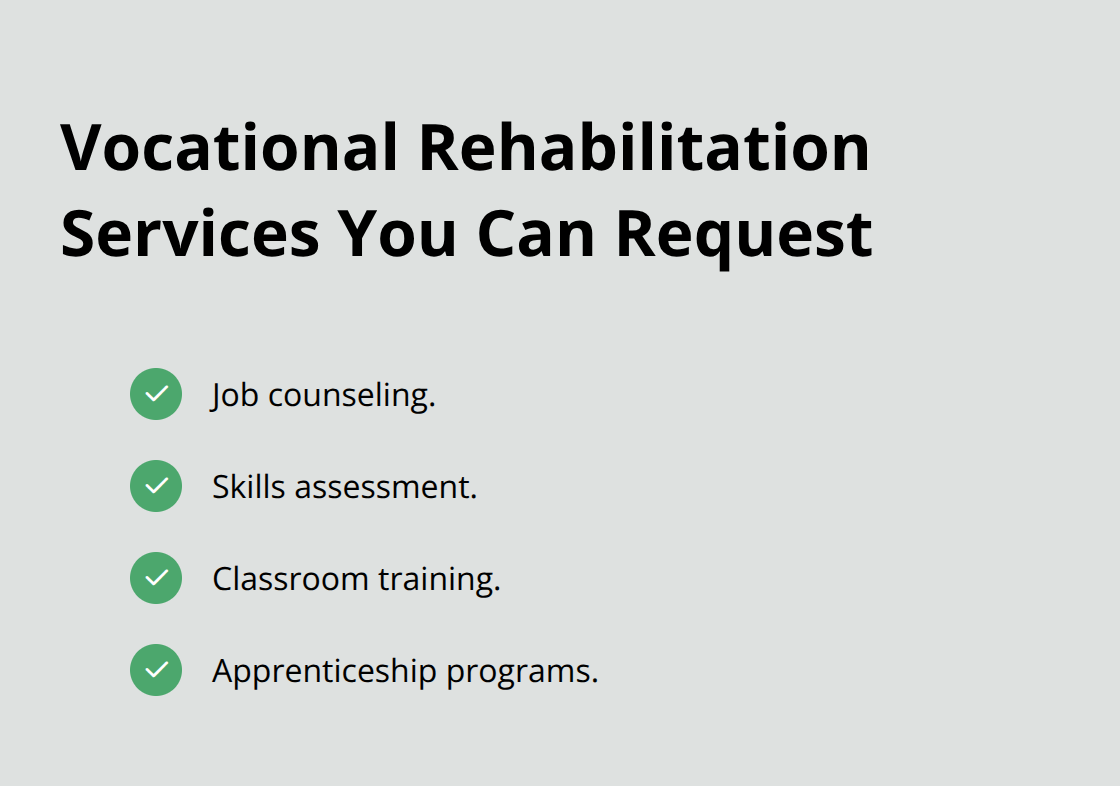
The Ohio Bureau of Workers’ Compensation offers vocational rehabilitation and retraining services to injured workers whose medical restrictions prevent them from returning to their pre-injury job. These services include job counseling, skills assessment, classroom training, or apprenticeship programs designed to help you transition to work within your physical limitations. However, the BWC does not automatically tell you about these programs, and many injured workers never learn they qualify.
If your injury prevents you from performing your original job duties, ask your BWC case manager or claims adjuster directly about vocational rehabilitation options. This benefit exists separately from your PPD award and can significantly improve your long-term earning capacity.
Why Legal Representation Protects Your Interests
Consulting an attorney experienced in Ohio workers’ compensation law before accepting any PPD determination or settlement offer protects your interests substantially. An experienced attorney can challenge low impairment ratings assigned by BWC doctors, request independent medical examinations from physicians of your choosing, and pursue loss-of-use awards for functional losses that the initial evaluation missed. The appeals process has strict deadlines and technical requirements, and missing them costs you the opportunity to increase your benefits. An attorney handles these deadlines, gathers medical evidence to support a higher rating, and negotiates with the BWC or your employer if settlement discussions occur. Given that your impairment percentage directly determines your total benefit amount, professional guidance during this phase often results in substantially higher compensation than accepting the initial tentative order.
Final Thoughts
Permanent partial disability in Ohio recognizes that work injuries create lasting effects requiring compensation, even when you return to work. Your impairment percentage determines your total benefit amount, making the medical evaluation and appeals process critical to your outcome. You have 20 days to object to a tentative order, and missing this deadline eliminates your opportunity to challenge a low rating.
Gathering comprehensive medical documentation showing how your injury affects your daily function strengthens your case significantly. Settlement offers from self-insured employers require careful review before acceptance, since signing an agreement may eliminate your access to ongoing medical treatment for your work injury. Once you lose that coverage, your health care options become limited for years to come.
At Robin J Peterson Company, LLC, we represent injured workers throughout Ohio who face complex workers’ compensation claims. If you have questions about your permanent partial disability determination or need guidance on whether to accept a settlement offer, contact our law firm for a review of your case.