
Workplace injuries happen fast, but understanding your Ohio workplace injury rights shouldn’t be complicated. At Robin J Peterson Company, LLC, we’ve helped countless injured workers navigate the system and get the benefits they deserve.
This guide walks you through what you’re entitled to, how to file a claim, and what to do when obstacles appear.
What Ohio Workers’ Compensation Actually Covers
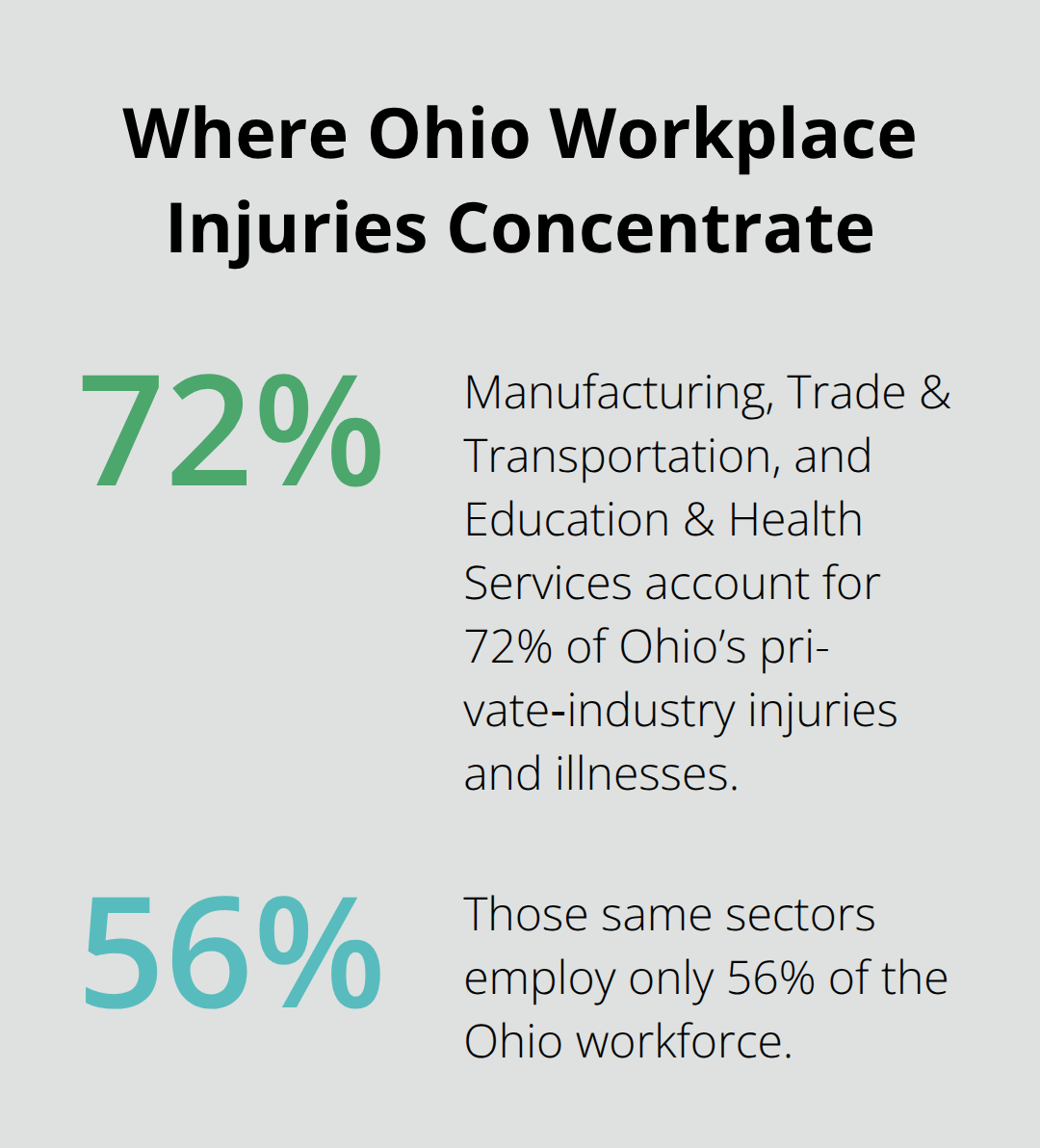
Ohio’s workers’ compensation system is a no-fault program, meaning you can receive benefits regardless of who caused your injury-unless your employer proves you acted with gross negligence or were intoxicated at the time. This distinction matters because it removes the burden of proving fault from your shoulders. According to the U.S. Bureau of Labor Statistics, Ohio experienced 77,100 private-industry nonfatal injuries and illnesses in 2024, with 40,600 cases involving days away from work or job restrictions. Manufacturing, Trade & Transportation, and Education & Health Services accounted for 72 percent of these injuries, even though these sectors employ only 56 percent of the workforce. If you work in Education & Health Services, your industry had the highest injury rate at 2.8 injuries per 100 full-time workers in 2024.
What the System Covers and What It Excludes
The system covers injuries that arise out of and occur during employment, including machinery accidents, falls, chemical exposures, and certain job-caused medical conditions like respiratory illnesses. However, exclusions apply: injuries from your gross negligence, injuries while intoxicated, or pre-existing conditions that your job merely worsened without creating the condition itself will not qualify for benefits.
Three Primary Benefit Categories
The Ohio Bureau of Workers’ Compensation administers three main benefit types. Medical benefits cover all treatment related to your work injury, including doctor visits, surgery, therapy, and prescriptions.
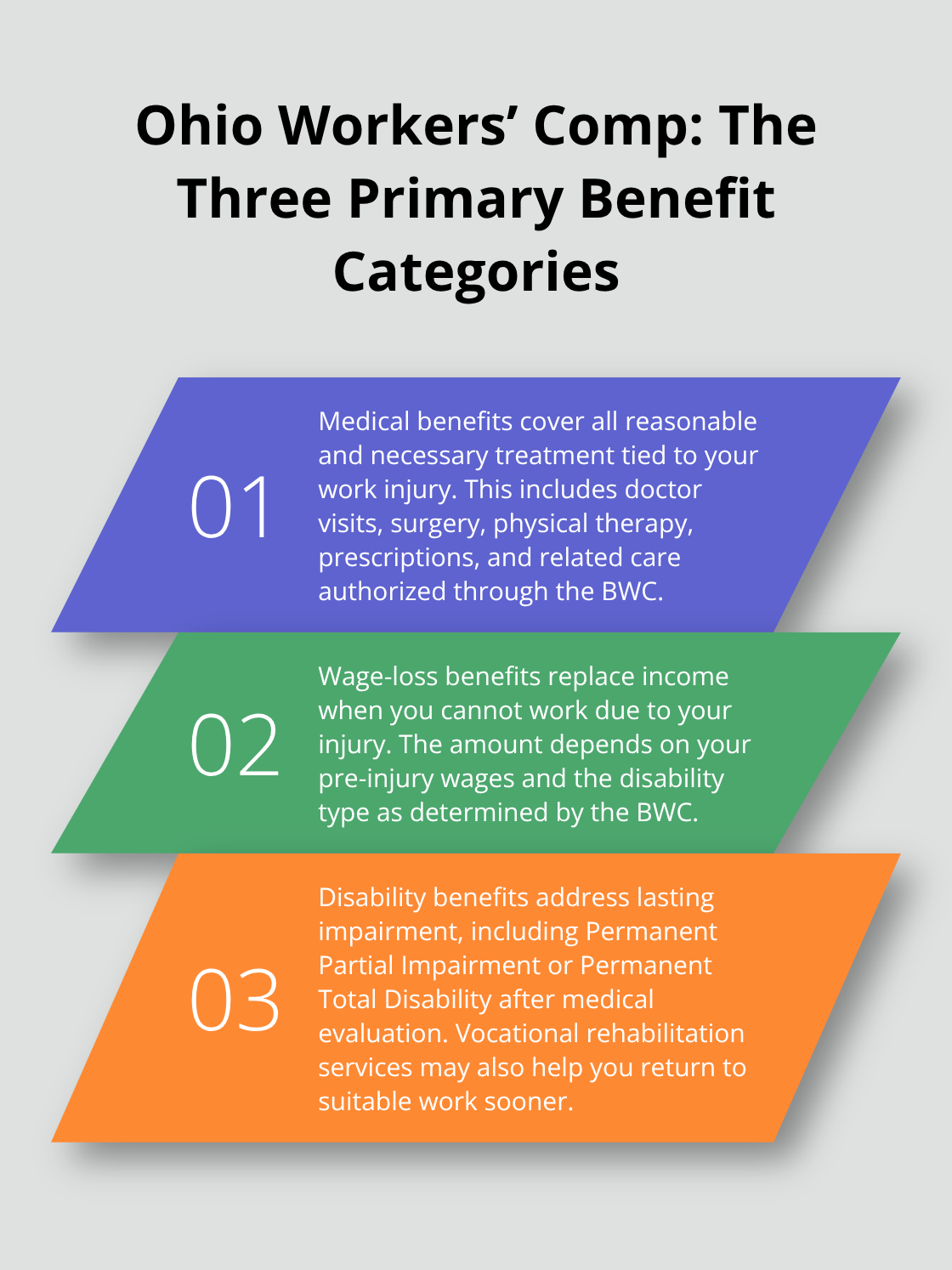
Wage-loss benefits replace lost income if you cannot work due to your injury-the amount depends on your wages and disability type as determined by the BWC. If your injury causes lasting impairment, you may qualify for Permanent Partial Impairment benefits or Permanent Total Disability benefits after medical evaluation. Vocational rehabilitation services may also be offered to help you return to suitable employment and minimize time away from work.
Selecting Your Physician and Ensuring Coverage Recognition
Your first medical visit after a work injury can be with any doctor of your choice, but all subsequent visits must be with a Bureau of Workers’ Compensation-certified physician. This requirement exists because BWC certification ensures ongoing treatment is recognized within the system and prevents disputes over whether care qualifies for coverage.
How the BWC Reviews and Decides Your Claim
The Ohio Bureau of Workers’ Compensation operates as an independent administrative agency separate from your employer or insurance carrier. You file your claim directly with the BWC at 30 W. Spring St., Columbus, or online, submitting medical records, your incident report, witness statements, and photos. The agency reviews your submission and issues an initial determination, which can happen quickly or may require you to provide additional information. If the BWC denies your claim, the denial letter states the exact reason-common reasons include that the injury didn’t arise out of employment, insufficient medical evidence linking the injury to work, or late reporting. You have 14 calendar days from the denial date to request a hearing before the Industrial Commission of Ohio (an independent review body separate from the BWC). To strengthen an appeal, gather new medical evidence directly connecting the injury to your job duties, obtain coworker statements, and collect maintenance or safety records showing hazards at the time of injury. The Commission reviews materials in a formal hearing, and representation by an attorney is allowed; many workers use attorneys on a contingency basis to improve outcomes. When obstacles emerge during this process, knowing how to respond separates workers who receive their full benefits from those who accept denials without challenge.
Filing Your Claim the Right Way
Report Your Injury Immediately to Your Employer
Report your injury to your employer within one day of it happening. This deadline is not a suggestion-delays create disputes that slow your benefits and hand the BWC ammunition to question the legitimacy of your claim. When you report, be specific about where the injury occurred, how it happened, and what symptoms you’re experiencing. Vague reports like “I hurt my back” get scrutinized; detailed accounts like “I felt sharp pain in my lower left back after lifting a 50-pound box without assistance” create a clear record. Your employer must document this report in writing. If your employer discourages you from reporting or claims they didn’t receive your report, that behavior is a red flag and illegal-document everything in writing yourself through email or a signed statement.
Submit Complete Documentation to the BWC
Once you’ve reported to your employer, file your claim directly with the Ohio Bureau of Workers’ Compensation at 30 W. Spring St., Columbus, or through their online portal. Include your medical records from your initial visit, a detailed written account of the incident, witness statements from coworkers who saw what happened, and photos of the location where the injury occurred if possible. Incomplete submissions slow decisions significantly; workers who submit everything at once move through the review phase faster than those who trickle in documents over weeks.
Track Every Detail in Your Injury Log
Maintain a detailed injury log from day one, recording every medical visit, test result, prescription, and communication with the BWC or your employer. This log catches discrepancies and prevents disputes over what treatments occurred and when. After you submit your claim, the BWC enters a review phase and may request additional information before issuing an initial determination. Respond to these requests immediately-the agency has no obligation to wait indefinitely.
Understand Your Initial Determination and Appeal Rights
When the BWC issues its initial determination, read it carefully. If approved, you’ll receive information about your benefits and ongoing coverage. If denied, the letter must state the exact reason. Common denials cite insufficient medical evidence linking your injury to work duties or late reporting. You have exactly 14 calendar days from the denial date to request a hearing before the Industrial Commission of Ohio-missing this deadline eliminates your right to appeal.
Build a Strong Appeal with Evidence
To strengthen an appeal, gather new medical evidence showing how your job duties directly caused the injury, collect written statements from coworkers confirming the accident, and obtain maintenance or safety records proving hazards existed at your workplace (these documents often reveal patterns of unsafe conditions). Complex cases or denials warrant consultation with a workers’ compensation attorney who can assess whether your evidence is strong enough and help you prepare for a formal hearing. When obstacles emerge during the appeal process, your next step depends on the strength of your evidence and the complexity of your case.
When the BWC Says No
Denial letters arrive with language that feels final, but they rarely are. The BWC denies claims regularly, and many of those denials get overturned on appeal. You have 14 calendar days from the denial date to request a hearing before the Industrial Commission of Ohio, and this window is absolute-missing it forfeits your right to challenge the decision. The most common denial reasons fall into three categories: the injury didn’t arise out of employment, medical evidence doesn’t connect your injury to work duties, or you reported the injury too late. Each requires a different response strategy.
Responding to Work-Relatedness Denials
If the denial claims your injury wasn’t work-related, collect detailed statements from coworkers describing exactly what they witnessed. Obtain maintenance records showing equipment failures or unsafe conditions at the time of your injury. Secure medical records documenting when your symptoms started relative to the incident date. These materials establish a timeline that connects your work duties directly to the injury.
Addressing Insufficient Medical Evidence
When insufficient medical evidence is cited, request that your treating physician write a detailed letter explaining how your job duties caused the injury. Generic statements won’t convince the Commission, but specific connections between your work tasks and your condition will. Your physician should reference the exact duties you performed and explain the medical mechanism linking those duties to your injury.
Building Your Appeal Evidence
The Industrial Commission reviews written materials and testimony during formal hearings, and what you present determines the outcome. Coworker statements carry significant weight because they’re independent witnesses with no financial stake in the decision. Photos of the accident scene, equipment, or hazardous conditions are powerful evidence-if the location still exists, take updated photos showing the same conditions that caused your injury.
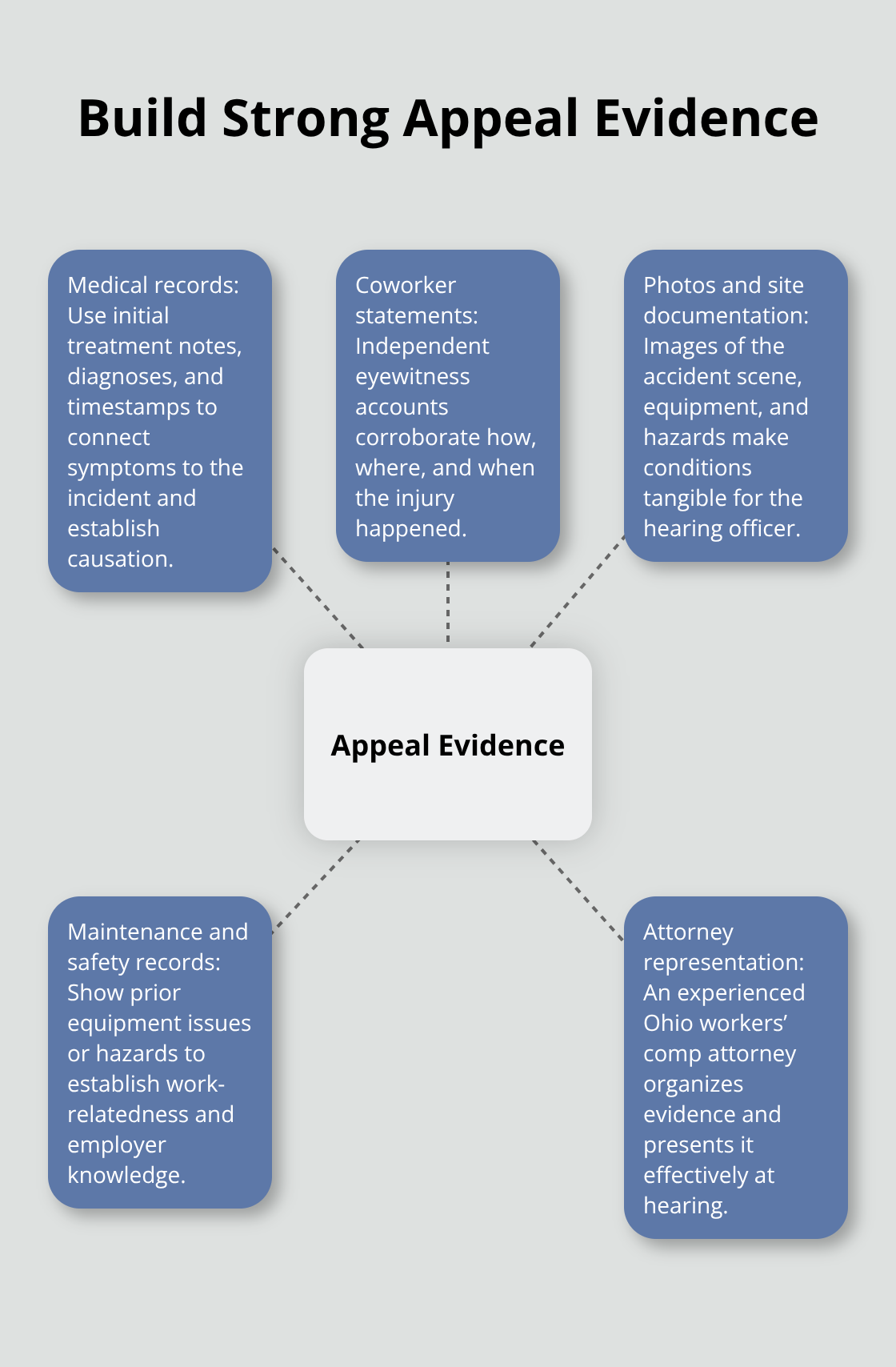
Medical records from your initial treatment are critical; they often contain timestamps and descriptions that prove when the injury occurred and how it happened. If your employer or the insurance carrier disputes your version of events, written communications from you (emails, dated letters) created immediately after the injury establish your account early and are harder to contradict later. Complex cases-those involving serious injuries, disputes over causation, or high-value claims-benefit from representation by an Ohio workers’ compensation attorney who understands how the Commission evaluates evidence and can cross-examine witnesses effectively.
Handling Disputes Over Medical Treatment and Return-to-Work
Conflicts with employers or insurance carriers often involve disputes over medical treatment authorization, return-to-work restrictions, or benefit calculations. If the insurance carrier refuses to authorize treatment your doctor recommends, request that your physician submit a detailed medical justification explaining why the treatment is necessary and how it relates to your work injury. Document all communications with the carrier in writing-phone calls followed by confirming emails create a verifiable record. If your employer offers modified or light-duty work, your physician must determine whether you can safely perform those duties given your medical restrictions. Never accept modified work that contradicts your doctor’s restrictions; doing so can complicate your claim and limit future benefits. When these disputes can’t be resolved informally, the BWC has mechanisms to intervene, and an attorney can help you navigate those processes effectively.
Final Thoughts
Asserting your Ohio workplace injury rights requires action, not patience. The system provides real benefits-medical coverage, wage replacement, and disability support-but only if you claim them properly and challenge denials when they arrive. Report your injury within one day, submit complete documentation to the BWC, and maintain detailed records of every medical visit and communication to prevent delays and disputes that weaken your position.
When the BWC denies your claim, that denial is not final. You have 14 calendar days to request a hearing before the Industrial Commission of Ohio, and many denials get overturned when you present strong evidence. Gather coworker statements, medical records, and photos of the accident scene, then have your physician explain the connection between your job duties and your injury in writing.
Complex injuries, employer disputes, or high-stakes claims demand professional guidance from someone who understands how the Industrial Commission evaluates evidence and knows which documents carry the most weight. Contact Robin J Peterson Company, LLC to discuss your case with an Ohio workers’ compensation attorney who fights to secure the benefits you deserve from the BWC and challenges denials that should never have been issued.