
Filing a BWC claim in Ohio can feel overwhelming, especially when you’re dealing with a workplace injury. The process involves specific steps, deadlines, and documentation requirements that many people get wrong.
At Robin J Peterson Company, LLC, we’ve helped countless workers navigate this system successfully. This guide walks you through each stage so you know exactly what to do.
Understanding Ohio’s BWC Claim Process
How the No-Fault System Protects You
The Ohio Bureau of Workers’ Compensation operates as a no-fault insurance system, which means your employer doesn’t need to be at fault for you to receive benefits. This differs fundamentally from a traditional lawsuit. If you suffer an injury or occupational illness while performing your job duties, you qualify for coverage. The BWC administers this program statewide and acts as both the claims processor and the entity that determines whether your claim qualifies for benefits.
Who Handles Your Claim
When you file, your claim goes to a managed care organization selected by your employer, which coordinates your medical care and communicates with the BWC. The BWC then has 28 days to respond to your initial claim submission, though this timeline often stretches longer if documentation is incomplete. Understanding this structure matters because it tells you who to contact at each stage and why timing is everything.
What Injuries and Illnesses the BWC Covers
The system covers traumatic injuries like fractures and lacerations, but also occupational diseases such as certain cancers linked to asbestos exposure, lead poisoning, mercury poisoning, and arsenic exposure according to Ohio’s occupational disease schedule. When your claim receives approval, the BWC covers your medical bills and lost wages.
Why Documentation Failures Derail Claims
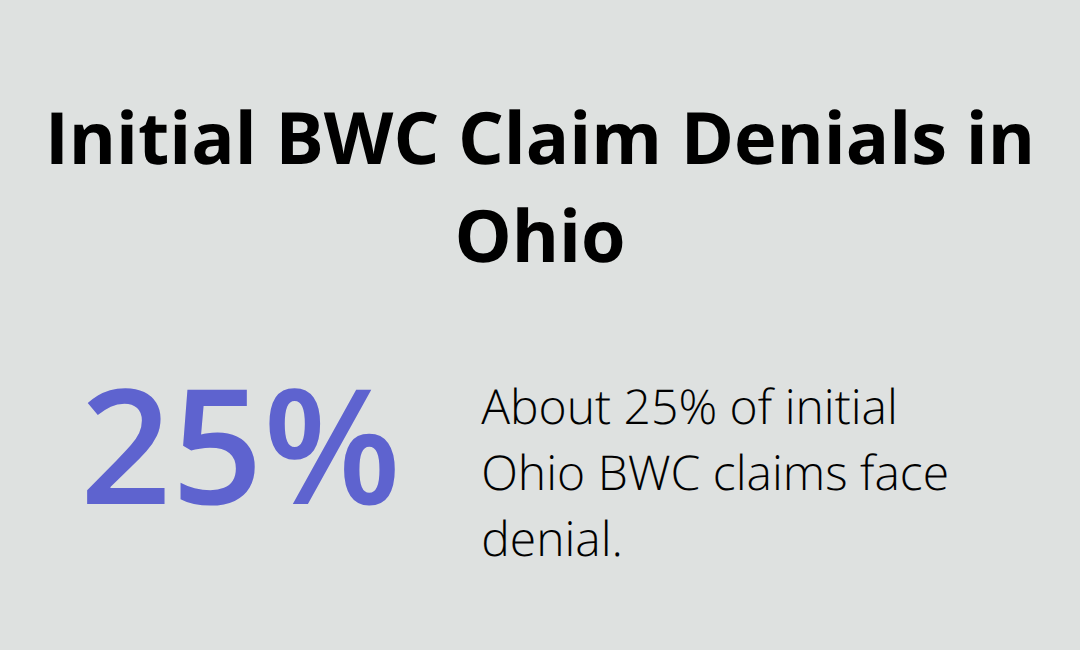
About 25 percent of initial claims face denial, and timing problems combined with documentation gaps represent the most common denial reasons. This statistic alone signals that filing correctly the first time saves months of frustration. Your injury must be work-related and documented as such in your medical records.
If your medical provider doesn’t explicitly state the work connection or if discrepancies exist between your accident report and your medical records, the BWC will likely reject your claim.
The Tight Filing Window and Appeal Deadlines
You must report your injury to your employer immediately and file your First Report of Injury within a specific timeframe, or you lose the ability to challenge a denial later. The process doesn’t reward second chances-workers who miss the 14-day appeal deadline lose their rights entirely. Precision matters more than hoping everything works out. Understanding these rules sets the foundation for the specific steps you need to take next.
Steps to File Your BWC Claim Successfully
Report Your Injury in Writing Immediately
The moment you suffer a workplace injury, the clock starts ticking. Most workers don’t realize that their first actions determine whether the BWC approves or denies their claim. Your employer must receive written notice of your injury immediately-not verbally, not casually mentioned to a supervisor. Send an email documenting the injury, the date, the time, and how it happened. Keep a copy for yourself. This creates the verifiable paper trail that the Ohio Bureau of Workers’ Compensation requires. If your employer doesn’t file the First Report of Injury within the required timeframe, you can submit it yourself through the BWC online portal, by mail, or by phone.
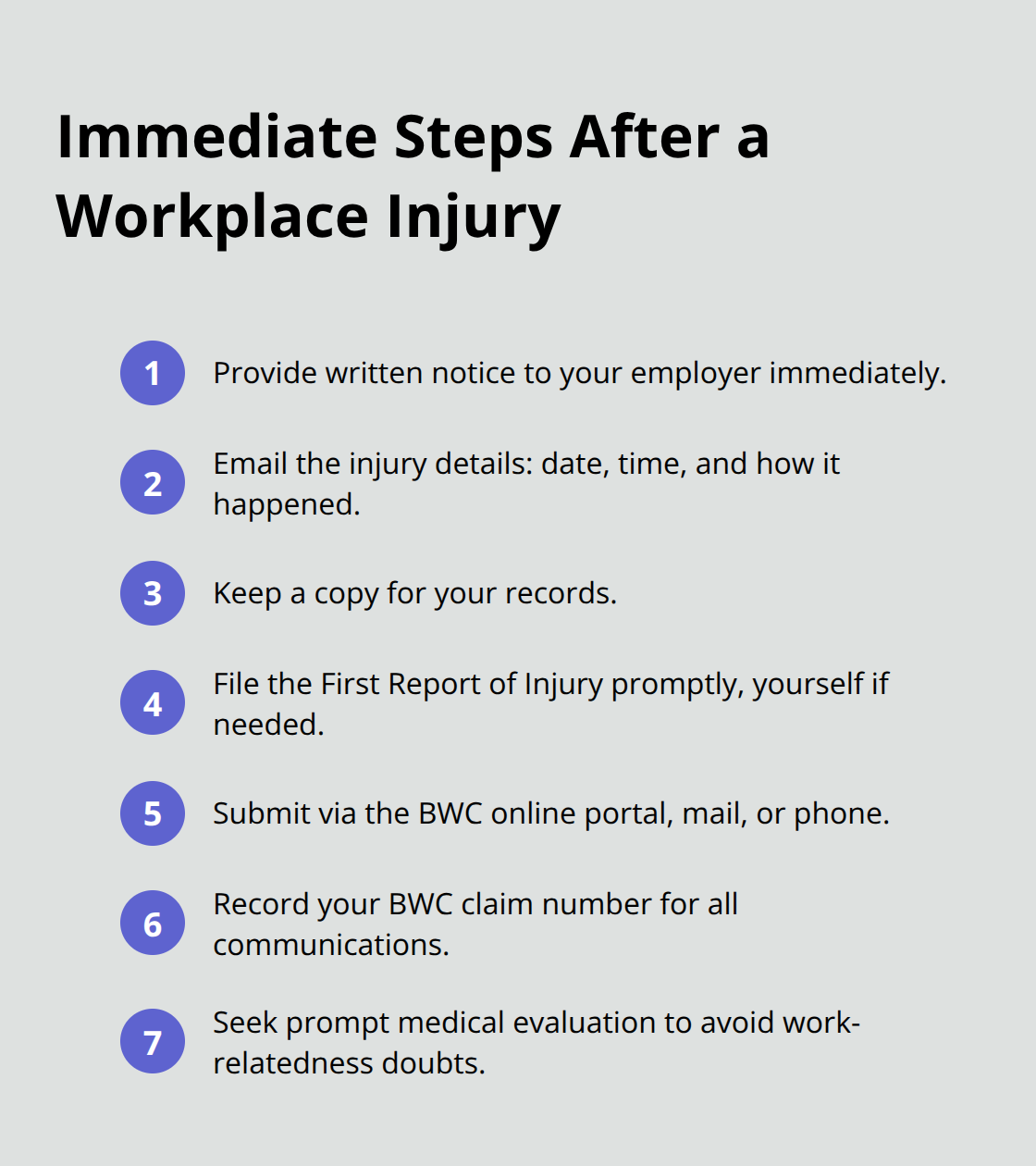
Write down your BWC claim number the moment you receive it and use that number for all future communications. Speed matters here because delays between your injury and your medical evaluation can trigger suspicion about whether the injury actually occurred at work.
Schedule Medical Care With a BWC-Certified Provider
Within days of reporting your injury, schedule an appointment with a medical provider on the BWC’s certified list. Non-certified providers create problems because the BWC rejects their bills, leaving you responsible for the charges. Your medical records form the backbone of your claim, so the provider must explicitly document that your injury is work-related and note any work restrictions you face. Discrepancies between your accident report and what your medical records say represent common denial triggers, according to the Ohio Bureau of Workers’ Compensation. If your initial provider fails to mention work-relatedness, obtain updated medical records with a physician’s statement that directly links your injury to your job duties. This single document prevents denials based on insufficient medical evidence.
Compile and Organize Your Documentation
Gather your medical records, test results, treatment notes, wage statements, and any correspondence with your employer or the BWC. Arrange these documents chronologically so the BWC can follow a clear narrative from injury to present. Submit your complete claim package through the BWC online portal, which is faster and leaves a digital record. If you mail documents, use certified mail so you have proof of delivery. The BWC typically acknowledges receipt within about 10 business days. After submission, monitor your claim status through the BWC portal or contact center to confirm what documents are still needed and where your claim stands. Don’t assume silence means approval-follow up actively because missing information requests can result in denial without further notice.
Track Your Claim and Prepare for What Comes Next
The BWC’s 28-day response window provides your first checkpoint, though incomplete documentation often extends this timeline significantly. Stay engaged with the process by checking your claim status regularly and responding promptly to any information requests. Delays in your responses can trigger automatic denials, so treat each request as time-sensitive. If the BWC approves your claim, medical bills and wage replacement begin immediately. If the BWC denies your claim, you enter a different phase entirely-one that requires understanding your appeal rights and the evidence that carries the most weight in challenging that decision.
Common Reasons Claims Get Denied
The Ohio Bureau of Workers’ Compensation rejects roughly 25 percent of initial claims, and most denials stem from preventable mistakes rather than legitimate ineligibility. Understanding the specific reasons the BWC rejects claims helps you avoid these pitfalls.
Timing Failures That Cost You Everything
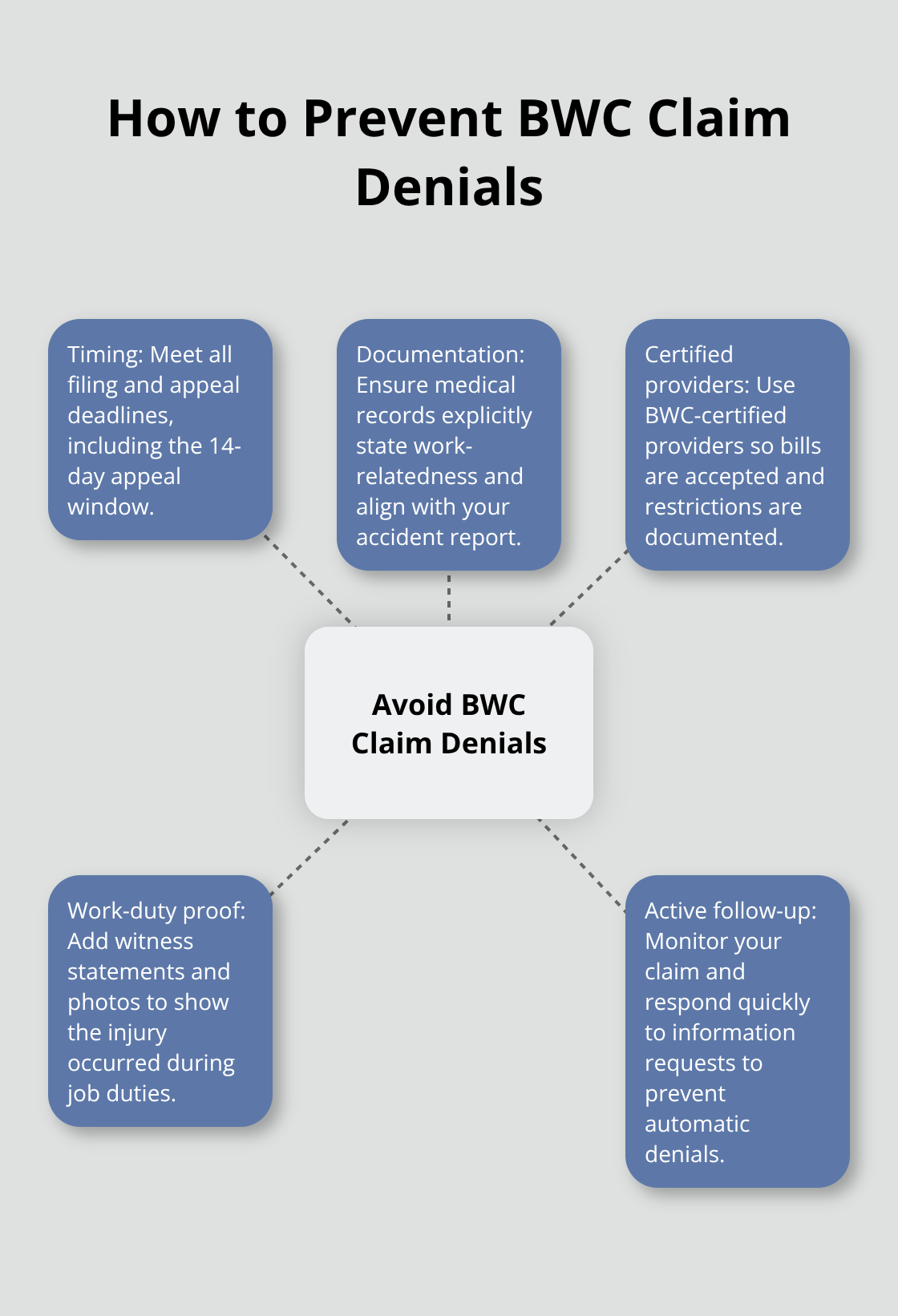
Workers who miss the 14-day appeal deadline after a denial lose all rights to challenge that decision, period. The Industrial Commission of Ohio doesn’t grant extensions or second chances on this deadline. Your employer must receive written injury notice immediately, and your First Report of Injury must reach the BWC within the required window. Delays between your injury and when you file create suspicion about work-relatedness that becomes nearly impossible to overcome later.
Medical Documentation Problems
If your provider doesn’t explicitly state that your injury is work-related in the medical records, the BWC treats the claim as unproven. Discrepancies between your accident report and what your medical records say rank among the most common denial triggers according to the Ohio Bureau of Workers’ Compensation. Non-certified providers create additional problems because the BWC simply rejects their bills, leaving you with the financial burden. You must use only BWC-certified medical providers and require them to document work restrictions and the direct connection between your job duties and your injury.
Workplace Injury Classification Disputes
The BWC questions whether you were actually performing job duties when the injury occurred, or whether the injury truly resulted from work rather than a pre-existing condition. Witness statements from coworkers who observed the incident carry substantial weight in resolving these disputes. Photographs of the work area or equipment involved in the injury provide visual context that strengthens your narrative considerably.
How to Address Specific Denial Reasons
If the BWC denies your claim citing insufficient medical evidence, obtain updated medical records with a physician’s statement that explicitly addresses the denial reason and links your injury directly to your work duties. If the denial questions whether you were performing job duties, gather witness testimony documenting exactly what happened. The Industrial Commission of Ohio evaluates appeals based heavily on medical evidence about work-relatedness, so updated records and a detailed physician statement often determine the outcome. Organized documentation arranged chronologically tells a coherent story that the Industrial Commission can follow. The difference between denial and approval frequently comes down to whether you present evidence that directly addresses the specific reason the BWC cited for rejection.
Final Thoughts
Filing a BWC claim in Ohio demands precision at every stage, and the stakes for getting it wrong are substantial. The steps outlined in this guide address the exact mistakes that cause denials: missed deadlines, incomplete medical documentation, and failure to establish work-relatedness clearly. Your injury report must be written and immediate, your medical provider must be BWC-certified and explicit about the work connection, and your documentation must be organized and submitted promptly-these fundamentals separate approved claims from rejected ones.
The 14-day appeal deadline after a denial is absolute, and the Industrial Commission of Ohio grants no extensions. If you receive a denial, your response must be swift and evidence-based, with updated medical records and a physician statement addressing the specific reason for rejection. Witness testimony and photographs of the work area strengthen your narrative considerably, and the difference between approval and continued denial often hinges on whether you present evidence that directly responds to the BWC’s initial rejection.
Many workers navigate filing a BWC claim in Ohio successfully on their own, but the rules are unforgiving and the process leaves little room for error. If your claim faces denial, if you’re uncertain about deadlines, or if you need help gathering evidence for an appeal, contact Robin J Peterson Company, LLC to discuss your situation with an attorney who specializes in workers’ compensation law.