
Construction sites in Ohio present real hazards, and knowing your construction injury Ohio rights protects you when accidents happen. We at Robin J Peterson Company, LLC understand that injured workers need clear guidance on what protections exist under state law.
This guide walks you through Ohio’s workers’ compensation system, covers common job site injuries, and explains how to file claims when you’re hurt on the job.
What Ohio’s Workers’ Compensation System Actually Covers
Ohio operates a no-fault workers’ compensation system through the Ohio Bureau of Workers’ Compensation, which means you don’t need to prove your employer was negligent to receive benefits. If you’re injured on the job, the system covers medical treatment related to your injury and provides partial wage replacement while you recover. However, this system has a significant limitation: it does not compensate you for pain and suffering. That distinction changes how you approach your claim strategy. The no-fault nature sounds protective, but in reality it caps your recovery at medical expenses and a portion of lost wages, leaving substantial damages unaddressed.
The 200-week filing deadline shapes your entire case
You have 200 weeks from the date of injury to file a workers’ compensation claim in Ohio, according to Ohio Revised Code Section 4123.52. That sounds like plenty of time, but waiting creates real problems. The longer you delay, the harder it becomes to gather medical evidence, witness statements, and documentation of your work conditions. Medical providers may not retain detailed records beyond a certain period, and witnesses move on to other jobs. Filing as soon as possible after your injury receives medical documentation preserves the evidence that supports your case when complications arise. This isn’t about bureaucratic formality; it’s about protecting your ability to prove what happened.
Medical coverage and wage replacement fall short of actual losses
Ohio’s workers’ compensation pays for necessary medical treatment and replaces about two-thirds of your average weekly wage up to a state maximum. In 2024, the maximum weekly benefit was approximately $1,047 for temporary total disability. This creates an immediate financial problem for most injured workers. If you earned $1,500 per week before your injury, you lose roughly $500 weekly in income that the system doesn’t replace. Beyond lost wages, you receive nothing for permanent scarring, reduced earning capacity, emotional distress, or the years of chronic pain that may follow.
Third-party liability claims address what workers’ comp leaves behind
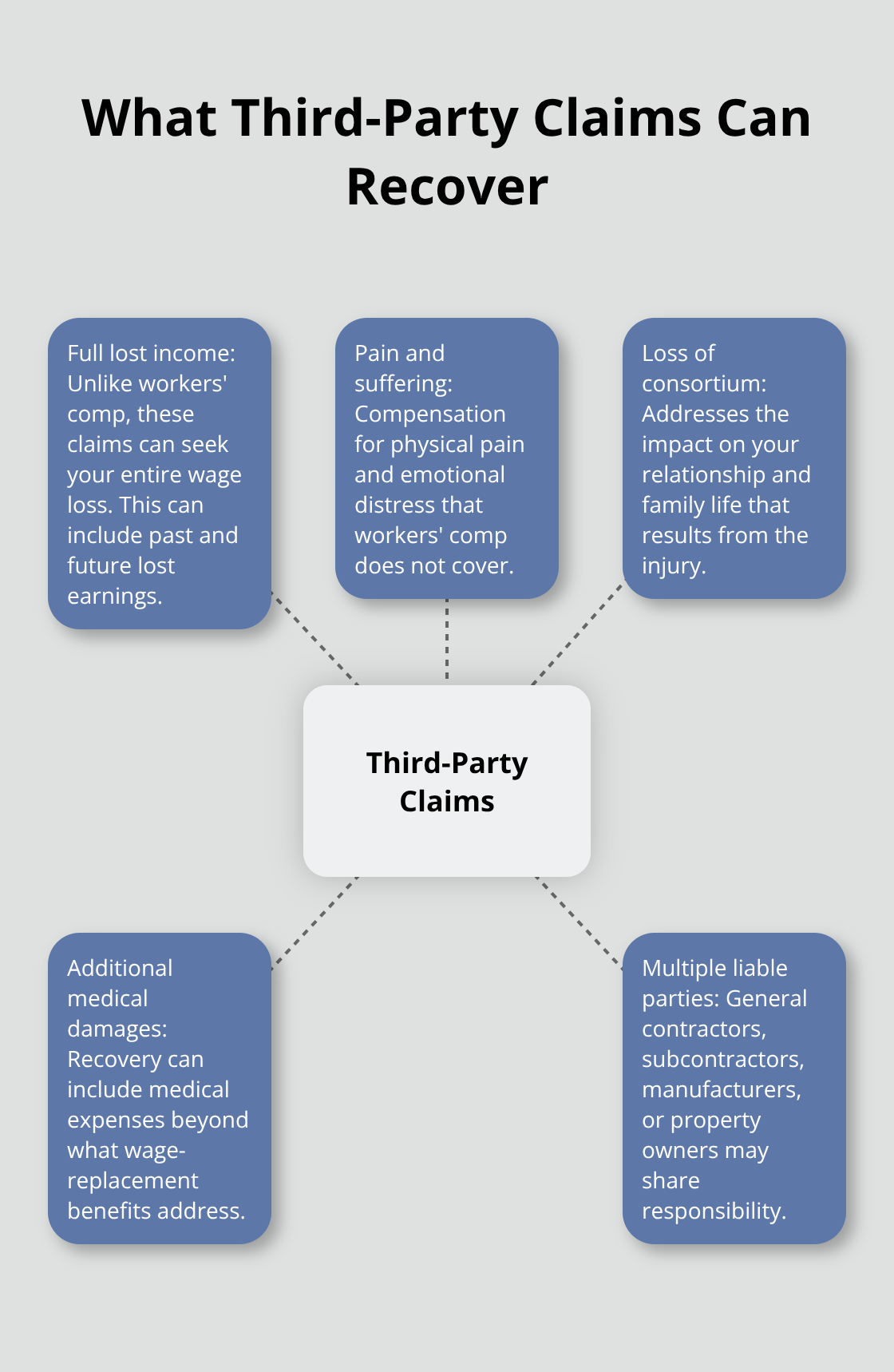
When your employer or a coworker caused your injury through negligence, or when a manufacturer sold defective equipment that harmed you, third-party liability claims become available. These claims operate separately from workers’ compensation and can recover damages that the no-fault system excludes: full lost income, medical expenses beyond wage replacement, pain and suffering, and loss of consortium. Construction sites often involve multiple parties (general contractors, subcontractors, equipment manufacturers, property owners), which means multiple potential sources of liability.
Understanding whether third-party claims apply to your situation requires careful analysis of how your injury occurred and who bears responsibility.
Common Construction Injuries and Your Legal Protections
Falls remain the deadliest construction hazard
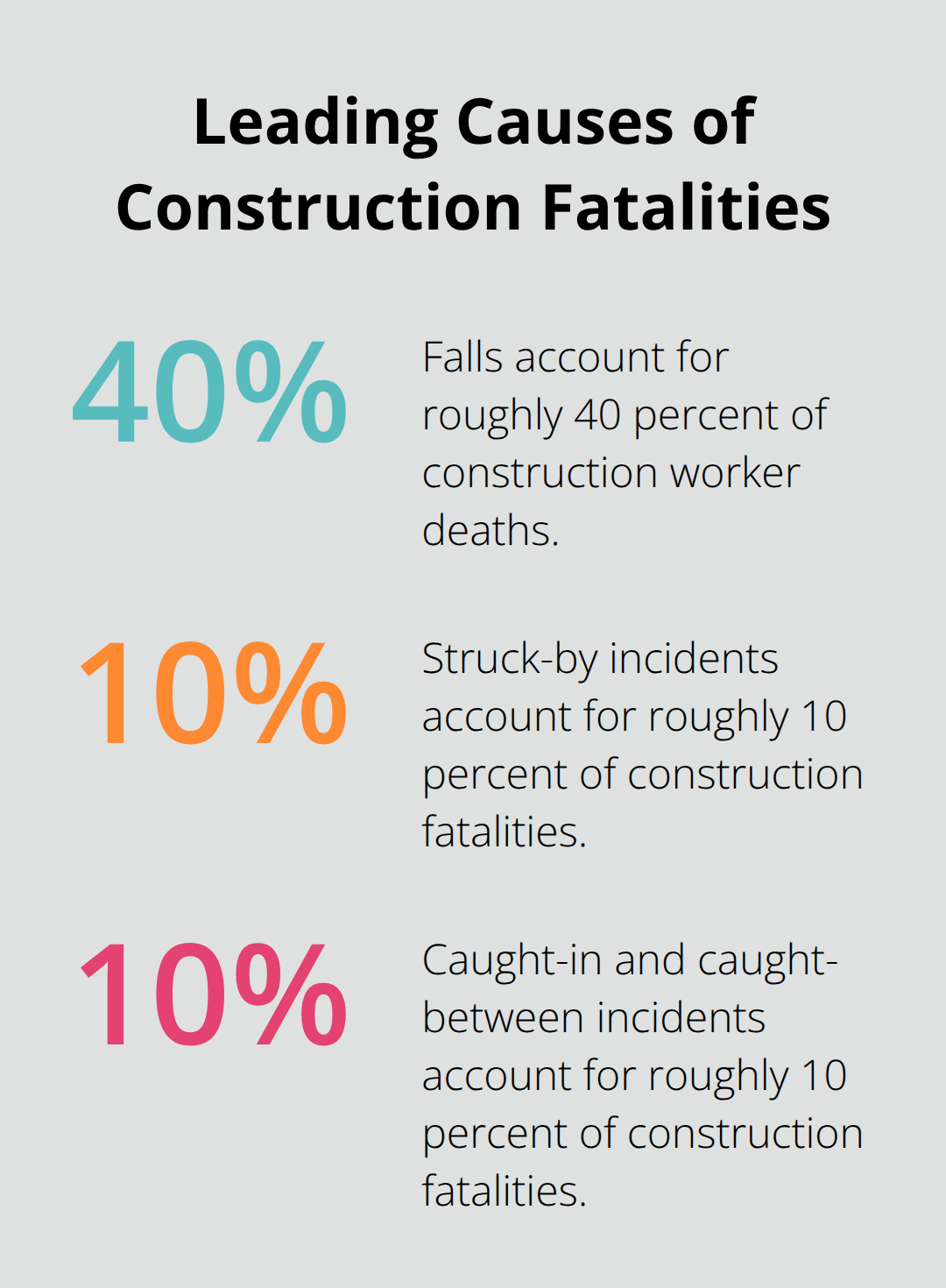
Falls account for roughly 40 percent of all construction worker deaths nationwide, making them the single deadliest hazard on job sites, according to OSHA data. In Ohio, falls from relatively low heights-even six feet or less-regularly cause traumatic brain injuries, spinal damage, and internal bleeding. Unstable scaffolding and improper ladder use create the conditions where these injuries happen. When your employer fails to install guardrails, provide proper fall arrest equipment, or train workers on safe ladder placement, that negligence becomes the foundation for a third-party liability claim beyond workers’ compensation.
Struck-by and electrocution incidents create separate liability paths
Struck-by incidents account for roughly 10 percent of construction fatalities. These occur when unsecured tools or materials fall from above, when swinging loads strike workers, or when equipment operates in zones where workers stand unprotected. Hard hats reduce head injury severity but cannot prevent the underlying negligence that caused the object to fall in the first place.
Electrocution causes over 5 percent of construction deaths, typically from contact with overhead power lines, damaged wiring, improper grounding, or energized equipment that lacks lockout and tagout controls. These three categories-falls, struck-by incidents, and electrocutions-form the core of construction injuries that generate both workers’ compensation claims and separate third-party liability cases.
Equipment defects and machinery failures expose manufacturers
Equipment and machinery accidents deserve specific attention because they often involve clear manufacturer defects or employer negligence in equipment maintenance. Caught-in and caught-between incidents account for roughly 10 percent of construction fatalities, typically from trench collapses, machinery entrapment, or equipment operated without proper guarding. When a manufacturer sells equipment with defective guards, or when your employer fails to maintain equipment or follow OSHA lockout and tagout standards, you have grounds for third-party claims that workers’ compensation cannot address.
Occupational exposures develop over time with multiple claim options
Injuries from unsafe working conditions extend beyond specific incidents-they include silica exposure, asbestos contact, confined space hazards, and noise exposure that causes hearing loss. These occupational exposures often develop over time rather than from a single accident, which complicates how you approach claims. Workers’ compensation covers the medical treatment and lost wages tied to these conditions, but third-party claims may exist if a subcontractor or equipment manufacturer created the hazardous condition.
Multiple parties on your job site may share liability
Construction injuries in Ohio almost always involve multiple potential claims. Your employer carries workers’ compensation insurance that pays medical costs and partial wages regardless of fault. Simultaneously, other parties on the job site (general contractors, subcontractors, equipment manufacturers, property owners) may bear liability for the conditions that caused your injury. Identifying which parties share responsibility requires careful examination of how your injury occurred and what safety standards were violated. This distinction between workers’ compensation coverage and third-party liability determines your overall recovery strategy and what damages you can actually obtain. Understanding these liability pathways shapes how you file claims and what compensation you ultimately recover.
Filing Your Claim and Handling Denials
Submit your application immediately after injury
File your workers’ compensation claim with the Ohio Bureau of Workers’ Compensation within 200 weeks of your injury, but don’t wait that long. The BWC requires Form OHIOBWC-1 (Application for Workers’ Compensation), which your employer must provide immediately after you report your injury. If your employer delays or refuses to provide this form, contact the BWC directly at 1-800-644-6292 or submit the application yourself through their online portal. Include your medical documentation, witness statements, and a detailed description of how your injury occurred.
Medical evidence matters enormously here because the BWC uses it to establish whether your injury is work-related. Gaps in your medical records or vague injury descriptions give the BWC reasons to deny your claim later. Submit your application as soon as you have initial medical treatment documented, then continue updating the BWC with new medical reports as your treatment progresses.
Prepare strong documentation for your claim
The strength of your claim depends on the evidence you present to the BWC. Gather employment contracts, safety records, and photographs of the job site conditions that caused your injury. OSHA violation reports (if they exist) strengthen your case significantly.
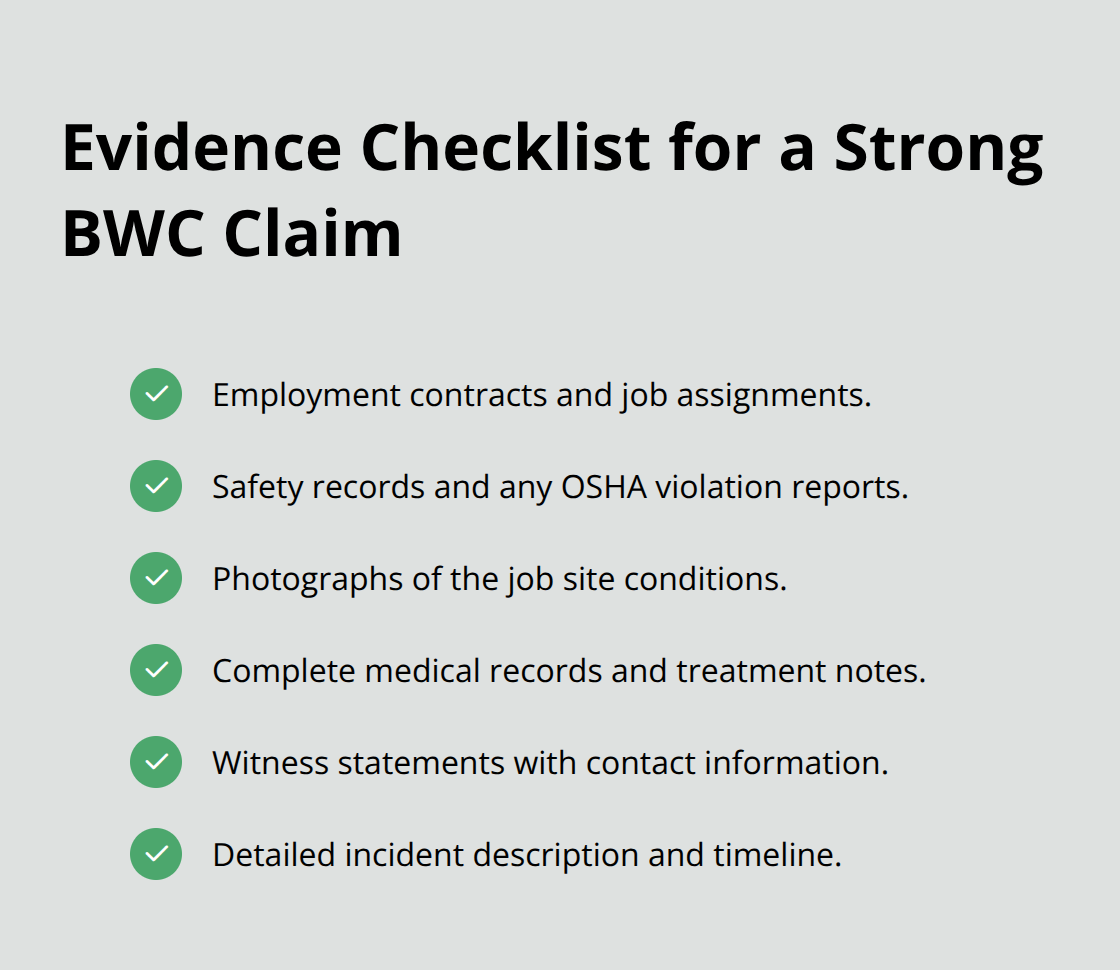
Medical records form the backbone of your application-they establish the connection between your work and your injury. Witness statements from coworkers who saw what happened carry substantial weight in BWC decisions. The more complete your documentation, the harder it becomes for the BWC to deny your claim on technical grounds.
Request a hearing if the BWC denies your claim
The Industrial Commission of Ohio handles disputes when the BWC denies your claim or offers benefits you believe are inadequate. If the BWC rejects your application, you receive a formal notice explaining their reason. You then have 14 days to request a hearing before an administrative law judge. This deadline is strict, and missing it eliminates your right to appeal.
Prepare for your hearing by organizing all medical records, employment contracts, witness contact information, and photographs of the job site conditions that caused your injury. Bring your employer’s safety records and OSHA violation reports if they exist. At the hearing, present clear testimony about what happened and how the injury occurred. The administrative law judge will issue a decision, and you can appeal to the full Industrial Commission if you disagree.
Navigate technical arguments with experienced representation
Many injured workers benefit from legal representation during this process because the BWC’s denials often rest on technical arguments about whether injuries are truly work-related or whether treatment is necessary. An attorney familiar with Ohio’s workers’ compensation system can identify weaknesses in the BWC’s reasoning and present counterarguments effectively. The Industrial Commission process involves complex procedural rules and evidentiary standards that favor those who understand them. Legal representation helps you avoid mistakes that could cost you your appeal.
Final Thoughts
Construction injury Ohio rights protect you when accidents happen on the job site, but claiming them requires immediate action. Ohio’s workers’ compensation system provides medical coverage and partial wage replacement without requiring you to prove employer negligence, yet this no-fault approach leaves pain and suffering, full lost income, and reduced earning capacity unaddressed. Third-party liability claims fill this gap by holding negligent parties accountable and recovering damages the state system cannot.
File your workers’ compensation claim immediately after your injury and gather strong documentation to support your case. If the BWC denies your claim, request a hearing before the Industrial Commission within 14 days and present clear evidence of how your injury occurred. Many injured workers find that legal representation during this process prevents costly mistakes and strengthens their position against technical denials.
Construction injuries-falls, struck-by incidents, electrocutions, and equipment accidents-generate both workers’ compensation claims and separate third-party liability cases. Identifying which parties share responsibility for your injury determines your overall recovery strategy, and we at Robin J Peterson Company, LLC represent injured workers throughout Ohio’s Cleveland, Akron, and Canton areas to help you navigate the BWC and Industrial Commission. Contact us for a free consultation to understand your options and next steps.