
Filing a workers’ compensation claim in Ohio can feel overwhelming if you don’t know where to start. We at Robin J Peterson Company, LLC understand the confusion, which is why we’ve created this guide to BWC claim filing basics.
This article walks you through each step of the process, from reporting your injury to submitting your claim form. You’ll also learn the mistakes that could delay or derail your claim.
What the Ohio Bureau of Workers’ Compensation Actually Does
How the BWC Operates in Ohio
The Ohio Bureau of Workers’ Compensation administers all workers’ compensation claims in Ohio as a state agency. Unlike most states where private insurance companies handle claims, Ohio operates a monopolistic system in which employers contract directly with the BWC for coverage. This fundamental difference matters because your claim goes through a government agency, not a private insurer. The BWC processes roughly 300,000 claims annually according to state records, making it one of the largest workers’ compensation administrators in the country.
The No-Fault System Explained
When you file a claim in Ohio, you enter a no-fault system. You don’t need to prove your employer was negligent to receive benefits, and your employer cannot sue you for the injury. This trade-off simplifies the process but creates its own complexities because the BWC evaluates claims based on strict criteria about whether your injury occurred within the course and scope of employment.
Types of Claims the BWC Handles
The BWC processes several types of claims, and the distinctions matter for your filing strategy. Temporary total disability claims apply when you cannot work at all during recovery. Permanent partial disability claims cover injuries that cause lasting impairment but don’t prevent all work. Permanent total disability claims go to workers who cannot return to any job. The Industrial Commission of Ohio handles appeals and hearings when claims are denied or disputed, so understanding this separation proves essential.
How Ohio’s System Differs From Private Insurance
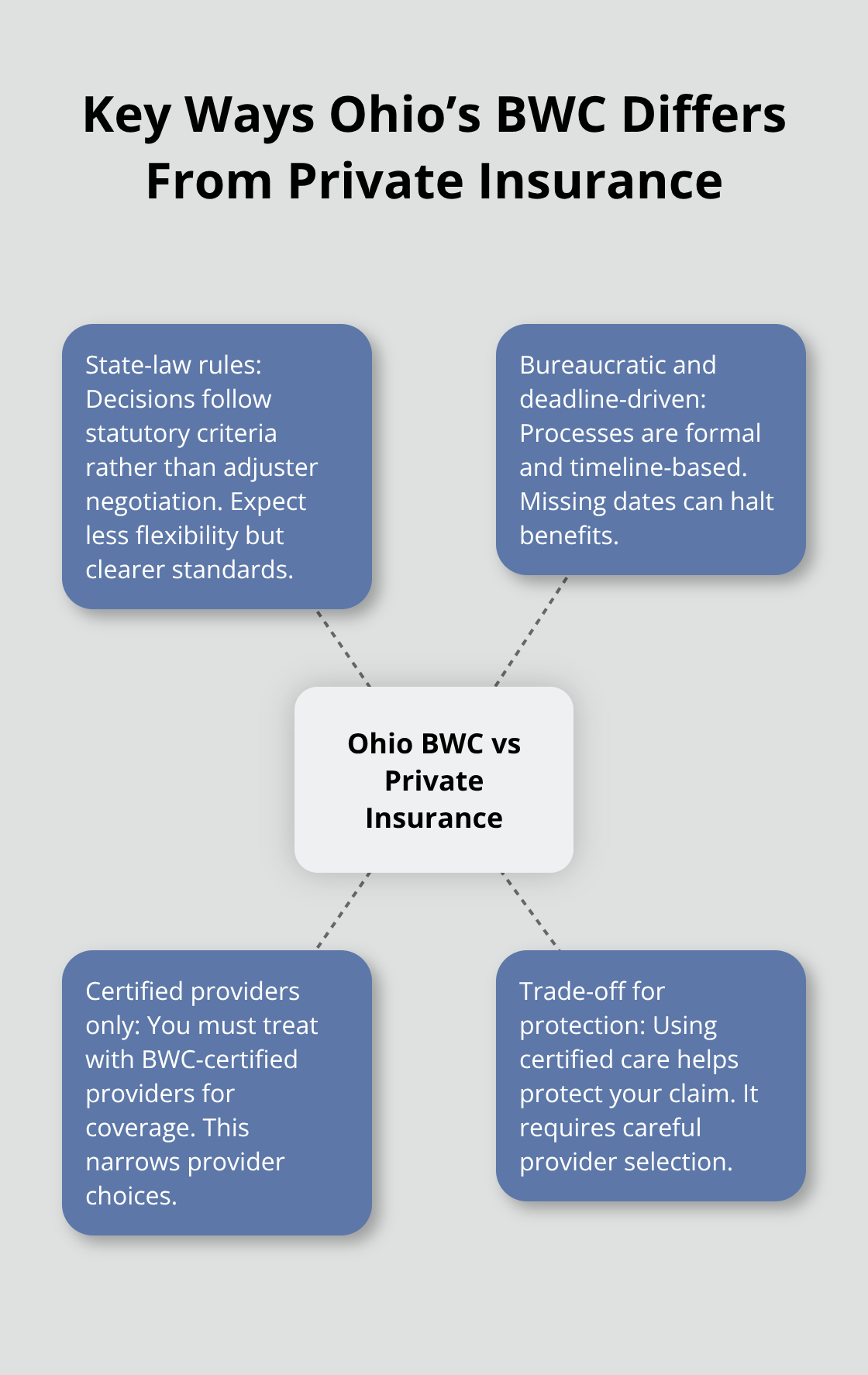
Ohio’s system differs sharply from private insurance because the BWC follows state law rigidly, and no negotiation occurs with a private adjuster trying to minimize payouts. However, this also means the process is more bureaucratic and deadline-driven. The BWC requires you to use only BWC-certified medical providers for treatment to be covered, which restricts your choice compared to some private systems. This requirement protects your claim but demands careful attention when you select your healthcare provider.
What Comes Next in Your Filing Journey
Understanding how the BWC operates sets the foundation for your claim. The next step involves taking immediate action when an injury occurs-reporting it to your employer and gathering the documentation that the BWC demands to approve your case.
How to File Your Ohio Workers’ Compensation Claim
Report Your Injury Immediately in Writing
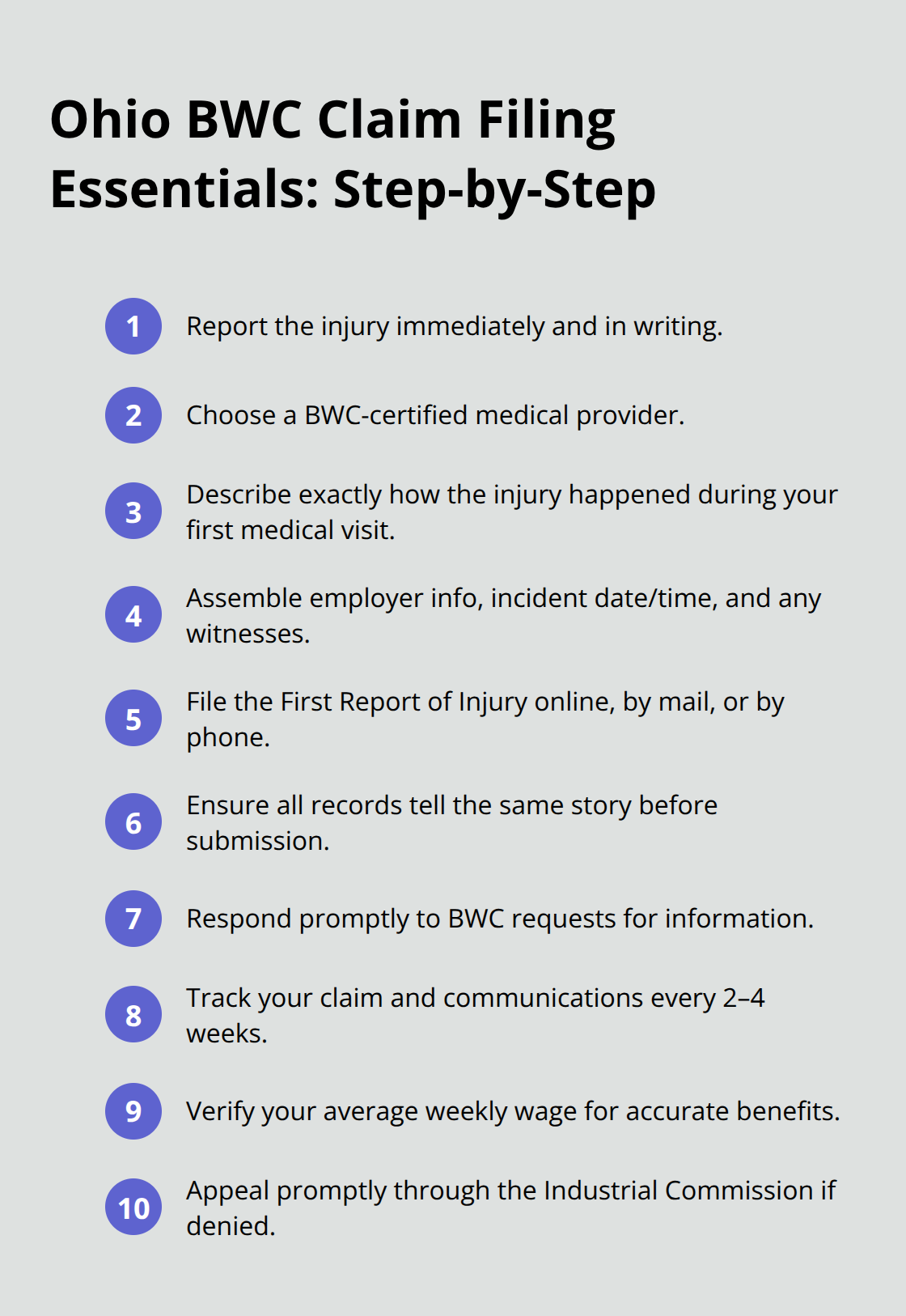
The moment an injury happens at work, speed matters more than perfection. You have one year to file a claim with the Ohio BWC, but waiting even a few days weakens your position. Your employer must receive written notice of the injury as soon as possible, and this written record becomes your first line of defense. An email to your supervisor, a completed accident report, or a text message documenting the injury creates a verifiable paper trail that verbal notice cannot match. The BWC receives approximately 300,000 claims annually, and the ones that move smoothly through the system share one trait: they start with immediate, documented reporting. Delaying your report signals to the insurer that something about your account may be unreliable, and that skepticism can follow your claim through the entire process.
Schedule an Appointment With a Certified Medical Provider
After notifying your employer, you must secure medical evaluation from a BWC-certified provider. This distinction is non-negotiable. Treatment from a non-certified doctor will be rejected by the BWC unless the visit was for emergency stabilization, meaning you will pay out of pocket for those services. Search the BWC’s Find a Provider tool on their website to locate approved physicians in your area before scheduling an appointment. When you see the doctor, provide a precise description of exactly how the injury occurred-not vague terms like “hurt back,” but specific details about the incident that connect your treatment directly to the workplace. Your medical records become the foundation of your claim, so accuracy in this initial visit matters enormously.
Gather Documentation and File the First Report of Injury
Once you have a diagnosis and medical documentation linking the injury to work, gather your employer information, the date and time of the injury, witness names if applicable, and any accident reports you filed. Then file your claim with the BWC through the First Report of Injury form online via the BWC portal, by mail to 30 W. Spring St., Columbus, OH 43215-2256, or by phone. The BWC issues a claim number after processing, and this number tracks your case through every stage. Inconsistencies between your accident report, witness statements, and medical records trigger denials regularly, so ensure all documents tell the same story before submission. If the medical evidence doesn’t clearly connect your diagnosis to the work incident, the BWC will deny the claim, and you will need to appeal through the Industrial Commission of Ohio.
What Happens After You File
After you submit your First Report of Injury, the BWC begins its evaluation process. The agency reviews your medical records, your employer’s documentation, and the details you provided to determine whether your claim meets the legal requirements for approval. This evaluation period can take weeks, and during this time, you may receive requests for additional information or clarification. Staying organized and responding promptly to any BWC inquiries keeps your claim moving forward. Understanding what comes next-and the common mistakes that derail claims at this stage-helps you protect your benefits and avoid unnecessary delays.
Mistakes That Kill Your Ohio Workers’ Compensation Claim
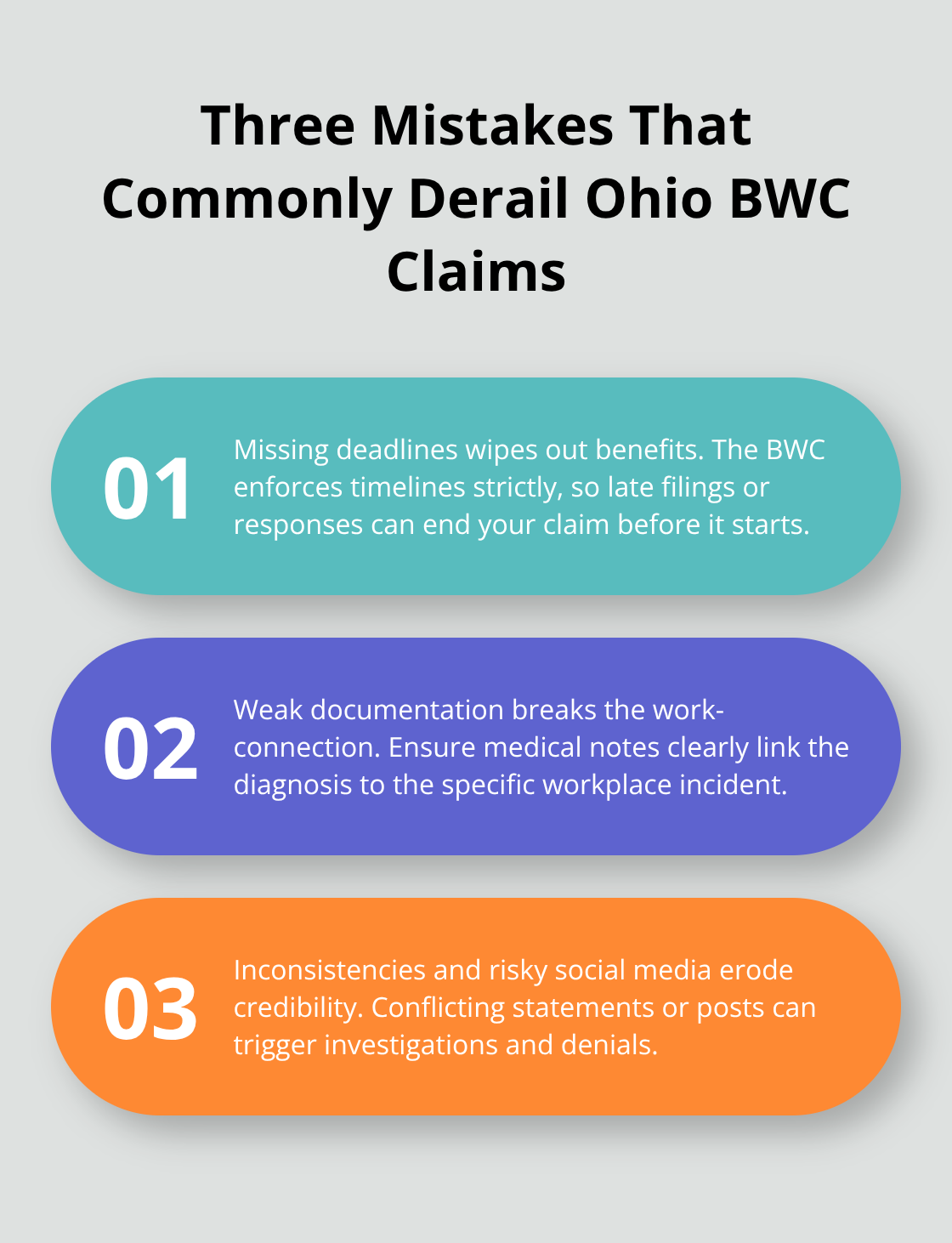
The difference between an approved claim and a denied one often comes down to execution, not circumstances. The BWC denies claims regularly due to preventable errors that claimants make during filing. Missing a deadline by even one day eliminates your right to benefits, and the BWC enforces these timelines without exceptions. Ohio Revised Code §4123.84(A) gives you one year from the injury date to file your First Report of Injury, but this deadline is absolute. Many workers assume they have more time or expect their employer to handle the filing, only to discover months later that their window has closed. Additionally, the one-year clock starts from the date of injury or diagnosis, not from when you feel ready to file.
If you injured your back in March but did not receive a formal diagnosis until August, your one-year countdown began in March, leaving you less time than you might think. Beyond the primary filing deadline, the BWC imposes additional timelines for submitting medical records, responding to requests for information, and appealing denials. Falling behind on any of these creates a domino effect that compromises your entire claim.
Written Notice Protects Your Timeline
Reporting failures and documentation problems account for the vast majority of denials. When you notify your employer verbally about an injury, you create no record that protects you later when the BWC questions when the injury actually occurred. Written notice-whether through email, accident report, or text message-establishes an irrefutable timeline. This paper trail becomes your defense against skepticism and delay. The BWC receives approximately 300,000 claims annually, and the ones that survive scrutiny share this trait: they start with documented proof of immediate reporting.
Medical Records Must Connect Injury to Work
Incomplete documentation causes equal damage because the BWC evaluates claims based on what appears in the file. If your medical records lack a clear statement from your doctor linking your diagnosis to the specific work incident, the BWC will deny the claim even if the injury genuinely happened at work. Vague descriptions like “hurt back” or “fell down” do not connect treatment to the workplace. Instead, your accident report must detail exactly what happened: the equipment involved, the specific action that caused injury, witnesses present, and the exact time. Your medical records become the foundation of your claim, so accuracy in this initial documentation matters enormously.
Inconsistencies Trigger Investigations and Denials
Inconsistencies between documents destroy credibility and trigger investigations. If your accident report states you fell while carrying boxes but your witness statement says you tripped on a cord, the BWC views this conflict as a reason to deny benefits. Each document in your file must tell the same story, or the agency will question your account. The BWC applies strict scrutiny to claims where details do not align, and this skepticism can follow your case through every stage of review and appeal.
Social Media Activity Undermines Your Claim
Social media activity during an active claim creates additional risk. Posting photos or descriptions of activities that contradict your claimed limitations gives the BWC ammunition to challenge your medical restrictions and reduce or deny benefits. Investigators may use posts to establish that your limitations are less severe than you reported, weakening your position in hearings or appeals. The safest approach is complete silence on social media regarding your injury and treatment until your claim fully resolves.
Final Thoughts
Filing an Ohio workers’ compensation claim requires attention to detail and strict adherence to deadlines, but the process becomes manageable when you understand what the BWC demands. The BWC claim filing basics boil down to three essentials: report your injury immediately in writing, seek treatment from a certified provider, and submit complete documentation that clearly connects your diagnosis to the workplace incident. Speed matters because delays weaken your credibility, and the one-year filing deadline is absolute.
After you submit your First Report of Injury, monitor your claim regularly by checking for communications from the BWC every two to four weeks. Respond promptly to any requests for additional information or clarification, and keep copies of all documents you submit. Verify that the BWC has your correct average weekly wage, as this figure determines your benefit amount.
If your claim is denied, you have the right to appeal through the Industrial Commission of Ohio. An experienced workers’ compensation attorney understands the appeals process, knows how to present evidence effectively, and can protect your credibility during hearings. Contact us at Robin J Peterson Company, LLC to discuss your claim and explore how legal representation protects your rights.