
A work injury in Ohio can disrupt your income and leave you uncertain about your financial stability. Temporary disability benefits in Ohio provide a safety net during recovery, but understanding how to access them requires knowing the right steps.
At Robin J Peterson Company, LLC, we help injured workers navigate the claims process and secure the benefits they deserve. This guide walks you through eligibility, how payments work, and what to do if your claim faces obstacles.
Who Qualifies for Temporary Disability Benefits in Ohio
Work-Related Injuries and Occupational Diseases
A work injury in Ohio opens the door to temporary disability benefits, but only if your injury stems directly from employment. The Ohio Bureau of Workers’ Compensation recognizes injuries that occur during work tasks, occupational diseases contracted through job duties, or injuries sustained while commuting at your employer’s direction. Non-work-related injuries fall outside the system entirely, so this distinction matters significantly. If you were injured while performing job tasks or developed a condition tied to your occupation, you likely qualify for benefits.
When You Can File Your Claim
Your doctor’s certification that you cannot work due to your injury triggers your eligibility. You do not need to miss a full week before filing-you can claim benefits immediately if your physician documents work incapacity and your employer cannot offer light-duty alternatives. The moment your medical provider establishes that you cannot perform your job duties, you have the right to pursue temporary disability benefits.
Required Forms and Documentation
Filing your claim requires submitting the Request for Temporary Total Compensation form (the C-84) to the Ohio Bureau of Workers’ Compensation. Your employer’s physician must complete the Physician’s Report of Work Ability, which forms the medical foundation of your case. The BWC will also request 52 weeks of earnings statements prior to your injury to calculate your weekly benefit amount accurately.
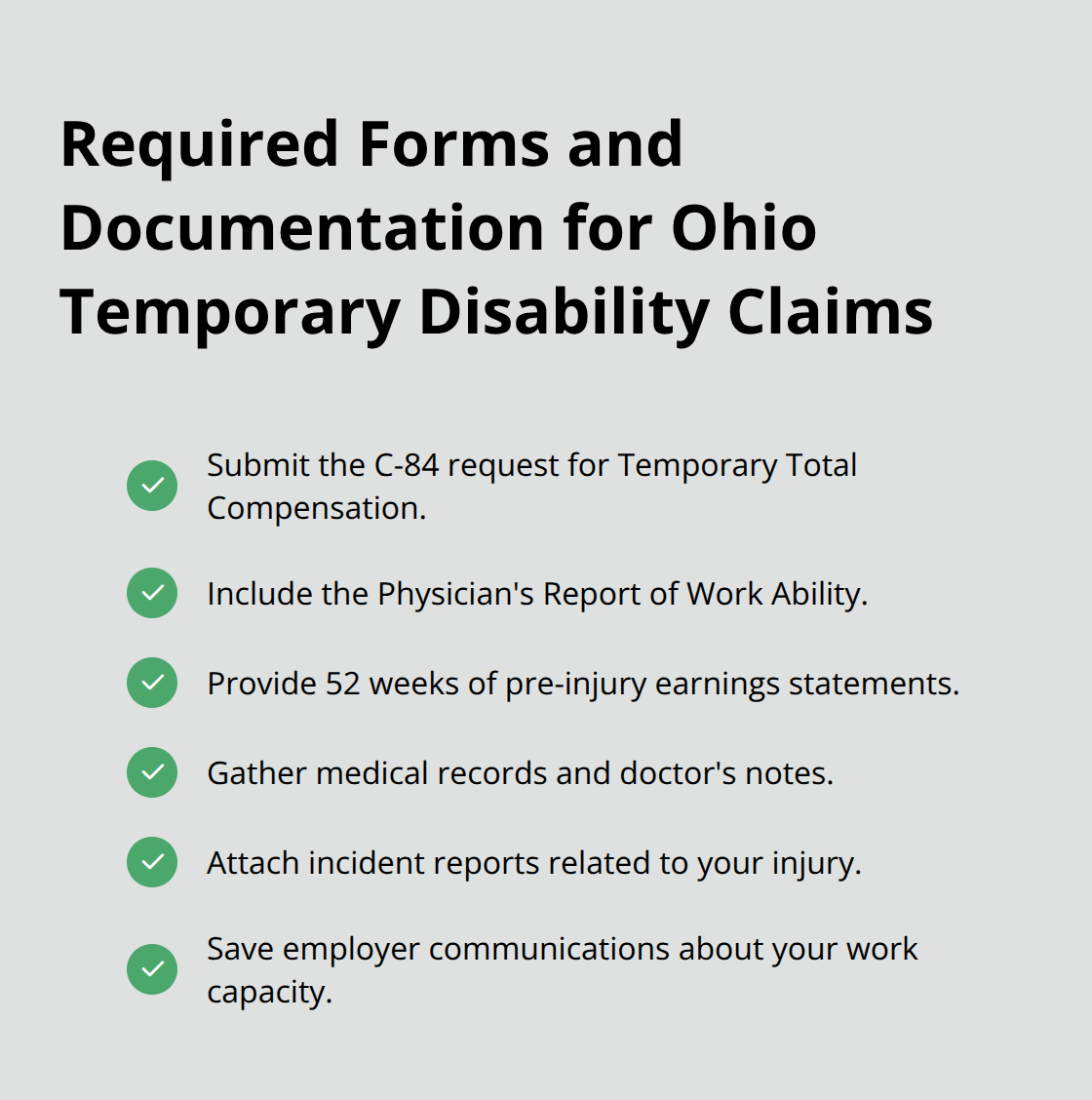
Documentation strengthens your position considerably. Collect medical records, doctor’s notes, incident reports, and any communications with your employer about your inability to work. According to the Industrial Commission of Ohio, temporary disability payments equal two-thirds of your average weekly wage, capped at the state maximum of $1,058 per week in 2024.
Getting Professional Help with Your Claim
An experienced Ohio workers’ compensation attorney understands which forms the BWC accepts, which deadlines matter most, and how to prevent common filing errors that derail claims before they gain traction. At Robin J Peterson Company, LLC, we help injured workers in the Cleveland, Akron, and Canton areas navigate this process and secure the benefits they deserve. The right legal guidance transforms your claim from a confusing stack of paperwork into a strategic path forward-one that protects your rights and maximizes your recovery prospects.
How Temporary Disability Benefits Pay Out
Calculating Your Weekly Benefit Amount
The Ohio Bureau of Workers’ Compensation calculates your temporary disability benefit from your average weekly wage during the 52 weeks before your injury. The formula is straightforward: for the first 12 weeks, you receive 72 percent of your average weekly wage, then the rate drops to 66.66 percent (two-thirds) after week 12. The Industrial Commission of Ohio caps this payment at the state maximum, which means your weekly check has a ceiling regardless of your actual earnings. Payments arrive in bi-weekly installments directly to your account, and the BWC processes these without requiring you to reapply each week.
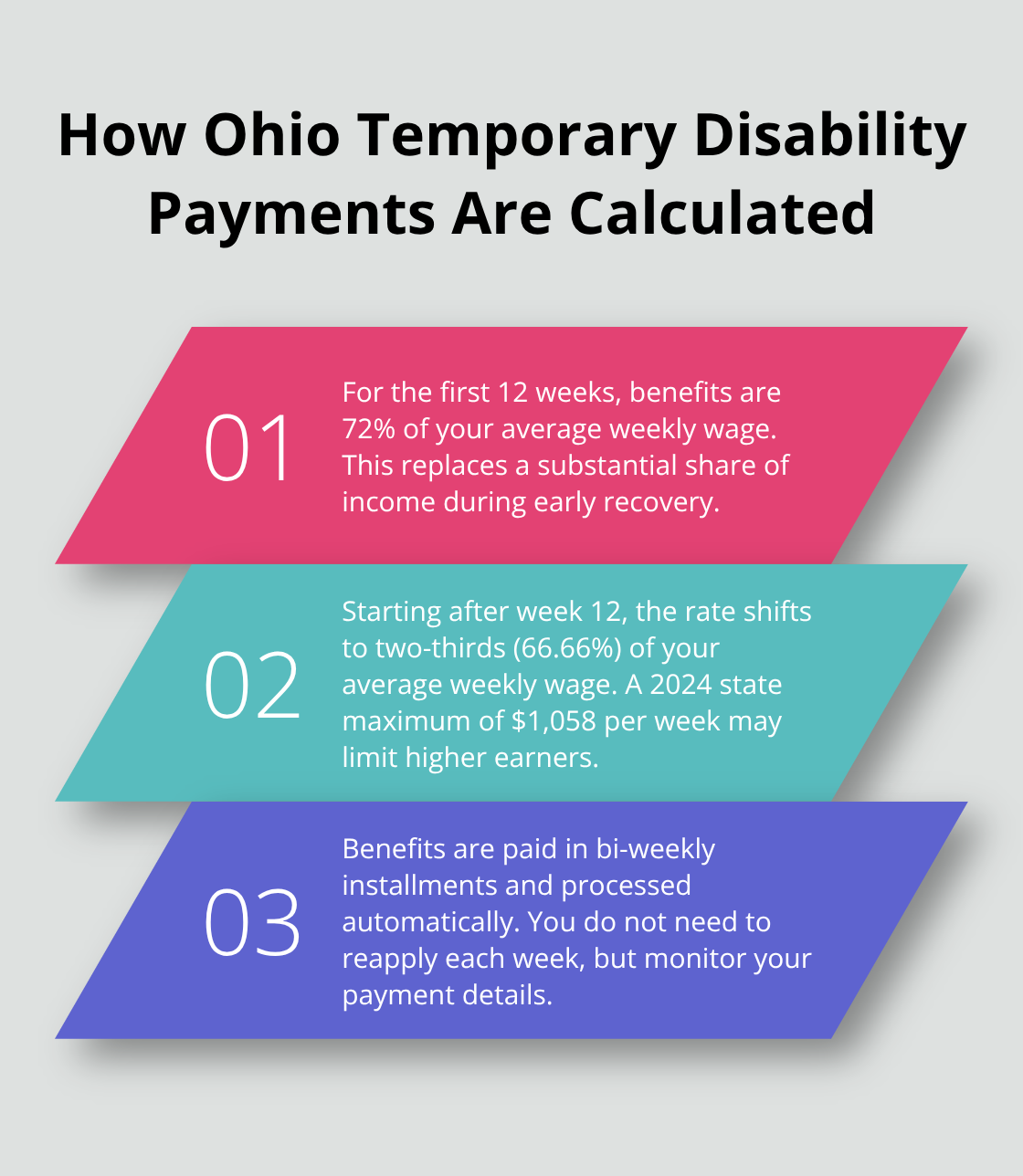
This structure replaces a meaningful portion of what you earned, though not your full wage. Many injured workers find this gap forces difficult financial choices during recovery, which is why understanding exactly what you’ll receive matters before your first check arrives.
When Your Benefits End
Your temporary disability coverage continues until specific events occur, and knowing these triggers helps you plan your recovery timeline accurately. The Ohio Bureau of Workers’ Compensation stops your benefits when you return to work, when your doctor determines you’ve reached Maximum Medical Improvement (MMI), or when you’ve been cleared to resume your pre-injury job duties.
The 2024 Dillon v. Industrial Commission decision created an important complication: employers can now recoup benefits paid after a doctor establishes MMI. This ruling means overpayments can reduce future awards, making it critical to monitor your medical status closely and ensure your physician documents your actual work capacity at each visit.
Work Obligations and Benefit Suspension
If your employer offers you work within your physical restrictions, your benefits end even if the job differs from your original position. Your coverage also terminates if you abandon employment, become incarcerated, or accept work with another employer during your disability period.
Return-to-work obligations mean you cannot refuse light-duty work your employer can genuinely provide. Declining suitable modified work gives the BWC grounds to suspend your benefits immediately. The system expects you to cooperate with transitional work programs and medical treatment plans, not simply collect benefits while avoiding rehabilitation efforts. These obligations shape how your claim progresses and directly affect your income stability during recovery.
What Stops Your Claim and How to Fight Back
Denial Rates and Common Reasons
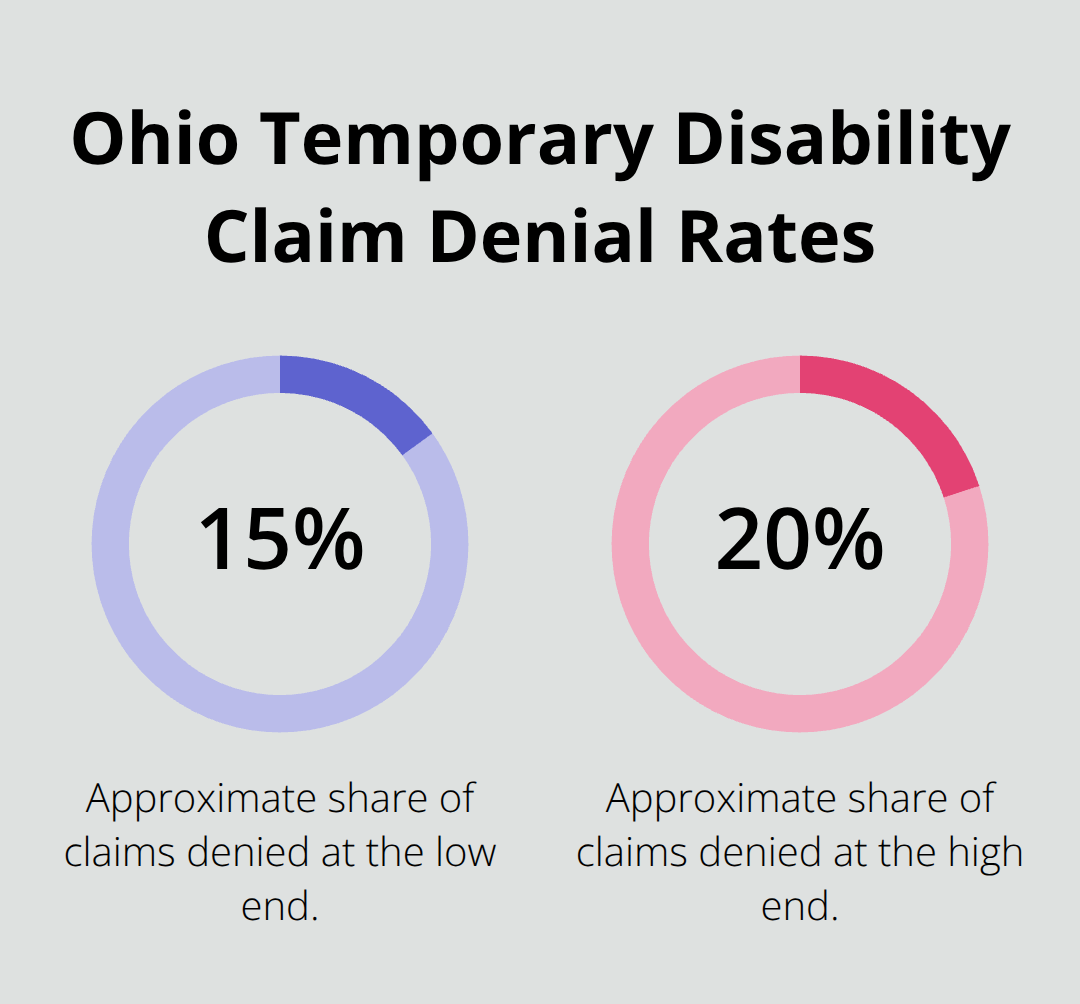
The Ohio Bureau of Workers’ Compensation denies approximately 15 to 20 percent of temporary disability claims, and most denials stem from incomplete medical documentation or missed filing deadlines rather than ineligibility itself. Your claim can fail before the merits even receive consideration if you submit forms incorrectly or fail to meet the BWC’s strict timelines. Understanding why denials happen allows you to prevent them before they derail your benefits.
The 14-Day Appeal Window
When the BWC rejects your claim, you have exactly 14 days to file an appeal through the Industrial Commission of Ohio’s ICON system or by submitting the IC-12 form. This narrow window closes fast, so acting immediately after receiving a denial letter matters more than waiting to gather additional evidence later. The appeal process has three levels-District Hearing Officer, Staff Hearing Officer, and Commissioners-with another 14-day window to appeal at each stage if you disagree with the decision. Many workers lose their right to benefits simply because they miss these deadlines, not because their injuries lack merit.
Disputes Over Medical Certification and Calculations
Disputes with your employer or the BWC often center on whether your doctor’s certification truly supports work incapacity or whether the BWC correctly calculated your weekly benefit. The Dillon v. Industrial Commission decision from 2024 created new complications by allowing employers to recoup overpaid benefits once your doctor determines you’ve reached Maximum Medical Improvement. This means the BWC may demand repayment of weeks you already received, directly reducing compensation for permanent disability.
Employer Pressure and Premature Return to Work
Employers sometimes pressure injured workers to accept unsuitable light-duty positions or return to full duties prematurely, gambling that workers won’t formally challenge the decision. Financial strain during the benefit period forces many workers into accepting unfavorable settlements or returning to work before their body heals properly. The two-thirds wage replacement after week 12 leaves a significant income gap that forces difficult choices about rent, medical bills, and living expenses. Workers without emergency savings frequently deplete their accounts within 4 to 6 weeks, creating desperation that weakens their negotiating position with employers and the BWC.
Getting Legal Support for Your Appeal
An experienced workers’ compensation attorney understands appeal deadlines, knows how to challenge unfair denials, and can navigate post-Dillon recoupment issues before they drain your recovery funds. Robin J Peterson Company, LLC helps injured workers in the Cleveland, Akron, and Canton areas fight back against claim denials and protect their rights throughout the appeals process. The financial pressure is real, but your claim deserves proper legal representation to prevent costly mistakes.
Final Thoughts
Temporary disability benefits in Ohio provide essential income protection when a work injury prevents you from earning, but accessing these benefits requires understanding eligibility rules, payment structures, and appeal deadlines. The system works predictably when you file correctly and submit complete medical documentation, yet claim denials happen frequently enough that preparation matters significantly. Missing the 14-day appeal deadline after a claim denial costs you your right to benefits entirely, regardless of your injury’s legitimacy.
Financial pressure during the benefit period forces difficult decisions about returning to work prematurely or accepting unsuitable positions. The income gap between your full wage and two-thirds replacement creates real hardship, particularly after week 12 when your benefit rate decreases. The 2024 Dillon decision changed the landscape by allowing employers to recoup overpaid benefits once your doctor establishes Maximum Medical Improvement, making it critical to monitor your medical status and ensure accurate documentation throughout your recovery.
An experienced workers’ compensation attorney becomes invaluable when your claim faces denial, when disputes arise with your employer or the BWC, or when post-Dillon recoupment threatens your recovery funds. We at Robin J Peterson Company, LLC represent injured workers throughout the Cleveland, Akron, and Canton areas, fighting to secure the benefits you deserve while protecting your rights against employers and the BWC. Your work injury disrupted your life, but your benefits claim does not need to become another source of stress when proper legal representation is available to guide you forward.