
Trucking industry injury in Ohio happens more often than many drivers realize. Long hours on the road, heavy lifting during loading, and highway accidents create real risks that can affect your health and livelihood.
At Robin J Peterson Company, LLC, we help injured truckers understand what protections exist under Ohio law. This guide walks you through your rights, how to file a workers’ compensation claim, and what steps to take if your claim gets denied.
What Injuries Do Ohio Truckers Face Most Often
Back and Spinal Damage from Extended Cab Time
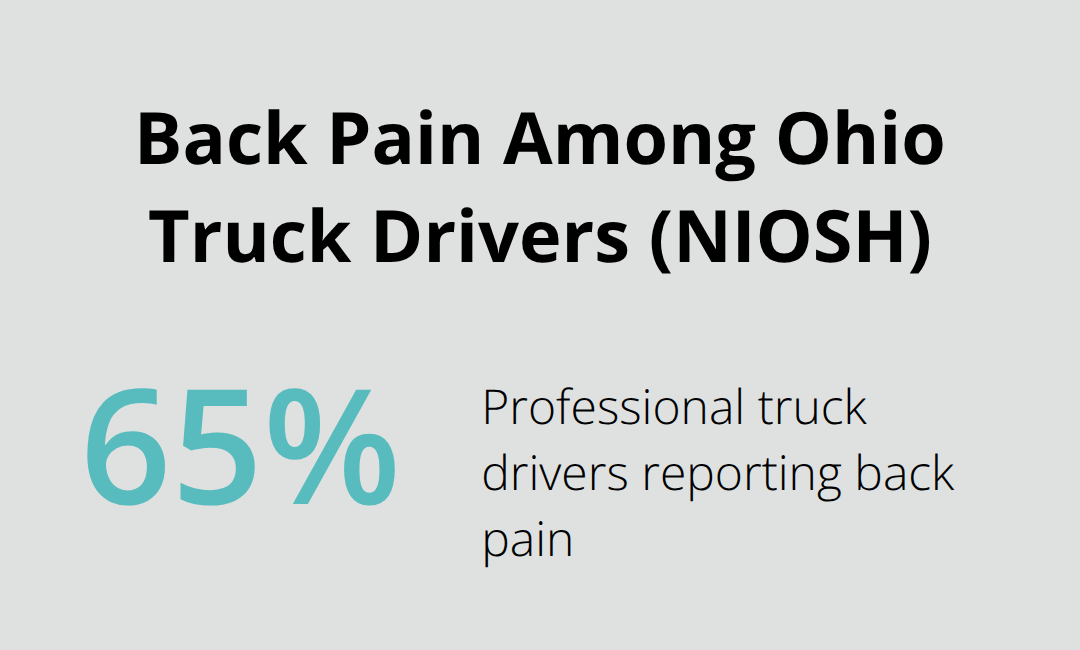
Back injuries dominate the trucking industry in Ohio. Drivers spend 10 to 14 hours daily seated in cabs that offer minimal lumbar support, which compresses spinal discs and strains lower back muscles. The National Institute for Occupational Safety and Health reports that back pain affects approximately 65 percent of professional truck drivers, making it the most common work-related complaint in the industry. Vibration from the road transfers directly through the seat to your spine, accelerating degeneration over time.
Many drivers ignore early warning signs like stiffness or mild discomfort, which allows serious conditions to develop silently. Once a disc herniates or nerve compression occurs, recovery can take months and may require surgery. The longer you wait to report symptoms, the harder it becomes to connect your injury to your job duties.
Traumatic Injuries from Highway Accidents
Highway accidents create traumatic injuries that happen instantly and without warning. A rear-end collision at highway speeds can cause whiplash, fractured ribs, internal bleeding, or traumatic brain injury depending on the impact force and vehicle positioning. These injuries often require emergency surgery and extended hospitalization.
Unlike gradual wear injuries, traumatic accidents generate clear medical documentation and obvious liability, which simplifies workers’ compensation claims. The immediate nature of the injury makes it straightforward to prove that your job caused the damage. This clarity works in your favor when you file your claim.
Joint Damage from Loading and Unloading Work
Loading and unloading work creates joint damage that accumulates over years. Drivers lift cargo repeatedly, climb in and out of trailers, and twist their torsos while securing loads-all activities that place enormous stress on knees, shoulders, and hips. This type of injury develops gradually, making it harder to pinpoint when the damage began, which can complicate claim filing.
Document pain onset dates and specific work activities that trigger symptoms, as this evidence strengthens your case when damage isn’t immediately obvious. Keep records of which tasks cause discomfort and how your symptoms progress over time. This documentation becomes critical when you file your claim with the Ohio Bureau of Workers’ Compensation.
Your Rights as an Injured Trucker in Ohio
Understanding Ohio Workers’ Compensation Coverage
Ohio’s workers’ compensation system operates under a straightforward principle: if you suffer an injury on the job, you receive coverage regardless of fault. You don’t need to prove your employer was negligent or caused the accident-you simply need to show the injury happened while you performed work duties. The Ohio Bureau of Workers’ Compensation handles these claims and covers medical treatment, rehabilitation, and wage replacement while you recover.
If your injury prevents you from working temporarily, you receive two-thirds of your average weekly wage up to the state maximum, which was $1,065 per week as of 2024. Permanent disabilities receive ongoing payments or lump-sum settlements depending on the severity. However, workers’ compensation becomes the exclusive remedy against your employer, meaning you cannot sue your employer in a traditional personal injury lawsuit. This trade-off exists because the system provides no-fault coverage without requiring you to prove negligence.
The Trade-Off: What You Gain and What You Lose
The protection works in your favor when injuries occur during normal job duties, but it also limits your recovery options for pain and suffering damages that civil lawsuits would typically award. You trade the ability to pursue larger damages against your employer for guaranteed coverage that doesn’t depend on proving fault. This arrangement protects both workers and employers by creating predictable outcomes.
Filing Your Claim Correctly
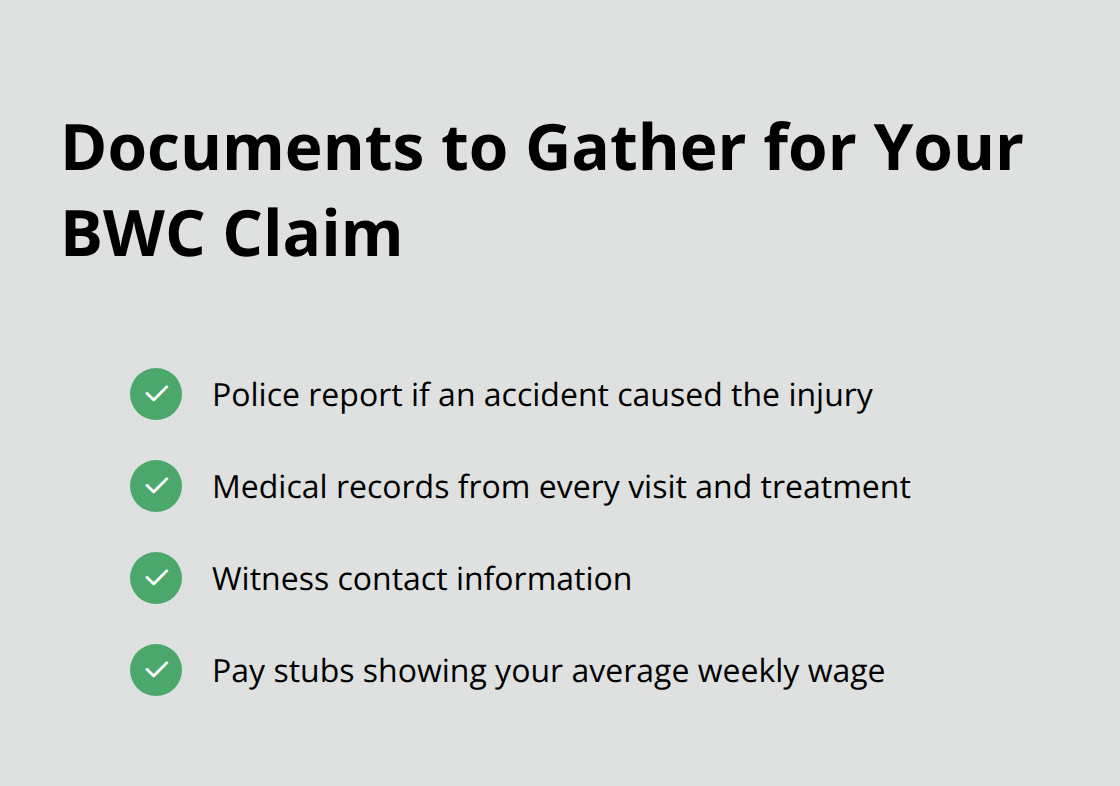
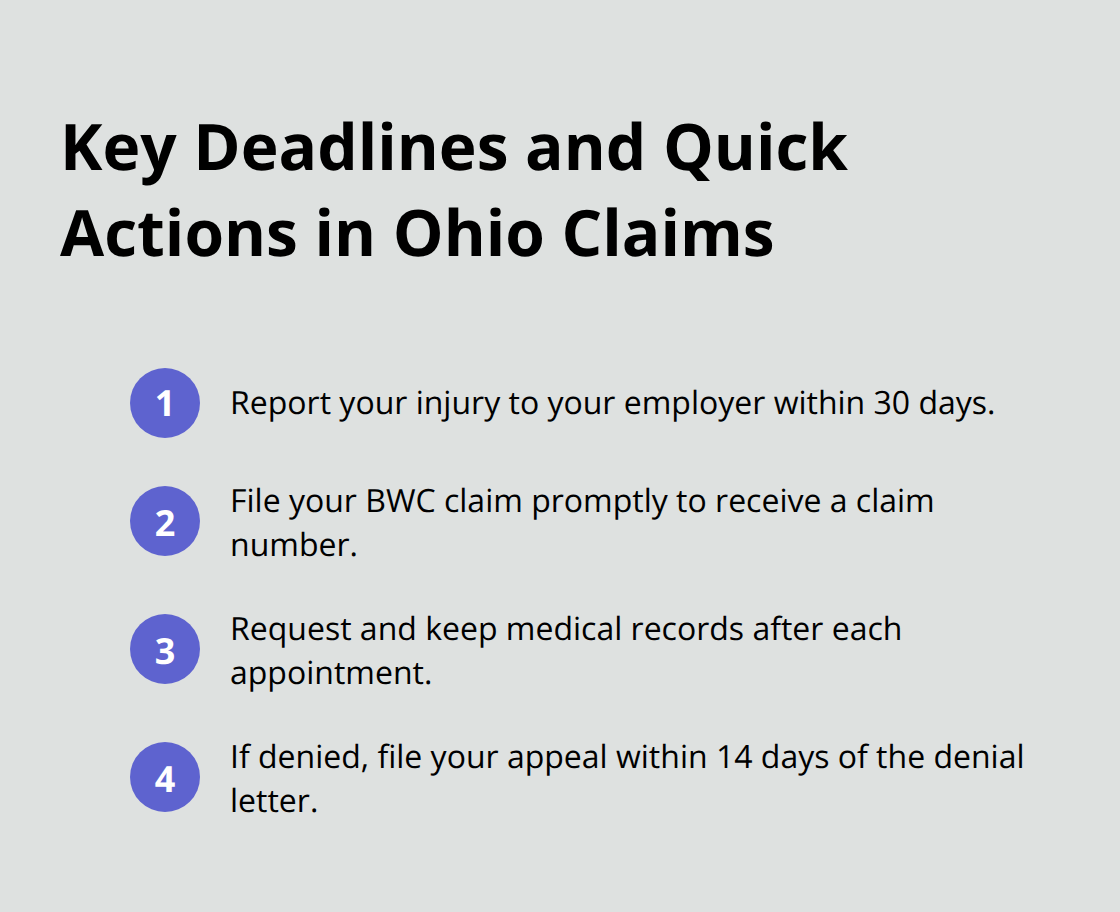
You must report your injury to your employer within 30 days, though reporting immediately proves smarter because delays create documentation gaps that can derail your claim. Your employer files the formal notice with the Ohio Bureau of Workers’ Compensation, and you receive a claim number within days. Collect your police report if an accident caused the injury, medical records from your treatment, witness contact information, and pay stubs showing your average weekly wage. The BWC uses this information to calculate your benefits and determine coverage.
Protection Against Employer Retaliation
If your employer retaliates against you for filing a claim-by firing you, cutting your hours, or demoting you-Ohio law prohibits this behavior, and you can pursue additional legal action. Retaliation claims require documentation showing the employer knew about your workers’ compensation filing and that their adverse action followed closely afterward. This protection stands separate from your workers’ compensation benefits and provides additional legal recourse.
When your claim moves through the system, understanding what happens next becomes essential to protecting your interests and maximizing your benefits.
What Happens After You File Your Claim
Medical Documentation Drives Your Claim Forward
Your claim enters the Ohio Bureau of Workers’ Compensation system, and what you do next directly affects whether you receive full benefits or face unnecessary delays and denials. Medical documentation becomes your most powerful tool during this phase because the BWC uses your treatment records to determine eligibility, benefit amounts, and whether your injury qualifies as work-related. Obtain copies of every medical record from your initial emergency room visit through ongoing treatment, including imaging reports, surgical notes, and physical therapy progress notes.
Request these records immediately after each appointment rather than waiting until you need them for your claim, because delays in gathering documentation slow your entire case. Include your doctor’s statement specifically linking your injury to your job duties, as this connection proves essential when the BWC reviews your case. If your employer disputes the claim, medical evidence becomes the deciding factor in most situations.
Understanding the Appeal Timeline
The Industrial Commission of Ohio handles appeals when claims get denied or when disputes arise over benefit amounts, and you have exactly 14 days to file an appeal after receiving a denial letter. Many injured truckers miss this deadline because they don’t understand the urgency, which permanently bars them from challenging the decision. File your appeal within days of receiving the denial notice, not weeks later.
The Industrial Commission conducts hearings where both you and the BWC present evidence, and your medical records, wage documentation, and witness statements determine the outcome. If you lose at the Industrial Commission level, you can appeal to the Commission’s appellate division, then to the Ohio Supreme Court if necessary, with the appeal clock resetting at each stage. This multi-level system exists to protect workers, but only if you meet every deadline and present compelling evidence throughout the process.
Building Your Evidence Package
Compile your police report (if an accident caused the injury), medical records from your treatment, witness contact information, and pay stubs showing your average weekly wage. The BWC uses this information to calculate your benefits and determine coverage. Strong evidence packages that include detailed medical records and clear documentation of work duties significantly improve your chances of approval at every stage.
Final Thoughts
Trucking industry injury in Ohio creates real consequences that extend beyond immediate pain and medical bills. Your ability to work, support your family, and maintain financial stability depends on understanding your rights and acting quickly when injury strikes. Ohio’s workers’ compensation system provides no-fault coverage that protects you regardless of who caused the accident, but only if you report your injury within 30 days and file your claim correctly.
The evidence you collect immediately after injury determines whether your claim receives approval or faces unnecessary delays. Medical records, police reports, witness statements, and wage documentation form the foundation of a strong case, and missing deadlines or failing to document your injury thoroughly can cost you benefits you’ve earned through your work. The 14-day appeal deadline is absolute, and missing it permanently bars you from challenging a denial decision.
If the Ohio Bureau of Workers’ Compensation denies your claim or offers insufficient benefits, contact our firm for a free consultation to discuss your situation and explore your options. We at Robin J Peterson Company, LLC represent injured truckers throughout Ohio who face claim denials, benefit disputes, or employer retaliation. Our experience navigating the complexities of workers’ compensation law and the Industrial Commission helps injured workers secure the benefits they deserve.