
Construction site injury claims can feel overwhelming when you’re hurt and unsure of your rights. At Robin J Peterson Company, LLC, we’ve helped countless injured workers navigate Ohio’s workers’ compensation system and recover what they deserve.
This guide walks you through your rights, the filing process, and how to handle disputes if your claim gets denied or underpaid.
Understanding Construction Site Injuries and Ohio Workers’ Compensation
What Injuries Happen Most on Ohio Construction Sites
Falls account for 37 percent of all construction fatalities in Ohio, according to the U.S. Bureau of Labor Statistics. Being struck by objects, electrocutions, and caught-in incidents follow as the next most serious hazards.
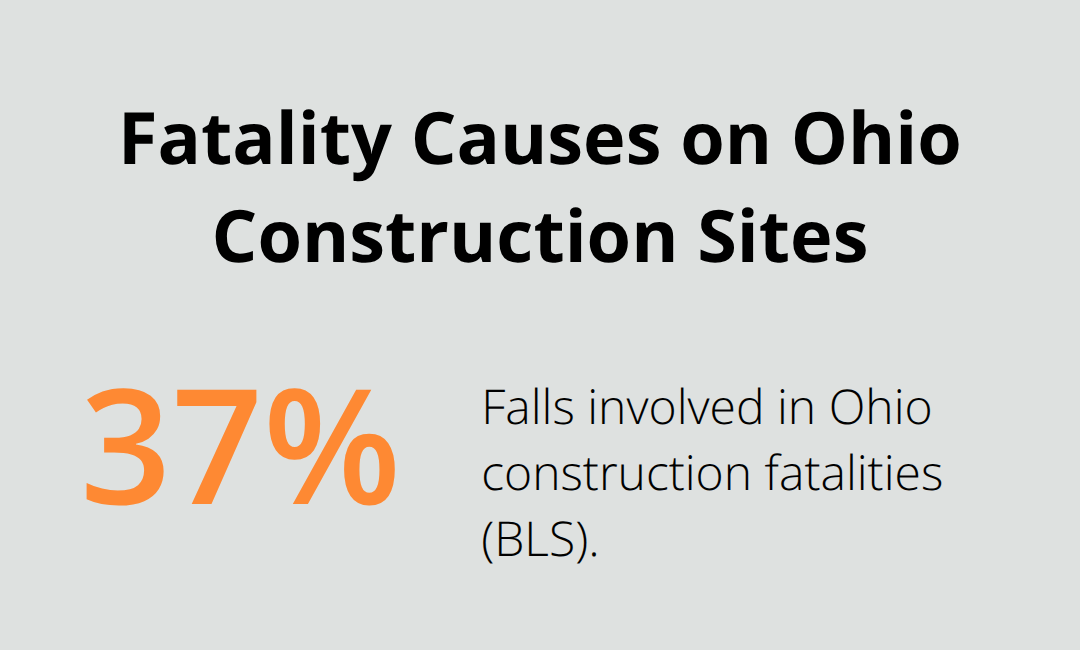
These aren’t theoretical risks-they happen on job sites across Cleveland, Akron, and Canton every year, and recognizing which injuries are most common helps you act fast when something goes wrong. Falls from heights over six feet occur frequently because guardrail violations and improper safety equipment remain widespread on many sites. If you’ve been injured by one of these four hazard types, your claim likely has strong footing because regulators track these dangers closely.
How Ohio’s No-Fault System Actually Works
Ohio operates a no-fault workers’ compensation system administered by the Ohio Bureau of Workers’ Compensation, which means you don’t need to prove your employer was negligent to receive benefits. This differs fundamentally from a traditional lawsuit where you’d have to show someone was at fault. Private employers with at least one employee must carry coverage, including construction firms hiring full-time, part-time, or seasonal workers. The BWC covers medical treatment, rehabilitation, therapy, medications, and wage replacement during time off work through Temporary Total Disability benefits. Your Temporary Total Disability payments are calculated based on your Average Weekly Wage, which the BWC determines using your actual earnings, prior-year earnings, or combined wages from multiple jobs (this matters because seasonal construction workers get accommodated in these calculations rather than penalized for the nature of construction work).
Why Your First 48 Hours Determine Everything
The actions you take immediately after an injury will either strengthen or weaken your entire claim. Report your injury in writing to your employer within 24 to 48 hours and request written confirmation, because verbal reports create disputes later when employers claim they never heard about the incident. File the First Report of Injury with the BWC yourself rather than waiting for your employer, even though employers are legally required to file within 14 days if you miss work or incur medical expenses. During those critical first 48 hours, seek medical evaluation, collect witness names and contact information, photograph the scene and hazards, and preserve damaged safety gear and maintenance logs. The BWC’s investigation will review medical records, your employer’s safety practices, witness statements, and OSHA compliance, so evidence of OSHA violations at the site strengthens your claim significantly. Maintain thorough medical documentation throughout your recovery, keep receipts for all expenses, and document your symptoms and daily functioning in a recovery journal (these details counter carriers who try to minimize your injuries).
What Evidence Matters Most in Your Claim
Medical records form the strongest foundation for your claim because they establish the direct link between your workplace incident and your injuries. Witness statements carry substantial weight, especially when multiple workers corroborate what happened on the site. Photographs and videos of the scene, hazards, and damaged equipment provide visual proof of conditions that led to your injury. OSHA violation records strengthen your case considerably because they demonstrate that safety standards were breached at the site. Maintenance logs and safety training records either support or undermine claims about whether proper procedures were followed before your injury occurred.
Moving Forward After Your Initial Report
Once you’ve filed your report and gathered initial evidence, the BWC begins its investigation into your claim. The agency reviews all documentation you’ve submitted and may request additional information from your employer or medical providers. Understanding what happens next in the claims process helps you prepare for potential questions and ensures you respond promptly to any BWC requests. This foundation you’ve built in the first 48 hours will either accelerate your claim or create obstacles that require additional effort to overcome.
Filing Your Claim with the Ohio Bureau of Workers’ Compensation
Start Your Claim Immediately Through the BWC
The filing process with the Ohio Bureau of Workers’ Compensation isn’t complicated, but speed and accuracy matter enormously. File the First Report of Injury yourself through the BWC’s online application rather than waiting for your employer to handle it, even though employers must file within 14 days if you miss work or incur medical expenses. Going directly to the BWC protects you because you control the narrative and timing, and the agency operates multiple service offices across Ohio (including 30 W. Spring St. in Columbus) if you need in-person assistance. The online application walks you through entering your injury details, employer information, and initial medical records. Completing it within the first 48 hours after your injury creates an official timestamp that strengthens your credibility with the BWC.
Gather Essential Information Before Filing
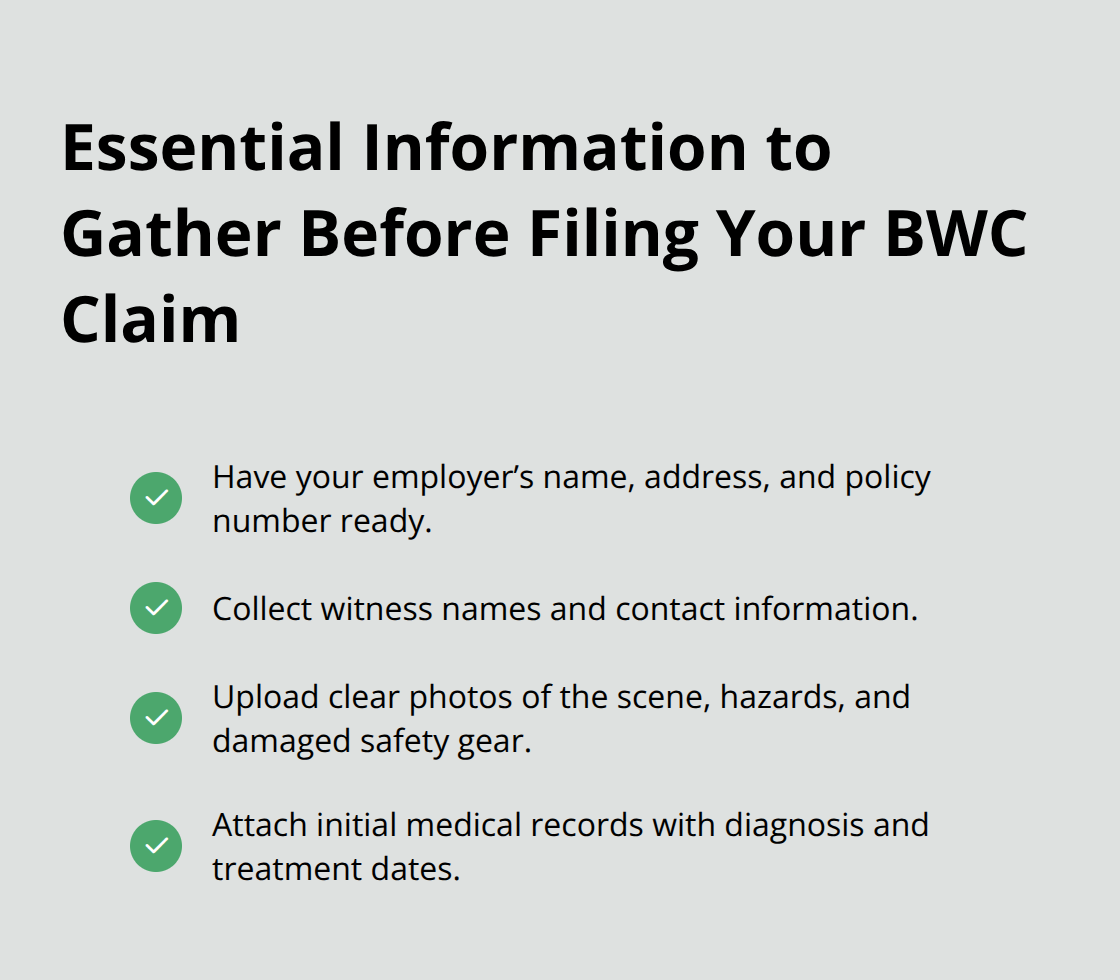
Collect your employer’s name, address, and policy number before you start the application, along with the names and contact information of any witnesses present when the injury occurred. Upload photographs of the scene, hazards, and any damaged equipment or safety gear, because visual evidence submitted during the initial filing makes a measurable difference in claim approval rates. Include copies of your initial medical records showing the injury diagnosis and treatment dates, as these establish the direct link between your workplace incident and your medical condition.
Maintain Thorough Documentation Throughout Recovery
Documentation requirements extend beyond the initial filing and continue throughout your recovery. Maintain copies of all medical bills, prescription receipts, and travel mileage to medical appointments, since the BWC uses these to calculate your benefits and verify your compliance with treatment. Keep detailed records of missed work dates and lost wages, because your Temporary Total Disability payments depend on accurate wage information that the BWC verifies against payroll records. Preserve original documents like maintenance logs, safety training records, and OSHA inspection reports if available, because these demonstrate whether your employer maintained required safety standards before your injury. The BWC’s investigation reviews all this documentation, so organized, legible records speed up the process considerably.
Understand Critical Deadlines
You must file your claim within one year of the injury date, though reporting within 24 to 48 hours to your employer strengthens your credibility significantly. Most injured workers miss this critical window simply because they don’t understand the urgency. Contact the BWC or a construction injury attorney immediately after your injury to avoid losing benefits you’re entitled to receive. Once you’ve submitted your initial claim and documentation, the BWC begins its formal investigation into your case, reviewing all materials you’ve provided and potentially requesting additional information from your employer or medical providers.
Navigating Disputes and Appeals
When the BWC Denies Your Claim
Denials happen far more often than most injured workers expect, and the BWC rejects claims for reasons ranging from missed deadlines to insufficient medical evidence linking your injury to work. The Industrial Commission of Ohio handles appeals, and this is where your documentation from those critical first 48 hours becomes your strongest asset. If the BWC denies your claim, you have the right to appeal with new evidence tailored specifically to address the denial reasons. Many workers assume a denial means defeat, but that mindset costs you benefits you’re legally entitled to receive.
Building a Stronger Appeal with Medical Evidence
Medical records form the foundation of successful appeals because they establish the direct connection between your workplace incident and your injuries. If your initial claim lacked thorough medical documentation, attend all follow-up appointments and obtain complete copies of your medical records immediately to strengthen your appeal significantly. A recovery journal that details your symptoms, treatments, and daily functioning helps counter carriers who attempt to minimize your injuries or suggest you’ve recovered faster than you actually have. The Industrial Commission reviews appeals with fresh eyes, meaning weak evidence in your initial claim can be replaced with stronger documentation that wasn’t available during the first filing.
Strategic Evidence Selection in the Appeal Process
The appeal process itself requires strategic evidence selection rather than simply resubmitting the same materials. OSHA violations at your job site carry substantial weight in appeals because they demonstrate negligence and safety breaches that contributed directly to your injury. If your site had missing guardrails on heights over six feet, improper equipment maintenance, or lack of required safety training, these violations strengthen both your workers’ compensation appeal and any potential third-party liability claim against contractors or equipment manufacturers.
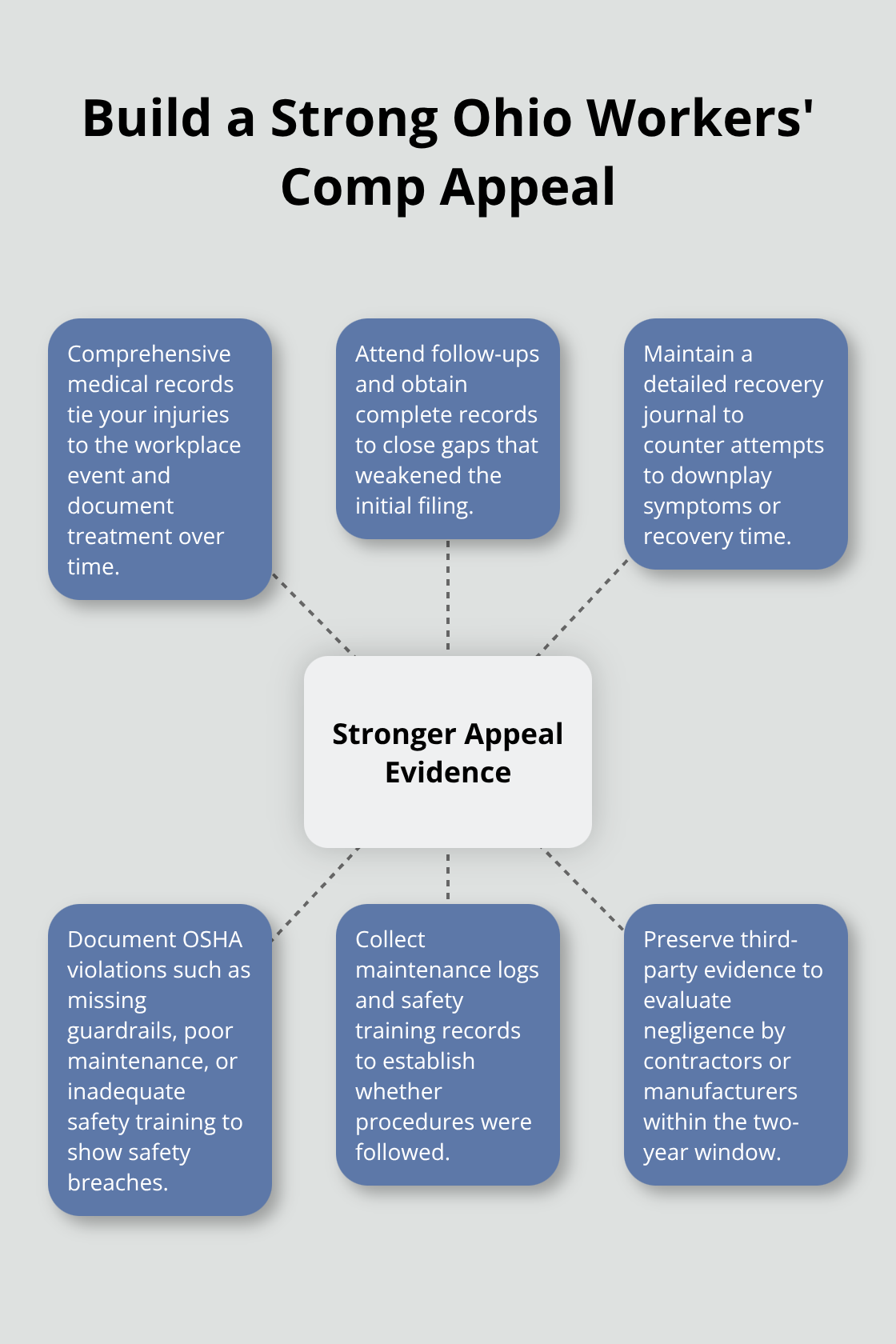
The two-year statute of limitations for third-party claims means you can pursue additional compensation beyond workers’ comp if another party’s negligence contributed to your injury.
Third-Party Claims and Legal Representation
Construction accident cases involving OSHA violations settle more favorably because the evidence of negligence is documented and clear. When you face a denial or underpayment, construction injury attorneys experienced in Ohio workers’ compensation can assess whether third-party liability exists alongside your workers’ comp claim, potentially multiplying your total recovery. Most construction accident claims settle before trial, but having legal representation signals to insurers that you’re serious about pursuing every available avenue for compensation, which accelerates settlement negotiations considerably.
Final Thoughts
Construction site injury claims in Ohio follow a clear path when you act decisively from the moment your injury occurs. Your rights under Ohio’s no-fault system are substantial, yet claiming them requires immediate action, thorough documentation, and strategic evidence gathering within those critical first 48 hours. Written reports to your employer, medical evaluation, witness statements, scene photographs, and preserved evidence transform a weak claim into a strong one that the BWC takes seriously.
Denials happen frequently, but they’re not final-the Industrial Commission of Ohio provides a genuine opportunity to appeal with stronger evidence, particularly when OSHA violations demonstrate negligence at your site. Many injured workers abandon their claims after an initial rejection, unaware that appeals succeed regularly when supported by comprehensive medical records and documentation of safety breaches. Third-party liability claims add another layer of potential compensation if contractors, equipment manufacturers, or other parties contributed to your injury, with a two-year deadline to pursue these claims alongside your workers’ compensation benefits.
Professional legal representation changes outcomes measurably for construction site injury claims. We at Robin J Peterson Company, LLC represent injured workers throughout Cleveland, Akron, and Canton, fighting against the BWC and employers to secure the benefits you’re entitled to receive. Contact us for a free case evaluation to understand your full range of options and whether your claim qualifies for third-party recovery.