
A head injury in Ohio can disrupt your life in ways that extend far beyond the initial accident. Understanding both your medical recovery path and your workers’ compensation benefits is essential to moving forward.
At Robin J Peterson Company, LLC, we help injured workers navigate these two critical areas simultaneously. This guide walks you through the medical timeline, the benefits available to you, and how legal support can strengthen your claim.
Medical Recovery Timeline After a Head Injury
What Happens to Your Body in the First Hours and Days
The first hours and days after a head injury determine much of your recovery trajectory. The Centers for Disease Control and Prevention reports that most people recover from a concussion within 7 to 10 days, but this timeline assumes you receive proper medical evaluation immediately. The acute phase begins at the moment of impact and extends through your initial medical assessment. You need imaging such as CT or MRI scans if you experienced loss of consciousness, repeated vomiting, confusion, severe worsening headache, or seizures. The National Institute of Neurological Disorders and Stroke emphasizes that even mild-seeming head injuries warrant early medical evaluation to establish a baseline and rule out complications. Your doctor will assess your injury severity using standardized protocols, and this classification drives everything that follows.
Hospital Care and Intensive Monitoring
Moderate to severe injuries require admission to a neuro intensive care unit for close monitoring, while mild injuries may allow outpatient management. The Ohio State University Wexner Medical Center, one of only 16 Traumatic Brain Injury Model Systems programs nationwide, uses Brain Trauma Foundation guidelines to standardize care across all injury severities. Medical teams monitor your condition continuously during this phase and make decisions about advanced treatments based on your response to initial care. This early phase is not the time to wait and see how you feel-prompt medical intervention shapes your entire recovery path.
Rehabilitation Starts Immediately, Not Later
Rehabilitation does not wait for you to feel better. Physical therapy, occupational therapy, speech-language therapy, and cognitive rehabilitation typically start during your hospital stay or within days of injury if you were treated in an emergency department. The Ohio State University Brain Injury Rehabilitation Program is the only central Ohio program certified specifically for traumatic brain injury treatment, and their data shows that early rehab initiation improves outcomes significantly. You will work with a multidisciplinary team including physiatrists, neurologists, physical therapists, and neuropsychologists who address both physical and cognitive symptoms simultaneously.
Managing Symptoms Through Graded Activity
Common post-concussion symptoms include headaches, dizziness, concentration and memory problems, and mood changes according to the CDC Heads Up program. Your therapists will use graded activity resumption, meaning you progress through increasingly demanding tasks as your symptoms permit. For workers in Ohio, the Ohio Bureau of Workers’ Compensation covers these rehabilitation services as part of your medical benefits. Your return to work depends on functional capacity evaluations that measure your current strength and endurance relative to your actual job demands, not generic standards.
Documentation That Strengthens Your Recovery Plan
Keeping a symptom diary that tracks changes, triggers, and milestones directly supports medical decisions and strengthens your benefits claim. Recovery from traumatic brain injury is individualized and can take weeks, months, or longer depending on injury severity and your age, so comparing your timeline to someone else’s is misleading. Understanding what benefits you qualify for during this recovery period requires knowledge of Ohio’s workers’ compensation system and how it applies to head injuries.
Ohio Workers’ Compensation Benefits for Head Injuries
Medical Treatment and Wage Replacement Coverage
The Ohio Bureau of Workers’ Compensation administers medical treatment coverage and wage replacement benefits for work-related head injuries, but understanding what you actually qualify for requires knowing the specific rules that apply to your situation. If you suffered a head injury at work in Ohio, the BWC covers all reasonable and necessary medical treatment related to your injury, including emergency care, imaging, rehabilitation services, and ongoing therapy. Wage replacement benefits-called temporary total disability or partial disability depending on your ability to work-replace a portion of your lost wages while you recover. The BWC also covers vocational rehabilitation services if your head injury prevents you from returning to your original job, helping you retrain for different work.
Filing Your Claim Immediately Protects Your Interests
You have the right to file directly with the BWC yourself, and doing so immediately after your injury creates an official record that protects your interests. Most injured workers in Ohio assume their employer will handle the claim, but this assumption can delay your benefits. The filing process requires notifying your employer and submitting a claim form to the BWC within specific timeframes, though Ohio law is relatively generous with deadlines for head injuries since symptoms often emerge gradually rather than immediately.
Why the BWC Denies or Delays Head Injury Claims
The real challenge in head injury claims comes after filing. The BWC frequently denies or delays benefits by questioning whether your symptoms are truly work-related or severe enough to warrant ongoing treatment and wage replacement. Head injuries lack visible external signs, and the BWC scrutinizes claims where symptoms like concentration problems, dizziness, or headaches develop days or weeks after the incident. You strengthen your claim by documenting everything: the exact date and time of injury, names of witnesses, your symptom progression in a diary, all medical evaluations and imaging results, and how your symptoms affect your ability to work specific job tasks.
Building Medical Evidence That the BWC Accepts
Thorough medical documentation from your healthcare provider stating that your symptoms are consistent with traumatic brain injury and attributing them to the work incident is essential for faster processing. The Ohio State University Wexner Medical Center and other specialized centers provide detailed medical assessments that carry significant weight with the BWC because they reference established diagnostic criteria. Many injured workers also encounter delays when the BWC requests independent medical examinations or demands additional testing before approving benefits. Having legal representation can prevent unnecessary delays by ensuring your medical evidence meets the BWC’s specific requirements and challenging unreasonable denials promptly. The complexities of the claims process-from initial filing through appeals-make the difference between swift approval and prolonged disputes over benefits you earned through your work injury.
Legal Support Changes Your Claim Outcome
How Attorneys Present Evidence the BWC Actually Accepts
The difference between approval and denial of your head injury claim often comes down to how well your case is presented to the Ohio Bureau of Workers’ Compensation. When the BWC reviews your claim, they apply strict evidentiary standards that most injured workers do not understand, and this gap creates unnecessary delays and denials. A workers’ compensation attorney knows exactly what medical documentation the BWC requires, how to structure your evidence to meet their specific criteria, and when to challenge decisions that contradict established medical guidelines. Workers’ compensation attorneys have seen countless claims denied because workers submitted incomplete medical records, failed to document symptom progression properly, or did not respond to BWC requests within critical timeframes.
The BWC denies head injury claims at significantly higher rates than other work injuries because symptoms like memory problems and concentration difficulties lack visible external markers. Your attorney prevents this by ensuring every piece of medical evidence ties directly to your work injury and demonstrates how your symptoms prevent you from performing your job duties. An independent medical examination requested by the BWC can become a turning point for your case when your attorney prepares you properly beforehand and challenges the examiner’s conclusions if they contradict your treating physicians’ assessments.
Managing Deadlines and BWC Requests
The claims process moves faster with legal representation because your attorney manages deadlines, responds to BWC requests immediately, and escalates issues before they become denials. If the BWC denies your initial claim, you have 14 days to file an appeal with the Industrial Commission of Ohio-a deadline that many workers miss because they do not understand the process. Your attorney files the appeal, gathers additional medical evidence during the appeal period, and presents your case to the Industrial Commission with the legal arguments that support your entitlement to benefits.
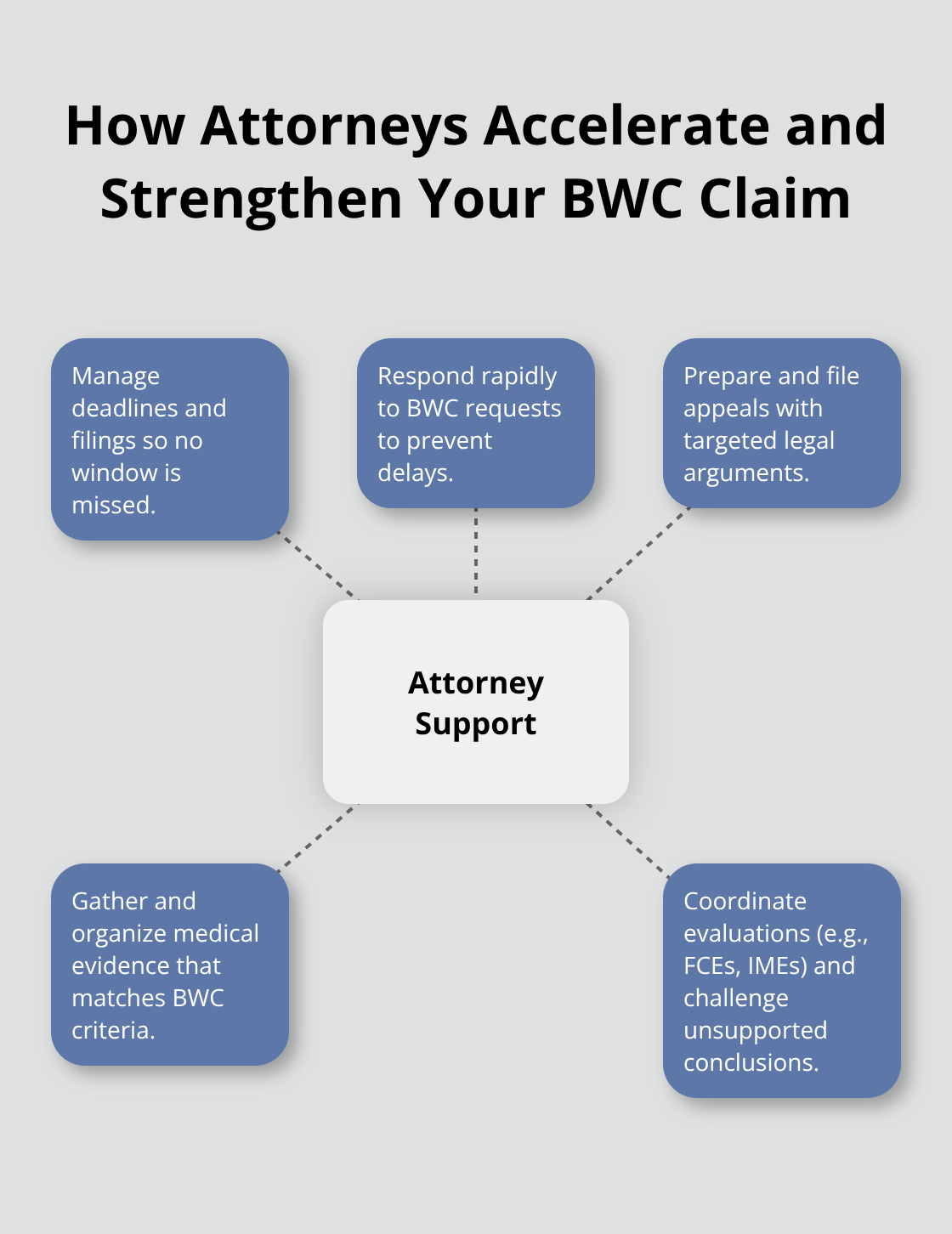
The Industrial Commission of Ohio overturns BWC denials regularly when cases are presented with proper legal support, but this reversal rarely happens when workers represent themselves. Your attorney requests functional capacity evaluations from your treating therapists that specifically address your ability to perform your actual job tasks, not generic work categories.
Establishing Work-Related Injury Connection
If your employer disputes that your injury occurred at work, your attorney gathers witness statements, medical records showing when symptoms began, and workplace records to establish the injury connection. Head injury claims involving wage replacement benefits require proof that your symptoms prevent you from working, and your attorney ensures this proof is documented throughout your recovery rather than scrambled together after a denial arrives. Documentation of your functional limitations matters enormously during appeals because it transforms abstract symptom descriptions into concrete evidence of work incapacity.
Final Thoughts
Your head injury Ohio recovery involves two parallel processes that must work together: medical rehabilitation and benefits navigation. The medical timeline depends on your injury severity, age, and how quickly you access specialized care, but early intervention produces better outcomes across all cases. The Ohio State University Wexner Medical Center and other certified trauma centers provide the multidisciplinary approach that addresses both physical and cognitive symptoms simultaneously.
The Ohio Bureau of Workers’ Compensation covers your medical treatment and wage replacement during recovery, but accessing these benefits requires understanding the specific documentation and deadlines that the BWC enforces. Your symptom diary, medical records from your treating physicians, and functional capacity evaluations form the foundation of a strong claim. Without this documentation, the BWC questions whether your symptoms are truly work-related or severe enough to warrant ongoing benefits.
Head injury symptoms often emerge weeks after the initial injury, and the BWC frequently denies claims when symptoms develop gradually rather than immediately. Contact our firm to discuss your specific situation and learn how legal support strengthens your path to recovery and benefits.