
Office workers in Ohio face real injury risks every day, from falls to repetitive strain conditions. At Robin J Peterson Company, LLC, we’ve helped countless injured workers understand their rights and navigate the workers’ compensation system.
This guide walks you through what happens after an office worker injury in Ohio, what protections you have, and exactly what steps to take next.
What Injuries Put Office Workers at Risk in Ohio
Slip and Fall Accidents in Office Spaces
Slip and fall accidents represent the most preventable office injury in Ohio. According to the U.S. Bureau of Labor Statistics Survey of Occupational Injuries and Illnesses, falls cause thousands of workplace injuries annually, and office environments create ideal conditions for these incidents. Wet floors near restrooms, loose cables under desks, cluttered walkways, and uneven surfaces trigger falls that workers often dismiss as minor until pain develops days or weeks later.
When you fall at work, document the incident immediately, even if you feel fine in the moment. Take photos of the hazard, collect witness names and contact information, and report the fall to your employer in writing before you leave the building that day. This written record protects your claim if questions about work-relatedness arise later.
Ergonomic Stress and Postural Injuries
Ergonomic-related health conditions develop silently in office settings. Prolonged sitting, improper desk height, monitors positioned too low, and chairs without adequate lumbar support create structural stress on your spine, neck, and shoulders. Many office workers experience lower back pain, neck strain, and shoulder tension after months of poor workstation setup.
The Ohio Bureau of Workers’ Compensation recognizes that work duties can aggravate or accelerate existing conditions, meaning you have a valid claim even if you had mild symptoms before. If you experience discomfort, request an ergonomic assessment of your workstation immediately. Your employer should adjust your chair height so your feet rest flat on the floor, position your monitor at eye level (approximately 20 inches away), and place your keyboard and mouse at elbow height. These adjustments cost minimal amounts but prevent serious conditions from developing.
Building Your Documentation Record
You must document your attempts to improve your workstation. Keep records of every request you make for ergonomic modifications, including dates and what specifically you asked for. If your employer refuses reasonable accommodations, that refusal becomes evidence supporting your claim when injury occurs.
Workers who fail to document their efforts to address ergonomic problems often lose cases, even when legitimate injuries develop. Your written requests, emails to management, and records of conversations create a clear timeline showing you took action to prevent harm. This documentation proves you acted responsibly and strengthens your position if you need to file a claim or appeal a denial.
What Protections Does Ohio Law Give You After a Workplace Injury
Ohio’s Legal Framework Protects Your Claim
Ohio’s workers’ compensation system exists specifically to protect you when workplace injury occurs. Unlike some states, Ohio law recognizes that work duties can aggravate or accelerate preexisting conditions, meaning you qualify for benefits even if you had minor symptoms before the injury happened. The Ohio Bureau of Workers’ Compensation administers these protections statewide, and the Ohio Industrial Commission oversees all decisions and appeals.
Your employer cannot retaliate against you for filing a claim, reporting a hazard, or pursuing workers’ compensation benefits. This legal protection applies regardless of your position level or employment status. If your employer threatens your job after an injury, that threat itself becomes evidence of wrongdoing you can present to the Industrial Commission.
Your Right to Medical Treatment and Wage Replacement
Your right to medical treatment begins immediately after injury. The Ohio Bureau of Workers’ Compensation covers all necessary medical care related to your workplace injury, including doctor visits, diagnostic testing, physical therapy, and surgical procedures when medically warranted. You control which medical provider treats you initially, but once treatment begins, your employer’s managed care organization may coordinate ongoing care.
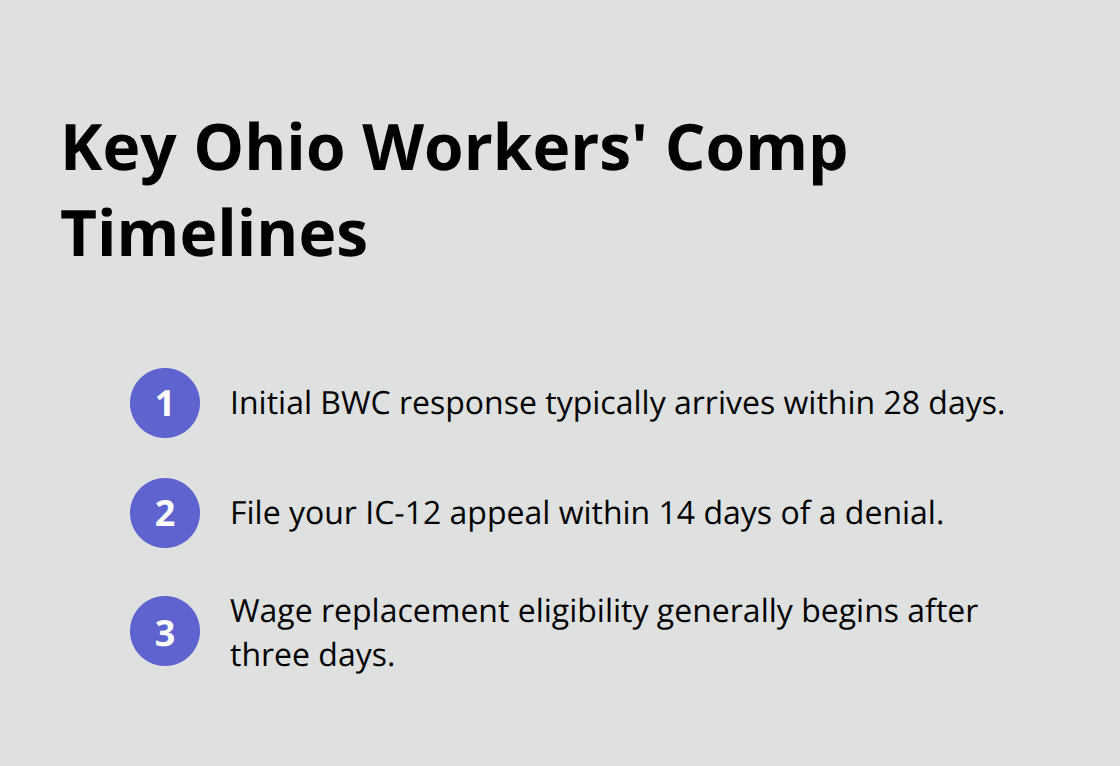
Tell every healthcare provider that your injury is work-related so treatment gets properly coded and covered. Your right to wage replacement benefits kicks in after a waiting period (typically three days) if your injury prevents you from working. These benefits replace a portion of lost wages while you recover, protecting your household finances during a difficult time. The Ohio Bureau of Workers’ Compensation calculates wage replacement based on your actual earnings, not an estimate, so accurate documentation of your pay matters significantly when claims are processed.
The Appeal Process and Your Right to Representation
If the BWC denies your claim initially, you have an absolute right to appeal that decision. You must file an appeal using the IC-12 form within 14 days of denial, and the Ohio Industrial Commission will schedule a hearing where you present your case. At this hearing, you testify about your injury, present medical evidence, and explain how the injury affects your work capacity.
Many workers lose appeals simply because they fail to attend hearings or arrive unprepared with documentation. An experienced Ohio workers’ compensation attorney can represent you at every stage, gathering evidence, preparing testimony, and presenting arguments to the Industrial Commission. Strong documentation and thorough preparation significantly improve your chances of success at appeal hearings.
What Happens Next in Your Claim
Understanding your rights protects your position, but taking action protects your benefits. The steps you take immediately after injury-what you report, how you document incidents, and when you seek legal guidance-determine whether your claim succeeds or fails.
Resources and Support Available to You
The Ohio Bureau of Workers’ Compensation as Your Starting Point
The Ohio Bureau of Workers’ Compensation stands as your first resource after injury, operating service offices across the state including the main location at 30 W. Spring St., Columbus, OH 43215-2256. The BWC Help Center provides step-by-step guidance on filing claims, understanding benefits, and navigating the system through online resources and phone support. When you file your initial claim, the BWC typically responds within 28 days, though incomplete applications delay this timeline significantly. Your employer’s managed care organization will contact you to coordinate medical providers and treatment plans once the claim enters processing.
The Ohio Industrial Commission Ombuds Office offers independent assistance if you encounter problems with your claim or need clarification on your rights, and this service costs nothing. Many workers overlook these free resources, instead struggling alone when a simple phone call to the Help Center could answer their questions immediately.
Accessing Medical Care Through the BWC Network
Medical providers authorized through the BWC network deliver treatment covered under your claim, and you should confirm any provider participates in this network before scheduling appointments. Physical therapy, diagnostic imaging, and surgical care all fall under covered services when medically necessary for your workplace injury. The Ohio Bureau of Workers’ Compensation publishes interactive dashboards tracking claim outcomes and recovery data statewide, giving you insight into typical timelines and success rates for injuries similar to yours.
Legal Representation to Strengthen Your Claim
An experienced Ohio workers’ compensation attorney becomes essential when claims face denial or when complications arise during recovery. Robin J. Peterson Company, LLC represents injured workers throughout the Cleveland, Akron, and Canton areas, handling claim appeals and fighting for benefits you deserve. Strong legal representation increases approval rates substantially-workers with attorneys secure better outcomes at the Ohio Industrial Commission than those proceeding alone. Your attorney gathers medical evidence, prepares testimony, and presents arguments specifically designed to overcome reasons for initial denial, transforming weak documentation into compelling cases that succeed at hearings.
Final Thoughts
The hours after an office worker injury in Ohio determine whether your claim succeeds or fails. Report your injury to your employer the same day it occurs, even if symptoms feel minor, and send a written email to your supervisor and HR describing exactly what happened, when it happened, and which body parts hurt. Keep a copy for your records so you have proof of your report if disputes arise later.
Document everything from that moment forward-photograph hazards that caused your fall, save all medical records and test results, write down dates and times of tasks that aggravate your symptoms, and record conversations with your employer about accommodations or modified duty. File your claim promptly through the Ohio Bureau of Workers’ Compensation online application system at 30 W. Spring St., Columbus, OH 43215-2256, since missing deadlines automatically disqualifies you from benefits.
An experienced workers’ compensation attorney understands how the Ohio Industrial Commission evaluates cases and knows exactly what evidence strengthens your position. Contact Robin J. Peterson Company, LLC for a free consultation to discuss your office worker injury in Ohio and protect your rights from the start.