
Filing a workers’ compensation claim with the Ohio Bureau of Workers’ Compensation can feel overwhelming if you don’t know where to start. The process involves specific documents, strict deadlines, and procedural requirements that trip up many claimants.
We at Robin J Peterson Company, LLC have guided countless injured workers through Canton BWC filing tips and helped them avoid costly mistakes. This guide walks you through exactly what you need to do to get your claim processed correctly.
What Documents and Deadlines Actually Matter for Your Canton Claim
The First Report of Injury Sets Everything in Motion
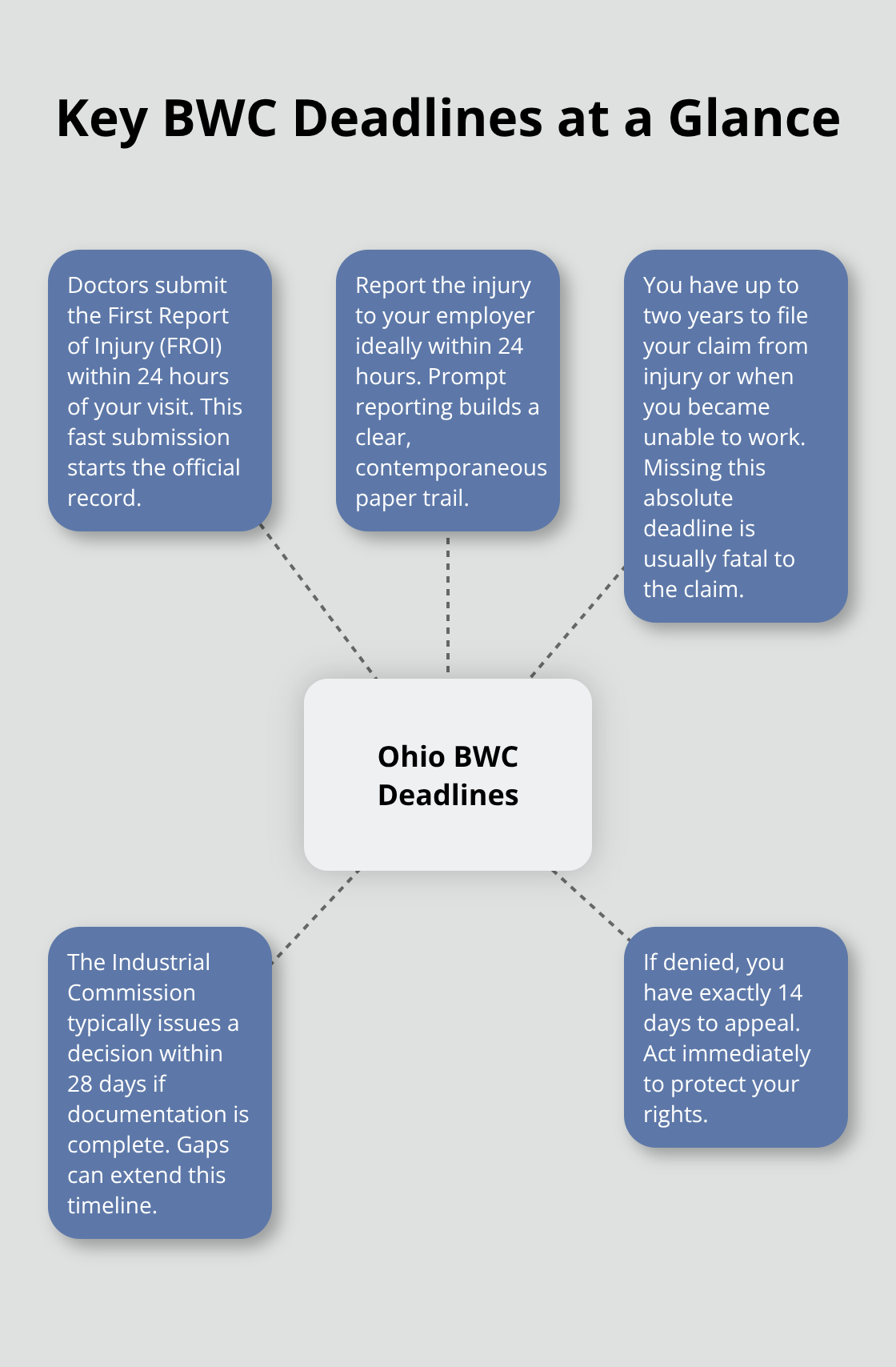
The Ohio Bureau of Workers’ Compensation requires the First Report of Injury (FROI) as the foundation of your claim. Your employer or treating doctor must submit this form, though you can file it yourself if neither takes action. Doctors submit the FROI within 24 hours of your visit, but you face no same-day requirement when filing on your own. You have up to two years from your injury date or the date you became unable to work to file-this two-year window is absolute, and missing it makes your claim nearly impossible to recover.
Gather Documentation That Connects Treatment to Your Injury
Medical documentation that directly links your treatment to the work injury forms the backbone of approval. Collect accident photographs if available, witness statements from coworkers who saw what happened, and a detailed description of exactly how the injury occurred. The more specific your accident narrative, the faster the BWC evaluates your case. Vague descriptions of how the injury happened trigger delays and requests for clarification that extend your timeline unnecessarily.
Understand the BWC’s Decision Timeline and Investigation Process
The Industrial Commission of Ohio typically issues an approval or denial decision within 28 days of filing, assuming no documentation gaps trigger requests for additional information. The BWC investigates thoroughly, and inconsistencies between what you claim happened and what medical records show will result in denial. Report the injury to your employer promptly-ideally within 24 hours of the accident-to establish a clear record that supports your filing.
Know What Happens If the BWC Denies Your Claim
If your claim receives a denial, you have exactly 14 days from receiving the denial notice to appeal through an Industrial Commission hearing. Ignoring that paperwork when it arrives means you forfeit your right to challenge the decision. An attorney can help you organize medical records, photographs, and witness statements to support your appeal and represent you at the hearing, significantly improving your chances of overturning the denial.
The path forward depends on whether your claim receives approval or faces denial-and that outcome hinges on the strength of your documentation and the clarity of your filing from day one. We at Robin J Peterson Company, LLC work with injured workers throughout the Canton area who face denials or complex claim situations that require experienced legal guidance to navigate the Industrial Commission process effectively.
How to File Your Claim Step by Step
Start Filing Immediately After Your Injury
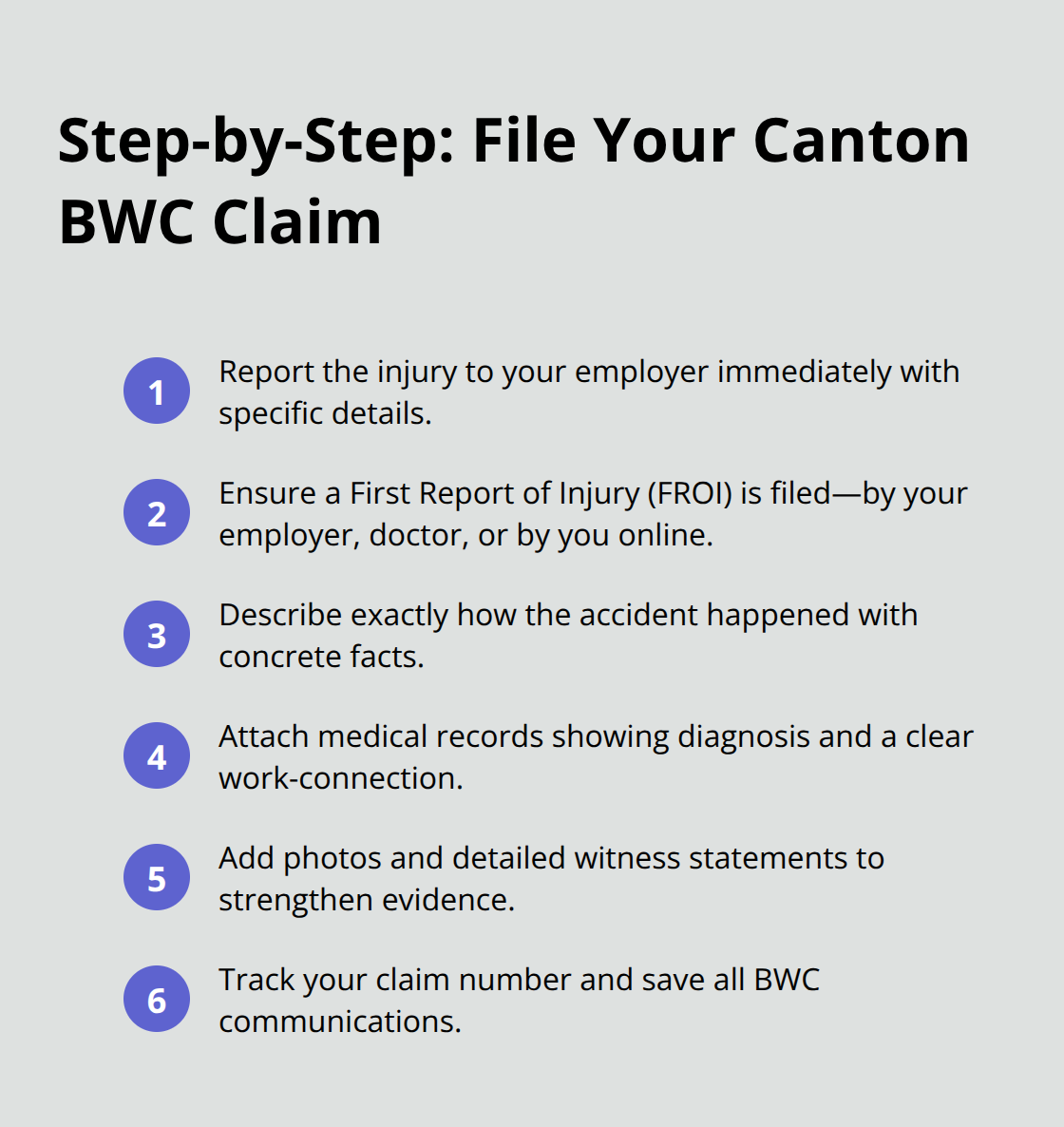
You must initiate the filing process right after your injury occurs. Contact your employer and inform them of what happened with as much detail as possible about the accident, your injuries, and which body parts are affected. Your employer holds the legal obligation to report the injury to the Ohio Bureau of Workers’ Compensation, but waiting passively puts your claim at risk. If your employer fails to file the First Report of Injury within a reasonable timeframe, contact the BWC directly at 30 W. Spring St., Columbus, OH 43215-2256 or file it yourself through their online system. The two-year filing window from your injury date or the date you became unable to work represents your absolute deadline-the BWC will not extend this period under any circumstances.
Complete the First Report of Injury with Specific Details
When you file the FROI yourself, include specific details about how the accident occurred rather than vague descriptions. State exactly what you were doing, what went wrong, and how the injury resulted from that specific sequence of events. Attach medical documentation from your first visit to a doctor, which must include the diagnosis and a clear connection between your treatment and the work injury. Photographs of the accident scene or your injuries strengthen your filing significantly. Witness statements from coworkers who saw what happened carry substantial weight in the BWC’s evaluation.
The BWC investigates every claim by speaking with you, your employer, and your medical team, so inconsistencies between your account and medical records will trigger a denial.
Track Your Claim Number and Documentation
Submit your filing through the online system or contact the BWC directly for assistance. Once submitted, you receive a claim number that you must track carefully because you will use it for all future correspondence. The Industrial Commission of Ohio typically issues a decision within 28 days, though gaps in documentation extend this timeline significantly. Keep copies of everything you submit and maintain a record of all communications with the BWC.
Prepare for Approval or Denial
If the BWC approves your claim, medical care and wage replacement benefits begin immediately. If the BWC denies your claim, you have exactly 14 days from the denial notice to file an appeal and request an Industrial Commission hearing. Missing this 14-day window eliminates your opportunity to challenge the decision. An attorney can organize your evidence, prepare your testimony, and represent you at the hearing, substantially improving your chances of overturning the denial and securing the benefits you deserve.
Why Legal Help Matters When the BWC Denies Your Claim
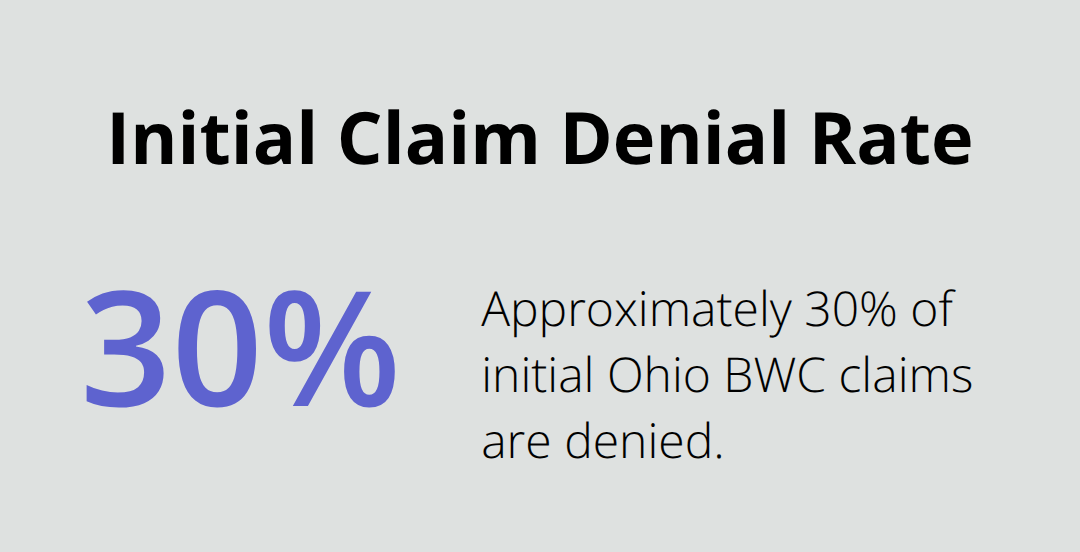
The Ohio Bureau of Workers’ Compensation denies approximately 30 percent of initial claims, according to state data. Many of those denials stem not from the injury itself but from documentation gaps, procedural missteps, or inconsistencies between your account and medical records.
When you file alone, you face the full weight of the BWC’s investigation without someone who understands exactly what evidence the Industrial Commission of Ohio requires to overturn a denial.
The Stark Difference Legal Representation Makes
Workers represented by attorneys at appeals hearings succeed at substantially higher rates than those proceeding alone, primarily because experienced representation means your evidence is organized, your witnesses are prepared, and your testimony directly addresses the specific reasons the BWC cited for denial. Canton injured workers often discover too late that their initial filing lacked the specificity or documentation that would have prevented denial altogether. A workers’ compensation attorney reviews your case from the beginning, identifies what went wrong, and rebuilds your claim with the precision the Industrial Commission demands.
How the 14-Day Appeal Window Works Against You
The real cost of handling your claim alone appears when you face an appeal deadline. You have exactly 14 days from receiving your denial notice to file, and that window closes regardless of whether you understand the appeals process. An attorney immediately secures your appeal, organizes your medical records chronologically to show treatment progression, obtains witness statements from coworkers with specific details about the accident, and prepares you for testimony by identifying the weak points the BWC will attack.
What Happens During Your Industrial Commission Hearing
During the hearing, the attorney presents evidence in the sequence that makes your case strongest, cross-examines the BWC’s representatives effectively, and ensures the Industrial Commission hears exactly why the initial denial was incorrect. Canton workers who work with legal representation also benefit from an attorney’s knowledge of which Ohio BWC procedures actually speed up processing versus which ones create delays. For example, requesting specific documentation from your employer or medical provider in writing, rather than verbally, creates a paper trail that prevents the BWC from claiming information was never provided.
Procedural Details That Determine Your Outcome
An experienced workers’ compensation firm knows which forms the BWC frequently loses and therefore requires acknowledgment of receipt before submission. These procedural details matter enormously when your appeal hinges on demonstrating that you provided complete documentation. The difference between handling your appeal yourself and having legal representation is stark-experienced representation transforms your chances of success at the Industrial Commission level.
Final Thoughts
Filing a Canton BWC claim correctly from the start prevents the delays and denials that plague workers who navigate the process alone. The essential steps are straightforward: report your injury to your employer immediately, file the First Report of Injury within your two-year window, gather specific documentation that links your treatment to the work injury, and track your claim number throughout the process. Vague descriptions and incomplete medical records trigger BWC denials that you could have prevented with proper attention to detail during initial filing.
Legal representation fundamentally changes your outcome when complications arise, since the Ohio Bureau of Workers’ Compensation denies roughly 30 percent of initial claims, and many of those denials stem from procedural mistakes rather than the validity of the injury itself. When you face a denial, the 14-day appeal window closes regardless of whether you understand Industrial Commission procedures, and that deadline pressure forces rushed decisions without proper evidence organization. An attorney immediately secures your appeal, organizes medical records chronologically, obtains witness statements with specific details about the accident, and prepares you for testimony by identifying exactly where the BWC’s case is weak.
Canton BWC filing tips matter most when your claim faces denial, because that is when procedural knowledge determines whether you succeed or fail at the Industrial Commission level. Experienced representation means your evidence appears in the sequence that makes your case strongest, your witnesses answer cross-examination effectively, and the Industrial Commission hears precisely why the initial denial was incorrect. Contact us to discuss your claim and learn how we at Robin J Peterson Company, LLC can help you secure the benefits you deserve.