
A BWC claim hearing in Ohio can feel overwhelming if you don’t know what to expect. We at Robin J Peterson Company, LLC have helped many workers navigate this process and understand their rights.
This guide walks you through each stage of your hearing, from preparation to the decision. You’ll learn what evidence matters most and how to present your case effectively.
What You Must Gather Before Your Hearing
The Ohio Industrial Commission conducts nearly 100,000 hearings annually, and most of them last around 20 minutes total. That compressed timeline means the hearing officer will assess your case primarily through written evidence and your testimony, not through lengthy discussion. Start collecting documentation immediately because the Ohio Bureau of Workers’ Compensation relies heavily on written evidence to support your claim. Submit all evidence at least five days before your hearing, whether through the BWC online portal or by fax to your assigned hearing officer.
Medical Records Form Your Foundation
Medical records form the foundation of your case. Collect your initial injury report, emergency room records, all treatment notes from every provider, documented work restrictions from your doctor, and any independent medical examination reports. The hearing officer will review your medical records before the hearing begins, so organize them chronologically from the injury date forward. Include dates, provider names, and specific diagnoses. If your doctor provided work restrictions, highlight those documents because they directly support claims for temporary total disability or modified duty.
Employment Documentation Matters Equally
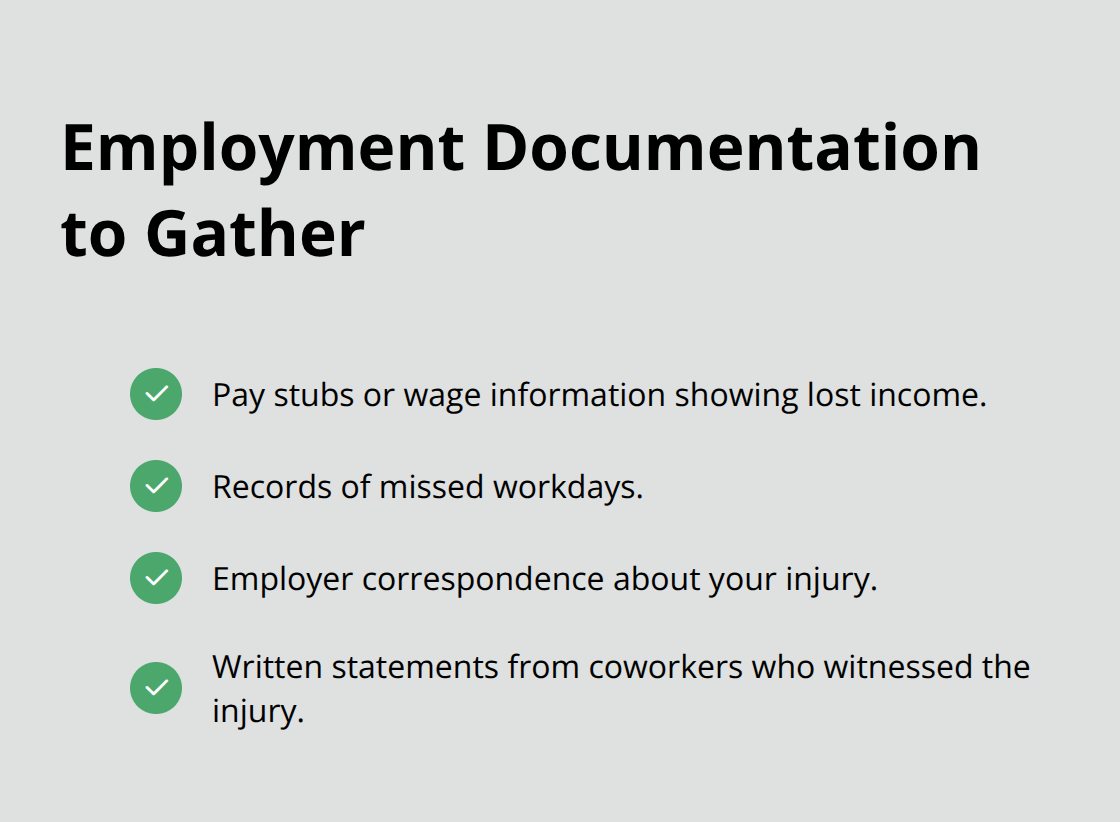
Employment documentation carries equal weight in your case. Gather pay stubs or wage information showing lost income, records of missed workdays, any employer correspondence about your injury, and written statements from coworkers who witnessed the injury or can describe how it affected your work capacity. These documents establish the financial impact of your injury and corroborate your account of what happened.
Ensure Consistency Across All Records
Inconsistencies between your testimony and your medical records will damage your credibility, so align your written account of the injury with what you told healthcare providers. If you have prior injuries or medical conditions, disclose them upfront-prior injuries can exist without negating a new or aggravated condition, but hiding them will destroy your case when the hearing officer discovers them. Prepare a one-page timeline listing the injury date, when you reported it to your employer, initial treatment, subsequent appointments, and any periods you missed work. This timeline helps the hearing officer follow your case during a compressed hearing.
Practice Your Testimony With Precision
Most telephone hearings last about 20 minutes total, giving each party roughly 10 minutes to present their case. If you have an attorney, they will argue most of the case and may have you testify only on specific issues. Speak clearly and slowly during the hearing-the hearing officer is taking notes and may not have seen your face, so your words must be precise. Practice answering questions concisely because the hearing officer controls the time and will redirect you if you ramble. Anticipate questions about how the injury happened, what symptoms you experienced immediately and over time, which treatments you received and their results, and how the injury affected your ability to work. Answer truthfully about every detail, including any gaps in treatment or reasons you delayed seeking care. The hearing officer evaluates credibility by assessing consistency between your testimony, medical records, and documented facts, so honesty matters more than trying to strengthen your narrative. With your evidence organized and your testimony prepared, you now understand what the hearing officer expects to see and hear when your case is called.
Inside the Hearing Room
How the Hearing Officer Evaluates Your Case
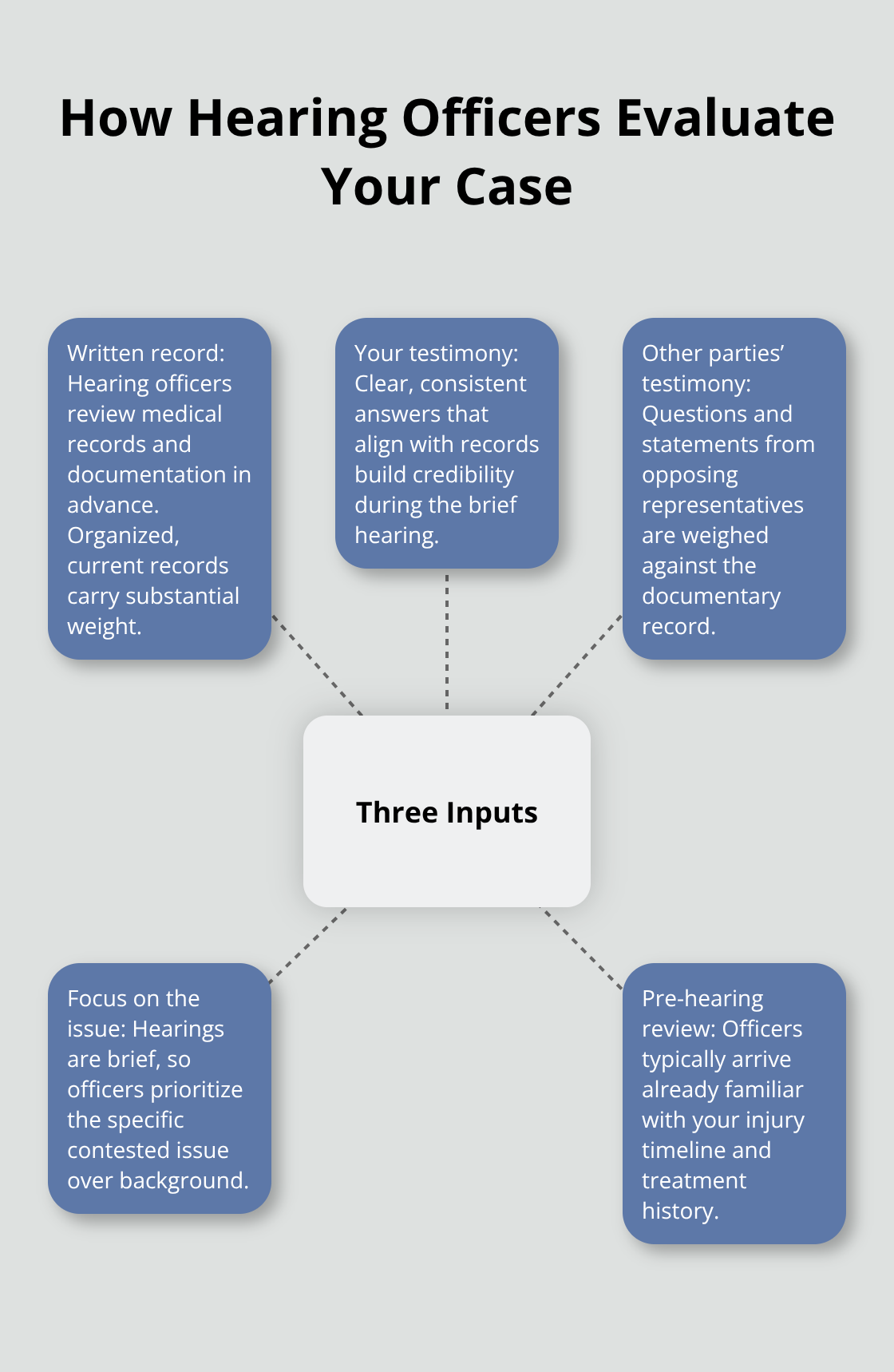
The hearing officer will assess your case using three primary inputs: the written record you submitted, your testimony, and the testimony of other parties. According to the Ohio Industrial Commission, hearing officers are attorneys hired specifically to decide disputed workers’ compensation matters, and they approach each case methodically. The hearing officer typically reviews your medical records and documentation before you speak, so they arrive with context about your injury timeline and treatment history.
During the hearing itself, the officer’s role is to determine whether your evidence meets the burden of proof for the specific issue being heard-whether that is claim allowance, additional medical conditions, temporary total disability, or treatment authorization. Most Ohio hearings last approximately 20 minutes, which means the hearing officer will not spend extensive time on background information. Instead, they focus on the contested issue.
Your Role During the Hearing
If you are represented by an attorney, your lawyer will present the legal argument and may ask you targeted questions about specific details. The hearing officer and the opposing party’s representative may also question you. When you answer, provide direct responses without elaborating beyond what was asked. The hearing officer takes notes throughout and will assess your credibility by comparing what you say to what appears in your medical records and employment documentation. Inconsistencies between your testimony and the written evidence will undermine your case, while consistency strengthens it.
What Evidence Carries the Most Weight
The evidence that carries the most weight in Ohio workers’ compensation hearings is medical documentation that directly connects your injury to work and establishes medical necessity for treatment or benefits. Your treating physician’s opinions linking your condition to your work injury matter significantly because the hearing officer relies on medical expertise to evaluate disability and treatment needs.
Independent medical examination reports from doctors selected by the BWC also carry substantial weight, though these can cut either direction depending on the examiner’s findings. Employment records showing missed workdays and wage loss support claims for temporary total disability, while work restrictions documented by your physician establish functional limitations. Witness statements from coworkers or supervisors who observed your injury or its effects on your work capacity add credibility to your account.
How the Hearing Officer Weighs Evidence
The hearing officer will weigh all evidence together, not isolating any single document as determinative. However, medical evidence that is current, specific, and directly addresses the issue being heard will influence the decision more than general or outdated records. If your medical evidence is sparse or contradictory, the hearing officer has less foundation to award benefits, even if your testimony is compelling. The strength of your written documentation often determines the outcome before you ever speak, which is why preparation and organization matter so much in the weeks leading up to your hearing.
Why Claims Get Denied at Hearings
Medical Evidence Gaps Undermine Your Case
Medical evidence gaps destroy most denied claims in Ohio workers’ compensation hearings. The Ohio Bureau of Workers’ Compensation relies heavily on written documentation, and if your medical records do not clearly establish that your injury is work-related or that treatment is medically necessary, the hearing officer has no foundation to award benefits. Sparse medical records, outdated treatment notes, or gaps in care create reasonable doubt about the severity of your condition or whether your injury actually occurred as you described it.
If you waited months before seeking treatment after your injury, the hearing officer will question whether your condition is truly work-related or whether it developed from something else entirely. Medical records must specifically link your symptoms to your work injury and document ongoing treatment that correlates with your claim. Vague diagnoses or treatment notes that fail to mention work restrictions or functional limitations give the hearing officer little evidence to support temporary total disability or permanent partial disability awards.
How Medical Records Affect Hearing Outcomes
If your treating physician’s records contradict your testimony about symptom onset or severity, the hearing officer will credit the contemporaneous medical documentation over your recollection from months or years later. Independent medical examination reports from BWC-selected doctors can also result in denials if the examiner concludes your condition is not work-related or that treatment is not medically necessary. These IME reports carry substantial weight, and unfavorable findings are difficult to overcome without additional medical evidence that directly refutes the examiner’s conclusions.
Procedural Failures and Work-Relatedness Disputes
Filing deadlines and procedural requirements eliminate claims before they ever reach a hearing. You must file your appeal with the Ohio Industrial Commission within the prescribed deadline after the BWC denies your claim or issues an unfavorable determination, and missing this deadline bars your right to a hearing entirely. Employment documentation showing work-relatedness also matters critically because disputes over whether your injury actually occurred at work frequently result in denials.
If your employer or the BWC claims your injury happened outside of work or that you failed to report it timely, your testimony alone will not overcome documented evidence that contradicts your account. Witness statements from coworkers who observed your injury strengthen your position significantly, but without corroborating evidence, the hearing officer may find the work-relatedness claim unproven. Similarly, if you reported the injury late or failed to seek immediate medical attention, the hearing officer may infer that the injury was not as serious as you now claim or that it did not occur as you described.
The Impact of Employer Pressure and Delayed Reporting
Employers sometimes pressure workers not to file claims or to characterize injuries as outside of work, but once an injury is reported and documented through medical treatment, contemporaneous medical records establish the injury timeline more reliably than delayed testimony. The hearing officer will assess what the written record shows about when you reported the injury, when you sought treatment, and what medical providers documented at that time (rather than what you recall years later).
Final Thoughts
Your BWC claim hearing in Ohio succeeds or fails based on preparation, not luck. The three elements that determine outcomes are straightforward: organized medical documentation that establishes work-relatedness and medical necessity, employment records that prove financial impact, and testimony that remains consistent with your written evidence. Hearing officers review thousands of cases annually and recognize immediately when a worker has prepared thoroughly versus when someone shows up unprepared.
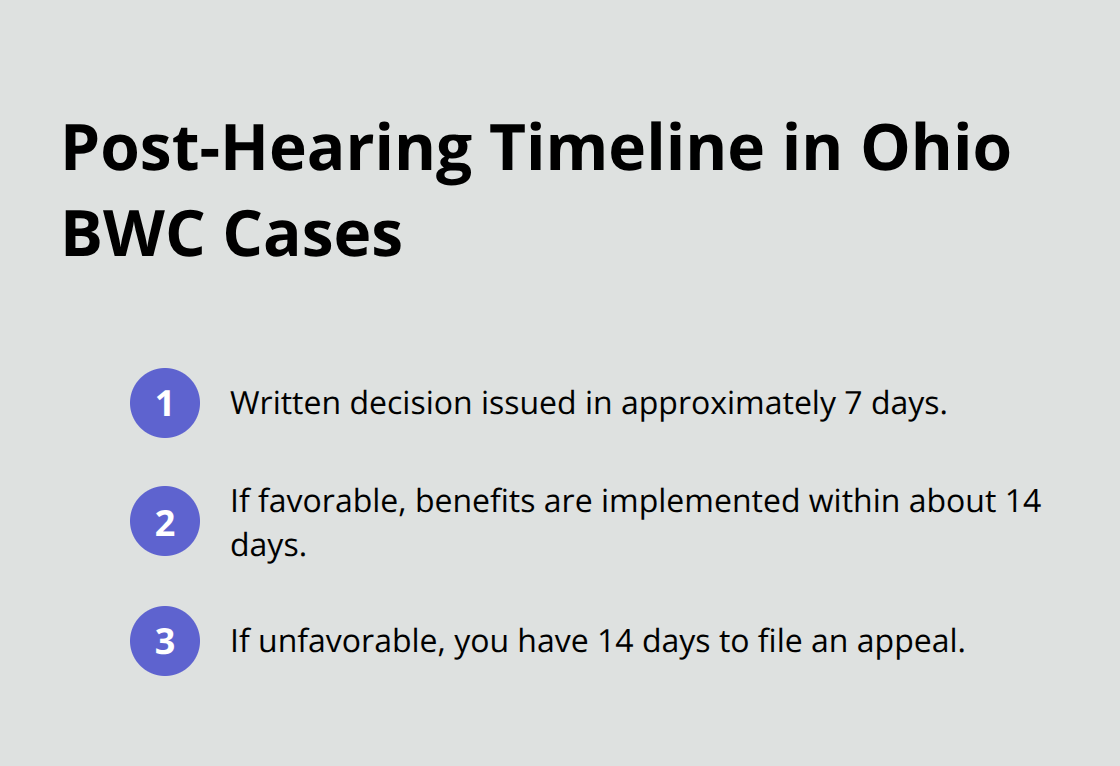
After your hearing concludes, the hearing officer takes the matter under advisement and issues a written decision within approximately seven days. If the decision favors your claim, benefits are implemented within about 14 days and authorized medical treatment can begin. If the decision is unfavorable, you have 14 days to file an appeal with the Ohio Industrial Commission, though grounds for appeal depend on specific circumstances and available evidence.
An experienced Ohio workers’ compensation attorney understands how hearing officers evaluate evidence, knows which procedural mistakes eliminate claims before they reach a hearing, and can identify whether grounds exist for appeal. Contact Robin J Peterson Company, LLC for a free consultation if your claim has been denied or if you face an upcoming BWC claim hearing in Ohio.