
Healthcare workers face unique risks on the job, from needlestick injuries to back strain. Understanding your healthcare workers compensation rights protects both your health and your financial security when an injury happens.
At Robin J Peterson Company, LLC, we help injured healthcare workers navigate Ohio’s workers compensation system. This guide walks you through your coverage options, your legal rights, and the steps to secure the benefits you deserve.
What Ohio Workers Compensation Actually Covers
Medical Treatment and Wage Replacement
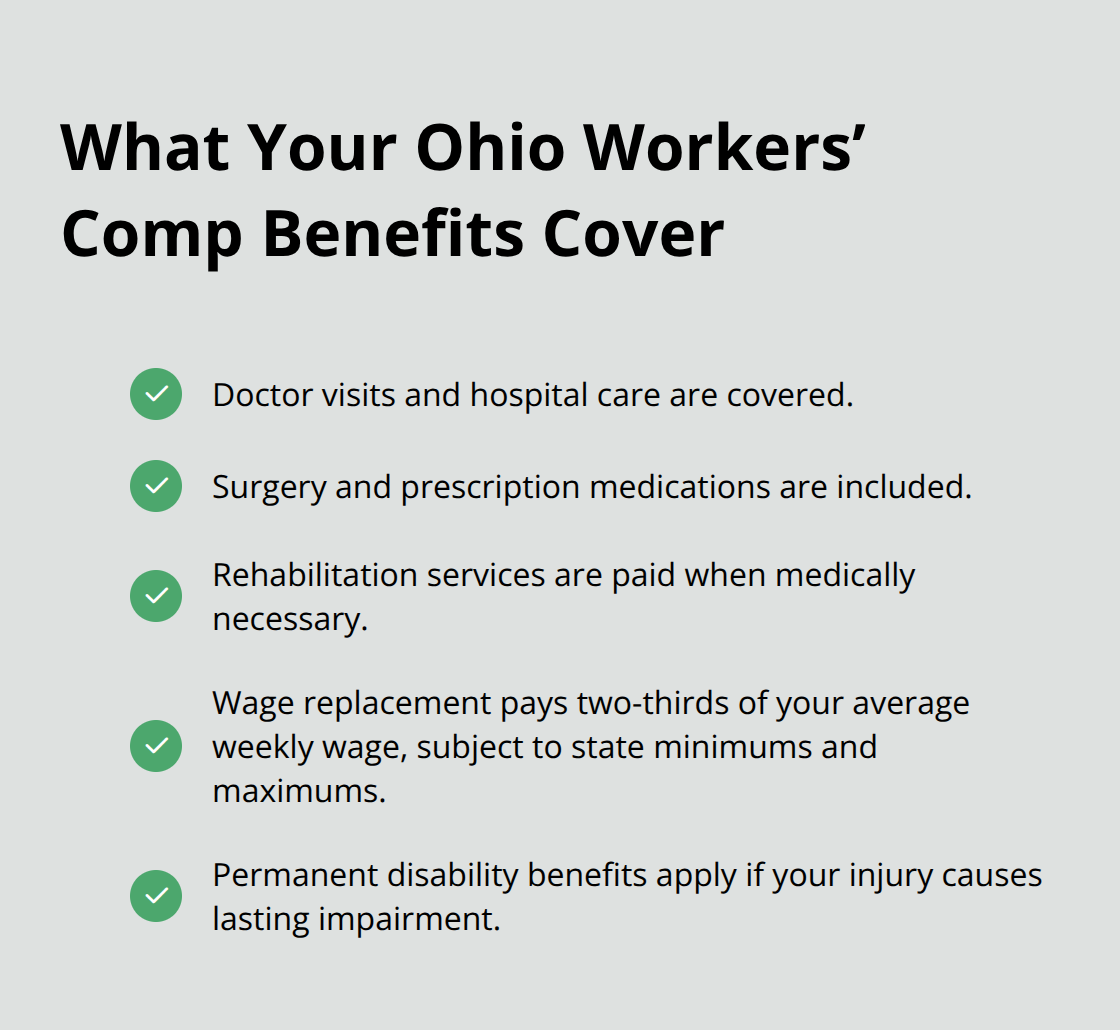
Ohio’s workers compensation system covers medical treatment and wage replacement for healthcare workers injured on the job, but the specifics matter more than the general promise. The Ohio Bureau of Workers’ Compensation covers medical expenses related to your injury, including doctor visits, hospital care, surgery, medications, and rehabilitation services. If your injury prevents you from working, you receive wage replacement benefits calculated at two-thirds of your average weekly wage, though state law sets maximum and minimum weekly amounts. The system also provides permanent disability benefits if your injury results in lasting impairment.
Healthcare Worker Injury Risks
Healthcare workers in Ohio face particular risks that qualify for coverage: needlestick injuries from contaminated sharps, back injuries from patient lifting and transfers, slip-and-fall incidents on wet floors in patient care areas, and infectious disease exposure from contact with patients. OSHA data shows healthcare worker injury rates run nearly three times higher than workers outside the healthcare sector, making coverage understanding essential for your protection. The types of injuries covered range from acute trauma to occupational illnesses, so long as the injury or illness arose out of and in the course of employment.
Documentation Requirements and Claim Investigation
What separates Ohio’s system from others is how aggressively the BWC investigates claims and what documentation you need from day one. When you report an injury to your employer, the employer files a claim with the BWC within a specific timeframe. You should receive medical treatment authorization quickly for emergency situations, but non-emergency care requires the BWC to review and approve treatment. This means delays occur, and your treating physician must document that care is medically necessary and related to your work injury.
Building Your Record for Approval
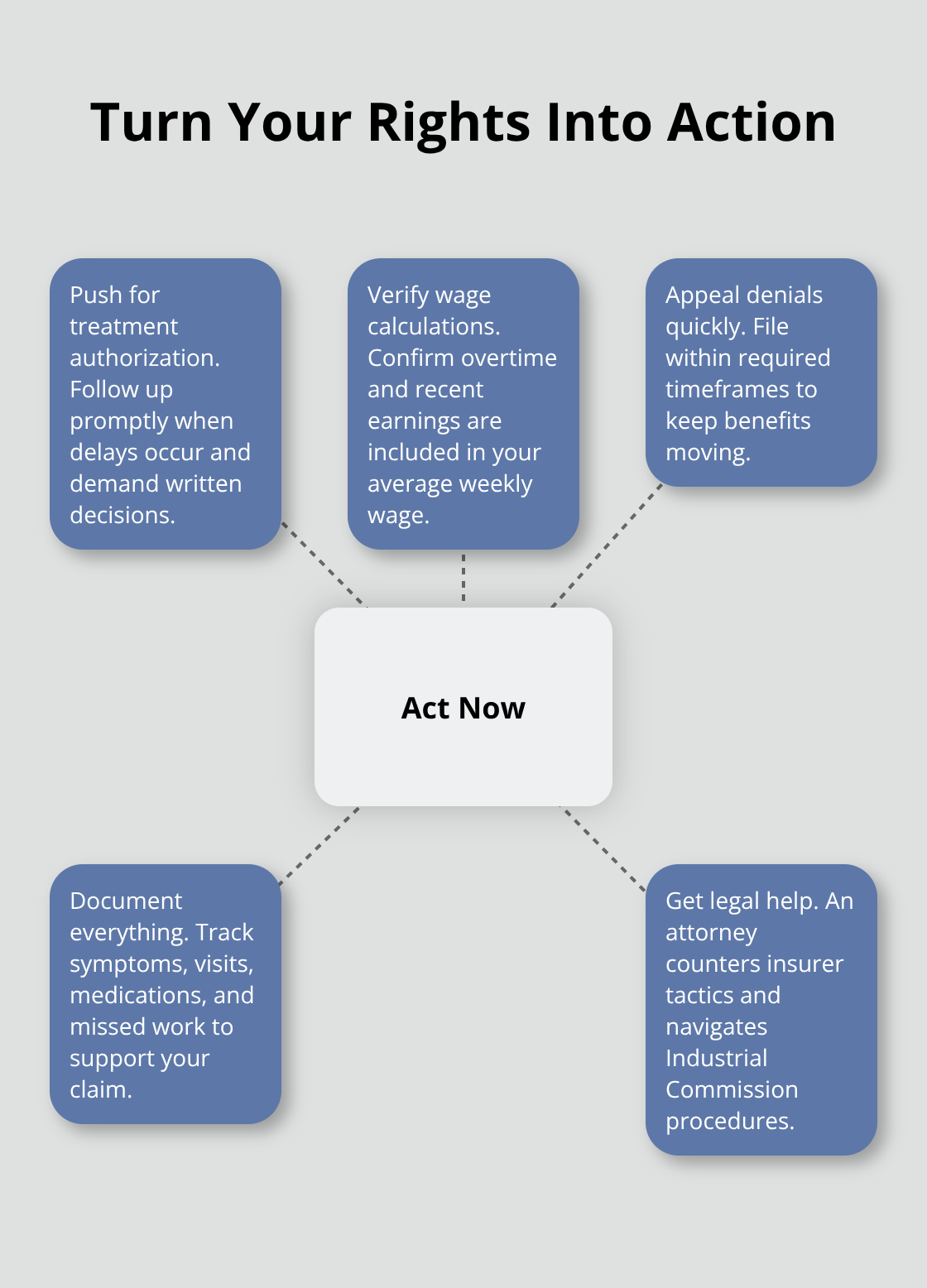
Detailed records accelerate your claim approval significantly. You should track every symptom, every medical visit, every medication, and every day you miss work because of your injury. The BWC uses this documentation to determine benefit amounts and to defend against claims they deem questionable. Healthcare workers who understand this documentation requirement from the start secure benefits faster than those who assume the system handles everything automatically. Your thorough record-keeping prevents denials that waste months fighting bureaucracy and strengthens your position throughout the claims process.
Your Rights as an Injured Healthcare Worker
Medical Treatment Without Financial Barriers
Ohio’s workers compensation system guarantees you access to medically necessary treatment without paying out of pocket. The BWC must authorize and pay for any care your treating physician deems necessary to address your work injury. This includes doctor visits, imaging, surgery, physical therapy, and medications. Authorization delays happen regularly, and you need to know how to push back when they occur. When the BWC denies treatment authorization, you have the right to request reconsideration within 14 days. If they deny again, you can appeal to the Industrial Commission of Ohio. Many healthcare workers accept the first denial instead of fighting it, which is a critical mistake because the law requires the BWC to prove your treatment is not medically necessary, not the other way around.
Wage Replacement During Your Recovery
Your second right is wage replacement at two-thirds of your average weekly wage while you cannot work due to your injury. Ohio sets both minimum and maximum weekly amounts that adjust annually. The BWC calculates your average weekly wage based on your actual earnings in the 52 weeks before your injury, so if you worked overtime regularly, that overtime counts toward your benefit calculation. This wage replacement continues for the duration of your disability, whether temporary or permanent. Understanding how the BWC performs this calculation prevents you from accepting inadequate benefit amounts without challenge.
Legal Representation Changes Everything
Your third right is legal representation at any stage of your claim, and this right matters more than most injured workers realize because the BWC and your employer’s insurer have lawyers, investigators, and adjusters working against you. An attorney files your appeal properly, meets all deadlines the Industrial Commission sets, and presents evidence the BWC cannot easily dismiss. Healthcare workers often hesitate to hire an attorney because they assume workers compensation is automatic, but the reality is that insurers and the BWC contest claims regularly (particularly for occupational illnesses and injuries that develop over time). When you have legal representation, you gain someone who challenges inadequate benefit calculations, ensures your treating physician receives proper authorization to continue care, and fights denials that the BWC issues without sufficient medical justification. The Industrial Commission of Ohio handles disputed claims, and presenting your case effectively there requires understanding their procedures and standards of evidence. Without representation, you navigate this process alone while managing your injury and recovery, which leaves you vulnerable to accepting settlements far below what your case warrants.
Why Your Next Move Matters
The three rights outlined above exist on paper, but claiming them requires action. Passive acceptance of BWC decisions costs you money and delays your recovery. Your treating physician needs authorization to continue your care, your wage replacement calculation needs verification, and your denials need formal challenges-all within specific timeframes that the Industrial Commission enforces strictly.
How the Ohio Claims Process Actually Works
Report Your Injury Immediately to Protect Your Timeline
Your injury happened at work, and now the clock starts ticking. The moment you report it to your employer, the BWC begins investigating whether your claim qualifies for coverage. This investigation phase determines everything about your benefits-how much you receive, what treatment gets authorized, and how quickly you access care. Most healthcare workers underestimate how aggressive this investigation becomes, particularly when your injury involves occupational illness or develops gradually.
Your employer must report the injury to the BWC within a specific timeframe, typically within two weeks of when they learn about it. The BWC then assigns a claims administrator who reviews your medical records, your work history, and the circumstances of your injury. During this review period (which can last anywhere from a few days to several weeks for straightforward injuries), the administrator determines whether your case qualifies as a compensable claim.
Documentation Prevents Claim Denials Before You Know They Happened
Documentation becomes critical at this stage. If your treating physician’s initial medical report fails to clearly establish that your injury arose out of and in the course of your employment, the BWC may issue a denial before you even realize the investigation is underway. Healthcare workers often discover their claims were denied weeks after the injury occurred because they did not receive proper notification.
The BWC is required to send you written notice of their decision, but that notice sometimes arrives late or gets lost in employer communications. Do not wait for official notification-contact the BWC directly at their claims line within two weeks of your injury report to confirm your claim status and obtain your claim number. This single action prevents the common scenario where a denial becomes final because you missed a deadline you never knew existed.
Treatment Authorization Requires Active Tracking and Deadlines
Once the BWC approves your claim as compensable, treatment authorization becomes your next battlefield. Non-emergency care requires explicit BWC authorization before your treating physician can proceed without financial risk to you. This authorization process introduces delays that directly impact your recovery timeline.
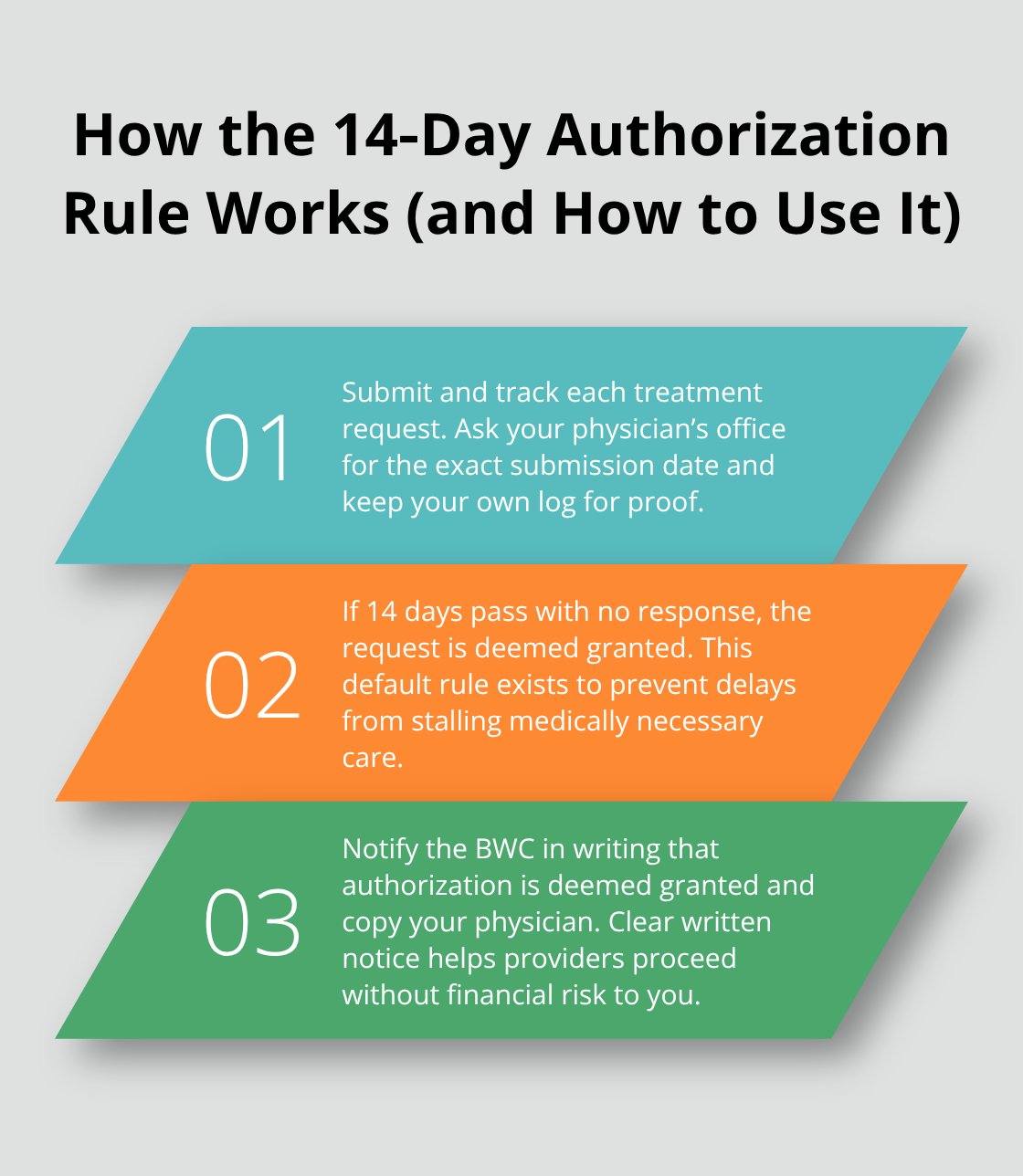
Your physician submits a treatment request to the BWC, and the claims administrator has up to 14 days to respond. If they do not respond within 14 days, Ohio law treats the authorization as granted-but many healthcare workers do not know this rule and accept treatment denials simply because they waited longer than two weeks without hearing back. Track every authorization request your physician submits and note the submission date. If you do not receive written authorization within 14 days, send the BWC written notice that the authorization is deemed granted under Ohio law, and provide a copy to your treating physician.
Appeal Denials Within the Correct Timeframe
When the BWC denies authorization, they must provide a written explanation of their medical reasoning. Read this explanation carefully. If the denial contradicts what your physician documented about medical necessity, you have grounds to appeal. An appeal must be filed with the Industrial Commission of Ohio within 14 days of the denial date, not 14 days from when you received the letter. This distinction matters because mail delays mean you could miss your deadline without realizing it.
The Industrial Commission reviews denied authorizations and often reverses denials when the medical evidence supports continued treatment, but only if the appeal is filed correctly and includes proper documentation of medical necessity. Your treating physician’s clinical notes are your strongest evidence-they show objective findings, test results, and functional limitations that justify ongoing care. If your physician’s documentation is weak, strengthen it by requesting they submit a detailed narrative explaining why the specific treatment addresses your work-related condition.
Final Thoughts
Ohio’s workers compensation system provides real protections for healthcare workers, but only if you claim them actively. Medical treatment authorization, wage replacement at two-thirds of your average weekly wage, and the right to appeal denials require you to understand deadlines, documentation requirements, and appeal procedures. The BWC investigates your claim thoroughly, treatment requests face delays, and denials happen regularly even when your injury clearly arose from your work.
Legal representation fundamentally changes your position within this system. When you have an attorney handling your claim, the BWC and your employer’s insurer know you understand your healthcare workers compensation rights and will fight inadequate decisions. An attorney files appeals correctly, meets every deadline the Industrial Commission sets, and presents medical evidence in ways that challenge denials effectively.
Contact Robin J Peterson Company, LLC to discuss your claim and protect your benefits. Whether your claim was recently denied, your treatment authorization was rejected, or you need guidance navigating the initial filing process, an attorney can review your situation and explain your options. Do not accept inadequate benefits or treatment denials without challenge.