
When the Ohio Bureau of Workers’ Compensation denies your medical benefits claim, it can feel like a setback with no clear path forward. At Robin J Peterson Company, LLC, we’ve helped workers understand that a denial isn’t the end of your claim.
You have specific rights and options available to challenge a medical benefits denial in Ohio. This guide walks you through those rights, the appeal process, and how to strengthen your case.
Why the BWC Denies Medical Benefits Claims and How to Overcome These Barriers
Documentation Gaps Trigger Most Denials
Missing or incomplete documentation stands as the leading cause of denial. A single missing page in your medical file-a lab result, a physician’s note, or proof of lost wages-can trigger a denial that takes months to overturn. The BWC requires your initial injury report, treating physician medical records, proof of lost wages, and a detailed description of how the injury occurred. If your employer failed to file the First Report of Injury within the required timeframe, the BWC may question the validity of your claim from the start.
Timing Errors and Reporting Delays
Timing matters significantly. Ohio law requires you to notify your employer of a work injury promptly, and your employer must file that report within a specific window. Delays of even a few days give the BWC grounds to challenge whether the injury truly occurred at work. Gradual injuries (cumulative trauma) face particular vulnerability to late reporting, so document the exact date and time you informed your employer. This written record protects your claim against future challenges.
Causation Issues and Pre-Existing Conditions
Causation issues represent another frequent denial trigger. The BWC will deny a claim if the injury appears unrelated to your job or if it seems like a flare-up of a pre-existing condition without clear work-related cause. Your treating physician must explicitly document that your work activities caused or substantially aggravated the condition. Vague medical notes that mention only pain without linking it to job duties typically fail to satisfy the BWC’s causation standard. Ask your physician to submit an amended report or a separate letter directly addressing how your job duties caused or worsened the condition.
How the BWC Evaluates Your Medical Request
When you submit a medical benefits request to the BWC, a claims examiner reviews it against Ohio’s workers’ compensation rules and the clinical evidence you provide. The examiner checks whether your injury falls within the scope of the original claim, whether your treating physician has proper credentials, and whether the requested treatment aligns with standard medical practice for your condition. The BWC does not simply accept physician recommendations without scrutiny. If your doctor requests an expensive or lengthy treatment course, the examiner may question medical necessity or seek a second opinion.
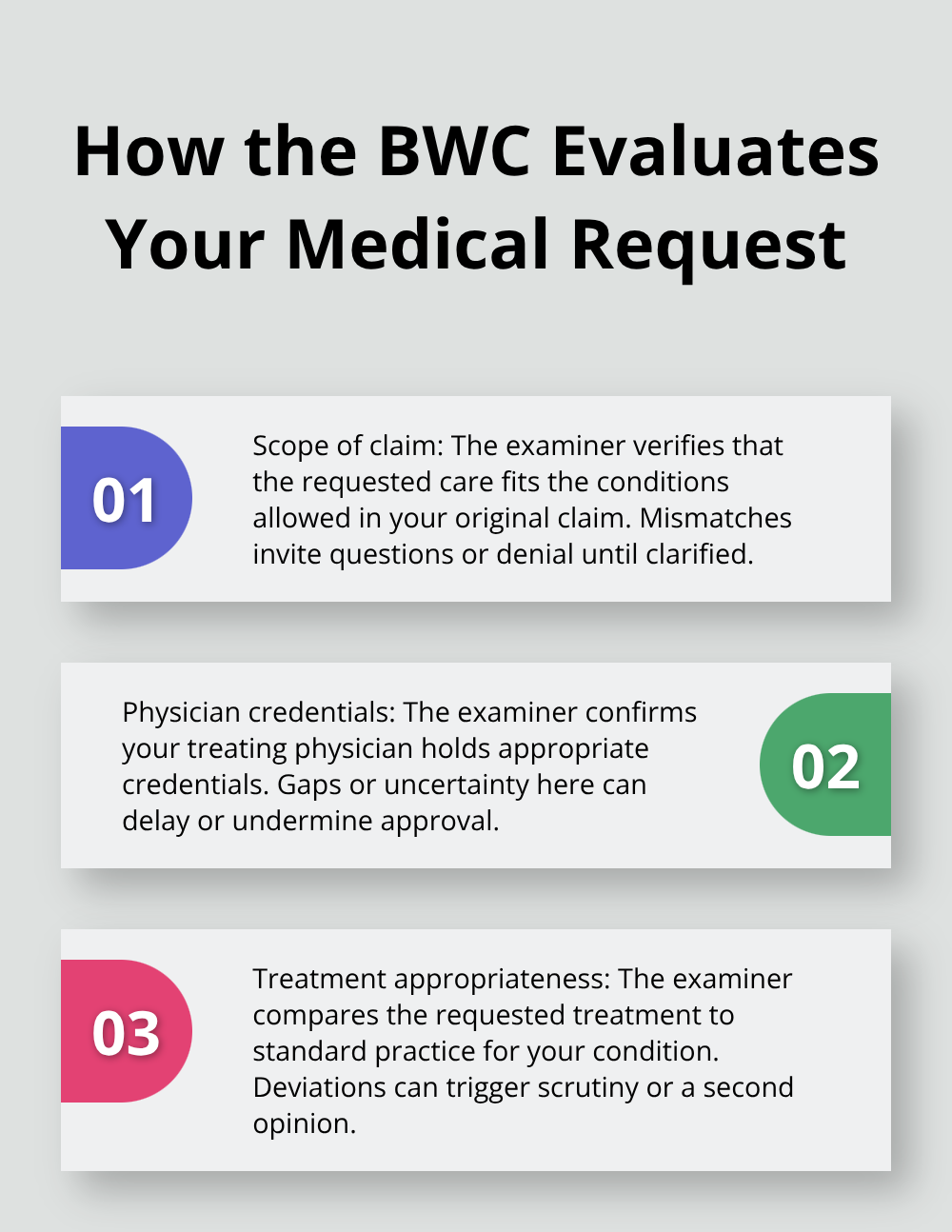
This is why your physician’s documentation must be thorough and specific about why the treatment is medically necessary for your particular injury.
Moving Through the Review Process
Well-documented claims with clear causation statements and comprehensive medical records move through the review process faster and face fewer denials. After the examiner completes the initial review, you receive a Notice of Action detailing whether benefits were approved or denied and stating the specific reason for any denial. This notice also outlines your right to appeal and the deadline for filing. Most workers have 20 days from the denial letter to file an appeal with the Industrial Commission, though confirming the exact deadline with the Commission directly prevents costly mistakes. Understanding these denial reasons positions you to build a stronger appeal and present evidence that directly addresses the BWC’s concerns.
What You Can Do After a Medical Benefits Denial
Appeal Your Denial Within the Strict Deadline
When the BWC denies your medical benefits, Ohio law grants you concrete rights to challenge that decision. The first and most important right is your ability to appeal within 20 days of receiving the denial letter. This deadline is strict-missing it forfeits your right to challenge the decision through the Industrial Commission of Ohio. Contact the Industrial Commission directly to confirm the exact filing deadline, as processing delays at the BWC can affect when you actually receive notice. Your appeal must be filed with the Industrial Commission through the official process, and you should attach all supporting evidence that addresses the specific reason the BWC cited for denial.
Address the Specific Denial Reason With Targeted Evidence
If the denial letter states the BWC questioned causation, submit a separate physician letter explicitly linking your work duties to the injury. If documentation was incomplete, gather every missing page and submit it with your appeal. Kaiser Family Foundation data shows that 82% of Medicare Advantage denials that were appealed were overturned, demonstrating that well-supported appeals succeed at high rates. Organize all documents chronologically and label them with dates and document type to strengthen your submission.
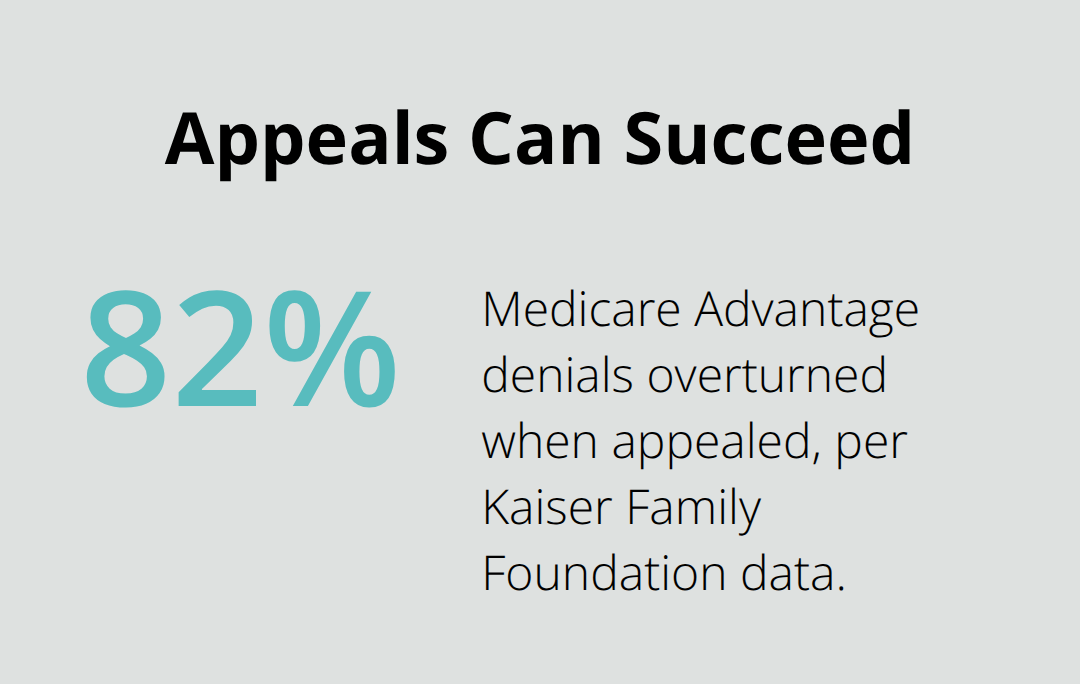
This organization signals to the Industrial Commission that you prepared your case with care and attention to detail.
Request an Independent Medical Examination
Beyond appealing the decision itself, you have the right to request an independent medical examination if you believe the BWC’s evaluation was incorrect. This examination can provide fresh clinical perspective on whether your condition warrants the treatment you requested. An independent examiner brings no prior involvement with your claim and can offer an objective assessment that counters the BWC’s position. This right protects you from accepting a denial based on incomplete or outdated medical information.
Secure Legal Representation to Strengthen Your Position
You also have the right to legal representation throughout the entire process, and this right matters more than many injured workers realize. An attorney who specializes in workers’ compensation can review your materials, ensure proper formatting, organize documents chronologically, and present arguments aligned with Industrial Commission expectations. The American Medical Association notes that clinicians spend roughly 13 hours per week navigating prior authorizations and appeals, underscoring how complex the process is for medical professionals-it is far more complex for injured workers without legal guidance. An experienced attorney can counter the BWC’s position using relevant precedents from prior Commission decisions and refine your evidence strategy to address each denial reason directly. Attorneys can also request an in-person hearing when appropriate, since testimony often conveys nuances that written submissions alone cannot capture.
Move Forward With Professional Guidance
The Industrial Commission reviews appeals on the written record, and strong, well-organized documentation often proves decisive in overturning denials. Legal representation from a firm with deep experience in Ohio workers’ compensation law can make the difference between a successful appeal and a continued denial. The next section covers the specific steps involved in filing your appeal and presenting your case to the Industrial Commission.
How to File and Win Your Appeal with the Industrial Commission
Meet the 20-Day Filing Deadline
Filing your appeal with the Industrial Commission of Ohio requires precision and speed. You have exactly 20 days from the denial letter date to submit your request for hearing, and this deadline cannot be extended. Contact the Industrial Commission directly to confirm the precise filing deadline rather than relying on the date printed in the denial letter, since processing delays mean you may receive notice days after the BWC mailed it. Your appeal must be filed through the official Industrial Commission process.
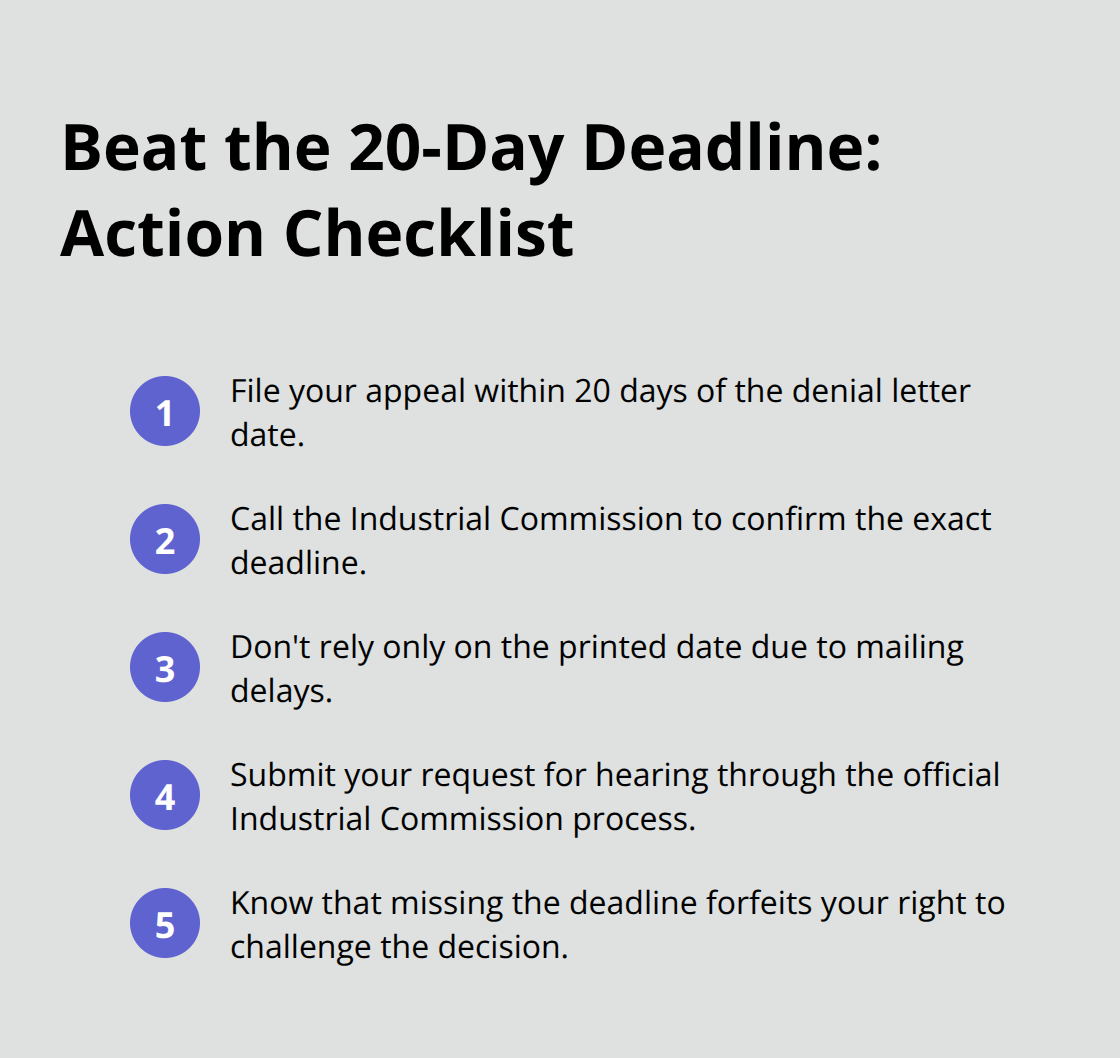
Missing this deadline forfeits your right to challenge the decision entirely.
Organize Evidence That Addresses the Denial Reason
The strength of your case depends entirely on the evidence you attach to your appeal. The Industrial Commission reviews appeals on the written record alone, meaning no in-person hearing occurs unless you specifically request one and demonstrate why testimony is necessary. Gather every document that addresses the specific reason cited in the denial letter. If the BWC questioned causation, include a separate letter from your treating physician that explicitly connects your work duties to your injury. If documentation was incomplete, submit every missing page with clear labels showing the date and document type. Arrange everything chronologically so the Commission can follow your injury timeline from the date you reported it to your employer through your most recent medical visit.
Present Your Case With Professional Strength
An attorney who specializes in Ohio workers’ compensation law transforms your appeal from a self-directed effort into a professionally managed case. Attorneys familiar with Industrial Commission expectations know how to frame arguments using relevant precedents from prior Commission decisions and can identify which evidence carries the most weight. The American Medical Association reports that clinicians spend approximately 13 hours weekly navigating prior authorizations and appeals, which demonstrates how technically complex these processes are for medical professionals themselves. Your attorney can request an in-person hearing when testimony would strengthen your position, since the Commission sometimes needs to hear directly from you about how the injury occurred or how the denial has affected your ability to work and receive necessary treatment.
Leverage Experience in Ohio Workers’ Compensation Law
An attorney will handle communication with the BWC, file all paperwork on time, and ensure nothing is overlooked. Kaiser Family Foundation research found that 82% of Medicare Advantage denials appealed were overturned, a figure that reflects the success rate when claims are properly documented and presented. The difference between a successful appeal and a continued denial often comes down to whether someone with deep knowledge of Ohio workers’ compensation law reviewed your case and refined your evidence strategy before submission to the Commission. Your attorney can counter the BWC’s position using relevant precedents and identify which evidence carries the most weight in Industrial Commission decisions.
Final Thoughts
A medical benefits denial in Ohio stops your access to necessary treatment, but it does not stop your right to fight back. You now understand the common reasons the BWC denies claims, how the review process works, and exactly what steps to take when a denial arrives. The 20-day appeal deadline is firm, the evidence you gather must directly address the denial reason, and the Industrial Commission reviews your case on the written record alone.
Legal representation changes the outcome. An attorney who knows Ohio workers’ compensation law inside and out can organize your evidence, counter the BWC’s position with relevant precedents, and present your case in the language the Industrial Commission expects. The difference between a successful appeal and a continued denial often comes down to whether someone with deep experience reviewed your materials before submission. You are not required to navigate this process alone, and attempting to do so puts your benefits at risk.
We at Robin J Peterson Company, LLC have helped injured workers throughout the Cleveland, Akron, and Canton areas challenge medical benefits denials and win the benefits they deserve. Our firm focuses entirely on workers’ compensation law and understands how the BWC operates, what evidence carries weight with the Industrial Commission, and how to build appeals that succeed. If you received a medical benefits denial in Ohio, contact us to discuss your case and learn how we can help you move forward.