
Construction site injuries happen more often than most people realize, and knowing your construction site injury rights can make a significant difference in your recovery and financial stability.
At Robin J Peterson Company, LLC, we’ve helped countless injured workers navigate the claims process and understand what protections Ohio law provides them.
Construction Site Injuries in Ohio and Your Legal Rights
The Most Common Construction Injuries
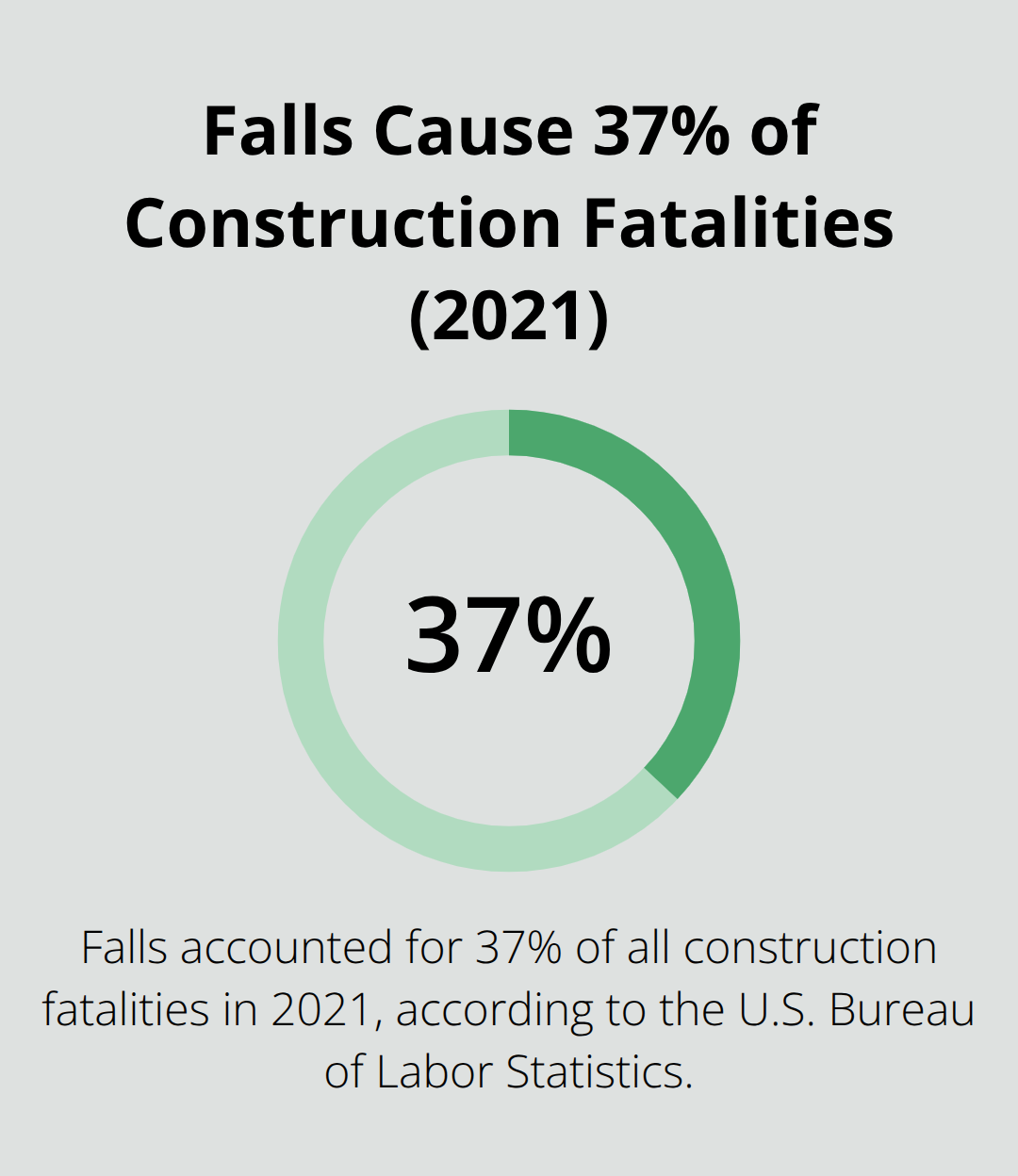
Falls from heights remain the deadliest construction hazard in Ohio and across the United States. According to the U.S. Bureau of Labor Statistics, falls caused 37% of all construction fatalities in 2021, making fall protection the single most important safety concern on job sites.
Beyond fatal falls, construction workers in Ohio face serious injuries from being struck by falling objects, electrocutions from live wires or faulty equipment, and caught-in or between incidents involving machinery or trench collapses. The Fatal Four-falls, struck-by, electrocutions, and caught-in/between hazards-account for the vast majority of construction deaths nationwide.
How Ohio’s Workers’ Compensation System Protects You
When you suffer any of these injuries on an Ohio construction site, Ohio’s workers’ compensation system provides immediate protection through the Ohio Bureau of Workers’ Compensation. The BWC covers your medical expenses, rehabilitation costs, and partial wage replacement if you cannot work during recovery. This is a no-fault system, meaning you do not need to prove your employer was negligent to receive benefits; you simply need to report the injury and file your claim within the required timeframe. Ohio law also protects you from retaliation if you report unsafe conditions or file a workers’ comp claim, and you have the explicit right to pursue additional compensation through third-party claims if someone other than your employer caused the injury.
Taking Action After Your Injury
Filing a claim with the Ohio BWC requires immediate action. You must report your injury to your employer as soon as possible, ideally within 24 to 48 hours, and obtain written confirmation of that report. Simultaneously, seek medical evaluation even if your injury seems minor, because some construction injuries-head trauma, internal injuries, or spinal damage-may not show symptoms immediately. Collect the names and contact information of all witnesses and document the accident scene with photos or videos if you can safely do so. Preserve all evidence including the equipment or materials involved, your personal protective equipment, maintenance logs, and any incident reports filed at the site.
Navigating the Claims Process
When you file your claim with the BWC, provide detailed documentation of your injuries, medical records, and a clear account of how the accident occurred. The Industrial Commission of Ohio will review your claim and either approve or deny it. If the commission denies your claim, you have the right to appeal with additional evidence. An experienced construction accident attorney can review your case, identify whether third parties were responsible, and help you understand whether you can pursue additional compensation beyond workers’ comp benefits. Understanding your options at this stage sets the foundation for protecting your financial recovery and exploring all available avenues for compensation.
Moving Through the BWC Claims Process
Act Fast in the First 48 Hours
The first 48 hours after your injury are critical, and most people waste them. You must report your injury to your employer immediately and obtain written confirmation of that report-not just a verbal acknowledgment from a supervisor. Many injured workers make the mistake of waiting a few days, thinking the injury will improve on its own, then discovering later that the delay creates problems with the BWC. Ohio law does not require you to file your claim within 24 to 48 hours, but the Industrial Commission of Ohio expects prompt reporting. The longer you wait, the harder it becomes to gather witness statements and preserve evidence from the scene.
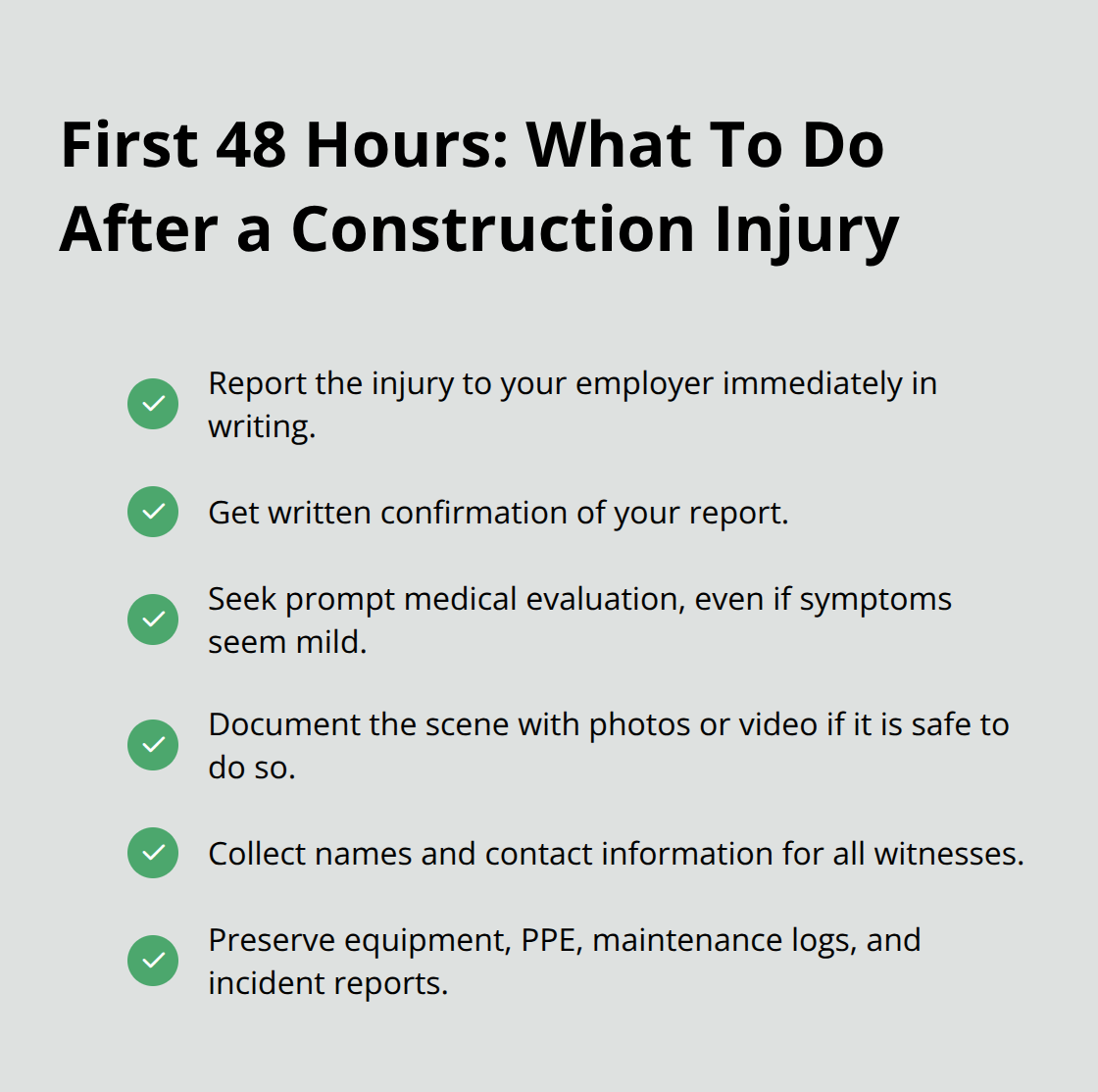
Your employer is required to report the injury to the BWC within 14 days if you miss work or incur medical expenses, but you should not rely on them to do this correctly. File your own claim with the BWC as soon as possible to protect your timeline. When you file, include a detailed written account of exactly what happened, the names and contact information of every witness present, photos or videos of the accident scene if available, and any equipment or materials involved in the injury. The BWC will assign your claim a number and begin reviewing your documentation.
Document Everything Medical-Related
Medical documentation becomes your strongest evidence during the claims process, and you must treat this seriously. Seek medical evaluation within days of your injury, even if symptoms seem mild, because internal injuries or head trauma may not present immediately and the absence of early medical records can undermine your claim later. Attend every medical appointment your doctor schedules and follow their treatment instructions completely, as gaps in treatment are used by the Industrial Commission of Ohio to argue your injury is not as severe as claimed.
Keep copies of all medical records, test results, and receipts for medical expenses you paid out of pocket. Document your recovery in a journal, noting your pain levels, limitations, and how the injury affects your daily activities, because this creates a detailed record that strengthens both your BWC claim and any potential third-party claim. When the Industrial Commission of Ohio reviews your claim, they examine your medical evidence carefully.
Understand What Happens Next
If the Industrial Commission of Ohio approves your claim, you receive medical coverage and wage replacement benefits. If they deny your claim, you have the right to appeal with additional evidence. At this point, consulting an attorney who handles construction injury claims in Ohio becomes wise because the appeal process involves strict procedural rules and the commission often requires expert testimony or additional documentation to overturn a denial. An experienced construction accident attorney can review your case, identify whether third parties were responsible, and help you understand whether you can pursue additional compensation beyond workers’ comp benefits. Understanding your options at this stage sets the foundation for protecting your financial recovery and exploring all available avenues for compensation, which leads directly into the question of employer responsibilities and what protections Ohio law actually guarantees you as an injured worker.
Employer Responsibilities and Your Protections
Safety Standards Your Employer Must Follow
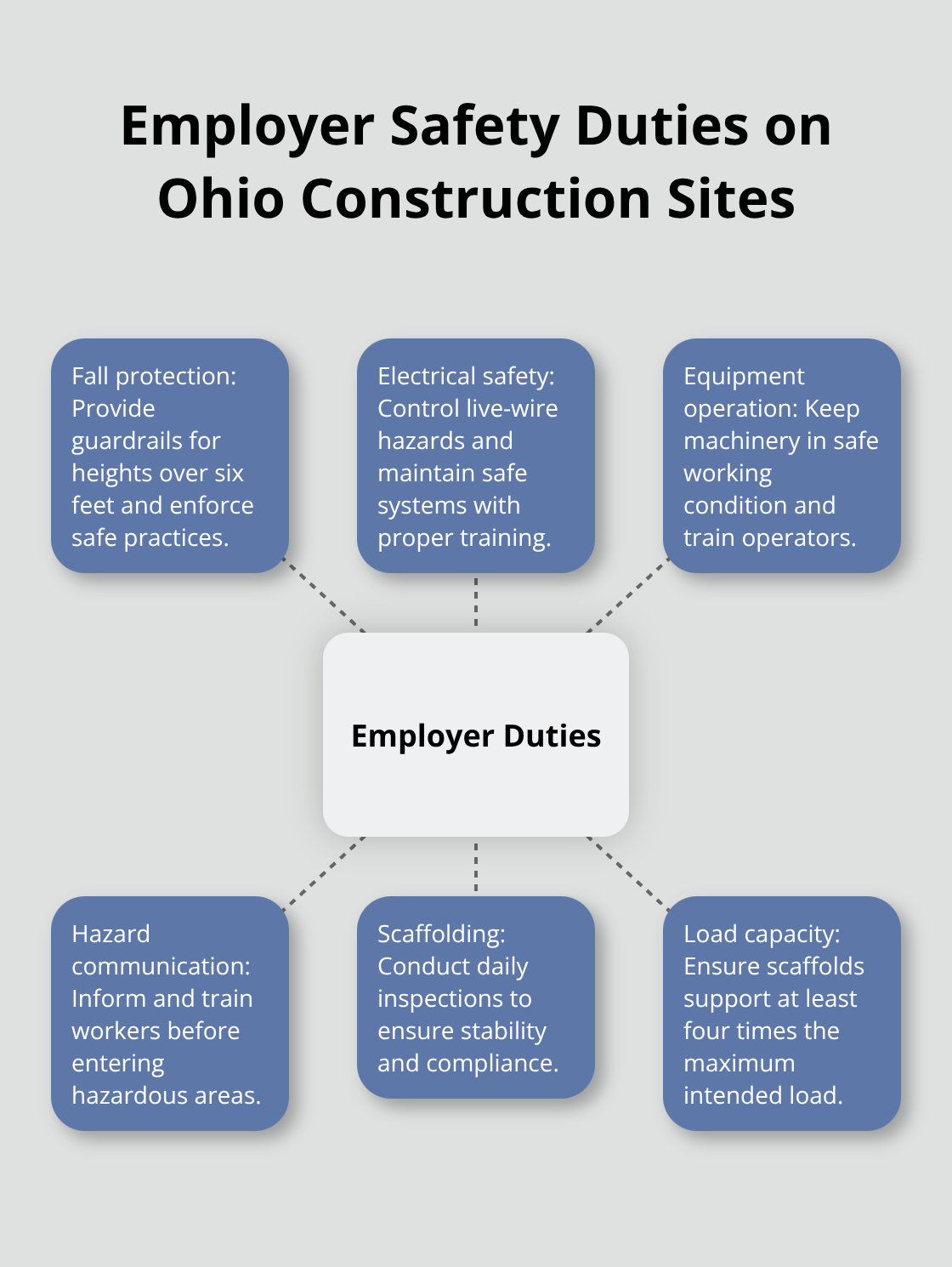
Ohio employers operating construction sites must follow specific safety standards established by OSHA and enforced through state regulations. These standards cover fall protection, electrical safety, equipment operation, and hazard communication, with requirements that employers provide guardrails for heights over six feet, maintain equipment in safe working condition, and train workers before they operate machinery or work in hazardous areas. OSHA scaffolding regulations mandate daily inspections and require scaffolds to support at least four times the maximum intended load, yet many Ohio construction sites cut corners on these inspections to save time and money.
Your employer cannot delegate safety responsibilities to workers; the law places the duty squarely on management to create and maintain safe conditions. If OSHA violations exist at your worksite, those violations become powerful evidence of negligence if you suffer an injury. The Industrial Commission of Ohio recognizes OSHA violations as indicators that your employer failed to meet their legal obligations, which strengthens your workers’ compensation claim and any third-party claims against responsible parties.
What Retaliation Looks Like and How the Law Protects You
Retaliation is illegal under Ohio law, and your employer cannot fire, demote, reduce hours, or otherwise punish you for reporting unsafe conditions, filing a workers’ compensation claim, or cooperating with an OSHA investigation. Many injured workers fear speaking up because they worry about losing their jobs, but this fear is exactly why the law prohibits retaliation. If your employer retaliates against you after an injury or safety report, you have grounds for additional legal action beyond your workers’ compensation claim.
When You Should Consult an Attorney
An experienced construction accident attorney can review your employer’s safety practices, identify OSHA violations, determine whether third parties share responsibility for your injury, and assess whether retaliation occurred. Consulting an attorney early in your case (ideally within weeks of your injury) allows them to preserve evidence, interview witnesses while memories remain fresh, and develop a comprehensive strategy that maximizes your recovery. At Robin J Peterson Company, LLC, we represent injured workers throughout the Cleveland, Akron, and Canton areas and help them understand your rights during recovery and pursue the compensation they deserve.
Final Thoughts
Your construction site injury rights in Ohio are stronger than you might think, and understanding them puts you in control of your recovery and financial future. The Ohio Bureau of Workers’ Compensation provides immediate medical coverage and wage replacement, but this system works best when you act quickly, document everything, and know when to seek additional help. Falls, struck-by incidents, electrocutions, and caught-in hazards remain the leading causes of construction injuries, and your employer bears the legal responsibility to prevent them through proper safety standards and equipment maintenance.
The first 48 hours after your injury determine whether you preserve critical evidence and protect your claim timeline. You must report your injury to your employer in writing, seek medical evaluation immediately, and gather witness information along with photos of the accident scene if possible. You should file your own claim with the BWC rather than waiting for your employer to do it, because this protects your timeline and ensures the Industrial Commission of Ohio gives your case prompt attention.
Beyond workers’ compensation, construction site injury rights may extend to third-party claims if someone other than your employer caused or contributed to your injury. A defective piece of equipment, a subcontractor’s negligence, or a property owner’s failure to maintain safe conditions can trigger additional compensation beyond BWC benefits. We at Robin J Peterson Company, LLC represent injured workers throughout Cleveland, Akron, and Canton and help them understand their options and fight for fair compensation-contact us for a free consultation to discuss your injury and develop a strategy that protects your rights.