
Many Northeast Ohio workers don’t know what protections they actually have on the job. At Robin J Peterson Company, LLC, we’ve seen firsthand how confusion about workplace rights leads to preventable problems.
This guide walks you through your actual protections under Ohio law, what happens when things go wrong, and exactly what steps to take.
Your Foundational Workplace Protections in Ohio
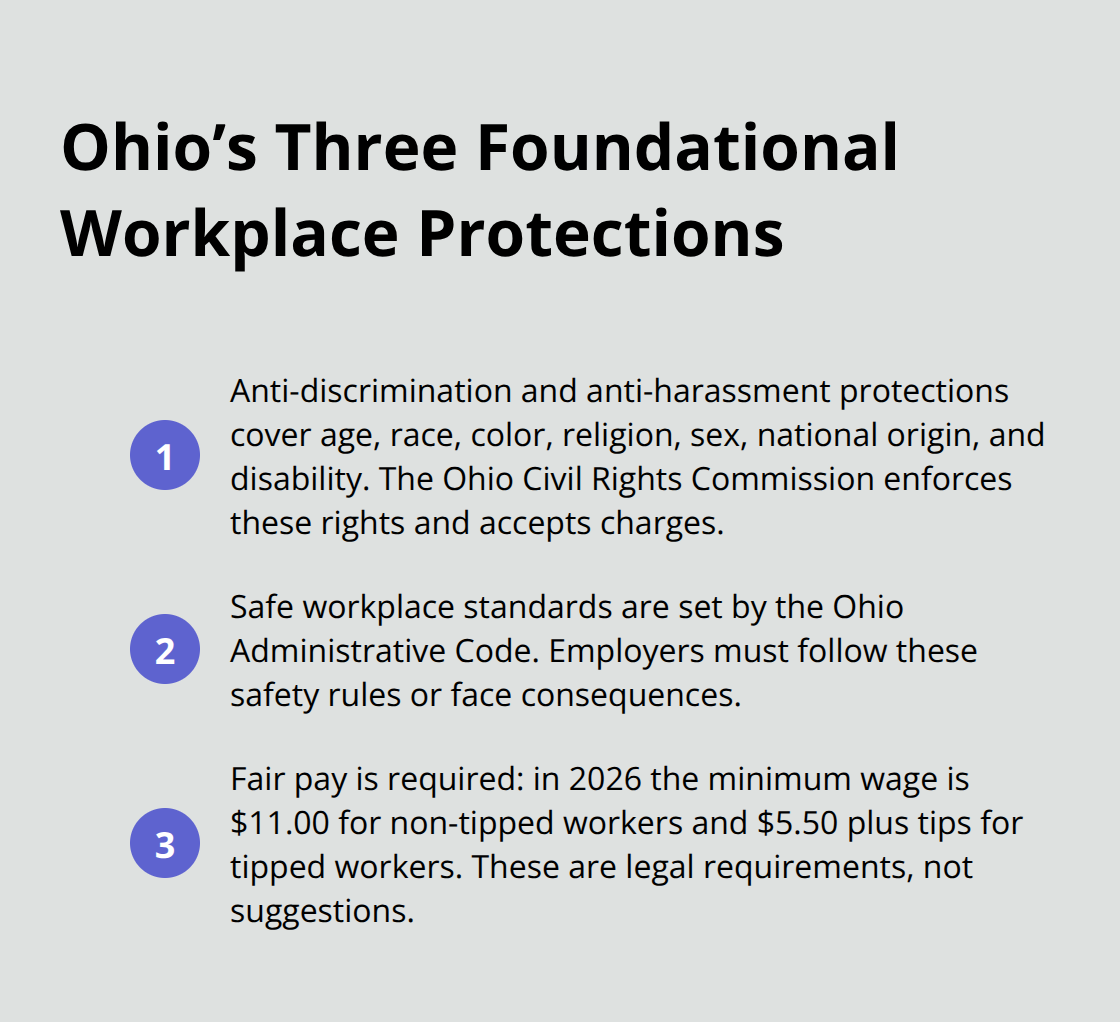
Ohio law grants you three foundational protections that most workers overlook. The first shields you from discrimination and harassment based on age, race, color, religion, sex, national origin, or disability. The Ohio Civil Rights Commission enforces this protection, and you can file a charge if you face age discrimination. The second protection guarantees you a safe workplace. Ohio follows the Ohio Administrative Code safety rules as the formal baseline, and employers must comply or face consequences. The third ensures fair compensation: as of 2026, Ohio’s minimum wage stands at $11.00 per hour for non-tipped employees and $5.50 per hour plus tips for tipped employees. These aren’t suggestions-they’re legal requirements, and employers who violate them break the law.
Identify Wage Theft in Your Paychecks
Wage theft occurs when employers fail to pay you for hours worked, misclassify you to avoid overtime, or refuse to pay overtime at the required rate. The Federal Fair Labor Standards Act sets baseline rules, but Ohio provides stronger protections through the Ohio Revised Code Chapter 4111 and Chapter 4113. If you work more than 40 hours per week, you’re entitled to overtime at time and a half unless a specific legal exemption applies (most workers are not exempt). Document your hours worked, take screenshots of timecards, and keep records of communications about your pay. If your employer refuses to pay what you’ve earned, file a complaint with the Ohio Department of Commerce’s Bureau of Wage & Hour Administration. They investigate wage violations without charging you a fee. The Northeast Ohio Worker Center also helps workers recover unpaid wages and guides you through the process.
Report Unsafe Conditions Without Fear of Retaliation
Employers cannot legally retaliate against you for reporting unsafe working conditions, filing a workers’ compensation claim, or refusing to work in imminent danger. This protection is absolute. If your workplace violates safety rules or you witness hazards that could cause injury, you have the right to report them to your employer or to Ohio’s regulatory agencies. Many workers stay silent because they fear termination, but Ohio law explicitly protects you from that outcome. If retaliation happens after you report a safety issue, that itself is illegal. Document the date you reported the problem, who you told, what was reported, and any negative employment action that followed. Keep emails or text messages as evidence. This documentation proves retaliation if you need it later.
When injuries do happen despite these protections, knowing how to respond immediately makes the difference between a smooth recovery and a prolonged fight for benefits.
Your First Steps After a Workplace Injury
The moment you suffer an injury at work, your actions determine whether you receive full benefits or face unnecessary delays and denials. Report the injury to your employer immediately, even if it seems minor. Ohio law does not require you to wait until pain worsens or you miss work. The sooner you report, the clearer the connection between your job duties and the injury becomes.
Report Your Injury in Writing
Tell your supervisor, manager, or HR department in person when possible, and follow up with a written email stating the date, time, location, and exact circumstances of the injury. This creates a timestamped record your employer cannot dispute later. Many workers stay silent because they worry about appearing weak or losing their job. That fear is unfounded. Ohio law explicitly protects you from retaliation for reporting a workplace injury, and employers who punish you for it face serious consequences. The U.S. experiences over four million on-the-job injuries annually, which means your employer has handled injury reports before and knows the legal requirements.
File Your Workers’ Compensation Claim Immediately
Start your workers’ compensation claim immediately after reporting. File your online application with the Ohio Bureau of Workers’ Compensation at the BWC website, or visit their office at 30 W. Spring St., Columbus, OH 43215-2256. The faster you file, the faster benefits can begin. Speed matters because delays work against you, not for you.
Document Everything From Day One
Document everything from the moment the injury occurs: keep records of the date and time of your injury, the names of witnesses, photos of the accident scene if safe, medical provider names and appointment dates, prescribed treatments, and all communications with your employer about the injury. Take screenshots of text messages and emails.
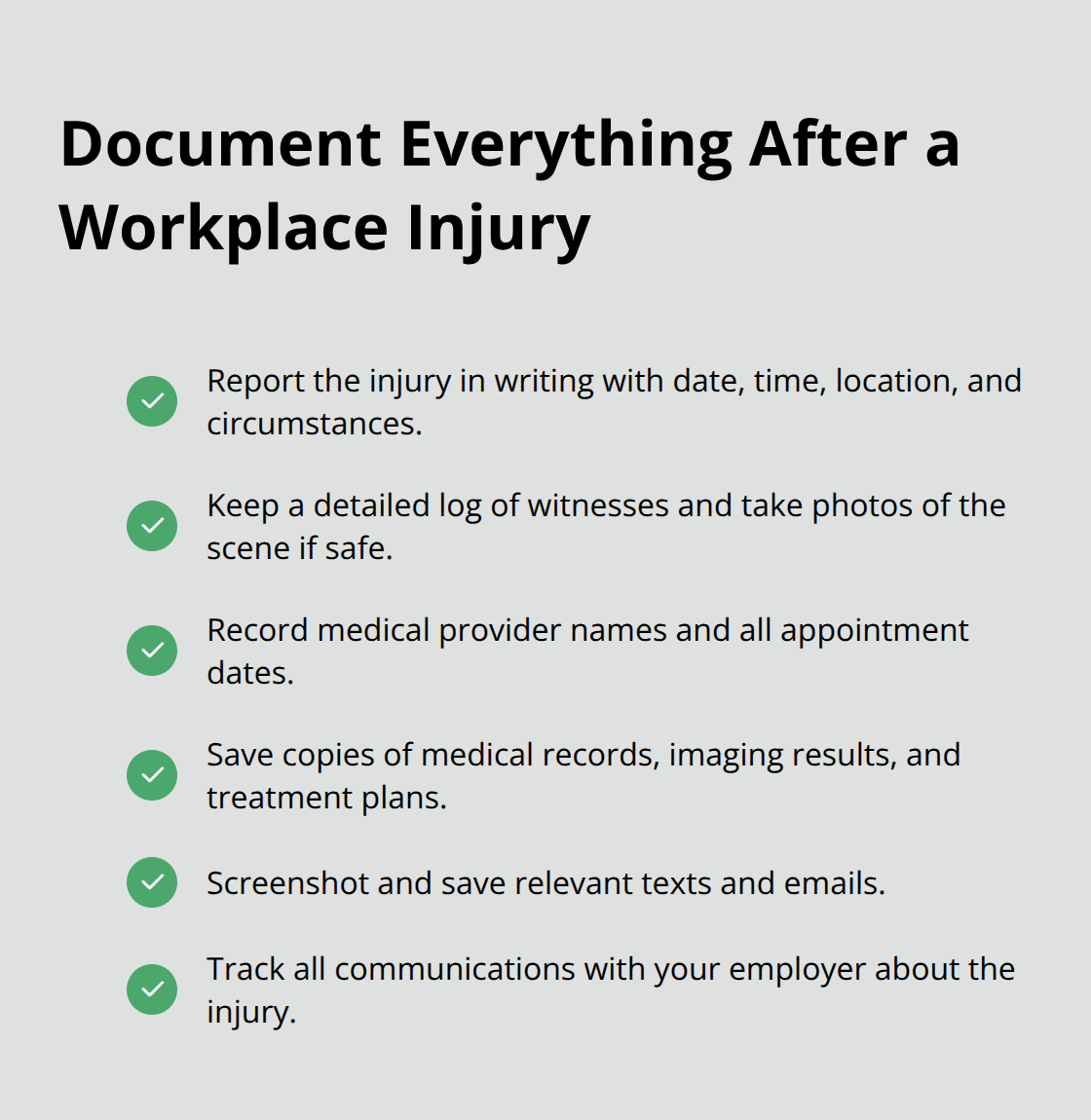
Save copies of medical records, imaging results, and treatment plans. This documentation proves the injury happened during work duties and required medical care (the key factors Ohio uses to determine eligibility).
Know When to Seek Legal Help
If you face denial, delay, or disputes with your employer or the managed care organization, a workers’ compensation attorney can protect your rights. We at Robin J Peterson Company, LLC, represent injured workers throughout Ohio and help them navigate the complexities of the BWC and the Industrial Commission of Ohio. When disputes arise, having experienced legal representation makes the difference between losing benefits and securing what you’ve earned.
The next section addresses what happens when your employer or the system itself creates obstacles to your recovery.
When Your Employer Violates Your Rights
Wage Theft: Recognize It and Stop It
Wage theft remains one of the most common workplace violations in Ohio, yet many workers fail to recognize it happening in their own paychecks. Your employer steals wages when they refuse to pay you for hours worked, misclassify you as exempt from overtime to avoid paying time and a half, or deliberately miscalculate your compensation. The Northeast Ohio Worker Center reports standing with more workers than ever to recover unpaid wages, indicating how widespread this problem has become.
Start by documenting your actual hours worked every single day. Take screenshots of timecards, record start and end times in a personal log, and save all pay stubs for at least two years. Compare your documented hours against what you were paid. If you worked more than 40 hours per week and did not receive overtime pay at one and a half times your regular rate, your employer violated the law.
File a complaint immediately with the Ohio Department of Commerce’s Bureau of Wage & Hour Administration, which investigates violations without charging you anything. They have the authority to compel your employer to pay back wages plus penalties.
Unsafe Conditions: Report Them Without Fear
Unsafe working conditions and employer retaliation often go hand in hand because workers fear that reporting hazards will cost them their jobs. That fear is the problem, not the solution. Ohio law absolutely prohibits retaliation against workers who report safety violations, refuse work in imminent danger, or file workers’ compensation claims.
If your workplace violates Ohio Administrative Code safety rules and your employer punishes you for reporting it, that retaliation is itself illegal and actionable. Document the exact date you reported the hazard, the person you told, what you reported, and any negative employment action that followed within days or weeks. Keep emails, texts, and witness statements.
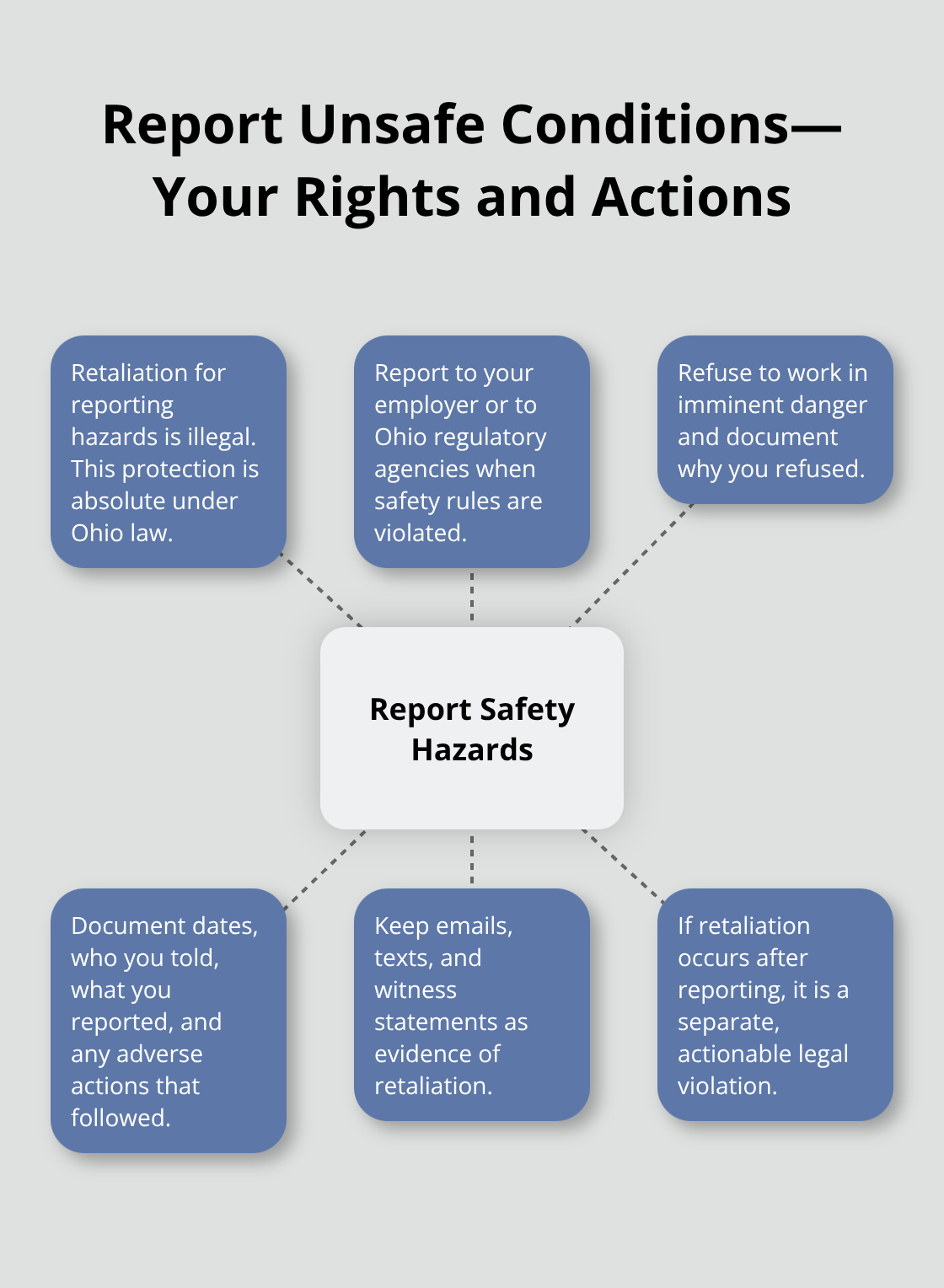
If retaliation occurs, you have grounds for a separate legal claim beyond any safety complaint.
The Northeast Ohio Worker Center helps workers organize around unsafe conditions and can guide you through the reporting process. When violations involve serious hazards, contact your employer’s safety department or Ohio’s regulatory agencies directly. Your employer cannot legally fire you, reduce your hours, cut your pay, or demote you in response (retaliation for safety reporting is a separate violation with its own penalties).
Final Thoughts
You now understand the core Northeast Ohio workers’ rights that protect you on the job. Ohio law shields you from discrimination, guarantees a safe workplace, and requires fair wages. When injuries happen, filing immediately with the Ohio Bureau of Workers’ Compensation and documenting everything gives you the strongest position for receiving benefits.
Knowing your rights means nothing if you fail to act on them. Many workers hesitate to report injuries, file wage complaints, or challenge unsafe conditions because they fear losing their jobs-but Ohio law explicitly protects you from retaliation for exercising your rights. Employers who punish you for reporting violations face serious consequences.
Seek legal assistance immediately if your employer denies your workers’ compensation claim, delays your benefits, retaliates against you for reporting a safety violation, or steals your wages. We at Robin J Peterson Company, LLC represent injured workers throughout Ohio and help them fight for the benefits they deserve. Contact Robin J Peterson Company, LLC if you need guidance on protecting your rights or if you face a dispute with your employer or the BWC.