
A wrist injury at work can disrupt your life and leave you uncertain about your rights. Ohio’s workers’ compensation system provides medical and wage coverage for qualifying injuries, but understanding what you’re entitled to requires knowing the rules.
We at Robin J Peterson Company, LLC help injured workers navigate wrist injury Ohio compensation claims and secure the benefits they deserve. This guide breaks down the coverage available to you.
What Counts as a Wrist Injury Under Ohio Law
Ohio workers’ compensation covers wrist injuries that occur during employment and arise from work duties. The Ohio Bureau of Workers’ Compensation recognizes acute injuries like fractures from falls, equipment impacts, or sudden trauma, as well as gradual injuries that develop from repetitive hand movements or prolonged pressure on the median nerve. Scaphoid fractures, for example, can be deceptively hard to diagnose early because standard X-rays often appear normal initially, yet the injury still qualifies for coverage once confirmed through advanced imaging. The key requirement is that your injury must stem from work activities, not from off-the-job activities or a preexisting condition unrelated to your job.
High-Risk Occupations and Industry Patterns
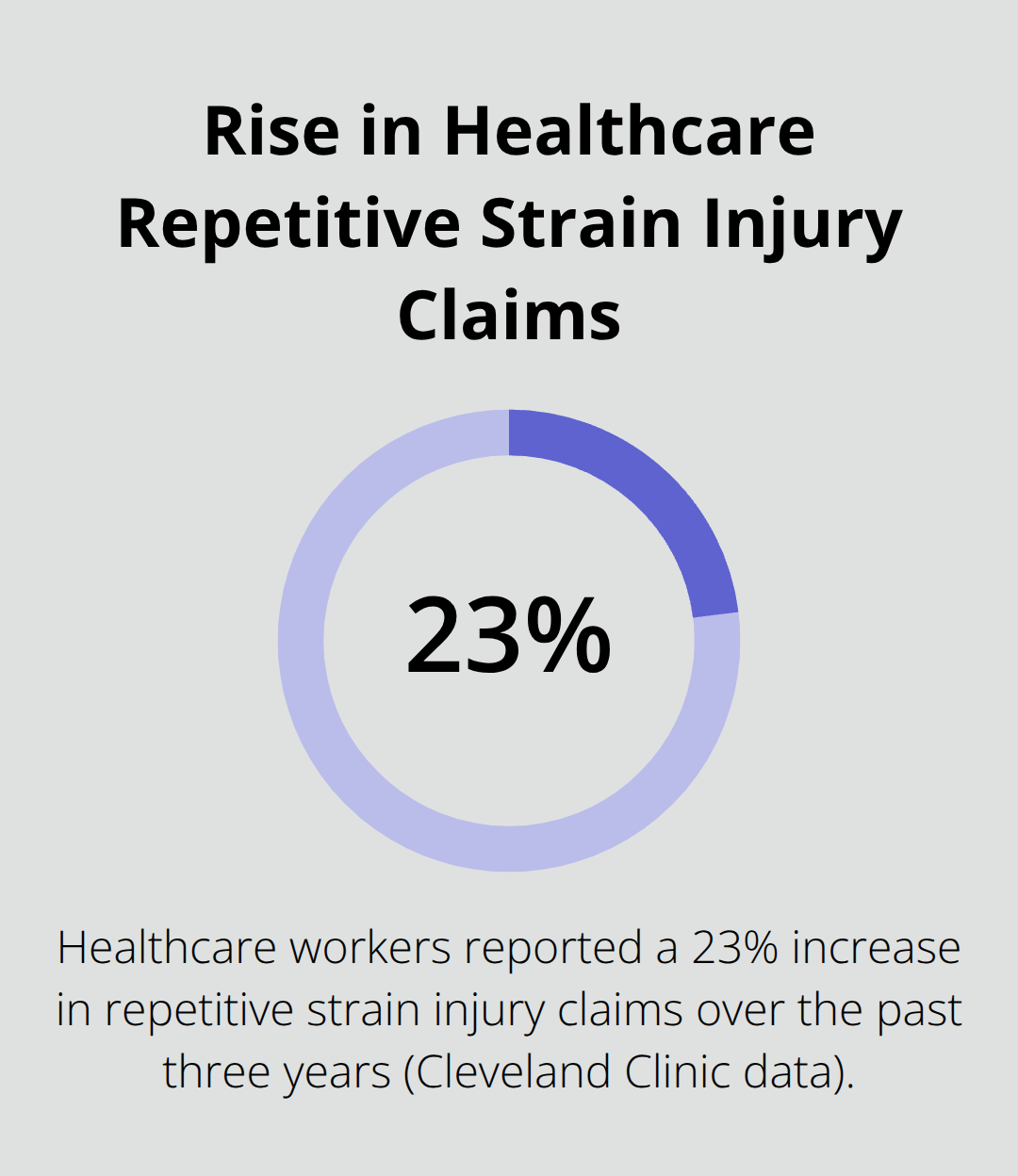
High-risk occupations include cashiers using scanners repeatedly, assembly line workers performing the same hand motions for hours, construction workers operating vibrating tools, and casino dealers handling cards and chips constantly. Healthcare workers show a 23 percent increase in repetitive strain injury claims over the past three years according to Cleveland Clinic data, driven by patient care tasks and repetitive charting. Your employer might argue that your wrist pain comes from arthritis, aging, or hobbies rather than work, which is why solid documentation from day one matters enormously.
Start Documenting Immediately
You must document your injury the moment symptoms appear. Write down the exact date symptoms started, which specific tasks triggered pain, and how the injury affects your ability to perform your job. Take photos of your workstation, equipment, and tools you use daily-these visuals prove the repetitive nature of your work better than any explanation. Your supervisor should acknowledge the injury in writing or provide a statement about your job duties and the tasks you perform.
Medical Records and Testing Requirements
Your physician’s records must explicitly connect your diagnosis to your job duties; generic clinical notes stating only the diagnosis without linking it to work activities often fail during review. The Ohio Bureau of Workers’ Compensation requires electromyography and nerve conduction studies to establish causation for certain wrist conditions, so your doctor must order these tests and document how your work worsens symptoms. Detailed job analysis reports boost claim approvals by about 35 percent compared with basic medical documentation alone, according to Cleveland Clinic findings.
File Your Claim Promptly
You should file your First Report of Injury directly with the Ohio BWC to prevent administrative delays and create an official record of when the injury occurred. This step protects your rights and sets the foundation for the medical and wage benefits that follow.
Medical Benefits and Treatment Coverage for Wrist Injuries
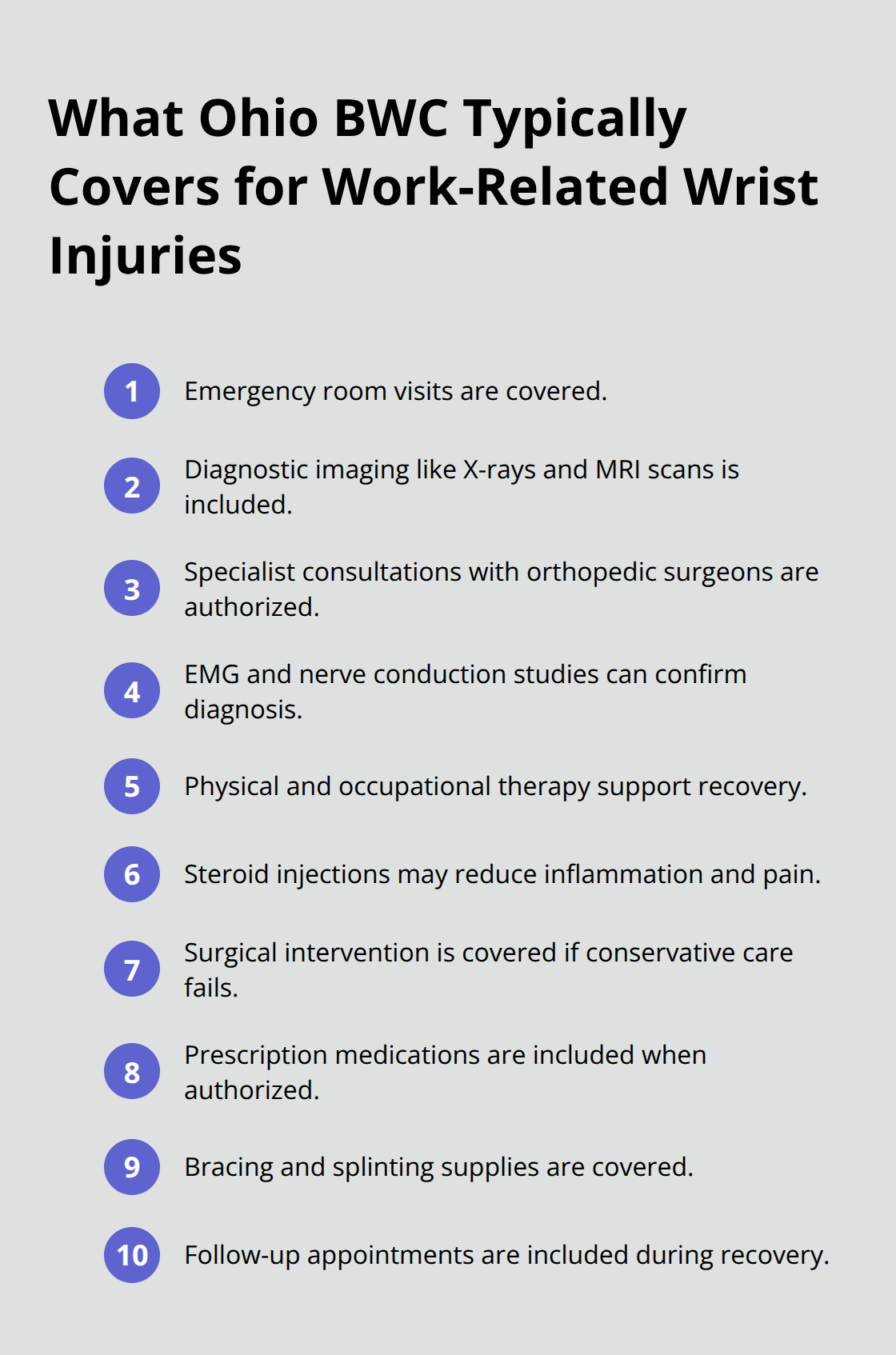
The Ohio Bureau of Workers’ Compensation covers all necessary medical treatment for your wrist injury once your claim is approved, which means you don’t pay out of pocket for authorized care. This includes emergency room visits, diagnostic imaging like X-rays and MRI scans, specialist consultations with orthopedic surgeons, electromyography and nerve conduction studies to confirm diagnosis, physical and occupational therapy, steroid injections, and surgical intervention if conservative treatment fails. The BWC also covers prescription medications, bracing and splinting supplies, and follow-up appointments throughout your recovery. What matters most is that you receive treatment from an authorized provider on the BWC’s network, because going to an unauthorized provider can result in denial of payment and you becoming responsible for the bill. When you file your claim, the BWC sends you a list of approved medical providers in your area, and your initial treating physician should be on that list.
If your doctor isn’t listed, contact the BWC directly before your appointment to confirm authorization, because assumptions about coverage can cost you thousands in unexpected medical bills.
Selecting Providers Who Understand Workers’ Compensation
Not all doctors handle workers’ compensation cases the same way, and this matters significantly for your claim’s success. Some providers understand the documentation requirements the BWC demands, while others submit incomplete records that delay benefits or trigger denials. Ask your primary care physician whether they regularly treat workers’ compensation patients and whether they understand Ohio’s medical reporting standards before you schedule an appointment. If you’re referred to a specialist, verify that specialist is also on the BWC’s authorized list and has experience with work-related injuries. Your initial treating physician controls much of the medical narrative in your claim, so you should choose someone thorough and familiar with causation documentation rather than someone convenient or familiar with your insurance.
Treatment Progression and Your Recovery Path
Conservative treatment typically starts first with wrist splints or braces that hold your wrist in a neutral position to reduce nerve compression and inflammation. You should wear these consistently, especially at night when symptoms often worsen. If splinting alone doesn’t provide relief within several weeks, your physician may recommend steroid injections into the carpal tunnel space to reduce swelling around the median nerve. These injections often require multiple doses over several months before you experience significant relief, so patience during this phase is essential. Physical therapy focuses on strengthening the muscles that support your wrist, improving flexibility, and teaching you ergonomic modifications for your job tasks. Your therapist should work directly with your employer to assess your workstation and recommend changes that prevent re-injury after you return to work. If conservative care fails after several months of documented treatment attempts, surgical carpal tunnel release becomes the next option, which involves cutting the transverse carpal ligament to permanently relieve pressure on the median nerve. Understanding what happens next-how the BWC calculates your wage replacement during recovery-helps you plan your finances and know what to expect as you heal.
Wage Loss Benefits During Recovery
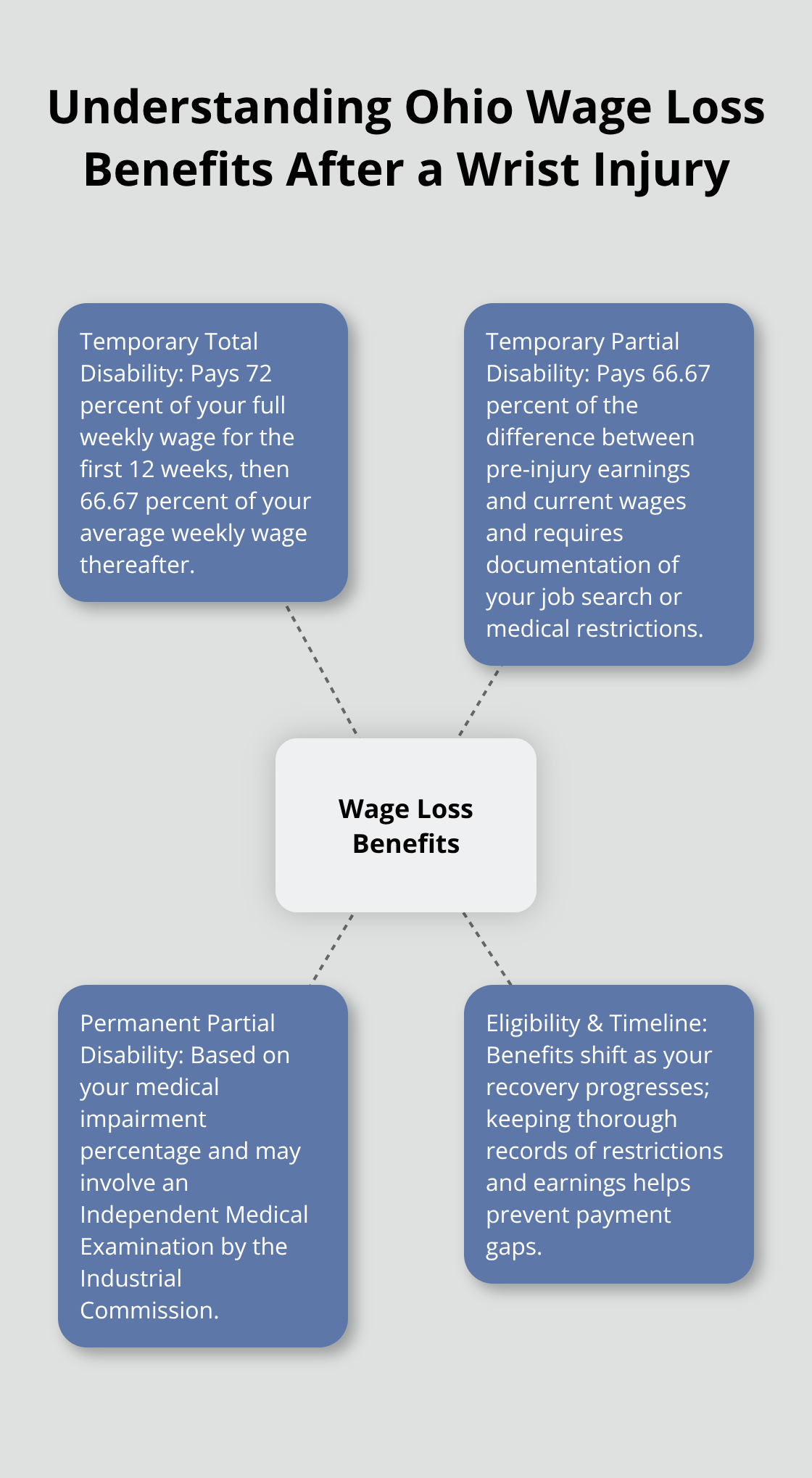
Once your wrist injury claim receives approval, the Ohio Bureau of Workers’ Compensation replaces lost wages while you cannot work or work at reduced capacity. This wage replacement occurs in stages depending on your recovery timeline and ability to return to job duties. The system distinguishes between temporary total disability when you cannot work at all, temporary partial disability when you work part-time or in a lighter role, and permanent partial disability when you reach maximum medical improvement with lasting impairment. Understanding how each category calculates your benefits prevents surprises when your first check arrives and helps you plan finances during recovery.
How Temporary Total Disability Payments Work
Temporary total disability pays 72 percent of your full weekly wage for the first 12 weeks, then shifts to 66.67 percent of your average weekly wage for ongoing payments. Your full weekly wage is the higher of six weeks of prior gross earnings or earnings from the seven days before injury, while average weekly wage averages all wages over the 52 weeks before the injury occurred. This distinction matters because some workers earn more during specific seasons or periods, and the BWC uses whichever calculation favors you initially. The system ensures you receive income support while your physician determines whether you can safely return to work.
Temporary Partial Disability and Gradual Return to Work
If you return to work part-time while still healing, temporary partial disability covers 66.67 percent of the difference between your pre-injury earnings and current wages, so you avoid financial penalties for attempting to work during recovery. Many injured workers miss this option and stop working entirely, losing the opportunity to maintain income continuity while gradually rebuilding capacity. Temporary partial disability requires proof that you actively seek full-duty work or that medical restrictions prevent it, so document all job search efforts and physician statements about your limitations. This approach allows you to earn wages while the BWC supplements the difference, creating a smoother transition back to full duty.
Permanent Partial Disability and Independent Medical Examinations
When you reach maximum medical improvement, your physician formally determines whether permanent impairment remains. The Industrial Commission of Ohio often orders independent medical examinations to verify impairment ratings, and these exams typically last 15 to 20 minutes, so preparation with your medical records and a clear explanation of how your wrist injury affects specific job functions strengthens your position. Permanent partial disability awards depend entirely on your medical impairment percentage, and the Industrial Commission reverses roughly 35 percent of initial disability ratings when workers have proper representation and complete medical documentation (this reversal rate demonstrates that thorough preparation and skilled advocacy significantly improve outcomes). Attorney representation becomes worthwhile when disputes arise over your impairment rating or when the BWC initially denies your claim, as experienced counsel understands how to present evidence that the Industrial Commission finds persuasive.
Final Thoughts
Your wrist injury Ohio compensation claim succeeds when you document symptoms immediately, link your diagnosis to work duties through medical records, and file your First Report of Injury with the Ohio BWC without delay. The system provides comprehensive medical coverage for authorized treatment and replaces your lost wages through temporary and permanent disability benefits, but only if you follow the procedural requirements and submit complete documentation. Gathering medical records showing how your work worsens your condition, taking photos of your workstation and tools, and obtaining written statements from supervisors about your job duties all strengthen your position from day one.
The claim process can become complicated when the BWC denies your application or disputes your impairment rating. Initial denials occur in roughly 40 percent of cases, but the Industrial Commission reverses approximately 35 percent of those denials when workers have proper representation and complete medical evidence. This is where experienced legal guidance makes a measurable difference in your outcome.
We at Robin J Peterson Company, LLC represent injured workers throughout Ohio who face wrist injuries and complex compensation claims. Our firm focuses exclusively on workers’ compensation law and serves the Cleveland, Akron, and Canton areas with attorneys who understand how to present evidence the Industrial Commission finds persuasive. Contact us for a free consultation to discuss your wrist injury claim and learn how we can help secure the benefits you deserve.