
Hand injuries at work can derail your career and finances fast. Ohio’s workers’ compensation system provides real support, but understanding what you’re entitled to matters.
At Robin J Peterson Company, LLC, we help injured workers navigate hand injury Ohio compensation claims and secure the benefits they deserve. This guide walks you through coverage types, benefit options, and the claims process.
What Hand Injuries Does Ohio Workers’ Compensation Cover
Common Hand Injuries That Qualify for Coverage
Hand injuries represent some of the most common workplace incidents in Ohio, particularly across manufacturing, construction, and industrial sectors according to the U.S. Bureau of Labor Statistics. Understanding which injuries qualify for workers’ compensation coverage matters because not all hand trauma receives the same treatment under Ohio law.
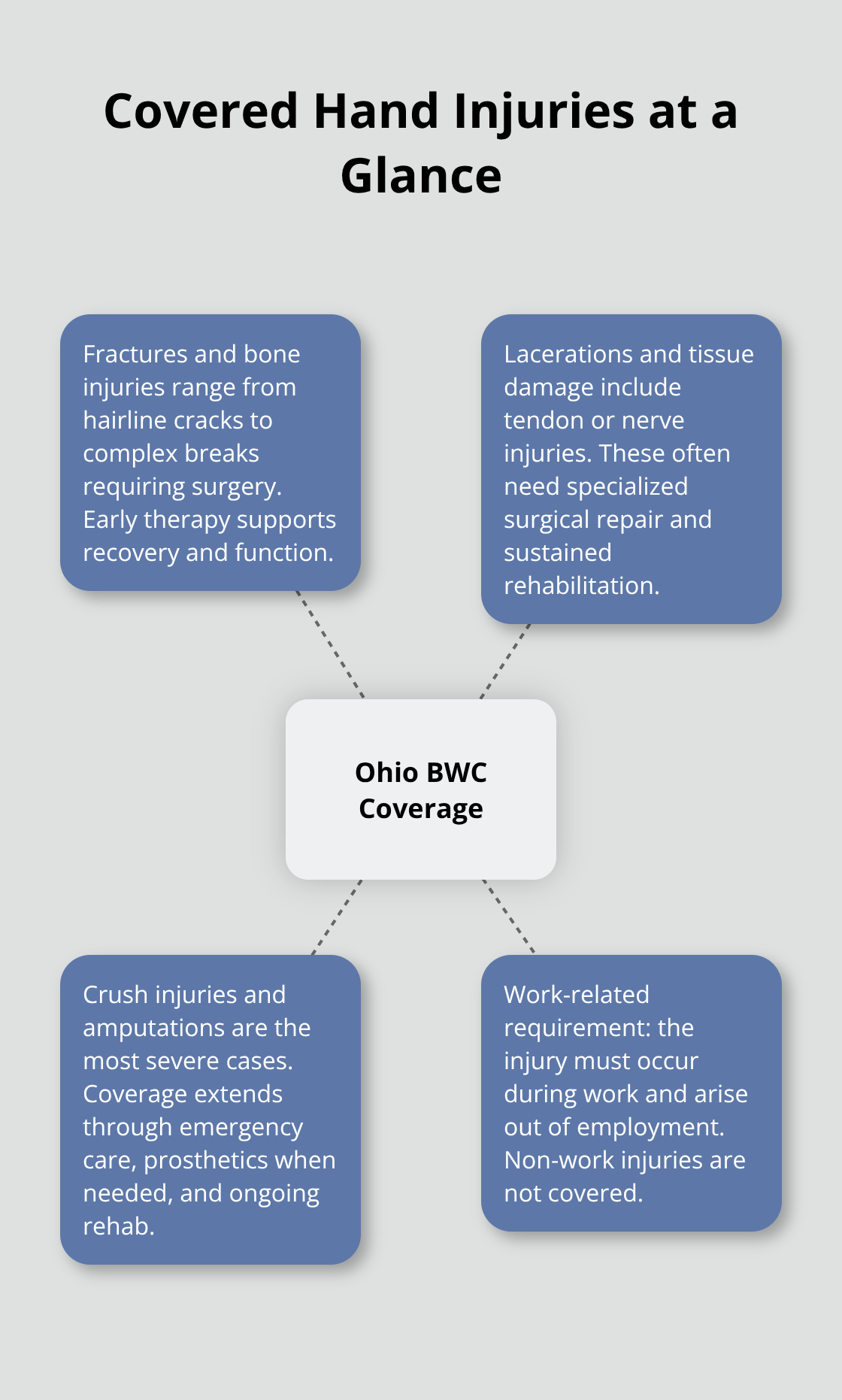
Ohio’s system covers a broad range of hand injuries, from simple fractures to severe amputations, as long as the injury occurred during work and arose out of your employment.
Fractures and Bone Injuries
Fractures and broken bones in the hand, wrist, or fingers trigger immediate medical coverage through the Ohio Bureau of Workers’ Compensation. These injuries range from hairline fractures in small bones to complex breaks requiring surgery and extended rehabilitation. The American Academy of Orthopaedic Surgeons emphasizes that early, aggressive hand rehabilitation and therapy improve functional outcomes and faster return-to-work timelines-which means getting proper medical care quickly is not optional.
Lacerations and Tissue Damage
Lacerations, cuts, and tissue damage qualify for coverage when they occur at work. Deep lacerations that damage tendons or nerves require specialized surgical repair and intensive therapy, sometimes spanning months. These injuries often demand multiple surgical interventions and prolonged physical rehabilitation to restore hand function.
Crush Injuries and Amputation
Crush injuries from machinery, presses, or heavy equipment represent the most severe category and often result in partial or complete amputation. If your hand or fingers were crushed, caught, or severed at work, Ohio’s system covers all necessary medical intervention, from emergency surgery through prosthetic fitting and ongoing rehabilitation services. The Ohio Bureau of Workers’ Compensation recognizes that amputation cases require specialized care and long-term support to help workers adapt and return to productive work.
Understanding your coverage options sets the stage for navigating the specific benefits available to you-medical treatment, wage replacement, and permanent disability awards all depend on your injury type and circumstances.
Ohio Workers’ Compensation Benefits for Hand Injuries
Medical Treatment and Coverage
Ohio’s workers’ compensation system pays for three distinct categories of support after a hand injury, and knowing the difference between them determines your financial recovery. Medical benefits cover all reasonable and necessary treatment through a BWC-certified physician, starting immediately after you report your injury to your employer. You can stay with your initial BWC-certified doctor or switch to another approved provider, but using a non-certified provider means paying out-of-pocket. The Ohio Bureau of Workers’ Compensation handles payment directly to your medical providers, so you avoid fronting costs for surgery, rehabilitation, imaging, or prosthetic devices if an amputation occurred.
Wage Replacement During Recovery
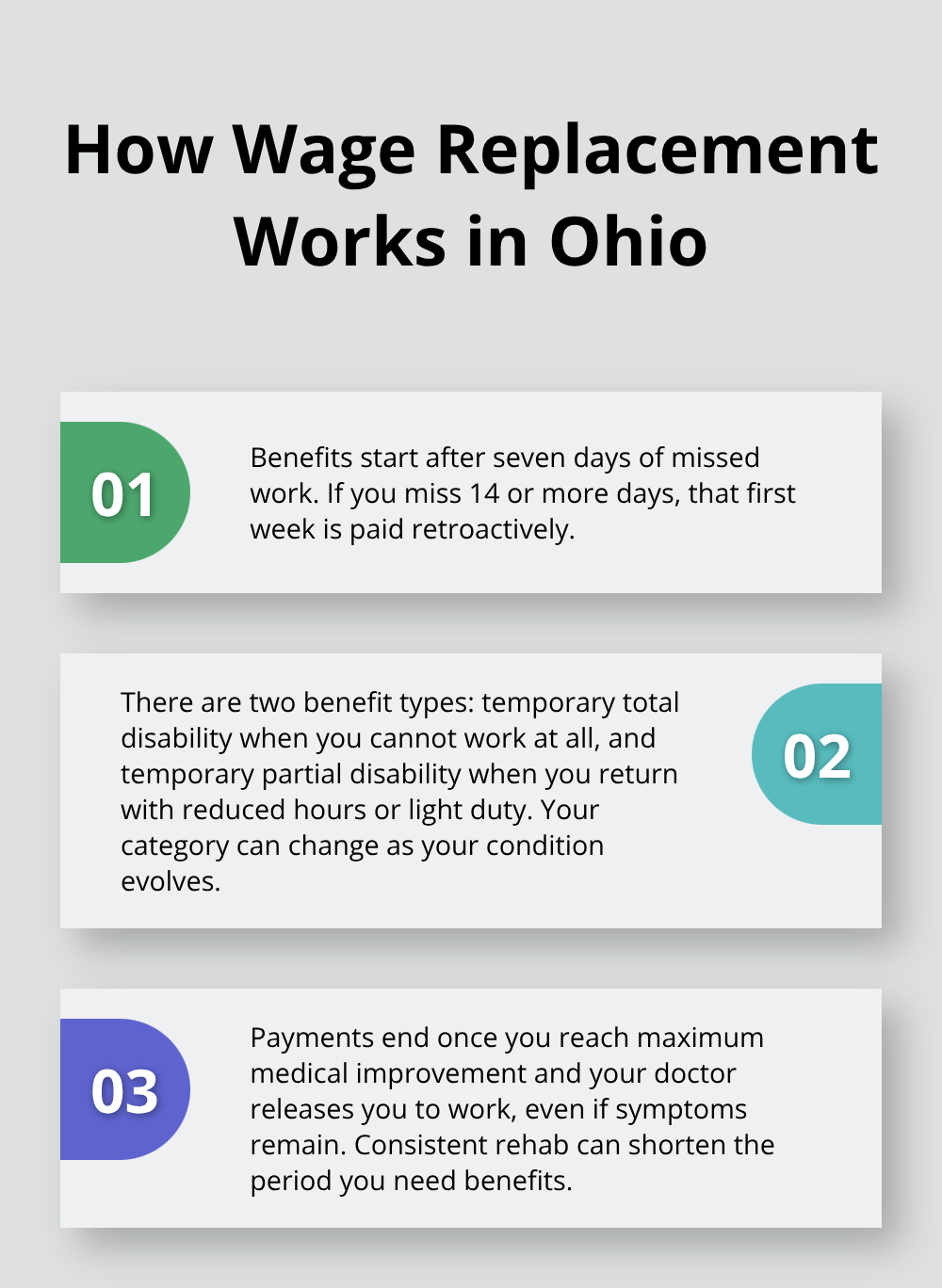
Wage replacement begins after seven days of missed work, with the first week paid retroactively if you miss 14 or more days. This compensation takes two forms: temporary total disability if you cannot work at all, or temporary partial disability if you return to reduced hours or lighter duties. The American Academy of Orthopaedic Surgeons confirms that early aggressive rehabilitation improves return-to-work timelines, so pursuing treatment aggressively actually shortens the period you receive wage replacement. Once you reach maximum medical improvement and your doctor confirms you can work again, wage replacement stops regardless of whether you’ve fully recovered.
Permanent Disability Awards and Scheduled Benefits
Permanent disability awards apply only after healing is complete and a physician assigns a lasting impairment rating. Under Ohio law, the schedule for hand injuries is specific: loss of a thumb equals 60 weeks of compensation, loss of an index finger equals 35 weeks, loss of a middle finger equals 30 weeks, loss of a ring finger equals 20 weeks, and loss of a pinky equals 15 weeks. Total loss of a hand means 175 weeks of compensation, while loss of an arm totals 225 weeks. These awards are based on your average weekly wage with a cap tied to the statewide average weekly wage, so your actual payment depends on what you earned before injury.
Additional Awards for Disfigurement
Serious facial or head disfigurement from your hand injury also qualifies for a one-time award if scarring might impair employment opportunities. This benefit exists separate from your disability compensation and recognizes that visible injuries affect your ability to work in certain roles. The Ohio Bureau of Workers’ Compensation evaluates disfigurement claims on a case-by-case basis to determine eligibility and award amounts.
Meeting Deadlines for Permanent Disability Claims
Missing deadlines costs you benefits, so filing your application for permanent disability at least 26 weeks after your last compensation payment or after your injury date is essential. The Ohio Bureau of Workers’ Compensation follows strict timelines for applications, medical examinations, and appeals. Once you file, the bureau schedules a medical examination, and if you miss that appointment, your application can be dismissed without prejudice-though you can refile. After the examination, the administrator issues a tentative order, and you have 20 days to object in writing if you disagree. Understanding these deadlines and the appeals process determines whether you receive the full benefits you’re entitled to, which is why navigating the claims process itself requires careful attention to timing and documentation.
Navigating the Claims Process
Report Your Injury Immediately
Report your injury to your employer without delay, because Ohio law enforces strict timelines that start from the date of injury. Most workers miss this critical first step or postpone reporting, which creates documentation gaps that insurers later exploit to deny claims. Your employer then files with their insurer or the Ohio Bureau of Workers’ Compensation, and you receive claim forms to complete. The Industrial Commission of Ohio enforces these deadlines rigorously, so filing promptly protects your right to benefits.
Understanding the Claims Administrator’s Role
After you file, the BWC assigns a claims administrator who coordinates your medical care through approved providers and manages your wage replacement payments. This administrator becomes your primary contact for questions about medical authorization, benefit payments, and claim status. Staying in regular contact with your administrator and providing requested documentation quickly prevents unnecessary delays in your case.
Why Claims Get Denied
Denials happen frequently, and the National Council on Compensation Insurance reports that upper-extremity injuries like hand injuries drive meaningful portions of workers’ compensation disputes. Claims fail when medical records lack detail, when you miss a BWC-ordered medical examination, or when your employer claims the injury didn’t arise from work. Some insurers deny legitimate claims hoping you’ll abandon them rather than fight back. Understanding these common denial triggers helps you avoid them.
Appealing a Denied Claim
If your claim is denied, the Industrial Commission of Ohio allows appeals with strict deadlines-typically 20 days to file written objections to tentative orders. Missing that window closes your options permanently.

An experienced workers’ compensation attorney knows which medical documentation insurers demand, how to respond to denials, and how to present your case to a district hearing officer. Legal representation handles appeals and settlements for workers across Ohio, fighting against denials that should never happen. The difference between handling this yourself and having legal counsel often determines whether you receive the permanent disability award and ongoing medical benefits you’re entitled to, particularly in complex cases involving nerve damage or multiple surgeries.
Final Thoughts
Hand injury Ohio compensation covers medical treatment, wage replacement, and permanent disability awards, but only if you navigate the system correctly and meet strict filing deadlines. Fractures, lacerations, crush injuries, and amputations all qualify for coverage under Ohio law, with scheduled awards providing specific compensation amounts based on which fingers or hand structures you lost. Wage replacement begins after seven days of missed work, and permanent disability awards apply once healing completes and a physician assigns an impairment rating.
Report your injury to your employer immediately, then file your claim with the Ohio Bureau of Workers’ Compensation without delay. Gather detailed medical records, attend all scheduled medical examinations, and maintain thorough documentation of your treatment and work status throughout your recovery. If your claim faces denial, you have 20 days to file a written objection with the Industrial Commission of Ohio, but missing that deadline eliminates your appeal rights permanently.
Insurers deny legitimate claims regularly, and medical documentation requirements create obstacles that many injured workers cannot overcome alone. At Robin J Peterson Company, LLC, we represent injured workers across Ohio who face denials or disputes over their hand injury compensation claims. Contact us to discuss your rights and secure the benefits you deserve.