
An on-the-job injury in Ohio can feel overwhelming, especially when you’re unsure about your rights and next steps. At Robin J Peterson Company, LLC, we help workers understand what they’re entitled to under Ohio’s workers’ compensation system.
Return to work in Ohio involves specific legal protections and processes designed to support you. This guide walks you through your rights, the obstacles you might face, and how to protect your future.
Your Rights Under Ohio Workers’ Compensation Law
Ohio’s workers’ compensation system covers most employees injured during work, but coverage depends on specific conditions. Your injury must arise out of and occur in the course of your employment, meaning it happened while performing job duties. The Ohio Bureau of Workers’ Compensation administers approximately 900,000 claims annually across the state, processing a massive volume of cases that range from minor injuries to serious disabilities. Eligibility is straightforward for most workers: if you’re employed by a covered employer and injured at work, you qualify. However, certain workers fall outside the system, including self-employed individuals, independent contractors, and federal employees who fall under the federal workers’ compensation program instead. Understanding whether you’re covered matters immediately after an injury because it determines your next steps and available benefits.
What Coverage Actually Means in Practice
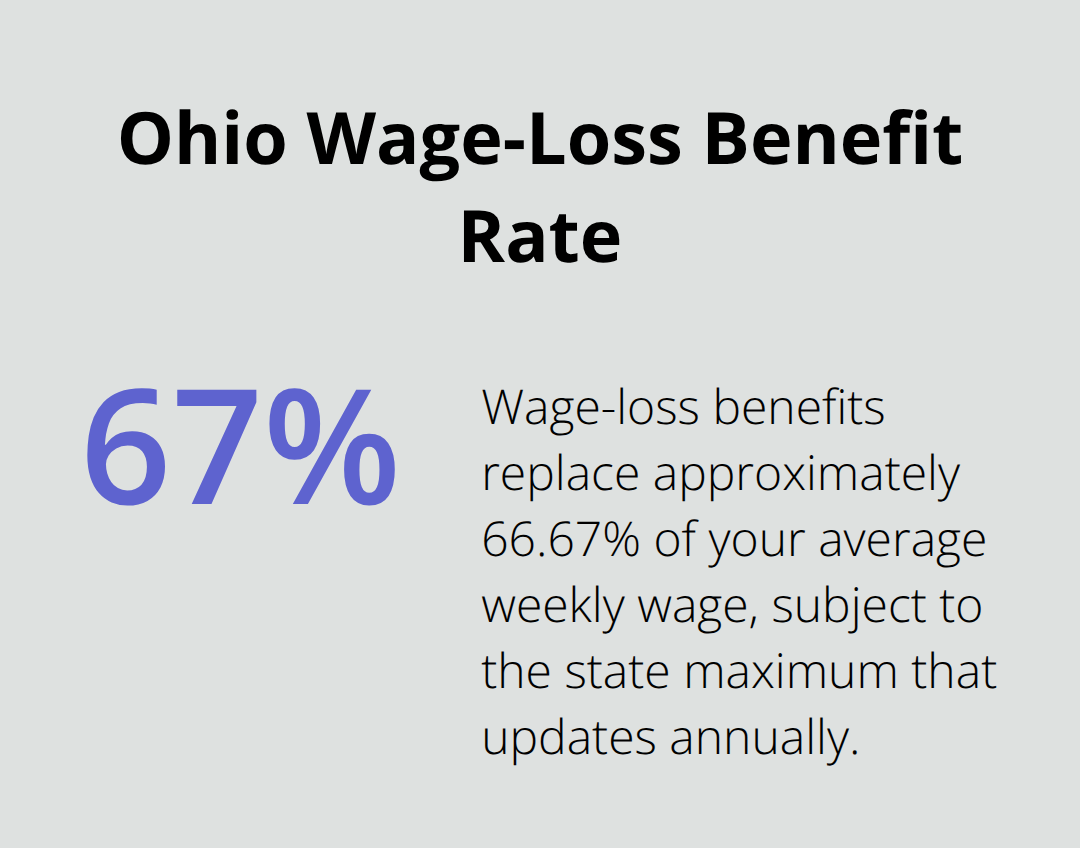
The Ohio Bureau of Workers’ Compensation provides three primary forms of support: medical treatment coverage, wage-loss benefits, and permanent disability compensation if your injury causes lasting impairment. Medical coverage means the BWC pays for all reasonable and necessary treatment related to your work injury without requiring you to pay out-of-pocket expenses. You can typically select your treating physician unless you’re enrolled in a managed care plan, which gives you some control over your medical care. Wage-loss benefits replace approximately 66.67 percent of your average weekly wage when you cannot work due to your injury, with benefit amounts capped at the state maximum rate that updates annually. This wage replacement continues while you recover, whether that takes weeks or months.
Permanent disability benefits apply if your injury results in lasting impairment, determined through physician ratings and Ohio’s schedule of awards. The system distinguishes between temporary total disability, temporary partial disability, permanent total disability, and permanent partial disability-each with different benefit structures.
Retaliation Is Illegal and Has Specific Remedies
Ohio law explicitly prohibits employers from retaliating against you for filing a workers’ compensation claim or testifying about your injury. Retaliation includes discharge, demotion, reassignment, or any punitive action tied to your claim. If your employer retaliates, you can file a civil action in the Court of Common Pleas within 180 days of the retaliatory action, with a written notice required within 90 days. Successful retaliation claims can result in reinstatement with back pay if you were discharged, or compensation for wages lost if you were demoted or reassigned. These protections exist because employers should never punish workers for seeking benefits they’re legally entitled to receive. Report any retaliation immediately to create a documented record, and consult with an experienced workers’ compensation attorney who understands Ohio law and these specific timelines. Once you understand your legal protections, the next step involves navigating the actual return-to-work process itself.
How the Return to Work Process Actually Works in Ohio
Medical Evaluation Sets the Foundation for Your Benefits
After your claim is accepted by the Ohio Bureau of Workers’ Compensation, the medical evaluation phase begins immediately. You must seek treatment from an authorized provider within the BWC network, or your employer may have designated a specific medical facility for initial evaluation. The treating physician will document your injury, establish a diagnosis, and determine what medical treatment you need going forward.
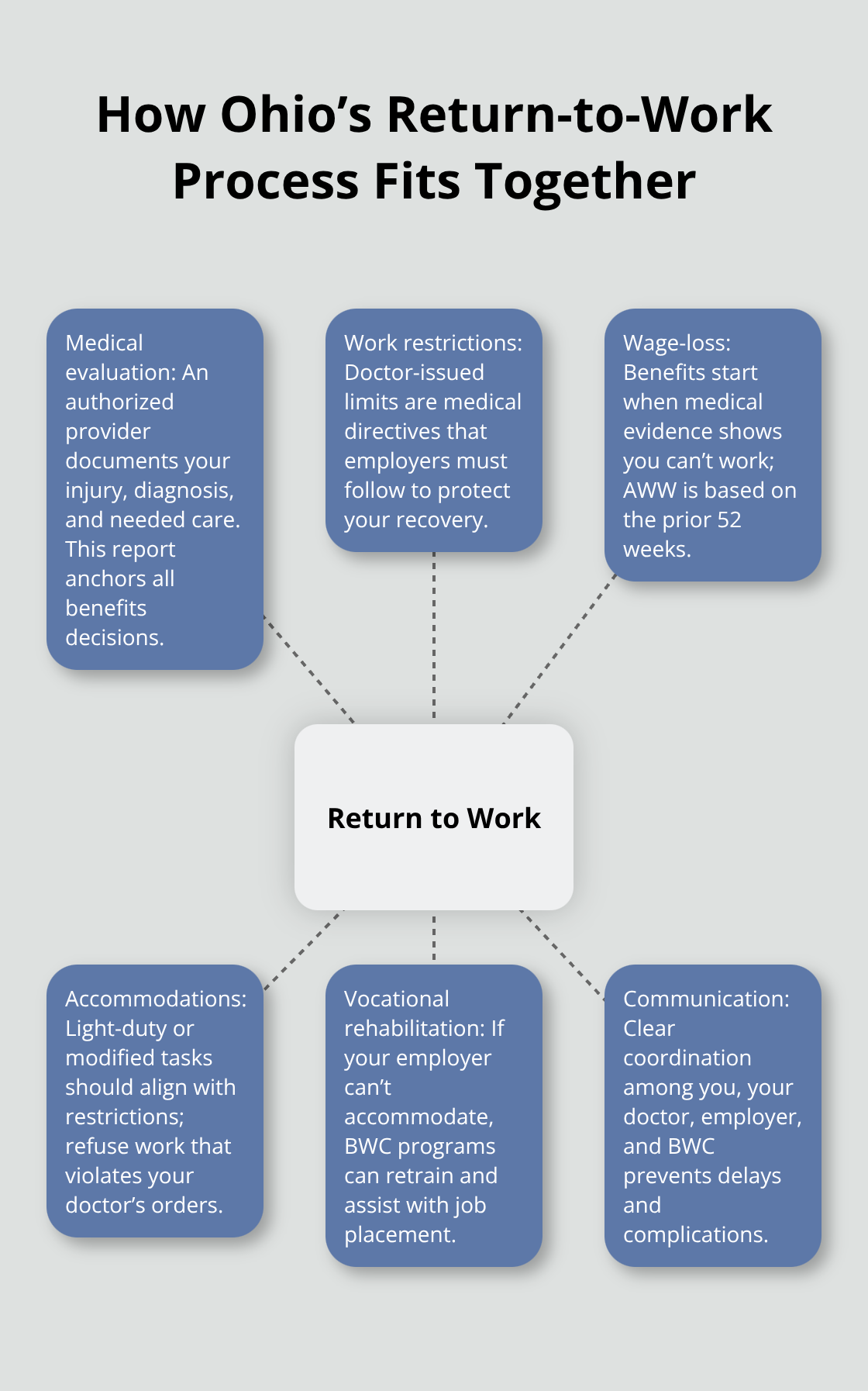
This evaluation report becomes the foundation for all subsequent benefits decisions, so accuracy matters tremendously.
Request copies of all medical records and treatment notes as they’re generated; do not sign any releases until you understand exactly what you’re authorizing. The BWC typically authorizes treatment within days of claim acceptance, but delays happen. If authorization stalls, contact the BWC directly at 1-800-644-6292 and reference your claim number to push for approval.
Work Restrictions Are Medical Directives, Not Suggestions
Your treating physician will issue work restrictions or accommodations based on your medical condition. These restrictions are not suggestions-they’re medical directives that your employer must follow. If your employer ignores these restrictions or pressures you to work beyond what your doctor cleared, document the pressure in writing and report it to the BWC immediately.
Wage-Loss Benefits Replace Your Lost Income
Wage-loss benefits begin when you cannot work due to your injury and medical evidence supports this inability. The BWC calculates your average weekly wage using your earnings from the 52 weeks before the injury, so wage fluctuations matter significantly. If you earned variable income, request that the BWC verify this calculation because errors directly reduce your benefits.
Temporary total disability pays approximately 66.67 percent of your average weekly wage, capped at the state maximum rate that adjusts annually according to the Ohio Bureau of Workers’ Compensation. The key word here is temporary-these benefits continue only while you cannot work and your claim remains active.
Transitioning Back to Work Requires Proper Accommodations
As you recover and your physician clears you for light-duty work or modified duties, your employer should offer graduated return-to-work assignments that align with your medical restrictions. Refuse any work that violates your doctor’s restrictions, even if your employer insists. Accepting unsuitable work can result in benefit reductions or denials, and it can also worsen your injury.
The transition back to full duty should be gradual, not abrupt. If your employer cannot accommodate your restrictions, vocational rehabilitation services through the BWC may help you retrain for a different role. This program covers retraining costs and job placement assistance if your injury prevents you from returning to your previous job.
Communication Failures Create Delays and Complications
The entire return-to-work process depends on clear communication between you, your doctor, your employer, and the BWC. Missing documentation or miscommunication at any step creates delays and complications that affect your benefits. When obstacles arise during this process-and they often do-knowing how to identify and address them becomes essential to protecting your recovery and your financial security.
Common Obstacles When Returning to Work
The return-to-work process in Ohio sounds straightforward in theory, but disputes and obstacles derail claims constantly. The Ohio Bureau of Workers’ Compensation handles roughly 900,000 claims annually, yet a significant portion face complications during the transition back to work.
Disputes Over Medical Necessity Stop Treatment Cold
Disputes over medical necessity occur when the BWC questions whether your treatment is reasonable and necessary for your injury. This happens frequently with ongoing physical therapy, imaging studies, or specialist referrals that your doctor recommends but the BWC’s medical reviewer contests. If the BWC denies authorization for treatment your physician ordered, you have the right to appeal that decision to the Industrial Commission of Ohio, but appeals take time and require solid documentation.
The real problem is that delays in treatment authorization set back your recovery and complicate your ability to return to work on schedule. Your treating physician’s medical judgment should carry significant weight, yet BWC reviewers sometimes overrule these decisions based on cost considerations rather than medical evidence. Document every treatment recommendation your doctor makes and request written explanations whenever the BWC denies or delays authorization. If denials persist, contact an experienced workers’ compensation attorney immediately because medical disputes often require legal intervention to resolve.
Inadequate Accommodations Force You Into Unsuitable Work
Inadequate workplace accommodations create another major obstacle that employers frequently mishandle. Your doctor issues specific work restrictions, but your employer either ignores them, provides unsuitable light-duty work, or pressures you to perform full-duty tasks before you’re medically cleared. This pressure often comes from supervisors who don’t understand workers’ compensation law or from employers trying to avoid the cost of accommodations.
Refusing unsuitable work is your right, but doing so requires documentation to protect your wage-loss benefits. Write an email to your supervisor and human resources stating that you cannot perform the assigned work because it violates your doctor’s restrictions, and copy your treating physician on this communication. Keep copies of all work restrictions your doctor issued and compare them directly to the work your employer assigns. If your employer cannot accommodate your restrictions and no suitable light-duty work exists, vocational rehabilitation services through the BWC can help you retrain for a different position.
Denied Claims Cut Off All Benefits Immediately
Denied claims represent the most serious obstacle because they cut off all benefits immediately. The BWC denies claims for various reasons: the injury wasn’t reported within the required timeframe, the injury wasn’t properly documented as work-related, or the employer disputes that the injury occurred during employment. If your claim is denied, you have the right to request a hearing before the Industrial Commission of Ohio within specific deadlines. Missing these deadlines results in permanent loss of your appeal rights, so act quickly when you receive a denial notice.
Final Thoughts
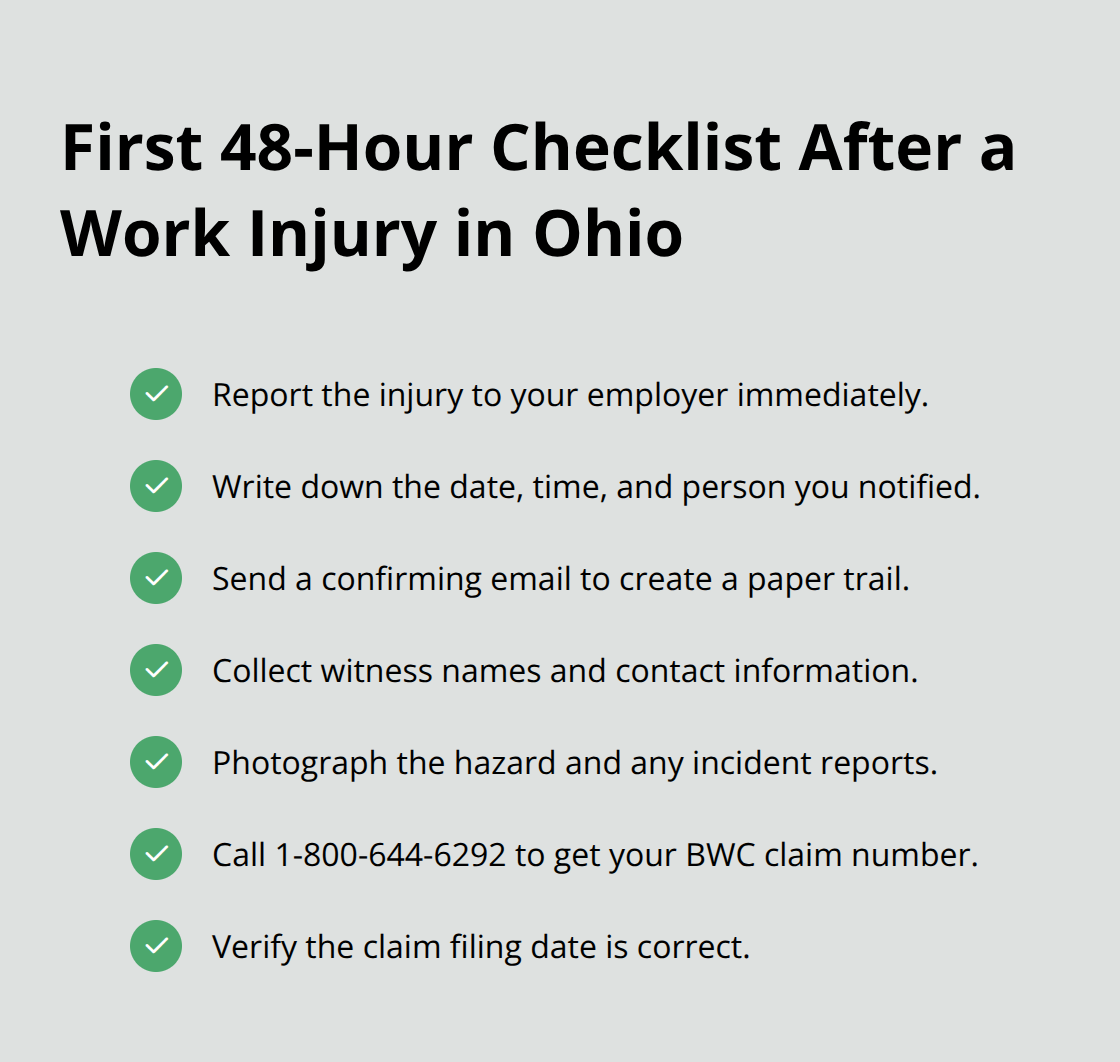
The first 48 hours after your injury determine whether you recover full benefits or face long-term disputes. Report the injury to your employer immediately, document exactly when and to whom you reported it, and follow up with a confirming email. Collect evidence at the scene: witness names, photos of the hazard, and any incident reports. Request your claim number from the Ohio Bureau of Workers’ Compensation by calling 1-800-644-6292 and verify the filing date.
Maintain thorough records throughout your entire claim, including your injury timeline, all medical visits and treatments, work restrictions issued by your physician, and any communications about accommodations or return to work Ohio assignments. Photograph any workplace hazards that contributed to your injury, and save emails, text messages, and written notes from conversations with supervisors about your restrictions or work assignments. If your employer pressures you to work beyond your medical restrictions or retaliates against you for filing a claim, document these incidents with dates and details immediately.
When disputes arise or your claim faces denial, an experienced workers’ compensation attorney can review settlement offers before you accept them, challenge BWC decisions effectively, and help you navigate the Industrial Commission procedures. We at Robin J Peterson Company, LLC represent injured workers throughout the Cleveland, Akron, and Canton areas, and we can help you understand how to protect your workers’ compensation claim and secure the benefits you deserve. Contact us to discuss your situation and learn how we can help you navigate Ohio’s workers’ compensation system.