
A workplace injury can turn your life upside down fast. Between medical appointments, lost wages, and paperwork, it’s easy to make mistakes that cost you the benefits you deserve.
At Robin J Peterson Company, LLC, we’ve helped countless injured workers navigate Ohio’s workers’ compensation system. This guide gives you workplace injury rights guidance and the practical steps to protect your claim from start to finish.
What Ohio’s Workers’ Compensation System Actually Covers
Medical Treatment and Wage Replacement Benefits
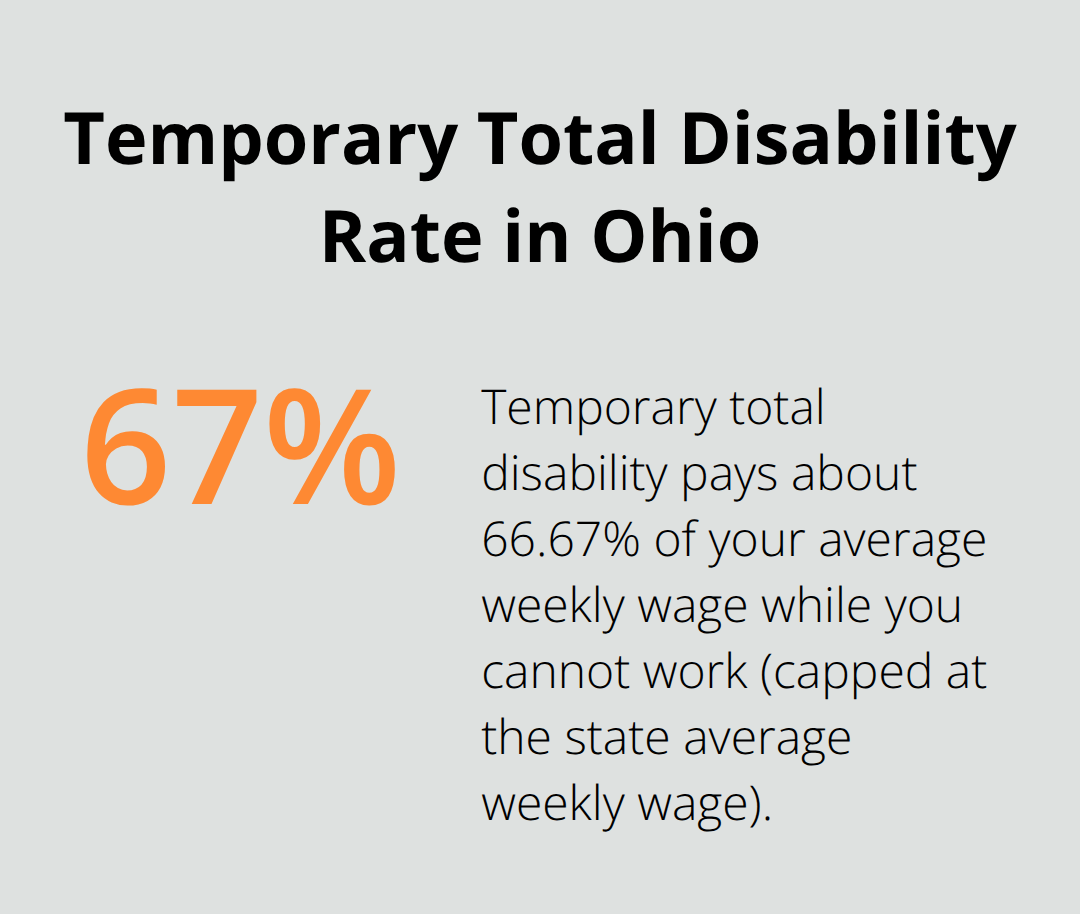
Ohio’s Bureau of Workers’ Compensation covers medical treatment, wage replacement, and disability benefits for workers injured on the job. Medical coverage includes doctor visits, surgery, medication, and rehabilitation-the BWC pays these expenses directly to providers, so you won’t receive bills for covered treatment. Wage replacement, called temporary total disability, provides about 66.67% of your average weekly wage while you’re unable to work, capped at the state average weekly wage.
If your injury results in permanent disability, you may qualify for permanent partial or permanent total disability benefits.
Occupational Diseases and Broader Coverage
Ohio law covers occupational diseases if you prove the condition arose from your job. The system’s coverage extends further than many workers realize-it includes injuries from repetitive tasks, aggravation of pre-existing conditions if work made them worse, and even psychological injuries if they stem from a workplace incident. However, the system excludes certain situations: if you were injured while violating company safety rules you knew about, if you were intoxicated, or if you were committing a felony.
Your Right to Job Security
One critical protection Ohio provides is job security: your employer cannot legally retaliate against you for filing a workers’ compensation claim. Your employer cannot fire, demote, or punish you for reporting an injury or pursuing benefits. Ohio Revised Code Section 4113.52 explicitly prohibits retaliation. If your employer retaliates, you have grounds for a separate legal claim beyond workers’ compensation.
The Exclusive Remedy Doctrine and Third-Party Claims
A common misconception holds that accepting workers’ compensation means you forfeit the right to sue your employer. In Ohio, you generally cannot sue your employer for a workplace injury if you have workers’ compensation coverage-this is called the exclusive remedy doctrine. However, this protection works both ways: your employer cannot sue you either. The real issue arises with third parties.
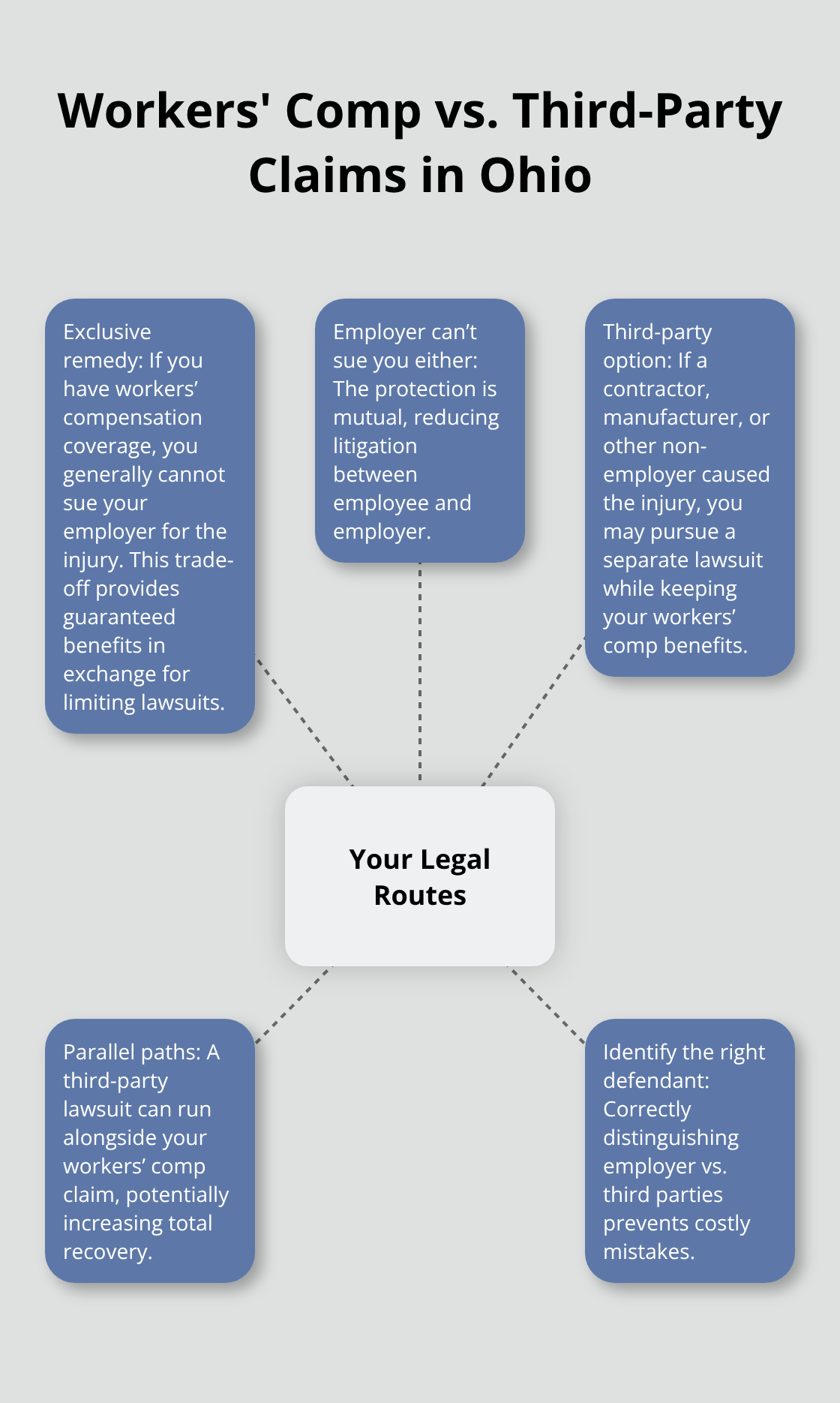
If someone other than your employer caused your injury (a equipment manufacturer, a contractor, or another company), you retain the right to pursue a separate lawsuit against that third party while still receiving workers’ compensation benefits. Understanding these distinctions prevents costly mistakes that could eliminate benefits you’re entitled to receive, which is why the next section walks through the specific steps you must take immediately after an injury occurs.
Steps to Take Immediately After Your Injury
Report the Injury to Your Employer Without Delay
The decisions you make in the first hours after a workplace injury determine whether you receive full benefits or face claim denials later. Most injured workers wait too long to report injuries, skip critical documentation steps, or fail to gather witness information when memories are fresh. These mistakes are avoidable, and the timeline is tight.
Report your injury to your employer or supervisor on the same day it happens, even if you think it’s minor. Many workers delay reporting because they fear retaliation or believe the injury will resolve on its own, but Ohio law prohibits employer retaliation, and early reporting creates an official record that protects your claim. Notify your employer verbally first, then follow up with written documentation via email or letter stating the date, time, location, and nature of your injury. This written trail becomes critical evidence if your employer later disputes when the injury occurred or claims they weren’t notified. The BWC tracks injury report dates closely, and delays between the incident and the report can raise red flags during claim review.
Seek Medical Treatment and Document Everything
Seek medical treatment immediately and document everything the healthcare provider tells you about your condition and work restrictions. Do not wait to see if symptoms improve or try to work through pain to avoid missing shifts. Request that your doctor document how the injury occurred and what job duties caused it, as this connection between work and injury is essential for claim approval.
Keep copies of all medical records, test results, prescriptions, and provider notes in a dedicated folder, both physical and digital. Take photos of the injury if it’s visible, the equipment or area where it happened, and any hazardous conditions that contributed to the incident. Photograph your work environment before anything is cleaned up or repaired, as these images provide objective evidence that the BWC cannot dispute.
Gather Witness Information and Evidence at the Scene
Gather names, contact information, and written statements from anyone who witnessed the injury or saw the conditions that caused it, because witness accounts strengthen your claim significantly when the BWC reviews it. If coworkers witnessed the incident, ask them to write down what they saw while details are accurate, rather than relying on memory weeks later. The combination of immediate medical documentation, photographic evidence, and witness statements creates a factual foundation that makes claim denials far less likely.
This evidence also gives you leverage if your claim faces initial rejection. When you move forward with filing your claim, you’ll have everything the BWC needs to process it quickly and approve your benefits without unnecessary delays or requests for additional information.
Navigating the Claims Process and Avoiding Pitfalls
How to File Your Claim with the BWC
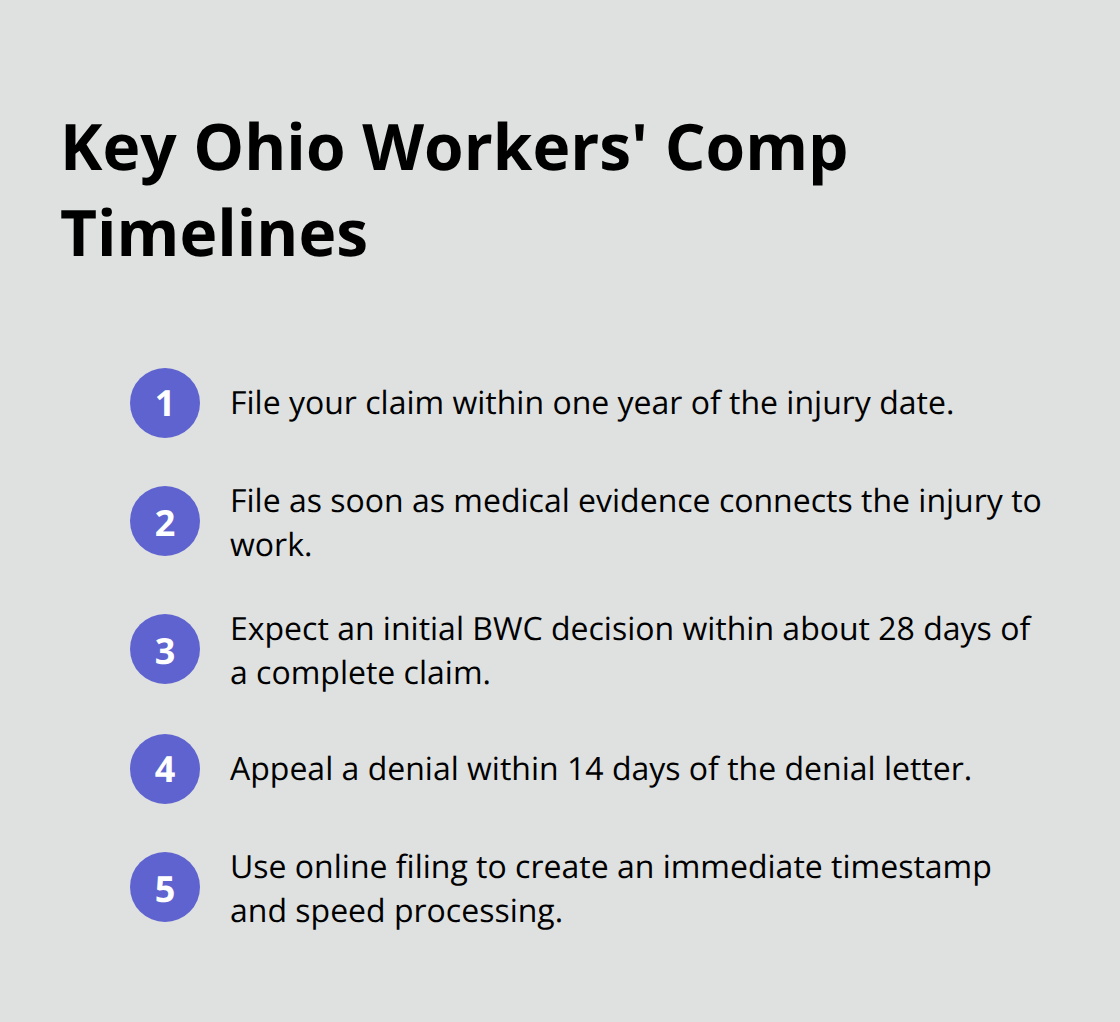
File your claim with the BWC within the required timeframe-this step is non-negotiable. Ohio law gives you one year from the date of injury to file, but waiting that long creates unnecessary risk. The BWC receives thousands of claims monthly, and delays in filing often correlate with incomplete documentation or missing witness statements that become harder to obtain as time passes. File your claim as soon as you have medical evidence connecting your injury to work, ideally within weeks of the incident.
You can file online through the BWC’s website, by mail, or through an employer representative, but online filing moves fastest and creates an immediate timestamp that protects you if disputes arise later about when the claim was submitted.
Understanding BWC Response Timelines
The BWC has specific timelines for response after you submit your claim. The agency typically makes an initial determination within 28 days of receiving a complete claim. If the BWC approves your claim, benefits begin immediately. If the agency denies your claim, you receive a detailed denial letter explaining the reason.
Claim denials happen frequently, and many are reversible with the right approach. Common denial reasons include insufficient evidence linking the injury to work, failure to report the injury timely to your employer, or the BWC’s conclusion that the injury doesn’t qualify under Ohio’s definition of a workplace injury.
What to Do If Your Claim Gets Denied
Do not accept a denial as final. File an appeal with the BWC within 14 days of the denial letter, and include any additional medical evidence, witness statements, or documentation that strengthens your case. Many workers abandon claims after initial denial, but appeals succeed regularly when supported by solid evidence.
The Industrial Commission of Ohio handles appeals if the BWC denies your appeal request. At this stage, the case becomes more complex, and having an attorney review your file becomes valuable.
When to Seek Legal Representation
Legal representation prevents you from making statements or accepting settlement offers that permanently damage your claim’s value. An attorney can identify weaknesses in your case early and help you avoid common pitfalls before formal proceedings begin, saving time and increasing your chances of benefit approval.
If you work in the Cleveland, Akron, or Canton metropolitan areas, Robin J Peterson Company, LLC represents injured workers throughout Ohio and focuses specifically on workers’ compensation claims. The firm helps clients navigate the complexities of the BWC and the Industrial Commission of Ohio to secure the benefits you deserve.
Final Thoughts
The steps outlined in this workplace injury rights guidance matter because they determine whether you receive full benefits or face unnecessary delays and denials. The immediate actions you take after an injury-reporting to your employer, seeking medical treatment, documenting everything, and gathering witness statements-create the foundation for a successful claim. These actions are not optional; they are the difference between protecting your compensation rights and losing them.
Ohio’s workers’ compensation system provides real protections: medical coverage, wage replacement, disability benefits, and job security against retaliation. Understanding what the BWC covers and what it excludes prevents costly mistakes. Filing your claim promptly, responding to BWC requests for information, and appealing denials when necessary keeps your claim moving forward. The BWC processes thousands of claims annually, and the agency denies many of them initially-but denials are not permanent, and proper documentation often overturns initial rejections.
If your claim faces denial or becomes complicated, legal representation protects your interests. An attorney identifies weaknesses in your case early, prevents you from making statements that damage your claim, and handles negotiations with the BWC and the Industrial Commission of Ohio. We at Robin J Peterson Company, LLC represent injured workers throughout Ohio, with a strong presence in the Cleveland, Akron, and Canton metropolitan areas, and our firm focuses specifically on workers’ compensation law. Visit Robin J Peterson Company, LLC to discuss your claim with an attorney who understands Ohio’s system.