
Medical benefits coverage Ohio can feel overwhelming when you’re navigating workers’ compensation claims. The system includes multiple layers of rules, limits, and requirements that directly affect the care you receive.
At Robin J Peterson Company, LLC, we’ve helped countless workers understand what their coverage actually includes and where gaps might exist. This guide breaks down the essentials so you know exactly what to expect.
How Ohio’s Workers’ Compensation System Covers Your Medical Care
The Ohio Bureau of Workers’ Compensation administers medical benefits through a structured system that differs significantly from standard health insurance. When you file a workers’ compensation claim in Ohio, the BWC doesn’t just write checks for any treatment you choose. Instead, it operates as a gatekeeper that determines what’s medically necessary and who can provide it. This distinction matters because it means your access to care depends on following specific rules, using approved providers, and obtaining authorization before certain treatments begin. The BWC processes roughly 500,000 claims annually according to their published data, and understanding how this system works prevents delays in your care and denials of legitimate treatment requests.
Which Treatments the BWC Actually Covers
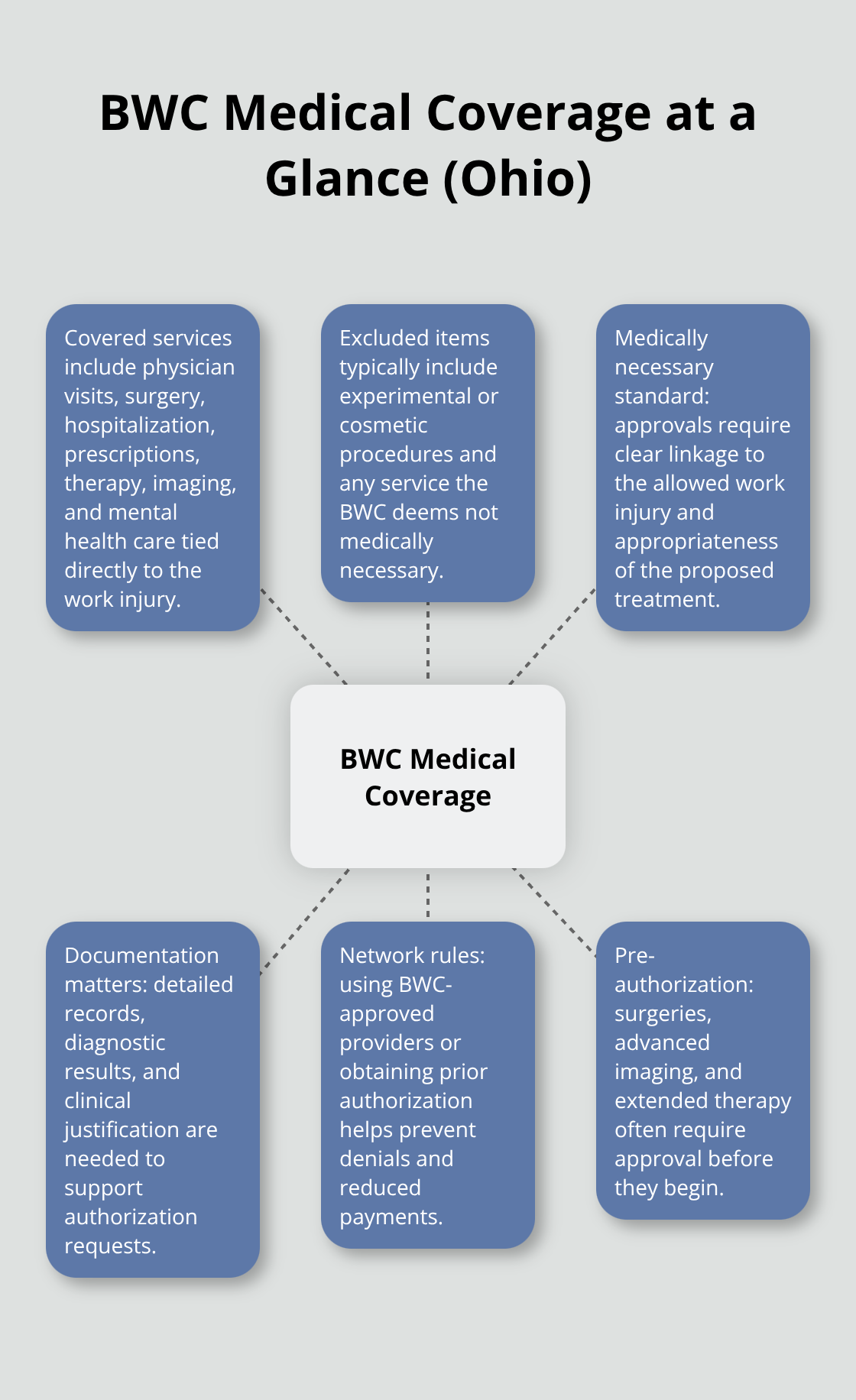
Ohio law covers a broad range of medical services for work-related injuries, including physician visits, surgical procedures, hospitalization, prescription medications, physical therapy, diagnostic imaging, and mental health treatment when directly connected to your injury. However, the BWC excludes certain services that standard health insurance might cover. Experimental treatments, cosmetic procedures unrelated to injury repair, and services deemed not medically necessary won’t receive approval. The key phrase here is medically necessary, which the BWC interprets strictly. Your treating physician must document why a specific treatment relates directly to your work injury and why it represents the appropriate course of action. Many workers assume their doctor’s recommendation automatically means coverage, but the BWC applies its own medical judgment and sometimes disagrees with treating providers about what constitutes necessary care. This gap between what doctors recommend and what the BWC approves creates genuine problems for injured workers seeking comprehensive treatment.
Network Providers and Your Treatment Options
The BWC maintains a network of approved providers across Ohio, and while you generally have the right to select your initial treating physician, subsequent specialists and facilities must typically be part of this approved network or require special authorization. The network includes hospitals, imaging centers, therapy facilities, and surgical centers throughout the state. Using an out-of-network provider without prior authorization often means you’ll face payment denials or reduced reimbursement, leaving you responsible for the difference. Verifying provider status before scheduling any treatment helps you avoid unexpected financial complications. The BWC’s provider directory is searchable online, and confirming your specific facility or specialist is listed prevents frustrating delays when you’re already dealing with an injury.
Pre-Authorization: The Step Many Workers Miss
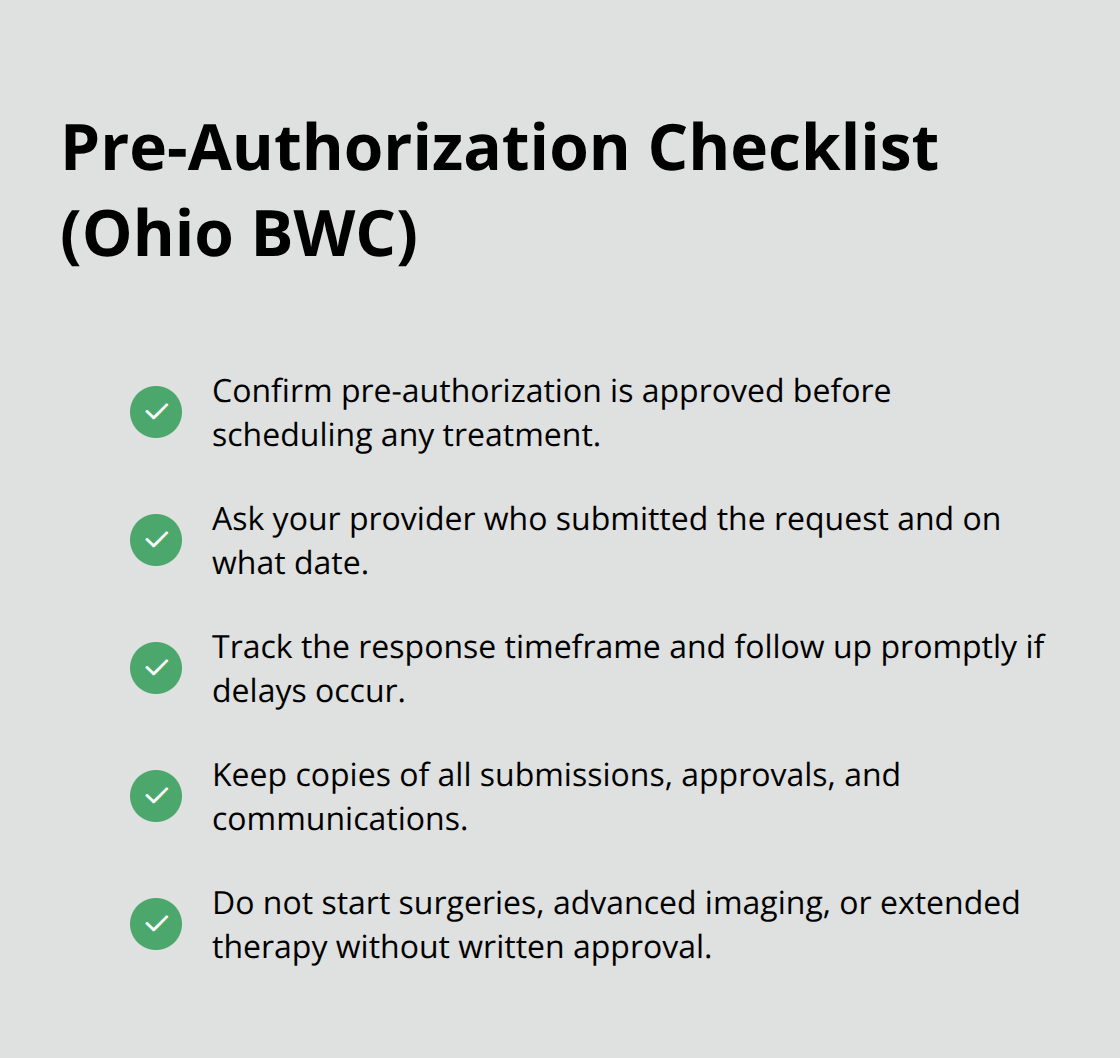
The BWC requires pre-authorization for certain treatments before you receive care, and skipping this step can result in claim denials even when your injury clearly warrants the treatment. Surgeries, advanced imaging studies, and extended therapy sessions typically need approval before they begin. Your treating physician usually submits the authorization request, but the responsibility ultimately falls on you to verify that approval has been obtained. The BWC typically responds to authorization requests within a specific timeframe, though delays do occur. Understanding this requirement upfront (rather than discovering it after treatment) keeps your claim moving forward and your care uninterrupted.
What Limits Actually Apply to Your Ohio Workers’ Compensation Benefits
Duration Limits on Different Treatment Types
The BWC does not provide unlimited medical care, and understanding where the boundaries sit prevents nasty surprises when you expect coverage and don’t receive it. Ohio law establishes specific duration limits for different types of treatment, meaning your benefits don’t continue indefinitely. Physical therapy typically runs for a defined period unless your physician documents that extended treatment remains medically necessary and requests continued authorization. Surgical procedures fall under different rules than ongoing therapy, and hospitalization has its own parameters. The BWC publishes its fee schedules and coverage guidelines, but most injured workers never review these documents because they assume their doctor will handle everything. This assumption costs workers real money and delays in care.
How to Find Your Specific Benefit Limits
Contact the BWC directly about your claim’s specific limits rather than waiting until denial letters arrive. Your claim adjuster can tell you exactly how many physical therapy visits remain approved, when surgical authorization expires, and what documentation your doctor needs to submit for extensions. Many adjudicators will provide this information over the phone if you ask the right questions. The practical solution involves making this call early in your treatment process so you understand what coverage remains available. Knowing these limits upfront allows you to plan your care strategy with your treating physician and avoid treatment interruptions.
Out-of-Network Treatment and Authorization Requirements
Out-of-network treatment presents another major restriction that catches workers off guard. Using a specialist or facility outside the BWC network without prior authorization typically results in either claim denial or reduced payment where you become responsible for the balance. The problem intensifies when you need specialized care that limited providers in Ohio offer. If your injury requires treatment from a nationally recognized specialist located out of state, the BWC sometimes approves out-of-network care, but this requires your treating physician to submit a detailed authorization request explaining why in-network alternatives won’t suffice.
Navigating Out-of-Network Approvals
Don’t assume the answer is no before requesting authorization, but also don’t assume the answer is yes without documentation. The BWC’s decision-making process on out-of-network authorizations takes longer than standard approvals (sometimes thirty to forty-five days), so planning ahead matters significantly. If the BWC denies your out-of-network authorization request, you have appeal rights through the Industrial Commission of Ohio, though pursuing this route requires understanding Ohio’s appeal procedures and deadlines. Getting this wrong means forfeiting your right to challenge the denial permanently. The next section covers the common gaps that emerge when coverage denials occur and how to respond when the BWC rejects your treatment requests.
Where Coverage Actually Breaks Down
The gap between what you expect the BWC to cover and what it actually approves shows up in three specific areas that catch workers off guard. First, certain treatments require documentation that goes far beyond a simple physician recommendation. The BWC demands detailed medical records, diagnostic test results, and clinical justification showing your condition meets their definition of medically necessary. When your doctor submits a request without sufficient supporting evidence, the BWC denies it outright, and you then face the burden of collecting additional documentation to appeal. Second, disputes over medical necessity represent the single largest reason the BWC rejects treatment requests. The BWC’s medical consultants sometimes disagree with your treating physician about whether a specific therapy, imaging study, or specialist visit actually relates to your work injury or represents appropriate treatment. This disagreement isn’t theoretical-it directly stops your care. Third, navigating the appeal process when denials arrive requires understanding Ohio’s specific deadlines and procedures, or you lose your right to challenge the decision permanently.
Documentation That Separates Approvals From Denials
The Industrial Commission of Ohio has consistently ruled that vague treatment requests receive denials. Your physician must connect the proposed treatment directly to your documented work injury and explain why this specific approach represents the standard medical response to your condition. Imaging studies need clear clinical indications documented in your medical record before the BWC approves them. Therapy requests require baseline functional assessments showing your current limitations and measurable goals the treatment will address. Many injured workers think their doctor will handle this automatically, but physicians often submit requests without the level of detail the BWC demands. Contact your treating provider before they submit authorization requests and ask specifically what documentation they’re including to justify the treatment. Request copies of what they submit so you know whether it contains sufficient detail. If the BWC denies a request due to insufficient documentation, your physician can resubmit with additional supporting evidence rather than pursuing a formal appeal, which saves significant time.
When the BWC Questions Your Doctor’s Medical Judgment
The BWC employs medical consultants who review treatment requests and sometimes conclude that your treating physician’s recommendation exceeds what’s medically necessary for your specific injury. This happens regularly with requests for extended physical therapy, advanced imaging, or specialist consultations. The BWC’s consultant might determine that your condition typically resolves with conservative treatment and doesn’t warrant the proposed intervention. When this occurs, you’re not stuck accepting the denial. Your treating physician can submit a rebuttal explaining why their clinical judgment differs from the BWC’s consultant, providing additional medical literature or clinical reasoning that supports continued or additional treatment. If the rebuttal fails, you can request an independent medical examination through the Industrial Commission of Ohio, which provides a neutral medical opinion that sometimes overrides the BWC’s initial determination. This route takes longer than a simple authorization approval, but it provides a legitimate pathway when you believe the BWC’s medical judgment is wrong.
Appealing Denials Before Your Rights Expire
The Industrial Commission of Ohio sets strict deadlines for appealing BWC denials, and missing these deadlines eliminates your right to challenge the decision. You have fourteen days from the date the BWC mails a denial notice to file an appeal with the Industrial Commission. This fourteen-day window starts from the mailing date, not the date you receive the letter, so delays in mail delivery work against you. File your appeal immediately upon receiving a denial rather than waiting to collect additional information or hoping the issue resolves itself.
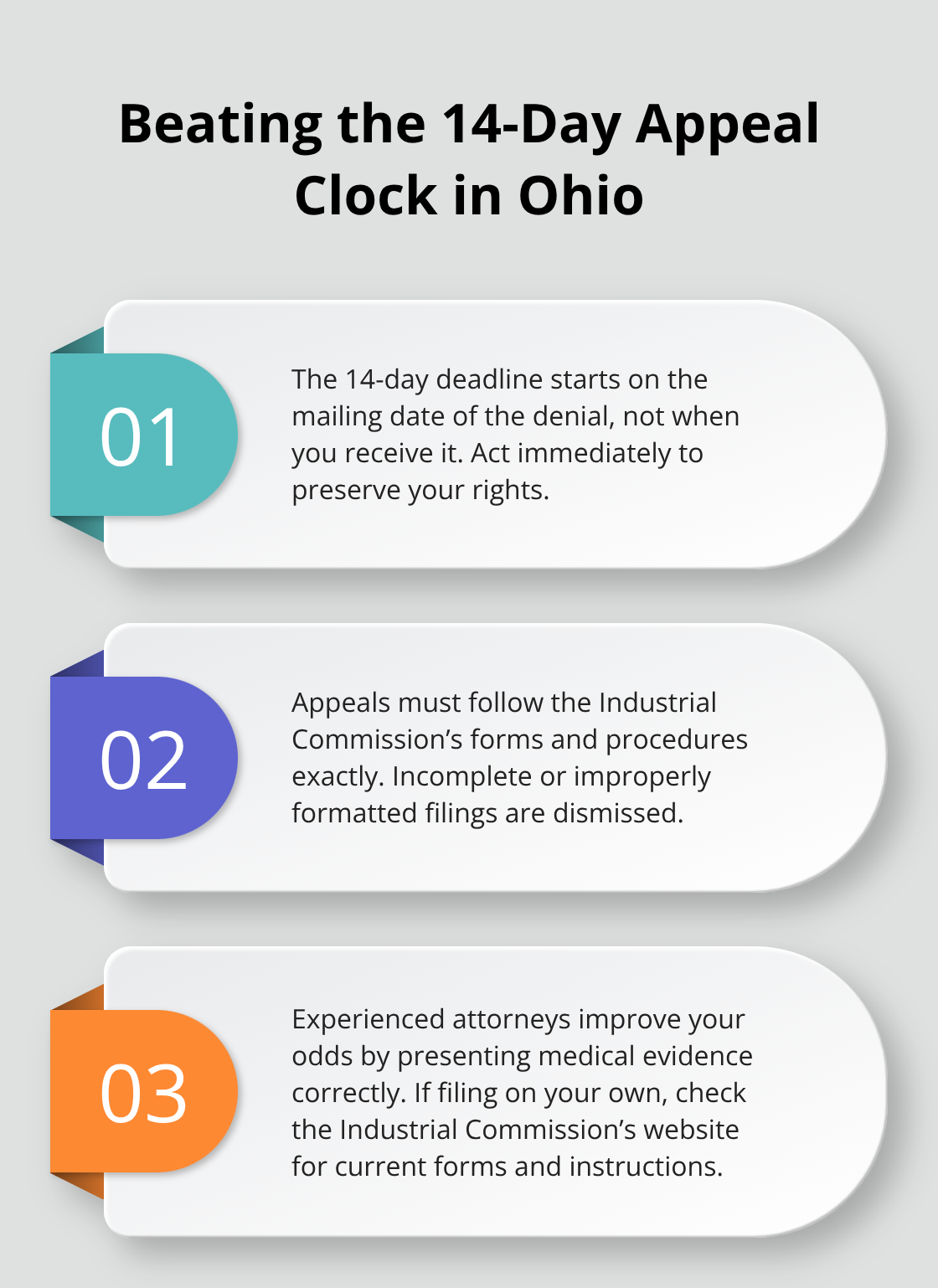
The Industrial Commission requires specific forms and procedures for filing appeals, and submitting incomplete or improperly formatted appeals results in dismissal. An attorney experienced in Ohio workers’ compensation law can file appeals correctly and present medical evidence effectively before the Industrial Commission, significantly improving your chances of overturning denials. If you’re handling appeals independently, contact the Industrial Commission directly at their website to obtain current appeal forms and instructions, as procedures change periodically. Workers who attempt appeals without understanding Ohio’s requirements frequently lose valid claims simply because they filed incorrectly or missed deadlines.
Final Thoughts
Understanding medical benefits coverage Ohio means accepting that the BWC controls what treatments receive approval, specific limits apply to your care, and missed appeal deadlines cost you permanently. The system operates with strict rules that injured workers must follow to receive benefits, and your treating physician cannot shoulder all responsibility for navigating these requirements. You must take active steps to protect your claim from the moment you file it.
Contact your claim adjuster early to learn your specific benefit limits and verify that any provider you plan to use is in the BWC network before scheduling treatment. Ask your doctor what supporting documentation they include when they submit authorization requests, and request copies of what they submit to the BWC. If the BWC denies treatment, file an appeal with the Industrial Commission of Ohio within fourteen days from the mailing date, as missing this deadline eliminates your right to challenge the decision permanently.
An attorney experienced in Ohio workers’ compensation law knows how to present medical evidence effectively and navigate the Industrial Commission’s procedures when denials arrive or when you disagree with the BWC’s medical judgment. Robin J. Peterson Company, LLC represents injured workers throughout the Cleveland, Akron, and Canton areas, helping clients fight for the benefits they deserve from the BWC. Contact the firm when you need professional guidance on your specific situation.