
Workplace injuries happen fast, but understanding your rights doesn’t have to be complicated. At Robin J Peterson Company, LLC, we’ve helped countless workers in Northeast Ohio navigate the system and get the support they deserve.
Whether you’re dealing with a recent injury or trying to understand what protections apply to you, this guide covers what you need to know about workplace injury rights in Cleveland and the surrounding region.
What Ohio Workers’ Compensation Actually Protects
Coverage Basics and the No-Fault Structure
Ohio’s workers’ compensation system covers medical treatment, wage replacement, and rehabilitation for work-related injuries. The Ohio Bureau of Workers’ Compensation handles most claims, though some large employers self-insure through the state system. If you suffer an injury that arises out of and occurs during employment, you qualify for coverage regardless of fault-a fundamentally different approach from personal injury lawsuits where negligence determines outcomes. This no-fault structure means you don’t need to prove your employer caused the injury to receive benefits.
However, the BWC excludes certain situations: intentional self-inflicted injuries, injuries from willful violations of safety rules you knew about, and injuries occurring while committing a felony. Many workers mistakenly believe they receive coverage for every medical expense indefinitely, but Ohio law caps certain treatments and requires pre-authorization for specific procedures.
What the BWC Actually Covers
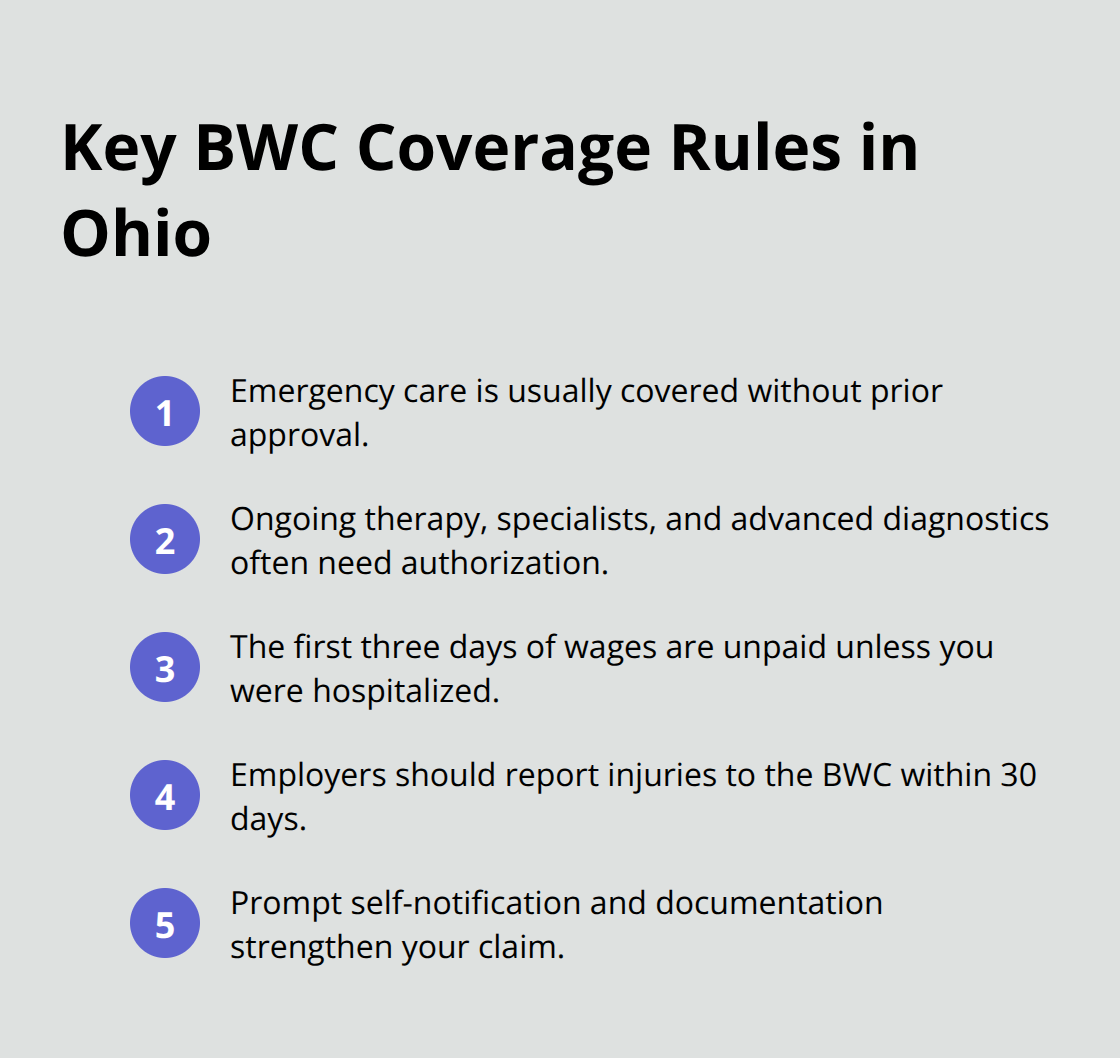
The BWC typically covers emergency care without approval, but ongoing physical therapy, specialist visits, or advanced diagnostics require authorization first. Waiting periods also apply-you lose the first three days of wages unless hospitalization occurs. Northeast Ohio employers must report injuries to the BWC within 30 days, though prompt notification protects you better.
One dangerous misconception is that accepting workers’ compensation bars you from any other legal action, but this isn’t entirely accurate in Ohio. While you generally can’t sue your employer for the workplace injury itself, third-party liability claims remain available if someone outside your employment relationship caused harm. For instance, if a contractor’s negligence injured you at your workplace, you might pursue that contractor separately.
Retaliation Protections and Your Legal Safeguards
Another myth involves retaliation: Ohio law explicitly prohibits employers from firing, demoting, or penalizing you for filing a legitimate claim or cooperating with BWC investigations. Retaliation cases are winnable when documented properly.
The timeline for receiving benefits varies significantly based on injury type and claim complexity. Straightforward cases with clear medical evidence and employer agreement typically process within two to four weeks, but contested claims can extend six months or longer. The Industrial Commission of Ohio manages disputes when the BWC denies claims or disagreements arise about benefit levels.
Benefit Amounts and Documentation Requirements
You have 200 weeks of wage replacement benefits for permanent total disability, though most injuries qualify for shorter periods based on the body part affected and recovery trajectory. Understanding your specific injury classification under the BWC’s schedule of losses determines your maximum benefit amount.
Many workers fail to gather documentation immediately after injury, which weakens their position during disputes. Photographs of the incident scene, witness statements collected within days, and detailed medical records create a stronger file. If your employer claims the injury didn’t occur at work or disputes your version of events, contemporaneous evidence becomes critical.
Navigating Medical Providers and Appeals
Northeast Ohio workers should know that the BWC’s medical provider network limits your initial choice of physicians in many cases, though you can request a change after the first visit. Appealing a BWC denial requires filing within specific timeframes, typically 14 days, so delays cost you. When you face a denial or dispute, building a compelling case backed by medical evidence and witness testimony strengthens your position significantly. Robin J Peterson Company, LLC represents injured workers throughout Cleveland, Akron, and Canton, fighting for the benefits you deserve against employers and the BWC.
Filing Your Claim and Moving Through the Process
Act Immediately After Your Injury
The first 30 days after a workplace injury are critical in Ohio, not because of legal deadlines but because evidence quality deteriorates rapidly. Your employer must report the injury to the BWC within this window, but waiting for them to act is a mistake. We recommend filing your own notice of injury with the BWC immediately, even if your employer claims they will handle it. The BWC’s online portal allows you to submit claims directly, and documentation you collect in the first week-photos of the injury site, witness contact information, and detailed notes about what happened-carries far more weight than recollections from months later.
Gather Medical Evidence and Maintain Records
Medical records matter enormously here. Seek treatment promptly and keep every receipt, lab result, and provider note. The BWC requires medical evidence to approve benefits, and gaps in treatment history often trigger denials or delays. Request copies of all records from your healthcare providers and maintain your own organized file.
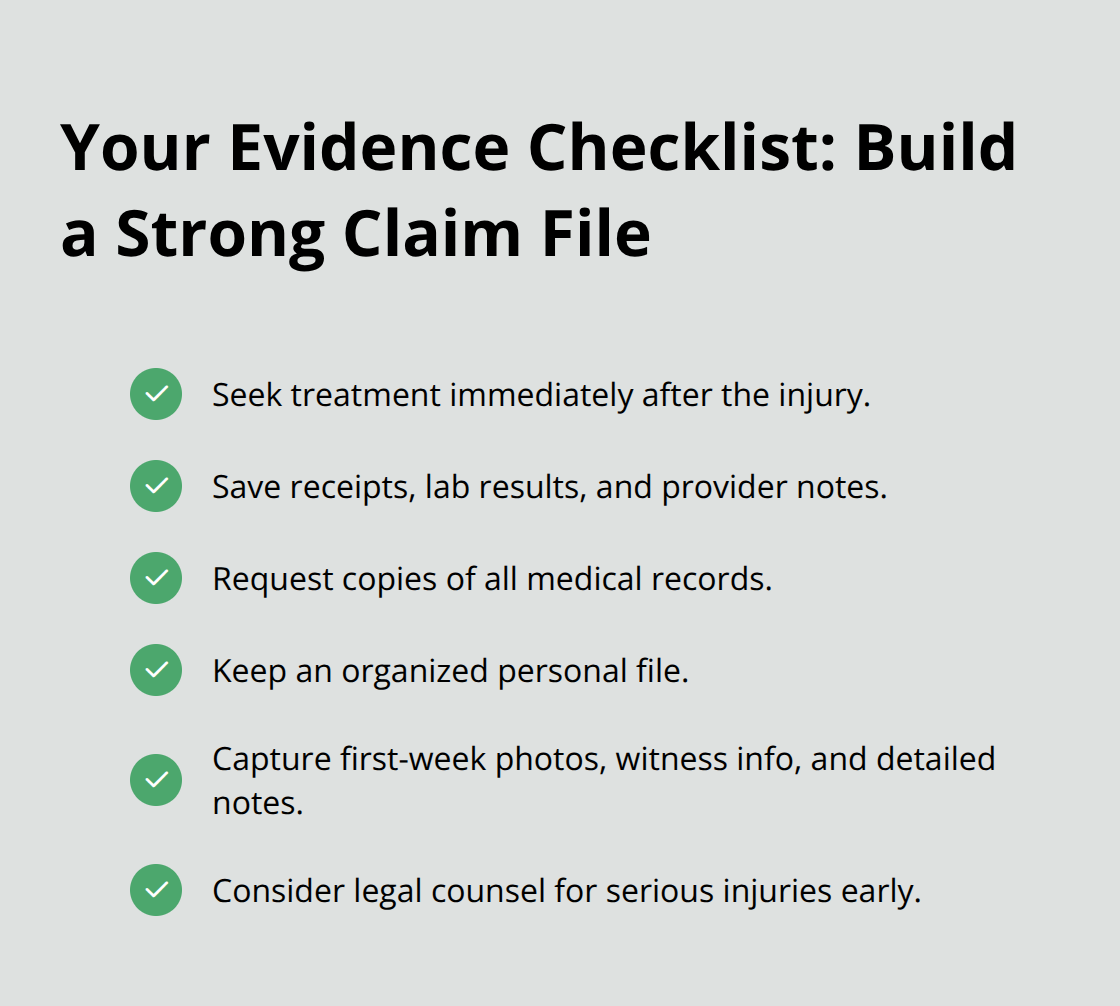
Many Northeast Ohio workers assume their employer’s insurance company will advocate for them, but that company’s job is to minimize payouts, not maximize your benefits. This misalignment makes legal representation valuable early, particularly for serious injuries where benefit amounts justify the investment.
Understand the Timeline and Benefit Structure
The timeline from filing to receiving benefits typically spans four to eight weeks for straightforward claims where medical evidence supports your injury classification and your employer does not contest the claim. Contested claims extend this period significantly, sometimes reaching six months or longer as the Industrial Commission of Ohio investigates. You will receive written decisions from the BWC outlining approved benefits, wage replacement rates based on your average weekly wage, and any medical restrictions.
If the BWC denies your claim or reduces benefits below what you expect, you have 14 days to file an appeal-this deadline is absolute and extensions are rarely granted. During this waiting period, many workers face financial pressure since wage replacement does not begin immediately. Understand that you lose the first three days of wages unless hospitalization occurred, which helps with financial planning.
Access Vocational Rehabilitation and Plan Your Recovery
If your injury prevents you from returning to your previous job, vocational rehabilitation services through the BWC can help retrain you for suitable work, though access to these services requires proper documentation and timely requests. The process feels slow and bureaucratic because it is, but staying organized, meeting every deadline, and collecting evidence systematically prevents most problems that extend timelines unnecessarily. When disputes arise between you and the BWC or your employer, understanding your employer’s legal obligations and the protections Ohio law provides becomes essential to protecting your interests.
Employer Responsibilities and Your Protections
What Ohio Law Requires From Your Employer
Ohio employers operate under specific legal obligations that protect you from the moment you suffer a workplace injury. Your employer must report your injury to the BWC within 30 days, though many fail to meet this deadline or file incomplete reports that delay your benefits. More importantly, your employer must provide you with the BWC’s official notice of rights and responsibilities form, which explains your coverage, appeal procedures, and what to expect during the claims process. If your employer cannot produce this document after your injury, they violated state law.
Ohio Revised Code Section 4121.26 mandates this notification, yet we regularly encounter workers who never received it, suggesting widespread non-compliance across Northeast Ohio workplaces. Your employer must also maintain a safe workplace and cannot retaliate against you for filing a legitimate claim or cooperating with BWC investigations.
Retaliation: What It Looks Like and How to Prove It
Retaliation includes firing, demoting, reducing hours, cutting wages, or transferring you to an undesirable position because you reported an injury or filed a claim. The Industrial Commission of Ohio takes retaliation seriously, and documented cases show workers winning substantial awards when employers punish them for exercising their legal rights. Many employers believe they can terminate at-will employees without consequence, but Ohio law explicitly protects injured workers from this behavior.
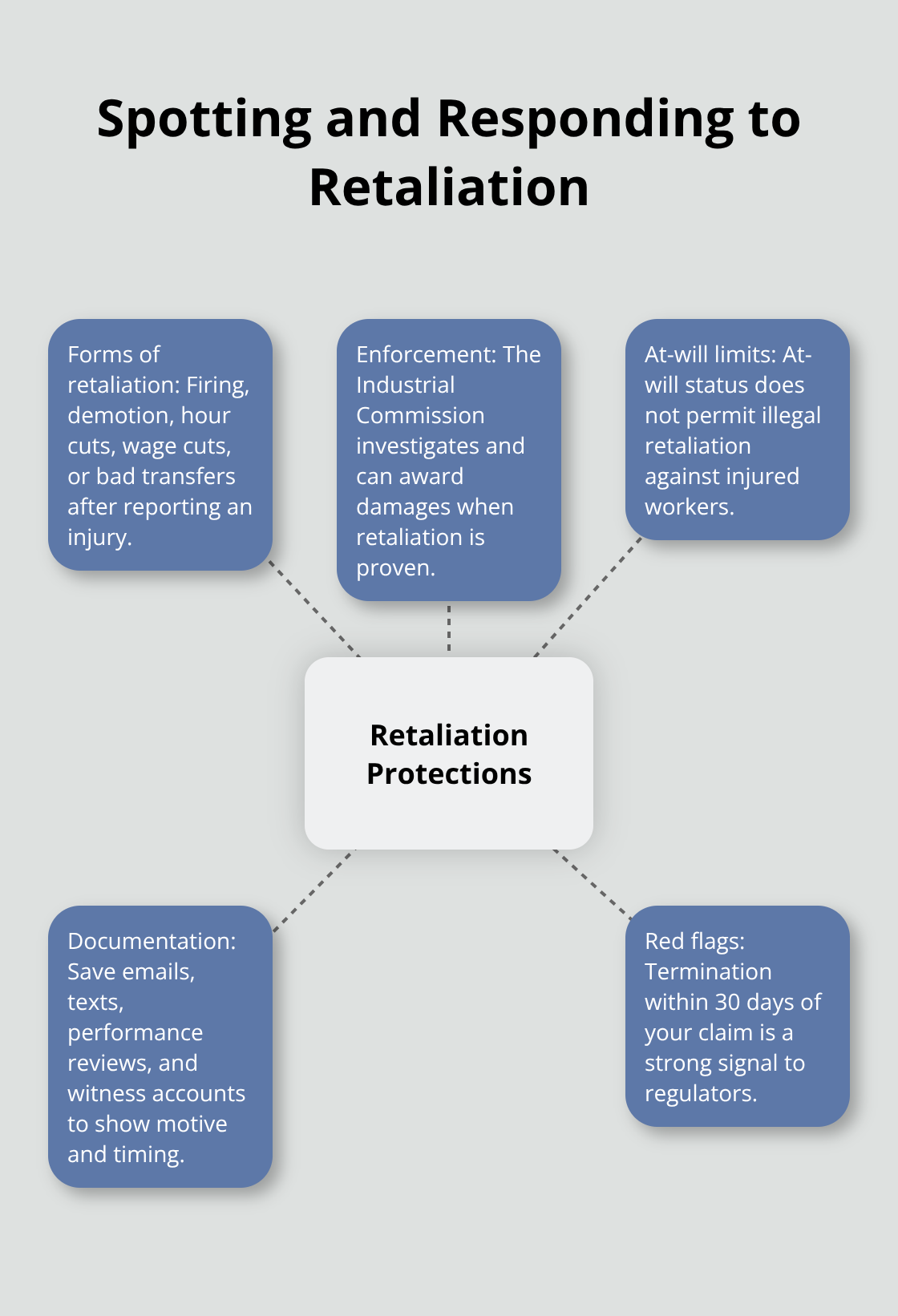
If your employer fires you within 30 days of filing a claim, that timing alone raises retaliation red flags that regulators investigate closely. You should document everything after your injury-emails, text messages, performance reviews, witness accounts of any threats or negative comments about your claim. This evidence becomes critical if you need to prove retaliation.
How the Industrial Commission of Ohio Enforces Your Rights
The Industrial Commission of Ohio exists specifically to enforce these employer obligations and resolve disputes when the BWC denies benefits or employers contest claims. When you appeal a BWC denial, the Industrial Commission reviews medical evidence, your work history, and employer statements to determine whether you qualify for coverage. The Commission operates on strict procedural timelines-you have 14 days to request a hearing after receiving a denial, and missing this deadline eliminates your appeal rights permanently.
Hearings occur before an administrative law judge who questions both you and the employer’s representative about the injury circumstances and your medical condition. The judge issues a decision that either upholds the BWC’s denial, approves benefits, or modifies the benefit amount. If you disagree with the judge’s decision, you can appeal to the full Industrial Commission, though most workers do not pursue this second level without legal representation because the process becomes more complex and technical.
Navigating Hearings and Building Your Case
Between 2020 and 2023, the Industrial Commission heard approximately 8,000 to 10,000 cases annually across Ohio, with denial appeals representing a significant portion of this caseload. Your employer or their insurance company will likely appear at your hearing with legal representation, making it substantially unequal if you attend alone without understanding how to present medical evidence or cross-examine witnesses effectively. Robin J Peterson Company, LLC represents injured workers throughout the Cleveland, Akron, and Canton areas during these hearings, ensuring your medical evidence receives proper presentation and your employer’s defenses face competent challenge.
Final Thoughts
Workplace injury rights in Cleveland and Northeast Ohio operate within a system designed to protect you, but only if you understand how to navigate it. The Ohio workers’ compensation system provides medical coverage and wage replacement without requiring you to prove fault, a significant advantage over personal injury lawsuits. However, misconceptions about what the BWC covers, retaliation protections, and appeal procedures cost injured workers thousands in lost benefits annually.
Acting immediately after your injury determines the strength of your claim. File your own notice with the BWC within days rather than waiting for your employer, collect photographs and witness statements while details remain fresh, and seek medical treatment promptly. These early actions create documentation that prevents denials and delays later, and understanding that the first three days of wages are lost, that appeals require filing within 14 days, and that the Industrial Commission of Ohio enforces your rights when disputes arise gives you realistic expectations about the timeline and process ahead.
Your employer’s legal obligations extend beyond reporting your injury-they must provide you with the official BWC notice of rights, maintain a safe workplace, and cannot retaliate against you for filing a legitimate claim. When employers violate these requirements, the Industrial Commission investigates and awards damages to workers who prove retaliation occurred. If you face a BWC denial, a contested claim, or employer retaliation, contact us to discuss your workplace injury rights Cleveland situation with an attorney who understands Northeast Ohio workplace injury law and the Industrial Commission process.