
Workplace injuries happen fast, and the steps you take immediately after matter more than you might think. At Robin J Peterson Company, LLC, we’ve helped countless Ohio workers navigate filing BWC claim basics when they needed it most.
The Ohio Bureau of Workers’ Compensation system isn’t complicated once you understand how it works. This guide walks you through exactly what to do, from reporting your injury to handling appeals if something goes wrong.
What Happens Right After a Workplace Injury
The first 24 to 48 hours after a workplace injury in Ohio determine how smoothly your BWC claim will move forward. You must tell your employer about the injury immediately, even if it seems minor. Most Ohio employers carry workers’ compensation insurance, and they need to know what happened so they can file the necessary reports with the BWC. Don’t wait until the end of your shift or the next day. The sooner your employer documents the injury, the sooner the BWC can begin processing your claim. Verbal notification counts, but written documentation is smarter.
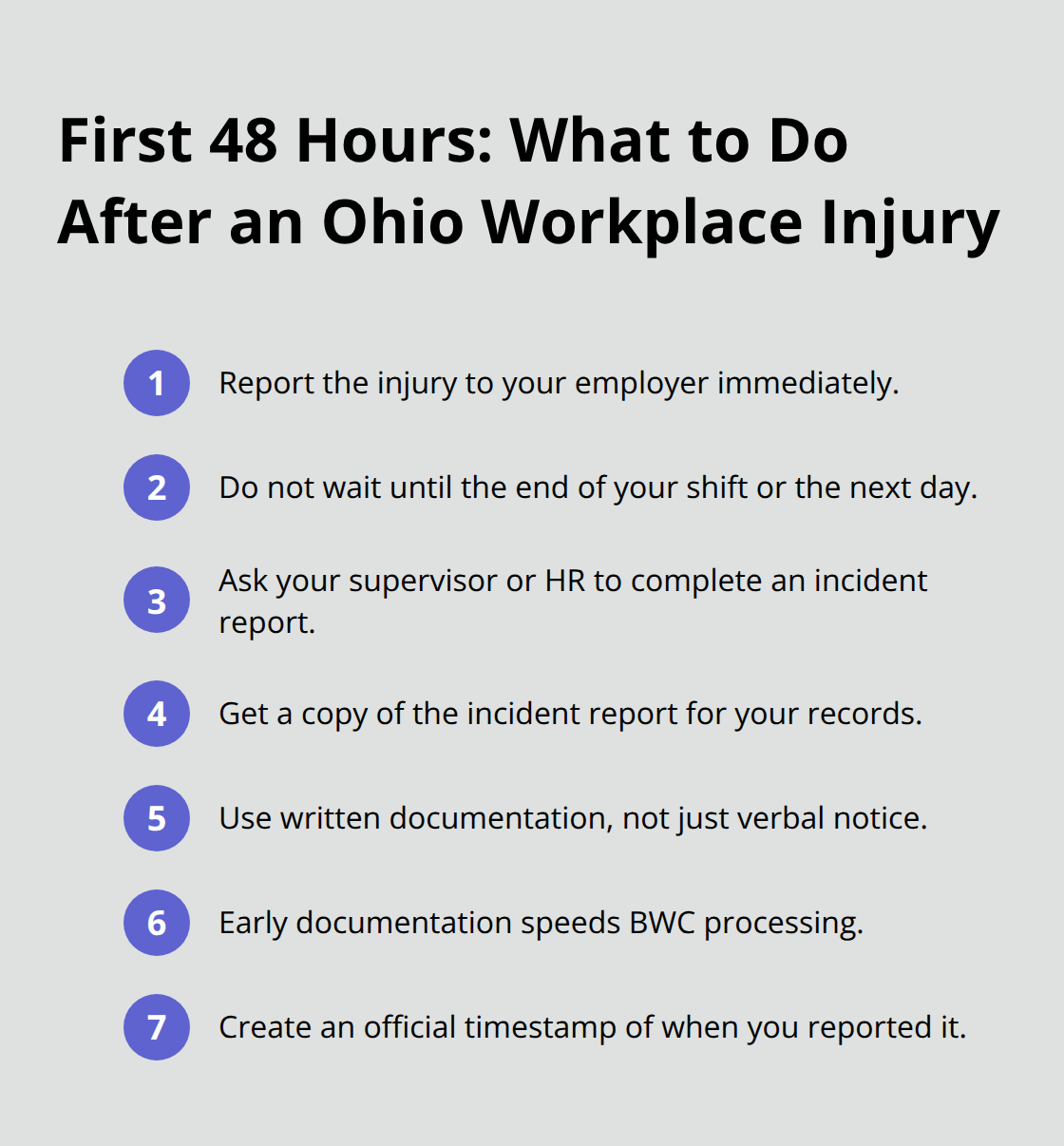
Ask your supervisor or HR department to complete an incident report and give you a copy. This written record protects you because it creates an official timestamp of when you reported the injury.
Getting Medical Care and Building Your Documentation
Seek medical attention immediately after reporting your injury to your employer. This step matters more than most workers realize. The Ohio Bureau of Workers’ Compensation tracks medical records closely, and a gap between your injury date and your first medical visit raises red flags during claim evaluation. When you see a doctor, tell them exactly how the injury happened and which body part was affected. Request copies of all medical records, imaging results, and treatment notes. Keep these documents organized in a folder or digital file. The BWC uses these medical records as the foundation for determining whether your injury is work-related and what benefits you qualify for. If your employer directs you to a specific doctor or clinic, go there first, but understand that you have the right to change healthcare providers after your initial treatment. Document everything, including the dates you received treatment, the names of medical professionals you saw, and any prescribed medications or therapy.
Filing Your Claim Within the Required Timeline
Ohio law gives you one year from the date of injury to file a claim with the BWC, but waiting that long is a mistake. The BWC receives thousands of claims monthly, and filing early prevents your claim from getting lost in the backlog. File within 30 days of your injury if possible. Your employer is actually required to file certain claim forms with the BWC, but don’t rely on them to do it correctly or promptly. You can file Form OHIOBWC-1 directly with the BWC through their online system or by mail. The BWC processes claims faster when medical documentation accompanies your filing. Include copies of your medical records, the incident report from your employer, and any witness statements from coworkers who saw the injury happen. If your injury prevents you from working, the BWC needs to know this immediately so they can process wage loss benefits. The faster you file and the more complete your documentation is, the faster you’ll receive a decision on your claim.
What Happens Next in the Evaluation Process
After you file your claim, the BWC enters the evaluation phase. The agency reviews your medical records, your employer’s incident report, and any witness statements you submitted. This process typically takes several weeks, though complex cases may take longer. During this time, the BWC determines whether your injury qualifies as work-related and what type of benefits you should receive. You’ll receive written notification of the BWC’s decision, which outlines their findings and the benefits they’ve approved or denied. If the BWC approves your claim, you move forward with receiving medical treatment coverage and potential wage loss benefits. If they deny your claim or approve it for less than you expected, you have options to challenge their decision.
Understanding the BWC Claims Process
The Ohio Bureau of Workers’ Compensation does not evaluate claims based on how bad your injury feels or how sympathetic your story is. They follow a specific protocol that centers on medical evidence and work-relatedness. When your claim lands on a BWC examiner’s desk, they look for three things: proof that you were working when the injury occurred, medical documentation that supports your injury claim, and evidence that the injury did not exist before your employment.
How Examiners Review Your Medical Records
The examiner pulls your medical records first and reads them carefully. If your doctor clearly documented how the injury happened and connected it to your job duties, your claim moves forward faster. If your medical records are vague or do not mention work at all, the examiner flags your claim for further investigation. The BWC also reviews your employer’s incident report, witness statements, and any surveillance footage if it exists. Claims with solid medical documentation and credible witness accounts receive approval at higher rates than claims with weak evidence. The entire evaluation typically takes four to six weeks, though the BWC processes some straightforward cases in two to three weeks.
What Benefits You Actually Qualify For
Ohio’s workers’ compensation system provides three main categories of benefits for injured workers. Medical benefits cover all reasonable and necessary treatment related to your work injury, including doctor visits, surgery, medications, physical therapy, and medical equipment. Wage loss benefits replace a portion of your income if your injury prevents you from working, calculated at two-thirds of your average weekly wage before the injury. Permanent disability benefits apply if your injury causes lasting damage that affects your earning capacity even after you return to work.
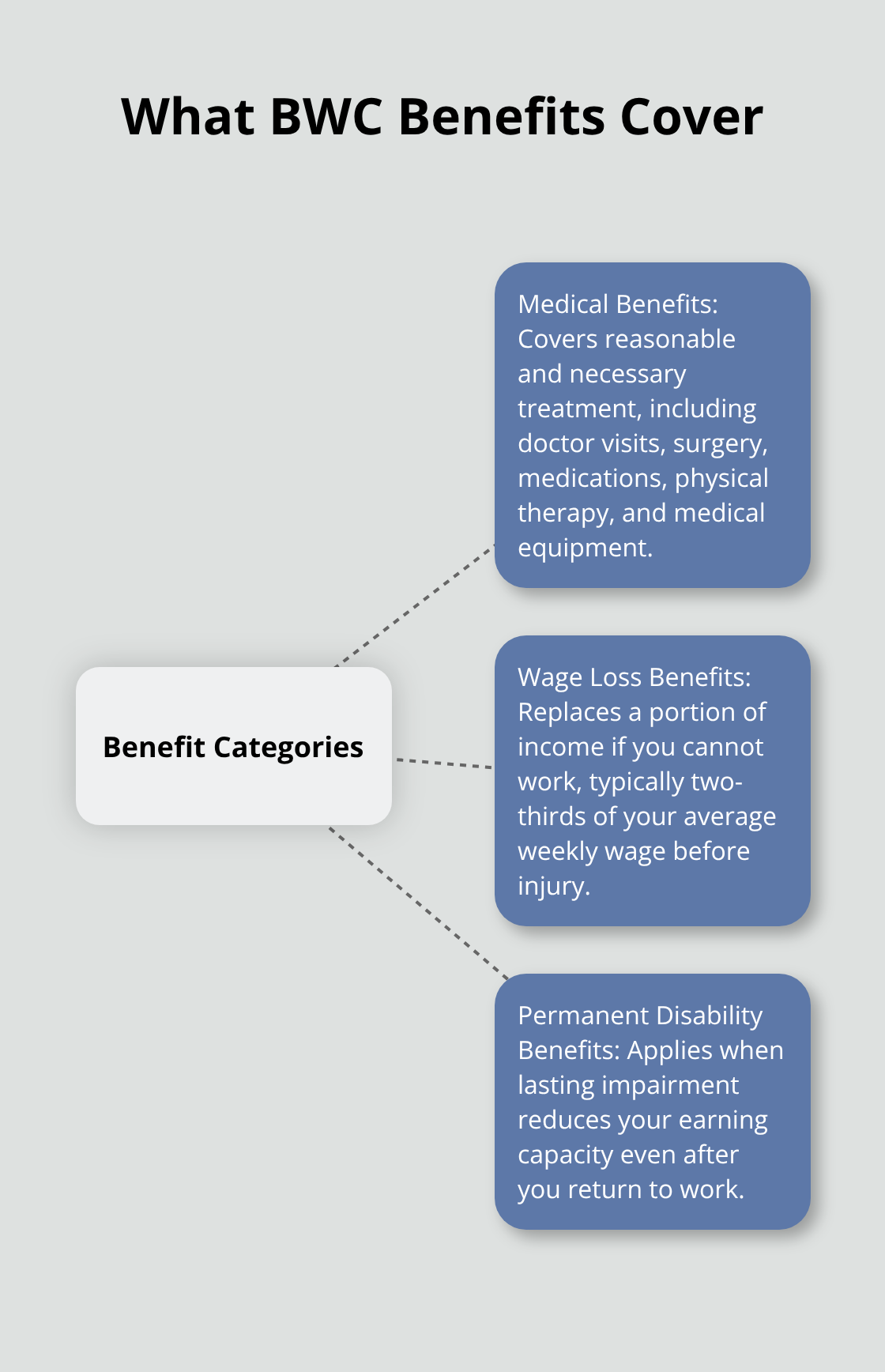
The BWC determines your benefit level based on the nature and severity of your injury as documented in your medical records. A worker with a mild strain might receive medical benefits only, while someone with a serious fracture could qualify for all three benefit categories. Wage loss benefits typically last for 200 weeks unless your injury qualifies for permanent total disability status. The BWC does not award lump sum payments in most cases, so your benefits arrive as ongoing payments rather than a single check.
Why the BWC Denies Claims
The BWC denies roughly 30 to 40 percent of claims submitted, according to Ohio workers’ compensation data. The most common reason for denial is insufficient medical evidence linking your injury to your job. If you waited weeks before seeking medical treatment or saw a doctor who did not document the work-related cause, your claim faces serious risk.
The second major reason for denial involves claims where the injury appears to be pre-existing rather than work-caused. If you had back pain or knee problems before your injury, the BWC investigates whether your job actually worsened the condition or simply exposed an existing problem. Some claims get denied because the injury occurred during a break or while performing non-work activities. The BWC also denies claims when the incident report and medical records tell different stories about how the injury happened.
Workers who delay reporting their injury or fail to seek immediate medical attention create gaps that examiners interpret as suspicious. The documentation you create in the first 48 hours determines whether the BWC approves or denies your claim. This reality makes those initial steps far more important than most workers understand, and it’s exactly why the next section on appeals and disputes matters so much if your claim faces rejection.
Navigating Appeals and Disputes
A BWC denial does not mean your case ends. The Ohio system gives you multiple opportunities to challenge the agency’s decision, and most workers who appeal actually improve their outcomes. The Industrial Commission of Ohio handles appeals, and this process operates differently than the initial BWC evaluation.
Filing Your Appeal Within the Critical Window
You have 14 days from the date you receive your denial letter to file an appeal, so act fast. Request a hearing before the Industrial Commission, which assigns your case to a hearing officer who reviews the evidence again from scratch. This fresh evaluation often produces different results because the hearing officer may weigh medical evidence differently than the original BWC examiner did.
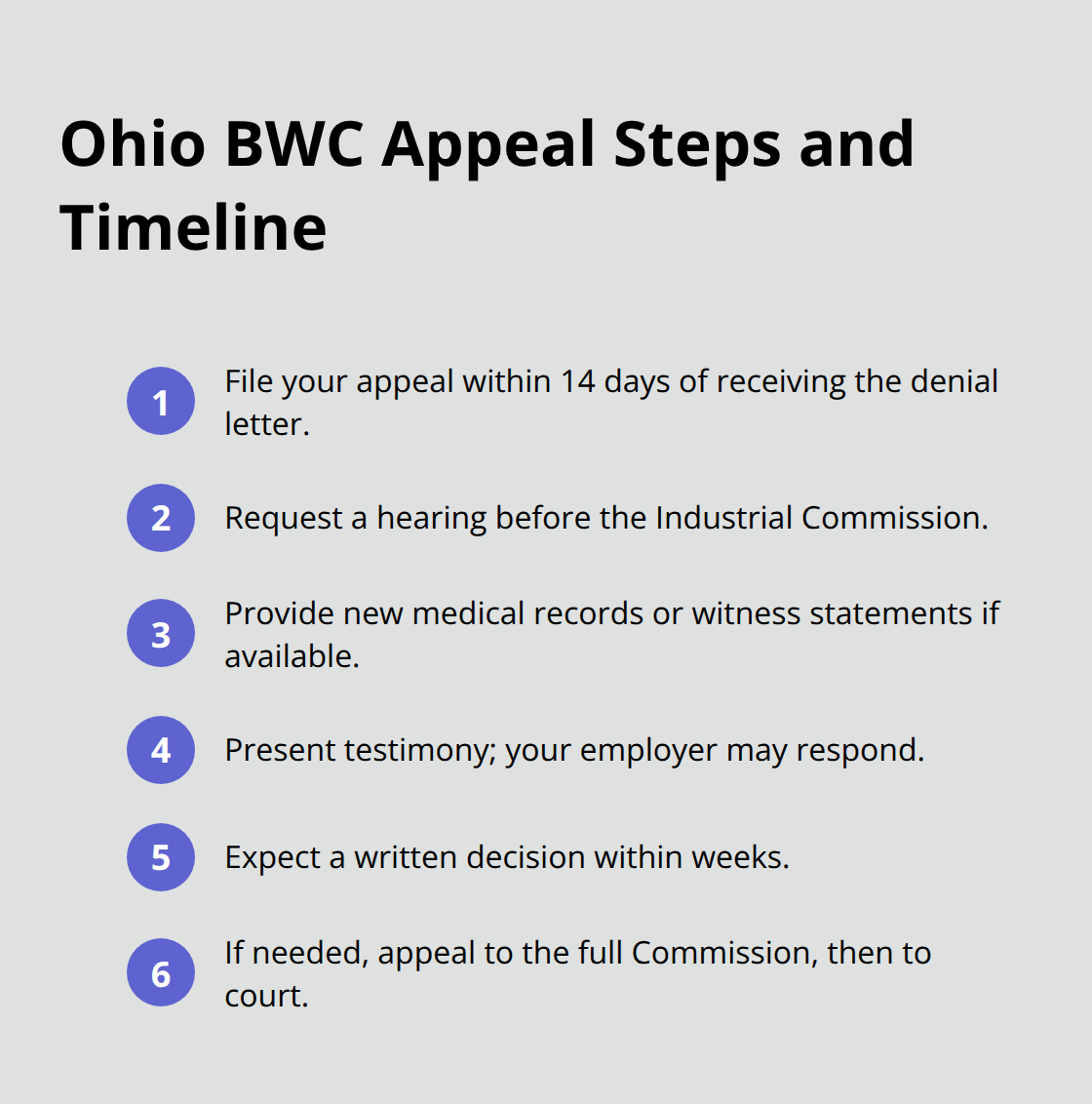
Bring new medical records or witness statements you did not have during the initial claim if possible. The hearing officer listens to your testimony and your employer’s response, then issues a decision within weeks. If you lose at the hearing officer level, you can appeal to the Industrial Commission’s full board, then potentially to Ohio court, but most workers either win at the hearing or settle their disputes before reaching those later stages.
How Legal Representation Improves Your Odds
Workers represented by attorneys win their appeals at substantially higher rates than those representing themselves, according to Industrial Commission of Ohio data. An attorney who specializes in workers’ compensation law knows exactly what medical evidence the hearing officer needs to see and how to present your case persuasively. Robin J. Peterson Company, LLC represents injured workers throughout Cleveland, Akron, and Canton, and the firm understands how the Industrial Commission evaluates appeals in your specific region.
Many workers wait until after their initial denial to hire an attorney, but having legal help from the beginning prevents the documentation mistakes that cause denials in the first place. If you are considering an appeal, contact an attorney before your 14-day window closes. The cost of representation typically involves a fee arrangement where the attorney takes a percentage of your approved benefits, so you do not pay upfront. This structure aligns your attorney’s interests with yours because they only earn money when you win additional benefits.
Final Thoughts
Filing BWC claim basics correctly from day one prevents months of frustration and denied benefits. Report your injury immediately to your employer, seek medical care within 24 hours, and file your claim within 30 days. Medical documentation becomes your strongest weapon because the BWC builds its entire decision on what your doctor wrote down.
If your claim gets denied, rejection is not final. The Industrial Commission of Ohio gives you 14 days to appeal, and workers who appeal often reverse their denials. The difference between winning and losing frequently comes down to how well your case is presented at the hearing level, where an attorney who understands Ohio workers’ compensation law knows which medical evidence matters most.
Ohio workers have access to free resources through the BWC’s website, including claim forms, benefit calculators, and contact information for regional offices. If your situation becomes complicated or your claim faces denial, contact Robin J. Peterson Company, LLC for representation in the Cleveland, Akron, or Canton areas (the firm specializes in helping injured workers fight for the benefits they deserve).