
A workplace injury changes everything. Medical bills pile up, lost wages add stress, and uncertainty about your future grows by the day.
At Robin J Peterson Company, LLC, we know that understanding your rights after job injury is the first step toward protecting yourself. This guide walks you through Ohio’s workers’ compensation system, the claims process, and what to do when obstacles arise.
What Workers’ Compensation Actually Covers in Ohio
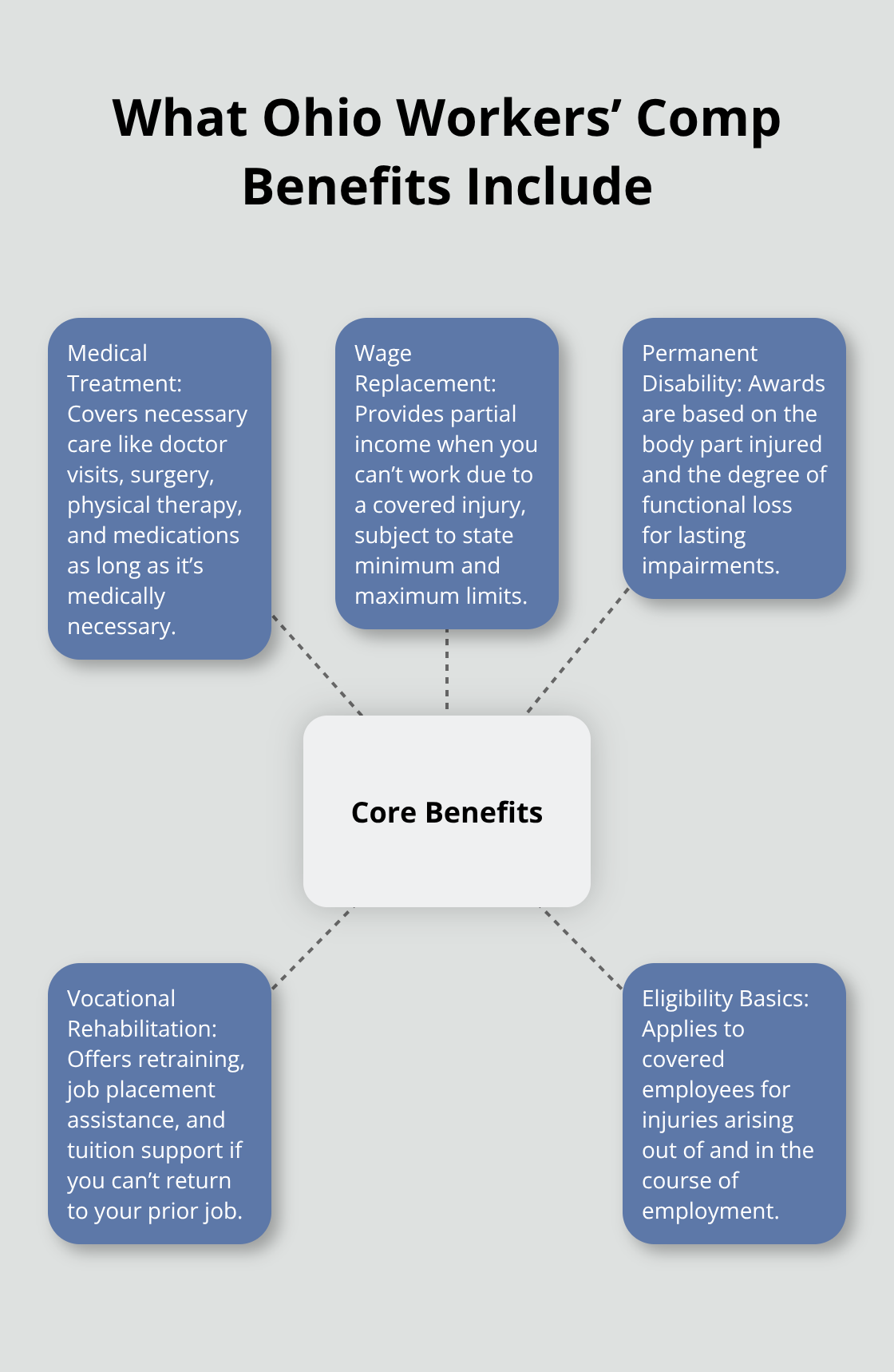
Ohio’s workers’ compensation system operates differently than most people expect. Unlike a lawsuit against your employer, workers’ compensation is a no-fault system, meaning you receive benefits regardless of who caused the injury. The Ohio Bureau of Workers’ Compensation administers this program and prioritizes getting you medical treatment and partial wage replacement quickly. However, the system has strict rules about what qualifies for coverage. You must have suffered an injury during the course of employment, and the injury must arise out of work conditions. This distinction matters enormously. An injury that occurs during lunch break in the company cafeteria typically qualifies, but an injury sustained during a personal errand does not, even if it happens on company property.
Medical Coverage and Wage Replacement
Ohio’s workers’ compensation provides two primary benefit categories. First, the system covers all necessary medical treatment related to your injury, including doctor visits, surgery, physical therapy, and medications. This coverage continues as long as your doctor determines treatment is medically necessary. Second, you receive wage replacement benefits if your injury prevents you from working. The replacement amount equals two-thirds of your average weekly wage, subject to state minimum and maximum limits.
According to the Ohio Bureau of Workers’ Compensation, the maximum weekly benefit in 2024 reached approximately 662 dollars per week for temporary total disability. These benefits continue for the duration of your recovery, whether that takes weeks or months. Temporary partial disability benefits apply if you return to modified duty work at reduced wages while you heal.
Permanent Disability and Vocational Benefits
If your injury results in permanent disability, Ohio provides additional protections. The state calculates permanent partial disability awards based on the specific body part injured and the degree of functional loss. Finger injuries receive different compensation than spinal injuries, for example. You may also qualify for vocational rehabilitation services if your injury prevents you from returning to your previous job. These services include retraining programs, job placement assistance, and tuition support for education. To qualify for workers’ compensation in Ohio, you must be an employee covered under the state’s system. Independent contractors generally do not qualify, though exceptions exist depending on your work arrangement. Most private employers with one or more employees must carry workers’ compensation insurance or self-insure through the state fund.
Understanding Eligibility and Coverage Gaps
Not every workplace injury qualifies for workers’ compensation benefits. The injury must have a direct connection to your job duties or work environment. Injuries that occur during commutes to and from work typically fall outside coverage, even though they happen in connection with employment. Occupational diseases (conditions that develop over time from work exposure) do qualify, but you must report them within specific timeframes to protect your claim. Some workers face coverage gaps because their employers operate outside the standard system. Agricultural workers, domestic workers, and certain other classifications may have different rules. Understanding whether your employer participates in Ohio’s workers’ compensation system determines your next steps in the claims process.
Getting Your Claim Approved: The Steps That Matter
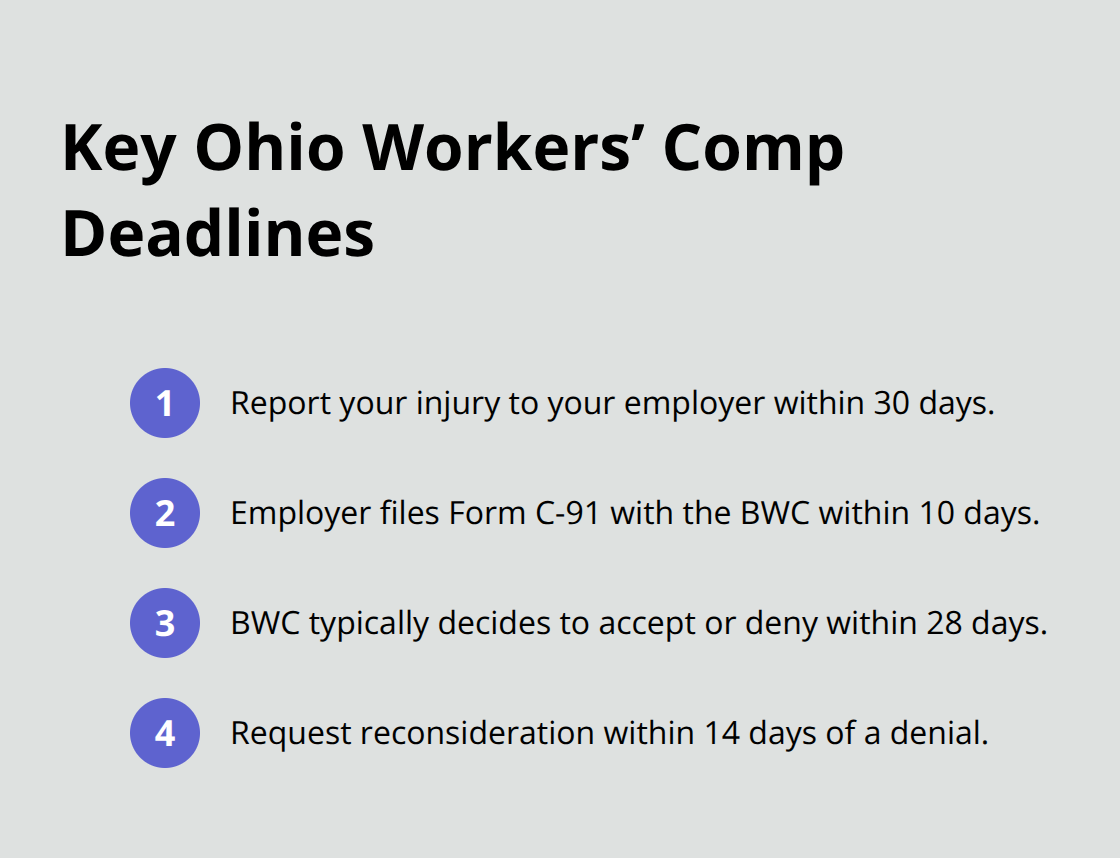
Filing a workers’ compensation claim in Ohio requires immediate action and careful documentation. You have 30 days from the date of injury to report it to your employer, though reporting sooner protects your rights better. When you report the injury, provide written notice in addition to verbal communication, and keep a copy for your records. Your employer must then file Form C-91 with the Ohio Bureau of Workers’ Compensation within 10 days of learning about your injury.
If your employer delays or refuses to file, you can file the claim directly with the BWC yourself.
Initial Documentation and Medical Evidence
The initial paperwork should include a detailed description of how the injury occurred, the exact body part injured, and the date and time of the incident. Medical documentation becomes your strongest evidence at this stage. Seek medical treatment immediately after the injury and ensure your doctor documents the connection between your work activities and the injury. The BWC uses this medical evidence to determine whether your claim meets the legal requirements for coverage under Ohio’s no-fault system.
Working With the BWC and Managing Your Claim
The Ohio Bureau of Workers’ Compensation processes claims through its system, and understanding their timeline helps you stay ahead. The BWC typically accepts or denies your claim within 28 days after receiving complete documentation. Once accepted, you begin receiving benefits while your case moves through the system. During this period, you’ll receive wage replacement checks and coverage for authorized medical treatment.
Stay in regular contact with your employer’s insurance carrier and the BWC claims administrator assigned to your case. Request a claim summary regularly to verify all information is accurate, and notify them immediately if your medical condition changes or you return to work. The BWC’s website provides access to your claim status, and you can download forms and track benefit payments online.
Handling Disputes Over Medical Treatment
If your employer disputes any aspect of your claim or the insurance carrier questions your medical treatment, the dispute resolution process begins. The Industrial Commission of Ohio handles these disputes through mediation and hearing procedures. Many disputes arise because medical providers recommend treatment that the insurance carrier considers unnecessary or excessive. In these situations, you have the right to request an independent medical examination or appeal the carrier’s decision to the Industrial Commission.
Responding to Claim Denials
Claim denials happen for specific reasons, and understanding why your claim was denied determines your next move. Common denial reasons include the injury not arising out of employment, insufficient medical evidence linking the injury to work, or failure to report the injury within required timeframes. The BWC provides a written explanation of the denial with specific legal references, which guides your response strategy.
You have 14 days from the denial date to request reconsideration, and this is your first opportunity to submit additional evidence. New medical documentation, witness statements, or clarifications about how the injury occurred can reverse an initial denial. If reconsideration fails, you can file an appeal with the Industrial Commission of Ohio, which provides an independent review of your case. This process involves submitting written arguments and attending a hearing before a staff hearing officer.
Legal representation becomes important at this stage because the appeals process involves specific procedural rules and legal standards. The hearing officer’s decision can be appealed further to the Industrial Commission’s full board if you believe significant legal errors occurred. Throughout this entire process, continuing medical treatment strengthens your position by demonstrating that your injury remains work-related and requires ongoing care. When disputes escalate beyond your ability to manage them alone, experienced workers’ compensation attorneys can navigate the complex appeals system and challenge denials effectively.
What Stops Claims and How to Fight Back
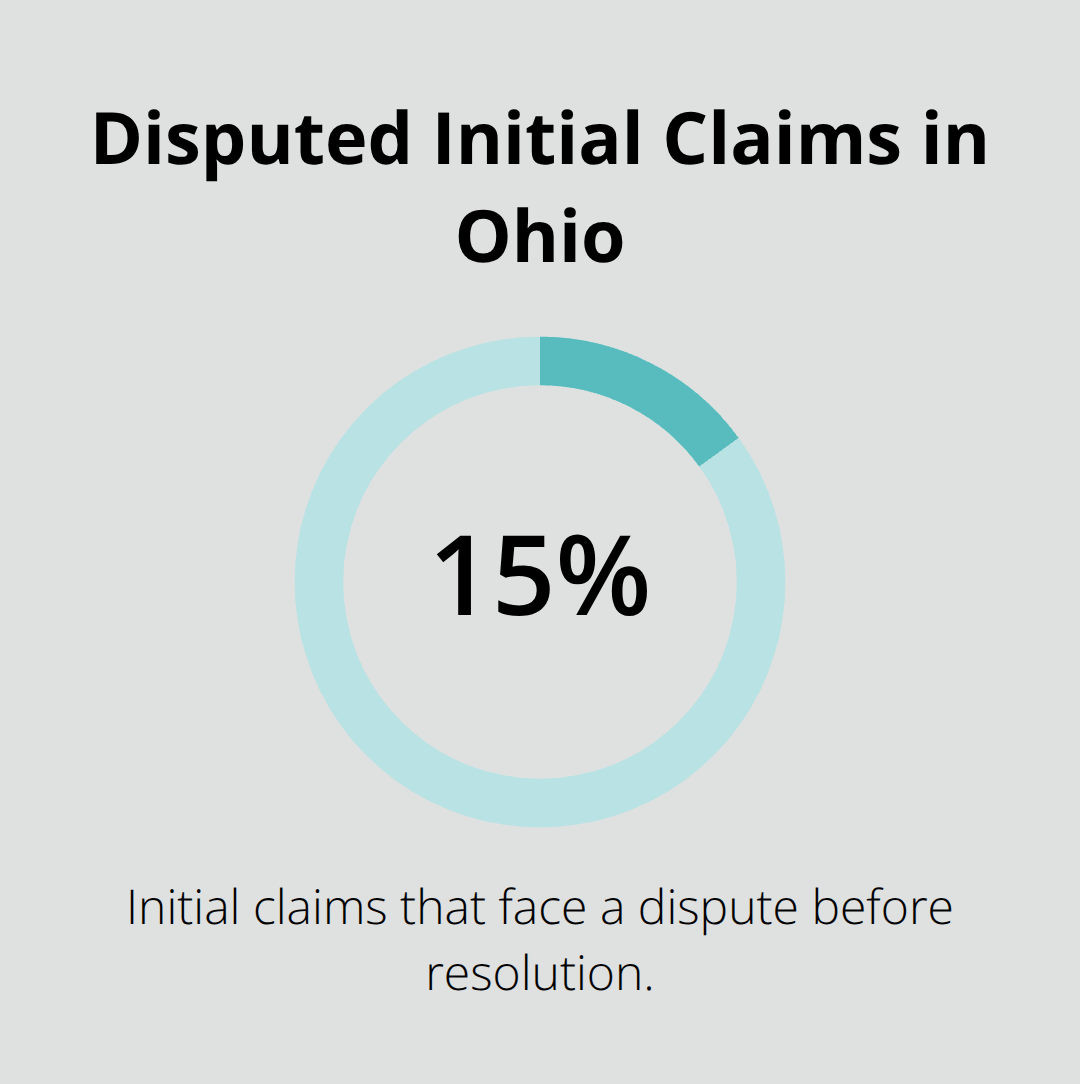
Disputes arise constantly in Ohio workers’ compensation cases, and most injured workers face at least one significant obstacle between filing and receiving full benefits. The most common conflict occurs when the insurance carrier questions whether your injury truly arose from work conditions. This happens frequently with back injuries, where carriers argue that pre-existing conditions caused the damage rather than the workplace incident. The Ohio Bureau of Workers’ Compensation reported that approximately 15 percent of initial claims face some form of dispute before resolution. Your employer may also contest your claim by arguing you were negligent or that you failed to report the injury promptly, though Ohio’s no-fault system makes these arguments weaker than in traditional lawsuits.
Insurance carriers frequently deny treatment recommendations, claiming physical therapy or specialist consultations exceed what’s medically necessary. When these disputes occur, you must respond within specific timeframes or lose your right to challenge the decision.
Building Medical Evidence That Sticks
Medical documentation determines whether disputes go your way, and weak evidence almost always results in lost benefits. The treating physician’s records must explicitly connect your injury to work activities, not just document your symptoms. Insurance carriers scrutinize medical reports that lack this work-related connection, so your first appointment after injury is critical. Tell your doctor exactly how the injury occurred at work, the specific movements or equipment involved, and when symptoms started. Request that your doctor document this information in their notes using your exact words about the incident. Follow-up appointments matter equally because consistent treatment demonstrates the injury remains work-related and serious. Gaps in medical care lasting more than several weeks give carriers ammunition to argue your injury resolved or wasn’t genuine. If your doctor recommends a specialist or advanced imaging, request that recommendation in writing, as this documentation supports appeals if the carrier initially denies authorization. Occupational medicine physicians (specifically trained in work-related injuries) provide especially credible evidence because they understand how job tasks cause specific injuries. Try to seek one if your case involves complex causation issues.
When Professional Help Becomes Necessary
You should consider legal representation immediately if the carrier denies your claim, delays benefit payments beyond 28 days, or disputes medical treatment recommendations. Many injured workers wait too long, hoping disputes resolve independently, then discover they’ve missed critical appeal deadlines. Ohio law allows you to recover attorney fees from the BWC in many situations, meaning you don’t pay costs upfront if your case has merit. Workers’ compensation attorneys know exactly which evidence persuades hearing officers and which arguments fail consistently. They understand the Industrial Commission of Ohio’s procedural requirements and can file appeals correctly the first time, avoiding costly mistakes. Our experience at Robin J Peterson Company, LLC handling these disputes across Cleveland, Akron, and Canton shows that early legal intervention prevents most cases from escalating to full hearings. Carriers respond differently when they know an attorney represents you, often settling disputes more quickly rather than fighting through formal proceedings.
Final Thoughts
Your rights after job injury in Ohio are substantial, but only if you act decisively and understand the system. The workers’ compensation process rewards preparation and documentation. Report your injury immediately, gather medical evidence that explicitly connects your condition to work, and maintain detailed records of all communications with your employer and the BWC.
The obstacles you face are real, but they are manageable with the right approach. Claim denials, treatment disputes, and carrier resistance happen frequently, yet they do not have to derail your recovery. Understanding that approximately 15 percent of initial claims face disputes means you are not alone if complications arise.
Your next step depends on where you stand in the process. If you have not filed yet, report your injury to your employer in writing immediately and seek medical treatment from a doctor experienced with work-related injuries. If your claim is pending, request regular status updates from the BWC and ensure your medical provider documents the work connection in every note. If you face a denial or dispute, do not wait hoping it resolves independently-the 14-day reconsideration window and appeal deadlines move quickly, and missing them costs you permanently. For complex cases involving denials or significant disputes, Robin J Peterson Company, LLC represents injured workers across Cleveland, Akron, and Canton, fighting to secure the benefits you have earned.