
When the Ohio Bureau of Workers’ Compensation denies your medical treatment, it feels like your claim is falling apart. Medical treatment denial in Ohio happens more often than injured workers realize, and many don’t know they have options to fight back.
At Robin J Peterson Company, LLC, we help workers navigate these denials and recover the care they need. This guide walks you through your remediation options step by step.
What Constitutes Medical Treatment Denial in Ohio
The Ohio Bureau of Workers’ Compensation denies medical treatment in several distinct ways, and understanding the difference matters because each denial type requires a different response. A full denial means the BWC refuses to pay for the entire treatment you requested. A partial denial approves some treatments but rejects others, forcing you to navigate which portions of your care are covered.
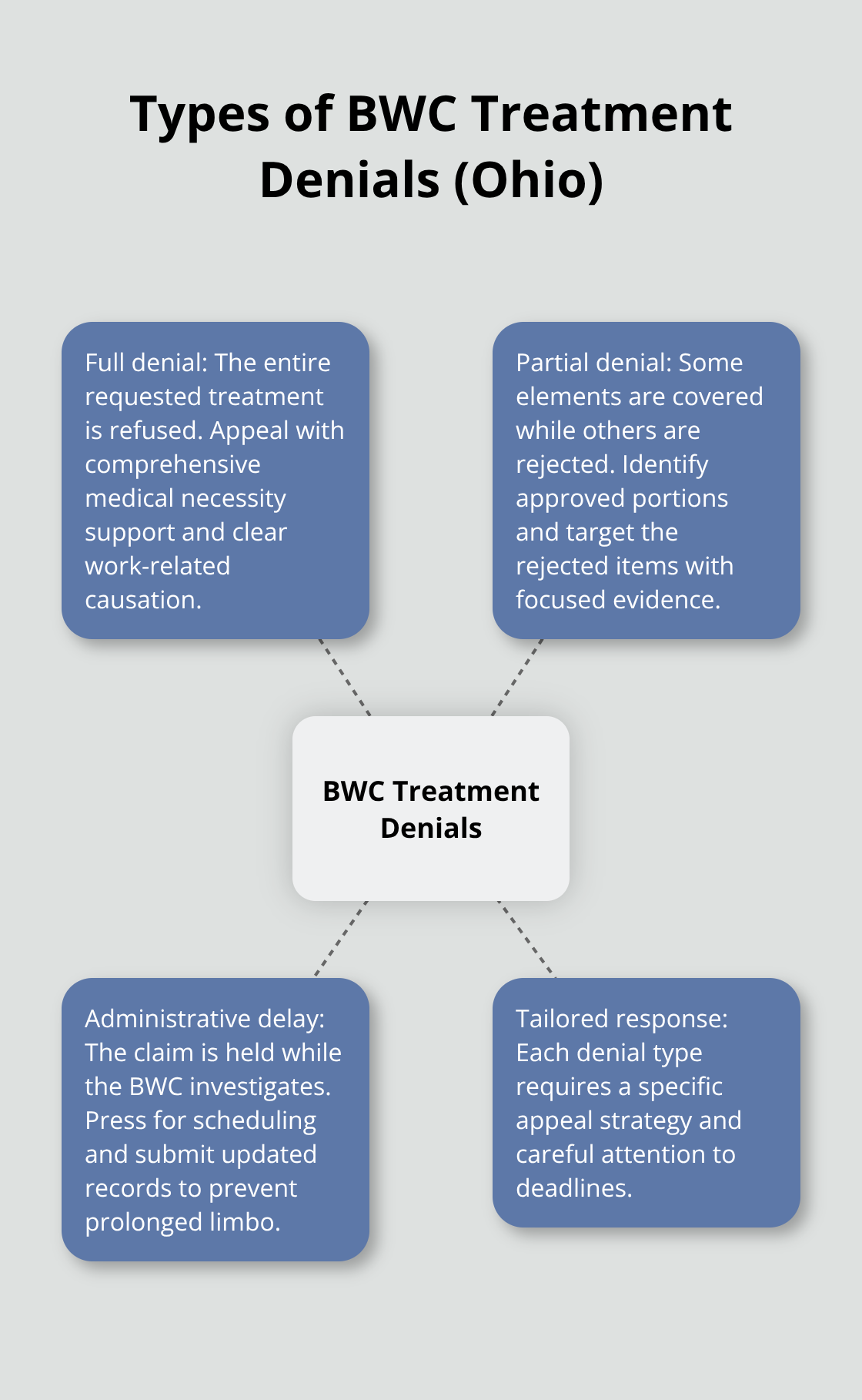
A denial isn’t technically a rejection when it involves delay, but the BWC holds your claim in administrative limbo for weeks or months, effectively blocking access to care while they investigate. Each of these scenarios disrupts your recovery, but they’re handled differently in appeals. The BWC processed roughly 825,000 healthcare and injury claims across Ohio in recent years according to employment data, yet many injured workers don’t realize denials are reversible.
Why the BWC Rejects Treatment Requests
The BWC rejects claims based on specific criteria outlined in Ohio’s workers’ compensation statutes. The most common reason is that they believe your injury isn’t work-related, meaning they dispute the causal link between your job and your medical condition. They also reject treatment when they claim the proposed care exceeds what’s medically necessary for your specific injury, or when they say you’ve already reached maximum medical improvement and further treatment won’t help. Some denials stem from the BWC challenging your treating physician’s qualifications or independence, especially if that doctor hasn’t been pre-approved by their system. Ohio has seven Tier 1 research universities including Case Western Reserve University and Ohio State University that train physicians, yet the BWC still frequently second-guesses treatment recommendations from qualified medical professionals. Denials also happen when you miss required appointments, fail to comply with prescribed treatment protocols, or seek care from providers outside the BWC’s approved network without authorization.
How a Denial Cascades Through Your Entire Case
A medical treatment denial doesn’t just block one procedure-it cascades through your entire workers’ compensation case. When treatment is rejected, your injury doesn’t heal properly, which weakens your position if you later request permanent partial disability benefits or vocational rehabilitation. The delay in care can worsen your condition, creating a documented medical record that contradicts your original injury claim. Employers and the BWC use rejected treatment as evidence that your injury wasn’t severe enough to warrant benefits in the first place. This creates a vicious cycle where the denial itself becomes grounds for future claim reductions. Ohio’s 11.9 million residents include many workers facing this exact scenario, and most don’t understand that fighting the denial immediately protects their long-term benefits. The longer you wait to appeal, the harder it becomes to establish that the rejected treatment was necessary all along.
Why You Need to Act Fast
The window to challenge a denial closes quickly. Ohio law sets strict timelines for filing appeals, and missing these deadlines can permanently bar your claim. Your next step involves understanding exactly what type of denial you received and what evidence supports your case for reversal.
How to Appeal a Medical Treatment Denial in Ohio
The Industrial Commission of Ohio gives you a formal path to overturn a BWC denial, and understanding this process separates workers who recover their benefits from those who give up too early. When the BWC denies your treatment, you have the right to request a hearing before an administrative law judge, but you must file within specific timeframes or lose that right permanently.
Filing Your Request for Hearing
Ohio law requires you to file your request for hearing within 14 days of receiving the BWC’s denial decision, though some circumstances extend this window slightly. The hearing takes place before an independent administrative law judge who reviews the medical evidence, your work history, and the BWC’s reasoning for the denial. This judge holds authority to overturn the denial and order the BWC to pay for your treatment if the evidence supports your case. Many injured workers in Ohio’s seven major metropolitan areas (including Cleveland, Akron, and Canton) don’t realize that the appeals process favors workers with strong medical documentation and clear causal evidence linking their job duties to the injury.
Building Your Evidence Package
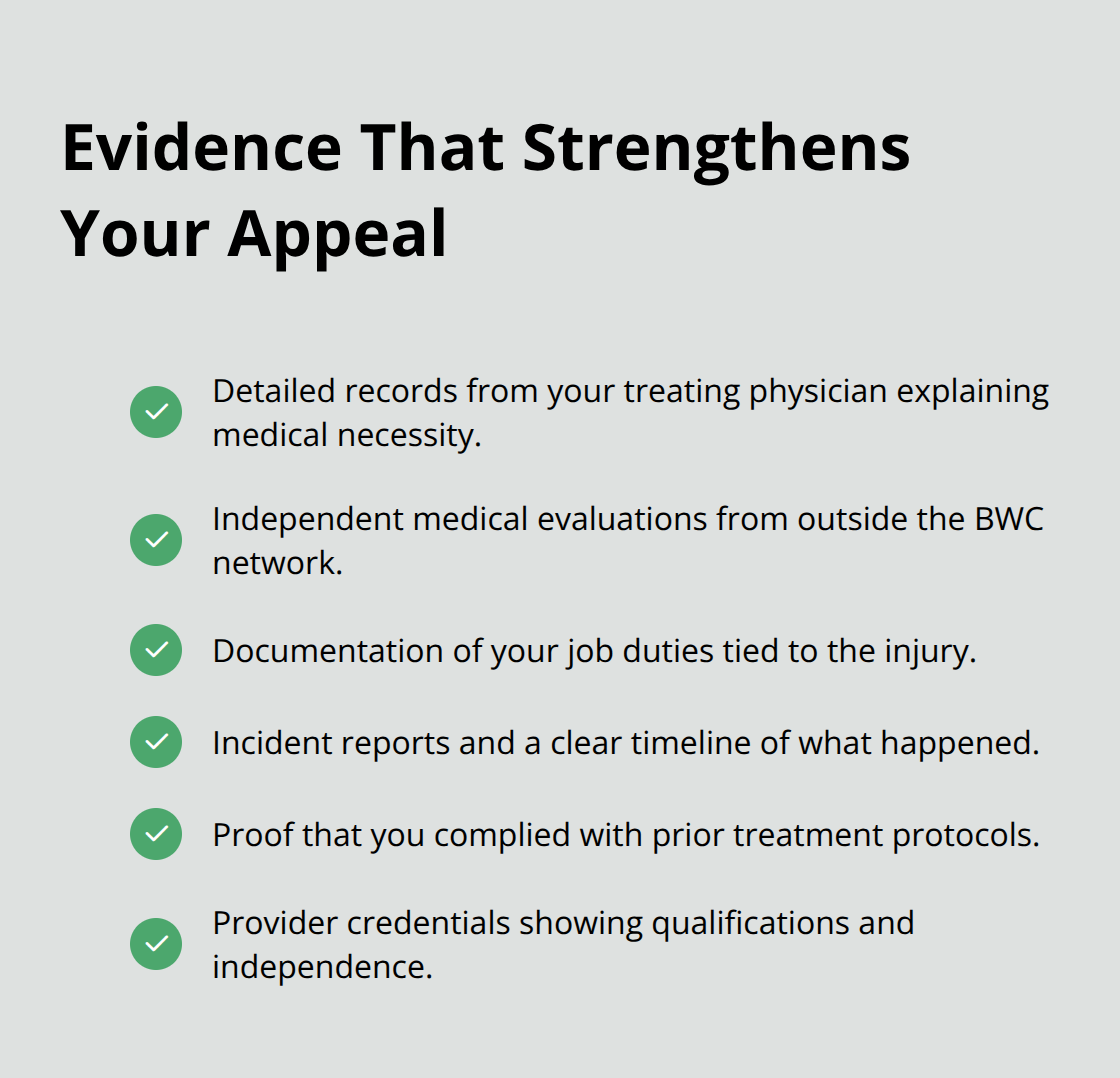
Your evidence determines whether you win or lose at the hearing stage. Medical records from your treating physician carry substantial weight, especially if that doctor explains specifically why the denied treatment is medically necessary for your condition and recovery timeline. Independent medical evaluations from physicians outside the BWC’s network strengthen your position considerably because they show the denied treatment isn’t a biased recommendation. Documentation of your job duties, the specific incident that caused your injury, and your compliance with prior treatment protocols all support your appeal.
Understanding the Burden of Proof
The BWC must prove by substantial evidence that their denial was justified, which means you don’t have to prove them wrong, only show that their reasoning doesn’t hold up under scrutiny. Prepare a written statement detailing how the denial has affected your recovery, your ability to work, and your daily functioning, as judges consider the human impact of delayed or withheld care. This personal account transforms your appeal from abstract legal arguments into a concrete picture of how the denial disrupts your life.
Working with Legal Representation
Robin J. Peterson Company, LLC represents injured workers throughout Ohio’s workers’ compensation system. The firm handles the procedural requirements and evidence presentation, ensuring your appeal reaches the judge with the strongest possible foundation for overturning the denial and securing the treatment you need. When you move forward with an appeal, having experienced representation increases your chances of success significantly-and your next step involves understanding what happens after the hearing concludes.
Working with a Workers’ Compensation Attorney
Attempting to overturn a BWC denial without legal representation puts you at a significant disadvantage. The Industrial Commission of Ohio receives thousands of appeals annually, and injured workers who represent themselves lose far more often than those with attorneys. An experienced workers’ compensation attorney knows the specific procedural rules, evidence standards, and judicial preferences that determine whether your appeal succeeds or fails. The BWC employs seasoned legal staff trained to defend denials aggressively, and matching that institutional knowledge without professional help is unrealistic.
Why Legal Representation Strengthens Your Appeal
An attorney identifies weaknesses in the BWC’s denial reasoning that you might miss entirely, then constructs an appeal strategy specifically designed to exploit those gaps. The difference between winning and losing often comes down to how evidence is presented and what legal arguments frame your case. Attorneys who work in Cleveland, Akron, and Canton understand local administrative law judges and their patterns in evaluating medical evidence. This regional knowledge translates into strategic advantages when presenting your case before the judge who will decide your appeal.
How an Attorney Builds Your Evidence Strategy
An attorney reviews your complete medical file, employment records, and the BWC’s denial letter to pinpoint exactly why the agency rejected your treatment and what evidence contradicts their reasoning. If your treating physician is qualified but the BWC questioned their independence, your attorney obtains documentation proving their credentials and lack of bias. If the agency claims the treatment exceeds medical necessity, your attorney locates peer-reviewed literature and expert testimony showing the treatment is standard care for your specific injury (this evidence often proves decisive in overturning denials based on medical necessity arguments).
Presenting Your Case at the Hearing
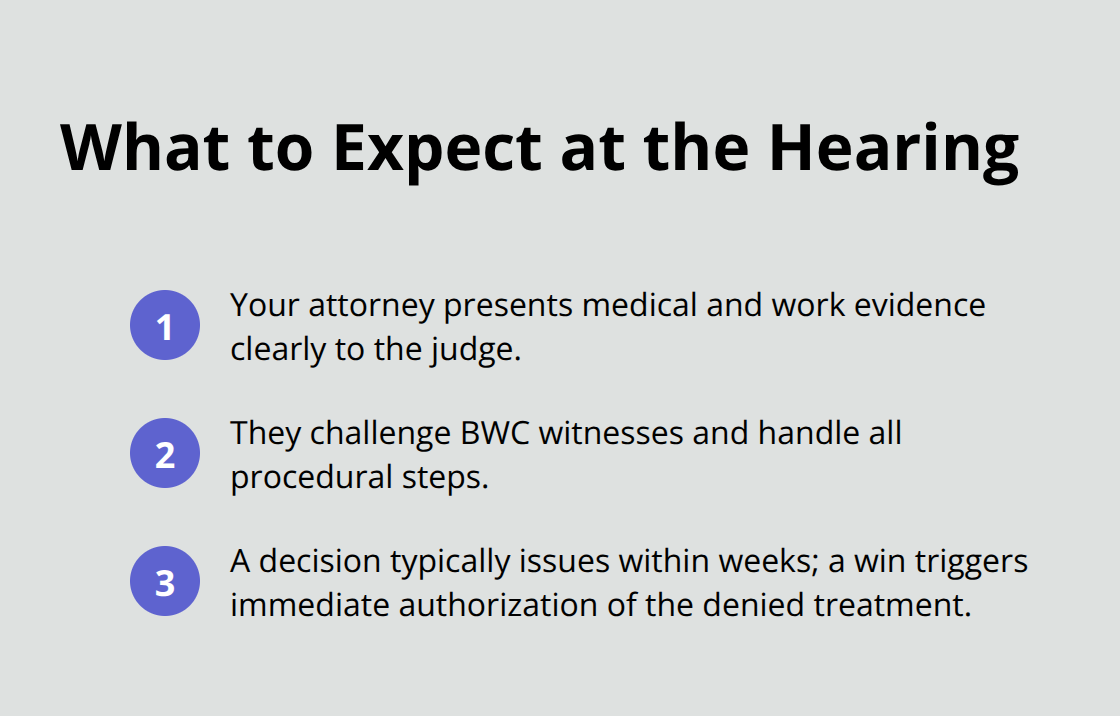
During the hearing before the administrative law judge, your attorney presents evidence strategically, challenges the BWC’s witnesses, and frames your case in language that resonates with judges who have heard hundreds of similar appeals. Your attorney handles the complex procedural requirements while you focus on your recovery. After the hearing concludes, the judge issues a decision within weeks, and if you win, the BWC must immediately authorize and pay for the denied treatment.
What Happens After the Hearing Decision
If you lose at the hearing stage, your attorney advises whether appealing to the Ohio Supreme Court makes sense based on the legal issues involved. This assessment requires understanding which aspects of the judge’s decision might succeed on appeal and which arguments lack sufficient legal foundation. Your attorney’s post-hearing guidance helps you make informed decisions about whether to continue fighting or explore alternative remediation paths for your medical care.
Final Thoughts
Medical treatment denial in Ohio demands immediate action because the moment the BWC rejects your treatment, your recovery timeline shifts and your long-term benefits hang in the balance. Waiting passively guarantees the denial sticks, but filing your request for hearing within 14 days opens a path to reversal. The evidence you gather now determines whether an administrative law judge orders the BWC to authorize your care.
Denials aren’t final decisions-they’re administrative positions that judges overturn regularly when presented with solid medical evidence and proper legal arguments. Your treating physician’s documentation, independent medical evaluations, and clear proof of work-relatedness form the foundation of a winning appeal. Ohio’s network of research universities and major health systems in Cleveland, Akron, and Canton offer access to qualified physicians who can support your medical necessity arguments.
The most effective path forward combines medical evidence with experienced legal representation. Robin J. Peterson Company, LLC represents injured workers throughout Ohio’s workers’ compensation system, handling the procedural complexities while you focus on recovery. Contact the firm to discuss your specific denial and explore your remediation options.