
Getting injured at work in Ohio can feel overwhelming, especially when you’re unsure about your Ohio workers compensation rights. At Robin J Peterson Company, LLC, we’ve helped countless workers navigate the system and secure the benefits they deserve.
This guide walks you through everything you need to know-from understanding your rights to protecting yourself throughout your case.
What Ohio Workers Compensation Actually Covers
How Ohio’s Workers Compensation System Works
Ohio’s workers compensation system operates through the Ohio Bureau of Workers Compensation, a state fund that handles the vast majority of workplace injury claims across the state. Unlike many other states, Ohio’s system is primarily state-administered, meaning the BWC processes claims rather than private insurance companies. This matters because the BWC follows standardized procedures and schedules set by state law, which gives injured workers predictability but also means the system operates on strict timelines and rules.
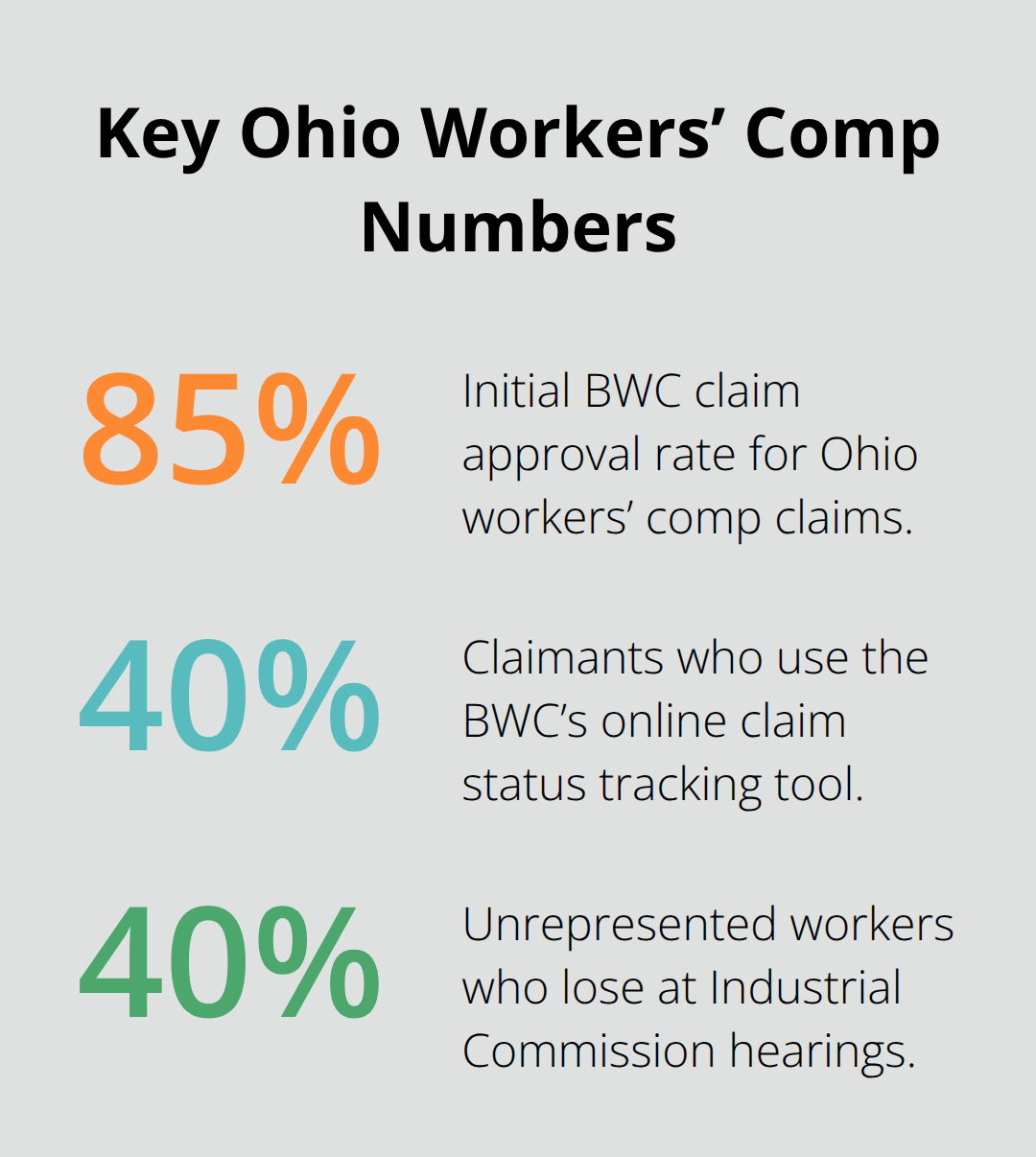
The BWC covers medical expenses related to your injury, wage replacement benefits if you cannot work, and permanent disability compensation if your injury causes lasting effects. However, the system has specific requirements you must follow. You have 200 weeks to file a claim from the date of your injury, though most workers file within days or weeks. The BWC publishes data showing that approximately 275,000 claims are filed annually in Ohio, with roughly 85 percent approved initially. Medical treatment must come from physicians within the BWC network unless you receive prior authorization-a critical detail many injured workers overlook.
Separating Fact From Fiction About Your Benefits
Common misconceptions about Ohio workers compensation create unnecessary obstacles for injured workers. Many workers believe they cannot receive benefits if they were partially at fault for their injury, but Ohio law provides coverage regardless of fault except in cases of willful misconduct. Another widespread myth holds that workers must accept the first settlement offer from the BWC, when in reality you have the right to appeal any decision you disagree with.
Some injured workers assume they need to hire an attorney immediately, but strategic timing often matters more. Waiting until after an initial denial or when facing complex medical issues can be more efficient than filing with representation from day one. The BWC website provides claim status tracking, which roughly 40 percent of claimants use according to BWC usage statistics, yet many workers remain unaware this tool exists.
Understanding Your Appeal Rights
Workers in Cleveland, Akron, Canton, and throughout Ohio who face denials or disputes benefit from understanding that the Industrial Commission of Ohio handles appeals, operating separately from the initial BWC decision process. This separation means you have a distinct opportunity to challenge unfavorable decisions through a formal process. Knowledge of how the system actually functions-not how people assume it functions-determines outcomes. The next step in protecting yourself involves understanding exactly what documentation and evidence strengthen your position when the BWC investigates your claim.
How to File and Navigate Your Claim
Filing Your Claim With the Ohio Bureau of Workers Compensation
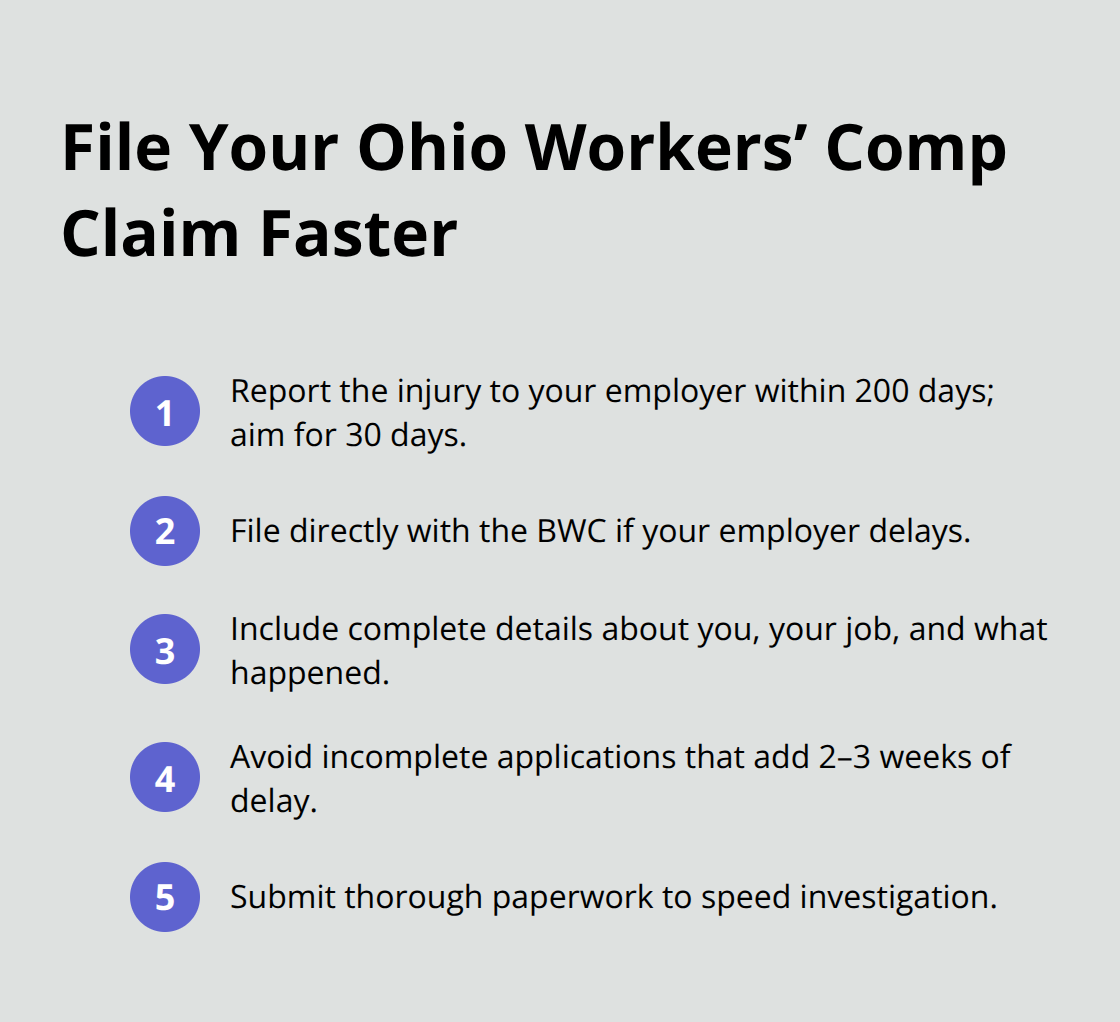
You must report your injury to your employer within 200 days of when you knew or reasonably should have known the injury was work-related, though filing within 30 days proves far more practical since memory fades and documentation becomes harder to gather. Your employer then has 10 days to submit the claim to the BWC, but waiting on them carries risk-file directly with the BWC yourself through their online system or by mail to eliminate delays. The BWC processes roughly 275,000 claims annually in Ohio, and those filed promptly with complete information move faster through investigation.
Include your name, employer, injury date, job description, and a clear description of what happened when you submit your application. Incomplete applications get returned, wasting 2-3 weeks while you’re potentially unable to work. Submitting thorough paperwork from the start accelerates the entire process.
What Happens During the Investigation Phase
The BWC assigns a claims adjuster who contacts your employer, reviews medical records, and verifies your injury meets coverage criteria. This phase typically lasts 28 days from the date you file, though complex cases extend longer. The adjuster will request your medical records from any healthcare providers you’ve seen, so gather those records yourself and submit them proactively rather than waiting-this accelerates approval since the BWC doesn’t chase medical documentation.
Acting quickly during this stage matters significantly. Providing evidence upfront prevents delays that could affect your wage replacement benefits.
Handling Denials and Appeals
If the BWC denies your claim or reduces benefits, you have 14 days to request a hearing before the Industrial Commission of Ohio, which operates independently from the initial BWC decision. Most workers don’t realize that presenting new medical evidence at the hearing stage often changes outcomes that seemed final at the BWC level. An attorney representing you at the hearing costs nothing upfront since Ohio law allows contingency fees-you pay legal costs only if you win.
Workers who appeal without representation lose roughly 40 percent of hearings, while those with experienced legal representation significantly improve their chances of securing the full benefits owed to them. This disparity reflects how complex the appeal process actually is. Understanding when to bring legal representation into your case determines whether you recover what you deserve, which is why the next section focuses on recognizing the specific situations that warrant professional legal guidance.
Building Your Case Before Legal Help Becomes Necessary
Document Everything From the Start
Documentation separates workers who win from workers who lose in Ohio workers compensation cases. Start recording details immediately after your injury occurs, not days later when memory fades. Write down the exact time, location, what you were doing, how the injury happened, and who witnessed it. Take photographs of the accident scene, your injuries, and any equipment or conditions that contributed to what happened. The BWC adjuster reviews these details during investigation, and workers who provide thorough documentation experience faster claim approvals.
Your employer’s incident report matters less than your own contemporaneous records because you control their accuracy and completeness. Medical records form the second pillar of strong documentation. After seeking treatment, request copies of every visit note, test result, imaging study, and provider assessment immediately. Don’t wait until the BWC requests them.
Submit Medical Records Proactively
Forward medical records directly to the BWC yourself rather than assuming your employer or healthcare provider will handle transmission. This proactive approach prevents the common delay where the BWC waits weeks for medical documentation while your claim sits in limbo. Keep a personal file organized by date containing all medical communications, treatment plans, and provider recommendations about your ability to work and restrictions.
Medical providers within the BWC network understand Ohio’s system, but you must actively coordinate with them rather than passively accepting their recommendations. When seeing your treating physician, specifically discuss your job duties and ask the provider to document how your injury affects your ability to perform those duties. Request written restrictions in clear language the BWC understands rather than vague assessments.
Work With the Right Medical Provider
If your provider seems unfamiliar with workers compensation cases, consider switching to another network physician who regularly handles injured workers. This choice affects how well your medical evidence supports your claim. Providers experienced with workers compensation cases frame their assessments in ways the BWC recognizes and values, strengthening your position during investigation and any potential appeals.
Recognize When You Need Legal Representation
Honest assessment of your situation determines whether legal representation becomes necessary. If the BWC denies your claim, you need an attorney immediately since the appeal process involves formal procedures most workers mishandle alone. If your injury involves multiple body parts, ongoing medical treatment, or complications, legal guidance prevents mistakes that cost you benefits.
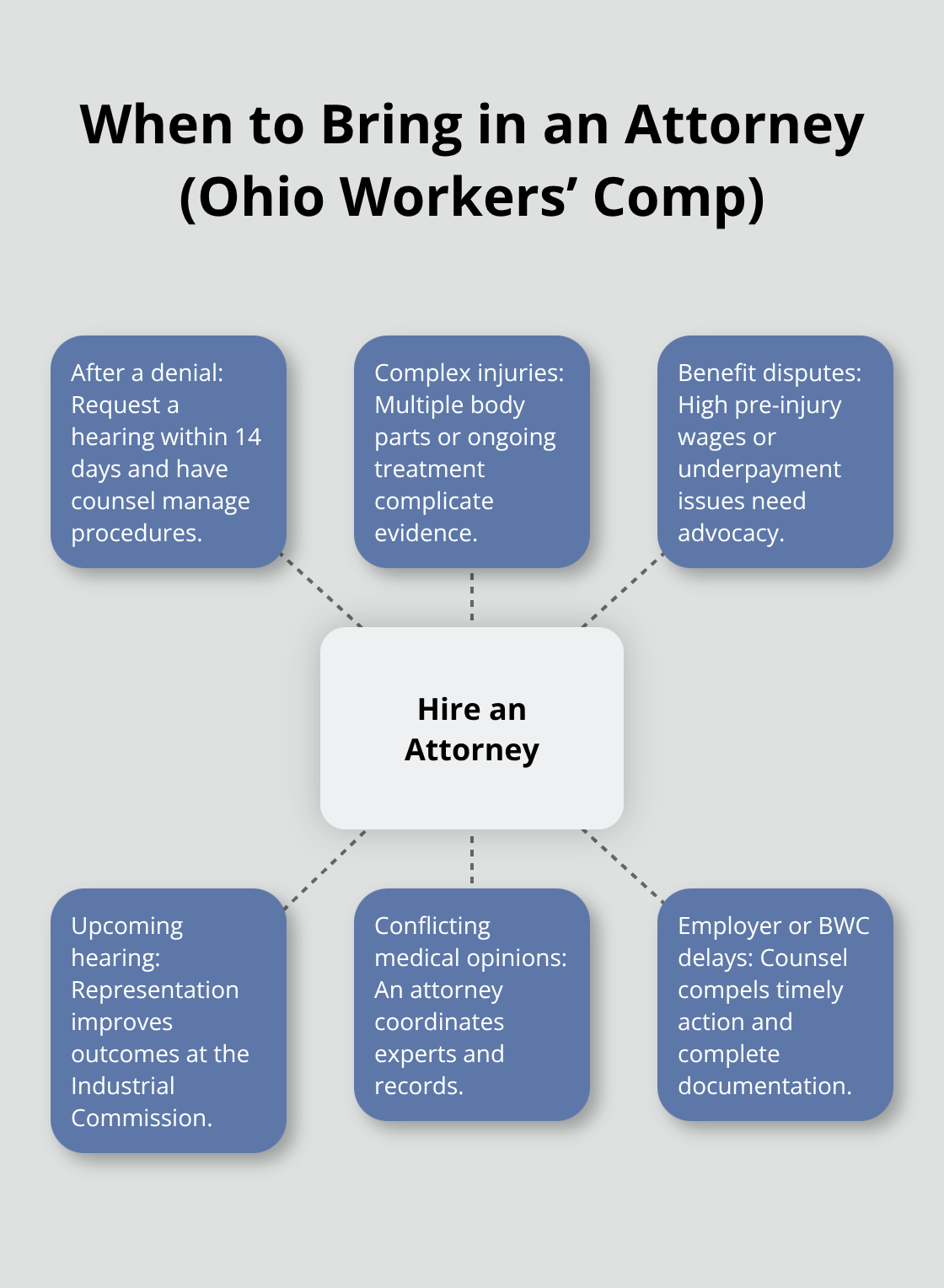
Workers earning higher wages before injury face more complex benefit calculations where attorney involvement protects against underpayment. The Industrial Commission of Ohio data shows workers with representation at hearings succeed significantly more often than unrepresented workers, making the decision to hire counsel before appeal hearings a financial calculation that nearly always favors legal representation. Ohio law allows contingency fees, so you pay legal costs only if you win. Robin J. Peterson Company, LLC represents injured workers throughout the Cleveland, Akron, and Canton areas, fighting to secure the benefits workers deserve from the BWC and the Industrial Commission of Ohio.
Final Thoughts
Understanding Ohio workers compensation rights and filing promptly with complete information accelerates approval through the BWC’s investigation process. You must gather medical records, maintain detailed documentation, and actively coordinate with healthcare providers to strengthen your position throughout your claim. The appeal process separates workers who recover full benefits from those who accept inadequate settlements, and Industrial Commission of Ohio data shows workers with legal representation at hearings succeed significantly more often than unrepresented workers.
Your next step depends on your current situation-if the BWC has denied your claim or reduced your benefits, contact an attorney immediately since the 14-day appeal window moves quickly. If you’re still in the investigation phase, continue submitting medical records proactively to accelerate approval. If your injury involves complications or multiple body parts, legal guidance now prevents costly mistakes during appeals.
Robin J. Peterson Company, LLC represents injured workers throughout Cleveland, Akron, and Canton, fighting to secure the benefits you deserve from the BWC and the Industrial Commission of Ohio. The firm understands Ohio workers compensation law and knows how to challenge unfavorable decisions. Contact them to discuss your situation and learn how legal representation protects your rights when the system seems stacked against you.