
Filing a workers’ compensation claim in Ohio can feel overwhelming, especially when you’re dealing with an injury. At Robin J Peterson Company, LLC, we’ve helped factory workers understand the process and avoid costly mistakes.
This factory worker claim guide walks you through each step of the Ohio BWC filing process, from reporting your injury to submitting the right documentation.
How the Ohio BWC Works
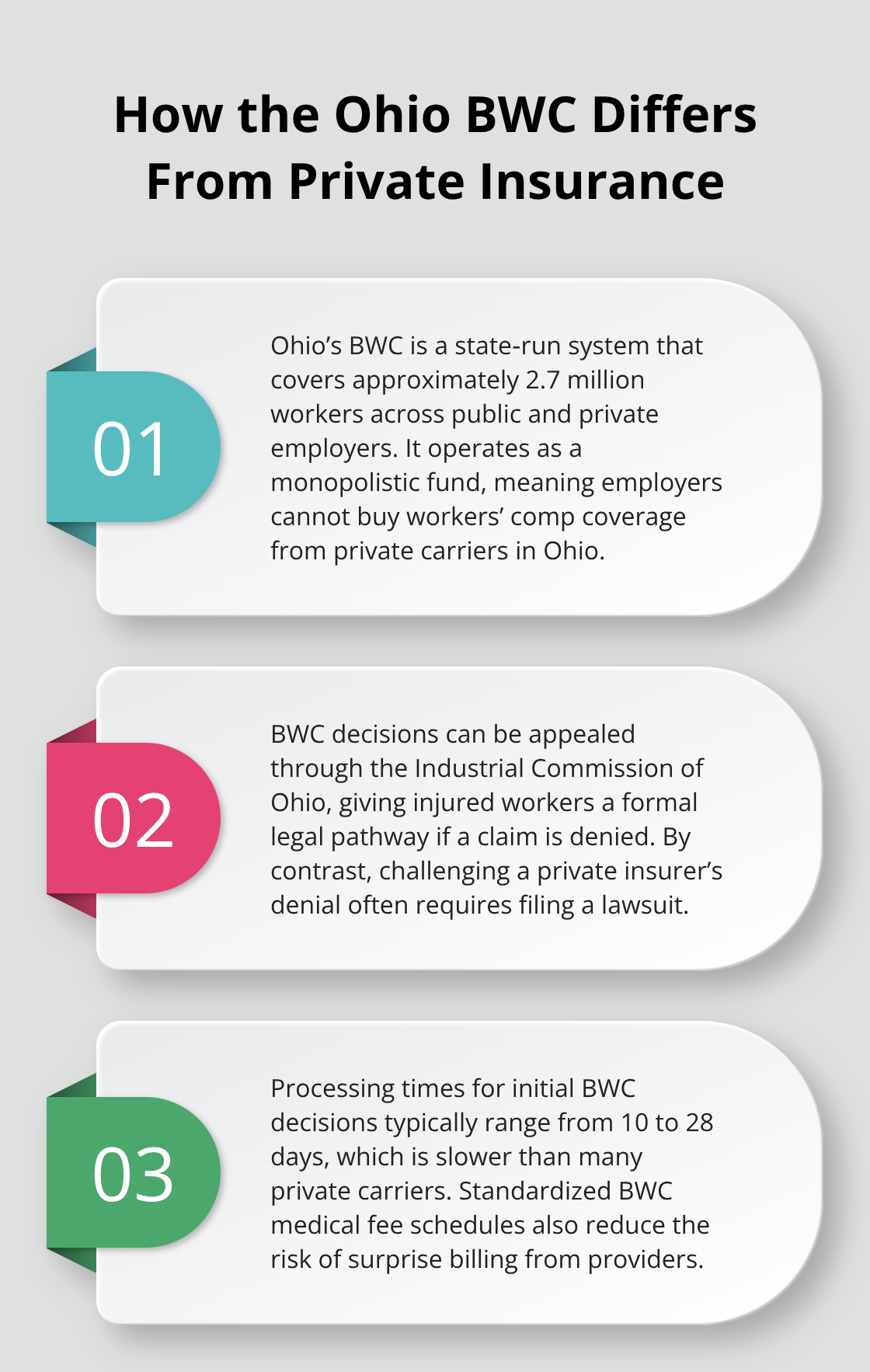
The Ohio Bureau of Workers’ Compensation operates as a state-run system that handles workplace injury claims differently than private insurance companies. The BWC covers approximately 2.7 million workers in Ohio across public and private employers, making it one of the largest workers’ compensation systems in the country. Unlike private insurance, the BWC is a monopolistic system-employers cannot opt out or purchase coverage from alternative providers. This matters because the BWC follows specific rules and timelines that differ from what you’d encounter with private carriers. The system processes over 300,000 claims annually in Ohio, so understanding how it functions gives you a significant advantage when filing your own claim.
What separates BWC claims from private insurance
Private insurance companies prioritize profit margins and often employ aggressive claim denial strategies. The BWC operates under a different mandate focused on providing benefits to injured workers, though this doesn’t mean claims sail through without scrutiny. The key difference is that BWC decisions can be appealed through the Industrial Commission of Ohio, giving you a formal legal pathway if your claim is denied. Private insurance denials often require expensive lawsuits to challenge. The BWC also has standardized fee schedules for medical treatment, which means you won’t face surprise billing from providers. However, the BWC moves slower than private systems-processing times typically range from 10 to 28 days for initial claim decisions, whereas private insurers sometimes decide within days.
Filing deadlines that actually matter
You have specific windows to report and file your claim with the BWC, and missing these deadlines can result in permanent loss of benefits. Ohio law requires you to report your injury to your employer immediately or within a reasonable time after it occurs. For most injuries, you must file your BWC claim within two years of the injury date, but this timeline changes if your employer fails to report the injury themselves. If your injury is an occupational disease or develops gradually over time, the two-year clock starts from when you first experienced symptoms or when your doctor diagnosed the condition. Many workers lose claims because they wait too long, assuming their employer handled the reporting.
Employer notification versus BWC filing
Employer notification and BWC filing are separate requirements, and this distinction trips up many workers. Your employer must report the injury to the BWC, but you cannot assume they will do so promptly or accurately. If your employer fails to report within the required timeframe, you need to file directly with the BWC yourself. Taking action on your own protects you from losing benefits due to employer negligence or delay. The next section walks you through the specific steps to report your injury and file your claim with the BWC.
Filing Your Claim Step by Step
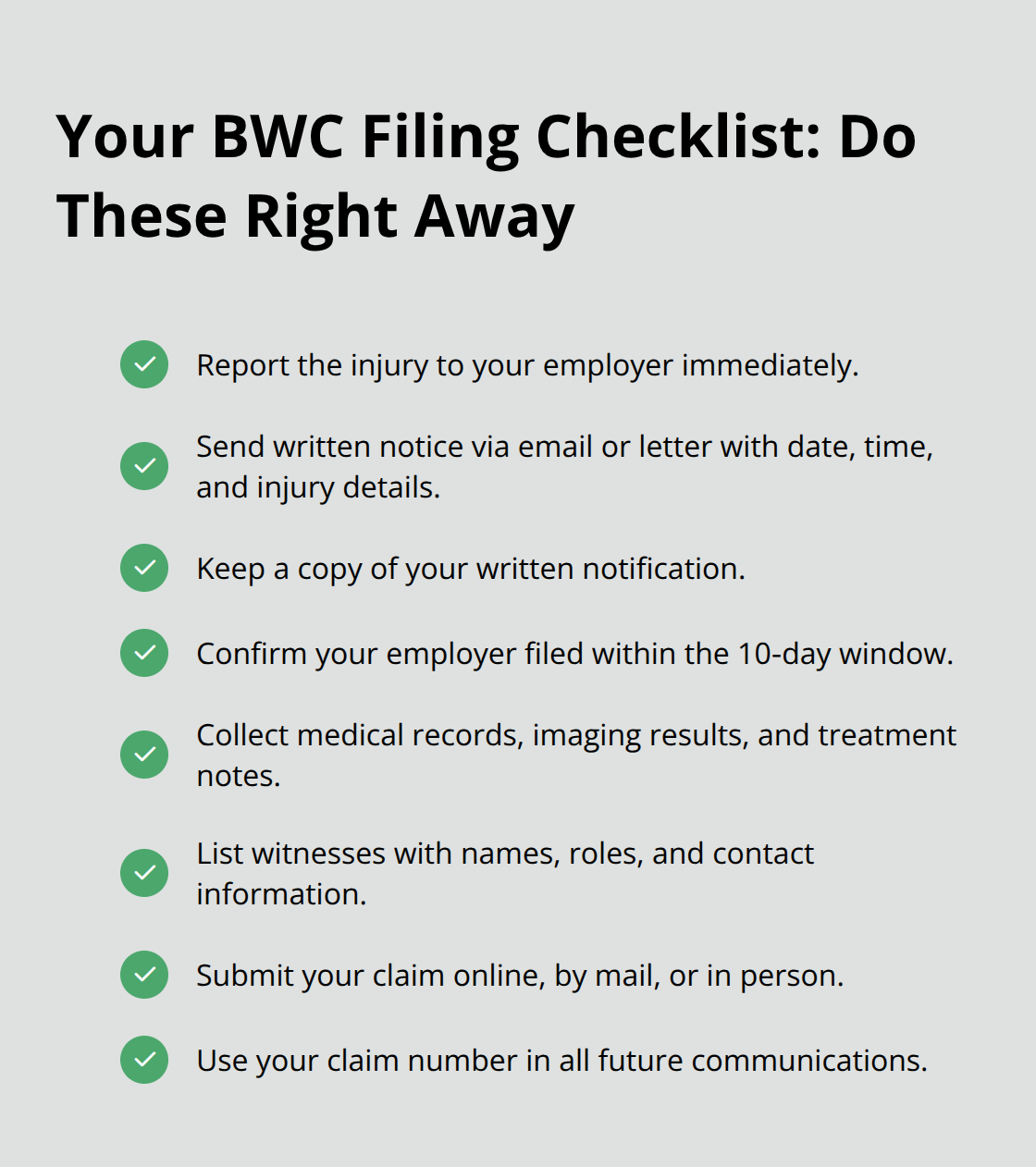
Most factory workers make critical errors during the filing process simply because they don’t know the specific sequence of actions the BWC requires. The first and most important step is notifying your employer of the injury immediately, or as soon as reasonably possible. Ohio law doesn’t define reasonably possible with precision, but waiting more than a few days creates problems. Your employer must report the injury to the BWC within 10 days of learning about it, according to Ohio Administrative Code 4123-6-02. However, you cannot rely on this happening. Document your notification by telling your supervisor in person and following up with a written email or letter stating the date, time, and nature of your injury. Keep a copy of this communication. If your employer claims they never received notification, your documentation protects your claim from denial.
Report Your Injury in Writing
Many factory workers lose benefits because they report verbally to a coworker instead of management, creating no paper trail. Written notification establishes proof that you informed your employer about the injury. Send an email or letter to your direct supervisor and your human resources department. Include the exact date and time of the injury, what you were doing when it happened, and which body part you injured. Request a written acknowledgment that your employer received your notification. This step takes minutes but prevents significant complications later. If your employer refuses to acknowledge receipt, send the notification via certified mail to create an official record.
Complete the Employer’s Report of Injury Form
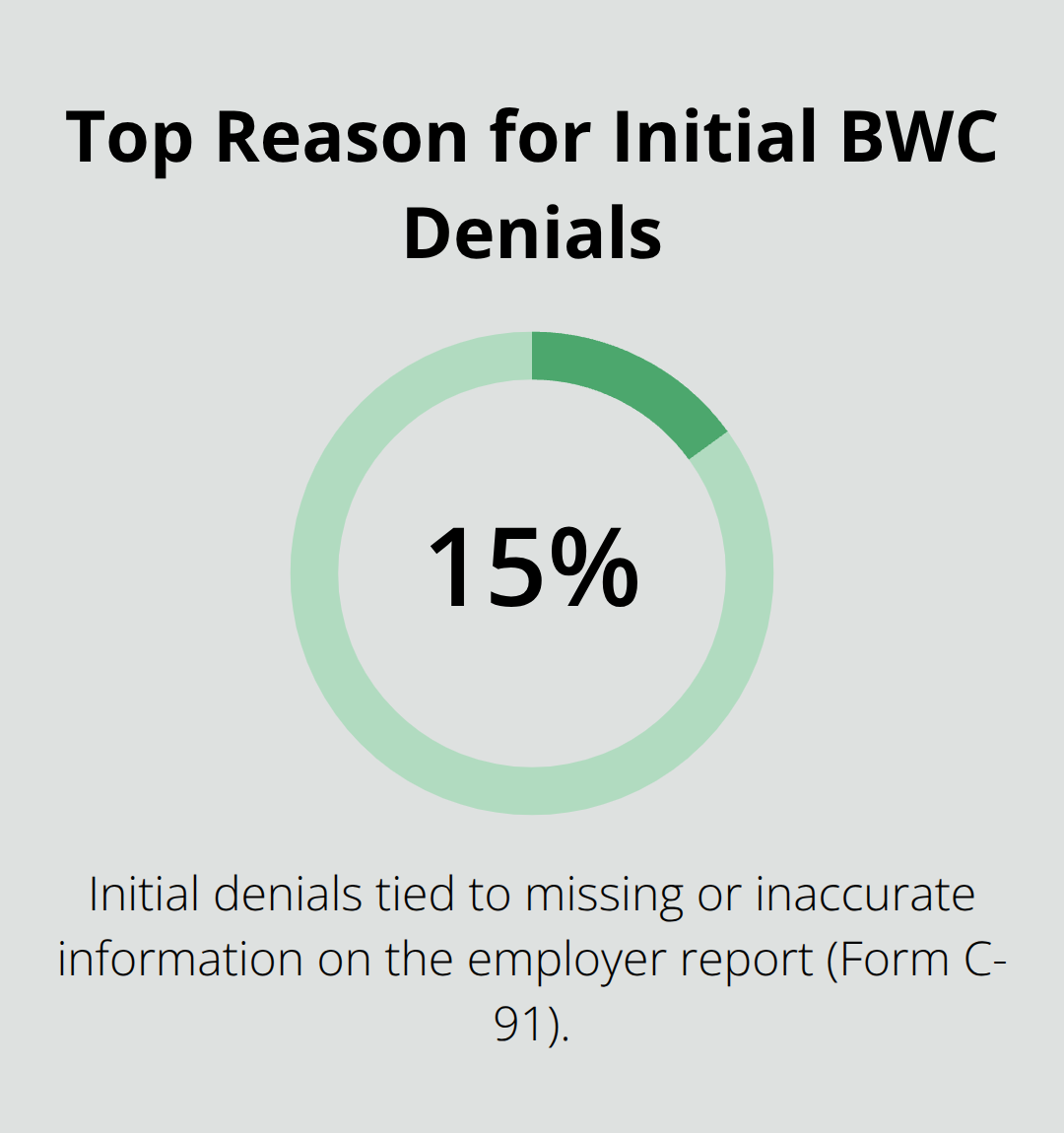
The BWC requires Form C-91, which is the Employer’s Report of Injury, Occupational Disease or Incident. Your employer should complete this form, but you need to verify they did so within the 10-day window. You can check the status of your claim online through the BWC website or by calling their customer service line at 1-800-644-6292. If your employer hasn’t filed, you must complete and submit the form yourself immediately. The form requests specific information including the exact location of the injury, what you were doing when injured, and witnesses present. Incomplete forms delay processing significantly. The BWC reports that approximately 15 percent of initial claim denials result from missing or inaccurate information on the employer report.
Write down names and contact information for any coworkers who witnessed the injury, as this information strengthens your claim substantially. Include their job titles and how long they’ve worked at your facility. Witness statements carry significant weight in claim decisions because they corroborate your account of what happened.
Gather Medical Records and Evidence
Collect all medical records related to your injury before submitting your claim. This includes emergency room reports, doctor’s notes, imaging results like X-rays or MRIs, and any treatment plans your healthcare provider created. The BWC processes claims faster when complete medical documentation arrives with the initial filing. If you’ve already sought treatment, contact your healthcare provider’s records department and request they send copies directly to the BWC. Include the claim number once you receive one from the BWC.
Photographs of the workplace location where the injury occurred, equipment involved, or hazardous conditions strengthen your claim significantly. If the injury resulted from unsafe equipment or conditions, document those details thoroughly. The BWC specifically looks for evidence establishing the injury occurred during work activities, so any documentation linking your injury to your job duties supports approval.
Submit Your Claim Materials
Submit all materials to the BWC through their online system, by mail to P.O. Box 3600, Columbus, OH 43216-3600, or in person at a BWC office. Processing times typically run 10 to 28 days after complete submission. The BWC will send you a claim number once they receive your filing, and you should use this number for all future communications about your case. If the BWC denies your claim or you disagree with their decision, you have the right to appeal through the Industrial Commission of Ohio-a step that requires understanding the specific grounds for denial and the evidence needed to overturn it.
Common Mistakes That Delay or Deny Claims
The BWC rejects thousands of claims annually not because workers lack valid injuries, but because they miss procedural requirements that seem minor until they cost you everything. Factory workers often assume that reporting an injury verbally to a supervisor counts as notification, then wait weeks before taking additional action. The BWC has a 10-day reporting window from when your employer learns about the injury, and if that window closes without proper documentation, you face serious complications. Approximately 15 percent of initial claim denials stem directly from missing or inaccurate information on the employer report form, according to BWC data. This means one incomplete form submission can trigger a denial that requires an expensive appeal to overturn.
Missing Deadlines and Filing Windows
The timeline pressure is real: you have two years to file from the injury date, but waiting months creates evidentiary problems because witness memories fade, workplace conditions change, and medical documentation becomes fragmented across multiple providers. Ohio law requires you to report your injury to your employer immediately or within a reasonable time after it occurs. Your employer must then report the injury to the BWC within 10 days of learning about it. If that window closes without proper notification, you cannot recover those lost days, and the BWC may question the legitimacy of your claim.
Many factory workers lose claims because they assume their employer will handle the reporting. This assumption costs them everything. You must verify that your employer filed the required forms within the 10-day window by contacting the BWC directly or checking their online system. If your employer failed to report, you must file immediately yourself to prevent permanent loss of benefits.
Incomplete or Inaccurate Information on Forms
The Employer’s Report of Injury form (Form C-91) requires specific information, and missing details trigger automatic delays or denials. The form requests the exact location of the injury, what you were doing when injured, and witnesses present at the time. Incomplete forms languish for months while the BWC requests missing documents. Factory workers often submit forms without witness statements or medical records, forcing them to appeal and delay benefits they should have received immediately.
Write down names and contact information for any coworkers who witnessed the injury, as this information strengthens your claim substantially. Include their job titles and how long they’ve worked at your facility. Witness statements carry significant weight in claim decisions because they corroborate your account of what happened. Collect this information immediately while memories remain fresh, not weeks later when details blur.
Failing to Seek Prompt Medical Attention
Seeking medical attention within days of your injury, not weeks or months later, directly strengthens claim approval odds and prevents the BWC from questioning whether your injury actually occurred at work. Factory workers often delay medical care thinking they can tough it out or that seeking treatment signals weakness, but the BWC interprets delays as evidence the injury wasn’t serious or work-related. If you wait three weeks to see a doctor after a workplace injury, the BWC questions whether something else caused the problem in the interim.
Collect all medical records related to your injury before submitting your claim. This includes emergency room reports, doctor’s notes, imaging results like X-rays or MRIs, and any treatment plans your healthcare provider created. The BWC processes claims faster when complete medical documentation arrives with the initial filing. Contact your healthcare provider’s records department and request they send copies directly to the BWC once you receive a claim number.
Documentation That Protects Your Claim
Document everything in writing from day one: send your employer a written injury report via email with certified mail backup, photograph any hazardous conditions or equipment involved, and gather witness contact information immediately while coworkers remember the incident. Photographs of the workplace location where the injury occurred, equipment involved, or hazardous conditions strengthen your claim significantly. If the injury resulted from unsafe equipment or conditions, document those details thoroughly. The BWC specifically looks for evidence establishing the injury occurred during work activities, so any documentation linking your injury to your job duties supports approval.
Final Thoughts
Filing a workers’ compensation claim through the Ohio BWC requires attention to detail, prompt action, and proper documentation. This factory worker claim guide covered the essential steps: report your injury to your employer immediately, complete the required forms accurately, submit medical records and evidence, and meet all filing deadlines. The difference between a claim that gets approved quickly and one that gets denied often comes down to whether you followed these procedures correctly from day one.
You don’t have to navigate this process alone. If the BWC denies your claim, disputes your injury, or treats you unfairly, legal representation protects your rights and increases your chances of approval. An attorney experienced in Ohio workers’ compensation law understands the specific grounds the BWC uses to deny claims and knows how to build a compelling appeal (many workers wait until after denial to seek help, but getting guidance early prevents costly mistakes).
We at Robin J Peterson Company, LLC represent injured factory workers throughout Ohio who fight for the benefits they deserve. If you need guidance on your claim or want to discuss whether legal representation makes sense for your situation, contact our law firm to learn how we can help. The BWC system is complex, but you have options and resources available to protect your claim and your future.