
A work injury in Ohio can leave you confused about your next steps. The Ohio Bureau of Workers’ Compensation system has specific rules, deadlines, and requirements that determine whether you receive the benefits you’re entitled to.
At Robin J Peterson Company, LLC, we help injured workers navigate Ohio BWC claim help and fight for fair compensation. This guide walks you through how the system works and why having expert guidance makes a real difference.
How Ohio’s Workers’ Compensation System Actually Works
The Ohio Bureau of Workers’ Compensation operates as a state-run insurance system that covers medical expenses and lost wages for workers injured on the job. Unlike private insurance, the BWC is a monopoly system in Ohio, meaning most employers must purchase coverage through this single state fund rather than private carriers. When you file a claim, the BWC has 28 days to decide whether to approve or deny it, though this timeline often extends in practice due to requests for additional medical documentation. The system requires employers to report workplace injuries within 14 days, and workers must notify their employer as soon as possible to protect their eligibility. One key aspect many injured workers miss is that the BWC operates on a no-fault basis, meaning you don’t need to prove your employer was negligent to receive benefits.
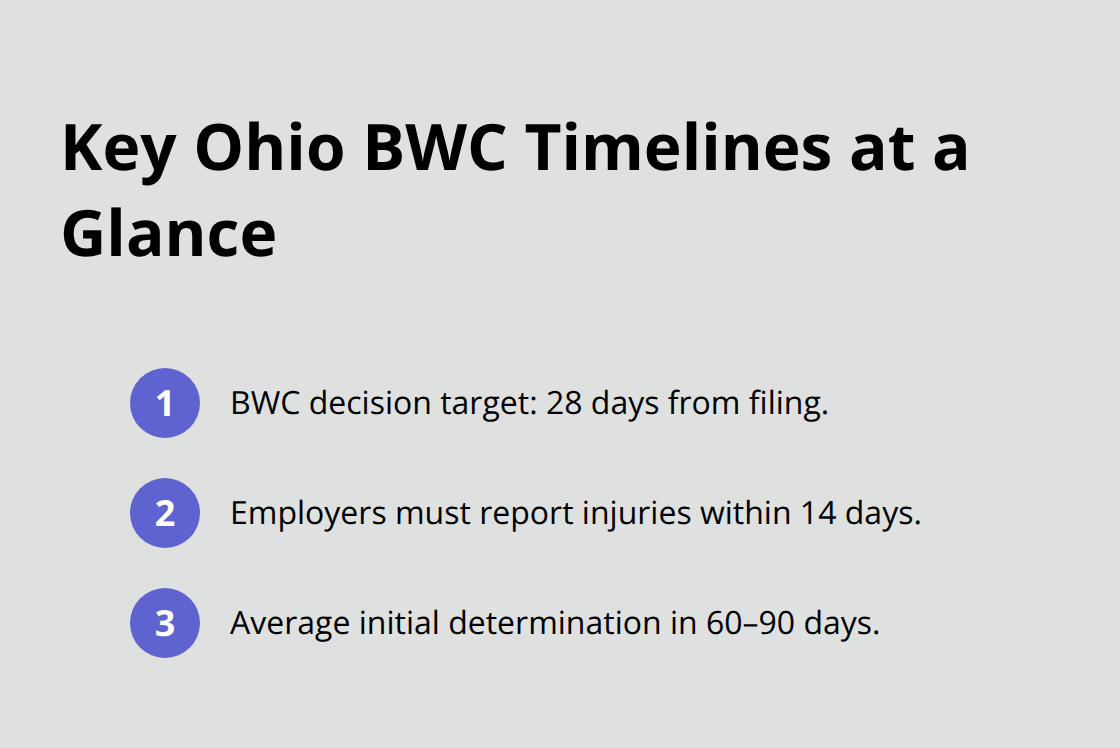
However, this protection comes with a trade-off: you generally cannot sue your employer for negligence related to your work injury. The average claim resolution in Ohio takes between 60 to 90 days from filing to initial determination, according to BWC processing data, though complex cases involving permanent disability can take significantly longer. Medical treatment authorization is essential, and you must receive care from providers approved by the BWC or risk having your medical bills denied. The system covers acute injuries like fractures and burns, as well as occupational illnesses that develop over time from workplace exposure.
Understanding What the BWC Actually Covers
The BWC covers a broad range of work-related conditions, from immediate traumatic injuries to gradual-onset illnesses. Acute injuries such as fractures, lacerations, and burn injuries are straightforward claims that typically process faster. Occupational illnesses present more complexity because they develop from repeated exposure or workplace conditions rather than a single incident. Hearing loss from prolonged noise exposure, occupational asthma from chemical inhalation, and skin conditions from chemical contact all qualify for BWC coverage. The system distinguishes between temporary total disability, temporary partial disability, and permanent partial disability, with each category affecting benefit calculations differently.
How the BWC Calculates Your Benefits
Temporary total disability covers your full wages while you’re unable to work, paid at two-thirds of your average weekly wage. Temporary partial disability applies when you can work but earn less than before your injury. Permanent partial disability involves a one-time payment based on the type of injury and your impairment rating, which a physician determines through a specific medical evaluation process (this rating is critical to your compensation amount). Medical benefits under the BWC cover doctor visits, surgery, hospitalization, prescription medications, and rehabilitation services necessary to treat your work injury.
What the BWC Does Not Cover
The system does not cover injuries that occur during your commute to or from work, injuries caused by intoxication, or injuries resulting from your intentional misconduct. Understanding these exclusions helps you recognize whether your claim falls within the system’s scope. If your injury doesn’t fit the standard categories, you need to know this early so you can explore other options or prepare a stronger argument for coverage.
Why Expert Help Makes the Difference
Filing Errors Cost You Money and Time
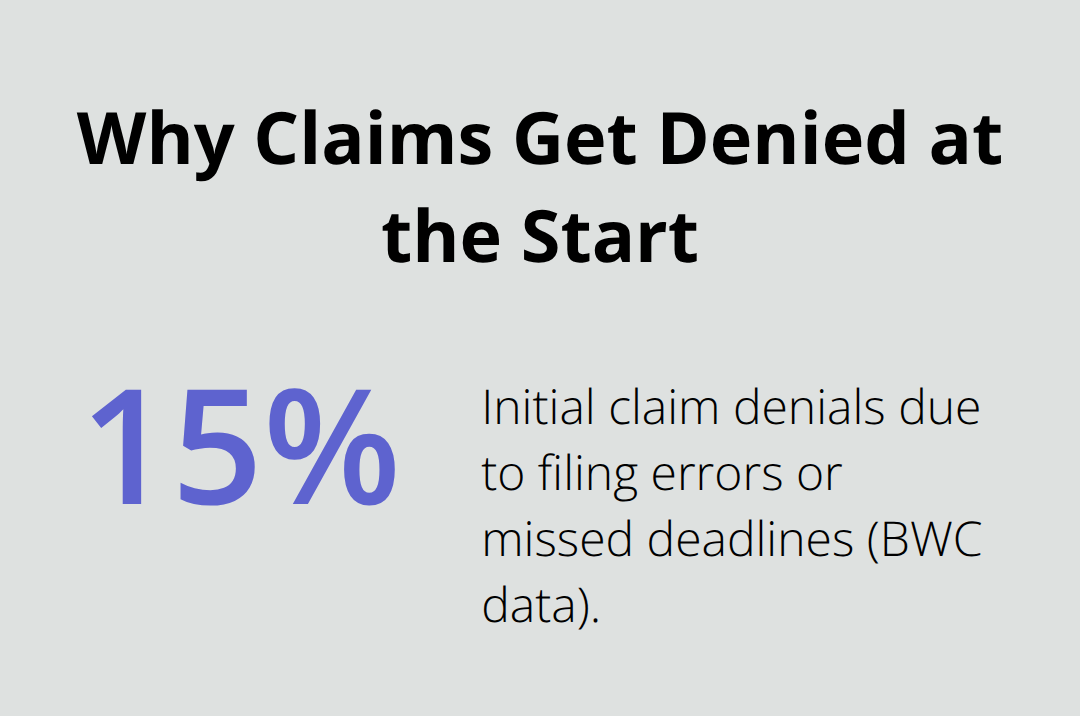
The BWC system punishes workers who miss procedural requirements or file incorrectly. The Ohio Justice and Policy Center found that injured workers without legal representation received significantly lower settlement amounts than those with attorneys, yet many workers attempt to navigate claims alone because they underestimate the complexity involved. The BWC’s own data shows that approximately 15% of initial claim denials occur due to filing errors or missed deadlines rather than legitimate coverage issues. When you file a claim without understanding Ohio Administrative Code Chapter 4121, you trigger denials that require expensive appeals to overturn.
Medical documentation requirements alone create a minefield for unrepresented workers. The BWC requires specific medical evidence to establish work causation, and submitting incomplete or poorly organized medical records dramatically increases denial rates. Your treating physician may not understand what information the BWC needs, meaning you must request the right evaluations and reports yourself. If your initial claim gets denied, you have only 14 days to file a request for hearing before the Industrial Commission of Ohio-missing this deadline eliminates your ability to appeal.
Medical Evidence and Documentation Gaps
Workers who wait to seek legal help after receiving a denial notice have already lost critical time and evidence-gathering opportunities. The BWC requires physicians to complete specific forms and provide detailed causation statements that connect your injury directly to your job duties. Many doctors complete these forms hastily or incompletely, which gives the BWC grounds to request additional information or deny your claim outright. You need someone who understands exactly what medical documentation the BWC accepts and how to organize it for maximum impact.
Employer Retaliation and Settlement Pressure
The relationship between you and your employer also creates legal risks that most injured workers don’t anticipate. Employers sometimes retaliate against workers who file BWC claims, and Ohio law prohibits this retaliation, but proving it requires understanding employment law alongside workers’ compensation law. Your employer might pressure you to accept a low settlement offer, claim your injury isn’t work-related, or suggest you file the claim under their private health insurance instead of the BWC. Each of these scenarios requires different legal responses.
Permanent Disability Calculations That Affect Your Future
If your injury qualifies for permanent total disability benefits, the calculation methodology determines whether you receive ongoing payments for years or a one-time lump sum. The difference in lifetime value can exceed tens of thousands of dollars depending on how your case is structured. Workers who accept the first settlement offer without understanding these long-term implications often leave substantial compensation on the table. The complexity of these calculations means that how you structure your claim from the beginning directly impacts what compensation options remain available to you-which is why the timing of when you seek representation matters significantly.
How We Help Injured Workers Secure BWC Benefits
Understanding What Representation Actually Changes
We at Robin J Peterson Company, LLC represent injured workers throughout the Cleveland, Akron, and Canton areas. Our practice rests on one fundamental truth: the BWC system favors those who understand its procedural requirements. Most injured workers lose compensation not because their injuries are ineligible, but because they miss filing deadlines, submit incomplete medical documentation, or fail to challenge denials effectively. Research from the Ohio Justice and Policy Center shows that workers represented by attorneys receive substantially higher settlements than those navigating claims alone. This outcome reflects a simple reality: procedural mistakes cost you money, and the system punishes workers who don’t know the rules.
How We Shape Your Claim From the Start
We handle the specific mechanics that trip up unrepresented workers. We construct your initial claim to include the exact medical evidence the BWC requires, monitor all deadlines so you never miss the 14-day window to appeal a denial, and organize your medical records in the format that actually influences BWC decisions. When your employer pressures you to settle quickly or suggests alternative insurance routes, we evaluate whether accepting their offer serves your interests or leaves you with inadequate long-term benefits. Our work begins immediately after you contact us, not after you’ve already received a denial letter.
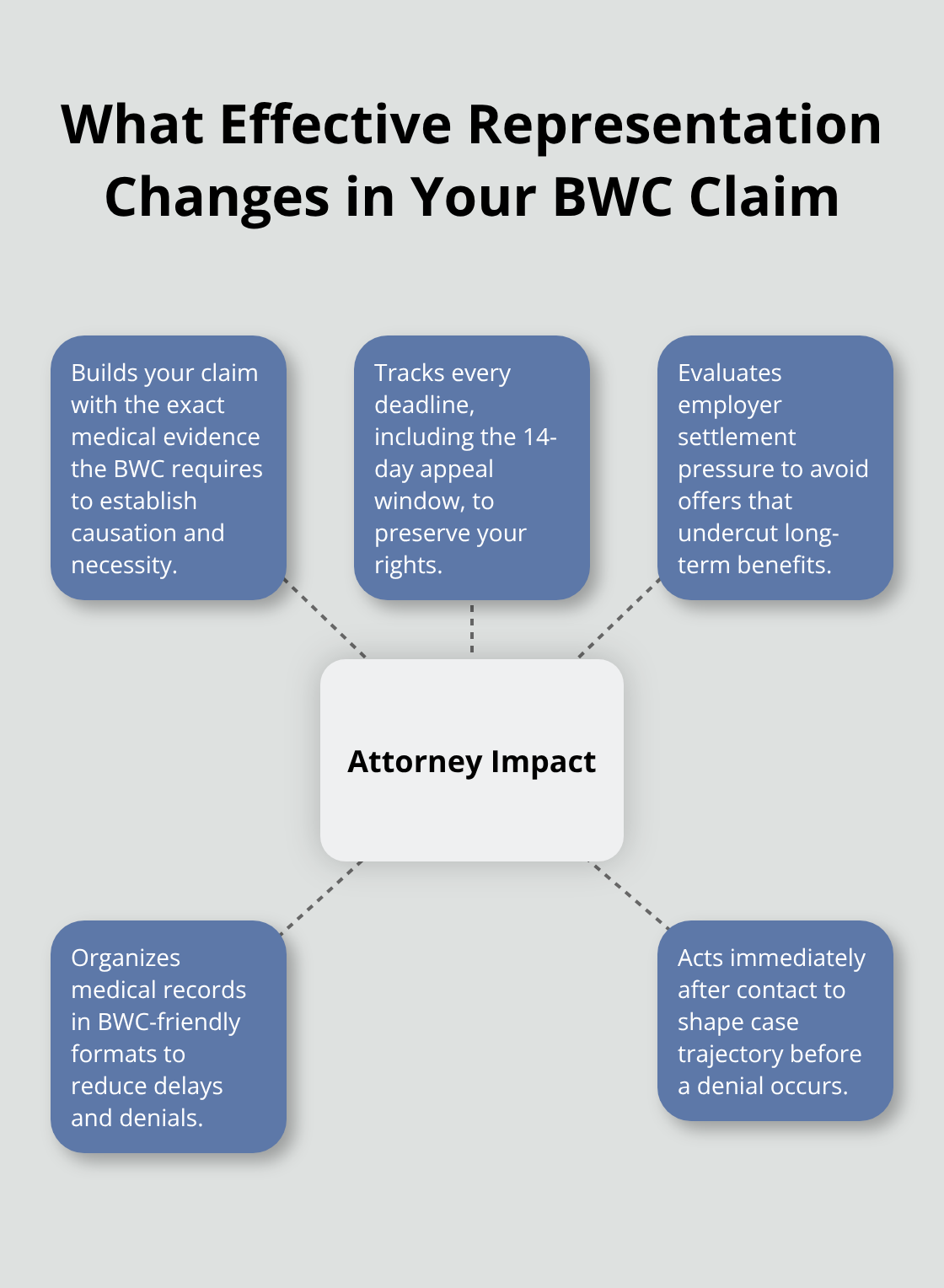
This timing difference matters significantly because we can shape how your claim develops from the start, positioning your medical evidence and documentation to withstand scrutiny.
Strategies for Maximum Benefit Recovery
The strategies we use center on understanding what specifically makes the BWC approve or deny claims in your injury category. For permanent disability cases, we calculate the lifetime value difference between accepting a lump sum versus structured ongoing payments, so you understand what you’re trading away. We work directly with your medical providers to request the specific evaluations and causation statements the BWC actually uses when making determinations, rather than accepting whatever documentation your doctor provides without guidance. If the BWC denies your claim, we file your request for hearing before the Industrial Commission of Ohio within the required timeframe and present evidence that addresses the specific grounds for denial.
Addressing Retaliation and Employer Pressure
We address employer retaliation directly when it occurs, recognizing that retaliation claims require different legal arguments than the workers’ compensation claim itself. Employers sometimes retaliate against workers who file BWC claims, and Ohio law prohibits this retaliation, but proving it requires understanding employment law alongside workers’ compensation law. Throughout your case, we handle communication with the BWC, your employer, and medical providers so you can focus on recovery rather than navigating bureaucratic processes.
Final Thoughts
The Ohio BWC system operates on strict procedural rules that determine whether you receive fair compensation or face denials that cost you thousands in lost benefits. Missing a single deadline, submitting incomplete medical documentation, or accepting a settlement without understanding your long-term options can permanently reduce what you’re entitled to receive. Workers represented by attorneys consistently receive substantially higher settlements than those who attempt claims independently, and this difference reflects procedural execution rather than the legitimacy of injuries.
Your injury is real, and Ohio law protects your right to compensation. The BWC denies approximately 15% of initial claims due to filing errors alone, not because those injuries lack coverage-and these denials are reversible if you act quickly and file your request for hearing within the required 14-day window. Waiting to seek help after receiving a denial letter means you’ve already lost the opportunity to shape how your claim develops from the start, which is why timing matters so much when you pursue Ohio BWC claim help.
If you’ve been injured at work in Ohio, contact Robin J Peterson Company, LLC to discuss your options. We handle the specific mechanics that trip up unrepresented workers and position your claim for maximum recovery from the beginning.