
Office workers face unique challenges when workplace injuries occur. Many don’t realize what protections exist or how to navigate the claims process effectively.
At Robin J Peterson Company, LLC, we’ve helped countless injured workers understand their office worker compensation rights and secure the benefits they deserve. This guide walks you through everything you need to know.
What Injuries Count in Ohio
Office workers in Ohio are covered under the state’s workers’ compensation system, but not every workplace incident qualifies. The Ohio Bureau of Workers’ Compensation covers injuries that arise out of and occur in the course of employment. This means the injury must have a direct connection to your job duties. Falls remain the most common office accident, with office workers about 2 to 2.5 times more likely to suffer a disabling fall than non-office workers according to the CDC. These falls happen when workers trip over open desk drawers, electrical cords, loose carpeting, or clutter in walkways. Back and neck pain from prolonged sitting, vision strain from computer screens, and pain in hands and wrists from keyboard work all qualify for coverage under Ohio law.

Struck-by incidents from falling objects and injuries from being caught in drawers or equipment also count. Your injury must connect to your work environment or job duties-not result from a pre-existing condition or something unrelated to employment.
Understanding Ohio’s No-Fault System
Many office workers mistakenly believe they need to prove their employer was negligent or at fault. This is false. Ohio operates under a no-fault system, meaning you receive benefits regardless of who caused the accident. You cannot sue your employer in most cases, but you also do not need to prove negligence to get paid. Another misconception is that minor injuries do not qualify. Even small injuries that prevent you from working deserve compensation. Some workers assume they must report an injury immediately or lose their rights. While prompt reporting is wise, Ohio law allows you to file a claim within a reasonable time.
Why Medical Documentation Matters
The most damaging mistake is failing to seek medical treatment and document everything. Your medical records form the foundation of your claim. Without them, the BWC has no evidence to approve benefits. Office workers sometimes wait to file because they think the injury will heal quickly, then find themselves unable to work weeks later with a weak claim. Medical documentation (including initial treatment records, follow-up visits, and physician statements) directly influences whether the BWC approves your benefits.
Your Rights as an Ohio Office Worker
As an injured office worker in Ohio, you have the right to select your own physician after the first treatment, which is critical because your doctor’s opinion directly influences your benefits. You are entitled to wage replacement benefits if you cannot work, medical treatment for your injury, and vocational rehabilitation if you cannot return to your previous job. The BWC must make a decision on your claim within a specific timeframe. If the BWC denies your claim, you have the right to appeal and request a hearing before the Industrial Commission of Ohio. You also have the right to legal representation throughout this process.
Many workers wait too long before consulting an attorney, missing critical deadlines or filing incomplete claims that get denied unnecessarily. The claims process involves specific steps and timelines that require careful attention. Understanding what happens next will help you protect your position and avoid costly mistakes.
Filing Your Ohio Workers’ Compensation Claim
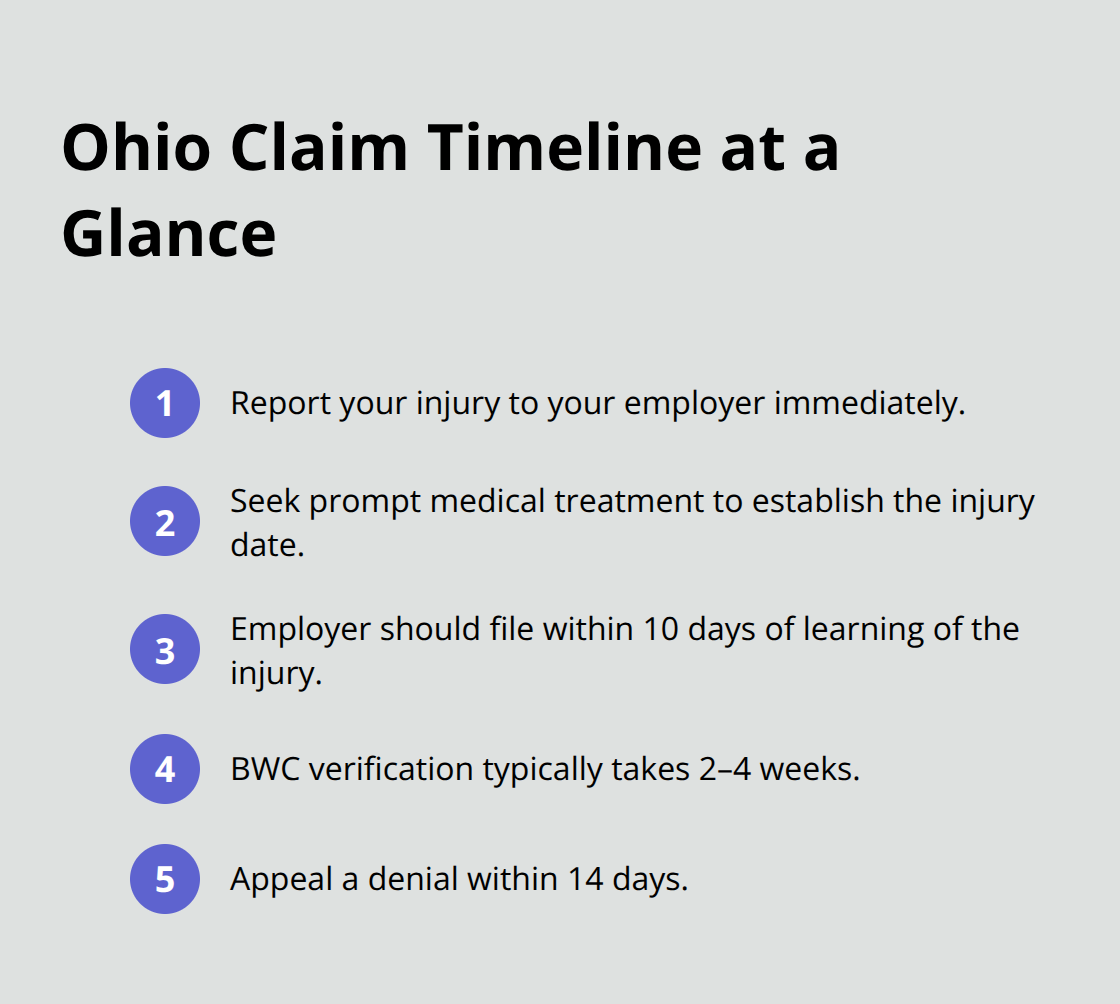
Report Your Injury Immediately
The first hours after an office injury determine whether your claim succeeds or fails. Report your injury to your supervisor or employer immediately, even if it seems minor. Ohio law does not require you to use specific language-simply inform your employer that you were injured at work. Request that they document the report in writing and ask for a copy. Many employers use incident report forms; fill these out completely and keep a copy for yourself. Do not downplay your injury to avoid seeming like a burden. Office workers often minimize injuries to appear tough, then struggle weeks later when symptoms worsen and their claim looks weak because the initial report was vague.
Seek Medical Treatment and Build Your Record
After reporting to your employer, seek medical treatment promptly. Your first medical visit establishes the injury date and creates the medical record the Ohio Bureau of Workers’ Compensation needs to process your claim. The employer typically directs you to an authorized provider for the first treatment, but after that initial visit, you can select your own physician. Choose a doctor who listens carefully and documents your symptoms thoroughly. Request copies of all medical records, imaging results, and physician statements. Store these documents in a folder or digital file organized by date. The BWC will request these records, and having them ready speeds up your claim review significantly.
File Your Claim With the BWC
Filing the actual claim happens through the employer or directly with the BWC. Your employer must file a claim form within 10 days of learning about the injury, though you should not wait for them to act. Contact the Ohio Bureau of Workers’ Compensation directly at 1-800-644-6292 or visit their website to file a claim yourself if your employer delays. When the BWC receives your claim, they enter it into their system and assign it a claim number.
You will receive correspondence with this number-keep it in every communication with the BWC.
Understand the Verification and Review Process
The agency then contacts your employer’s insurance carrier to verify coverage. This verification step typically takes 2 to 4 weeks. During this time, continue seeking medical treatment and documenting everything. The BWC reviews your medical records, the injury report, and your employment status to determine if your injury qualifies for benefits. If the claim is approved, wage replacement and medical benefits begin. If the BWC denies the claim, you receive a written explanation and have the right to appeal.
Act Quickly on Denials
An appeal requires filing a request for hearing with the Industrial Commission of Ohio within 14 days of the denial. Missing this deadline costs you the right to challenge the decision. This is where many office workers lose benefits they deserve-they delay contacting an attorney until after the deadline passes. The next section covers how to protect your rights during the claims process and what steps to take if the BWC denies your claim.
Protecting Your Claim From Start to Finish
Gather Evidence Immediately After Your Injury
The difference between a successful workers’ compensation claim and a denied one often comes down to what you document and when you act. Start collecting evidence the moment your injury occurs. Take photographs of the exact location where you fell or were struck, including hazards like open drawers, loose cords, or wet floors. Photograph your workstation setup if ergonomic issues contributed to your injury. Write down the names and contact information of anyone who witnessed the incident, even if they seem reluctant to get involved.
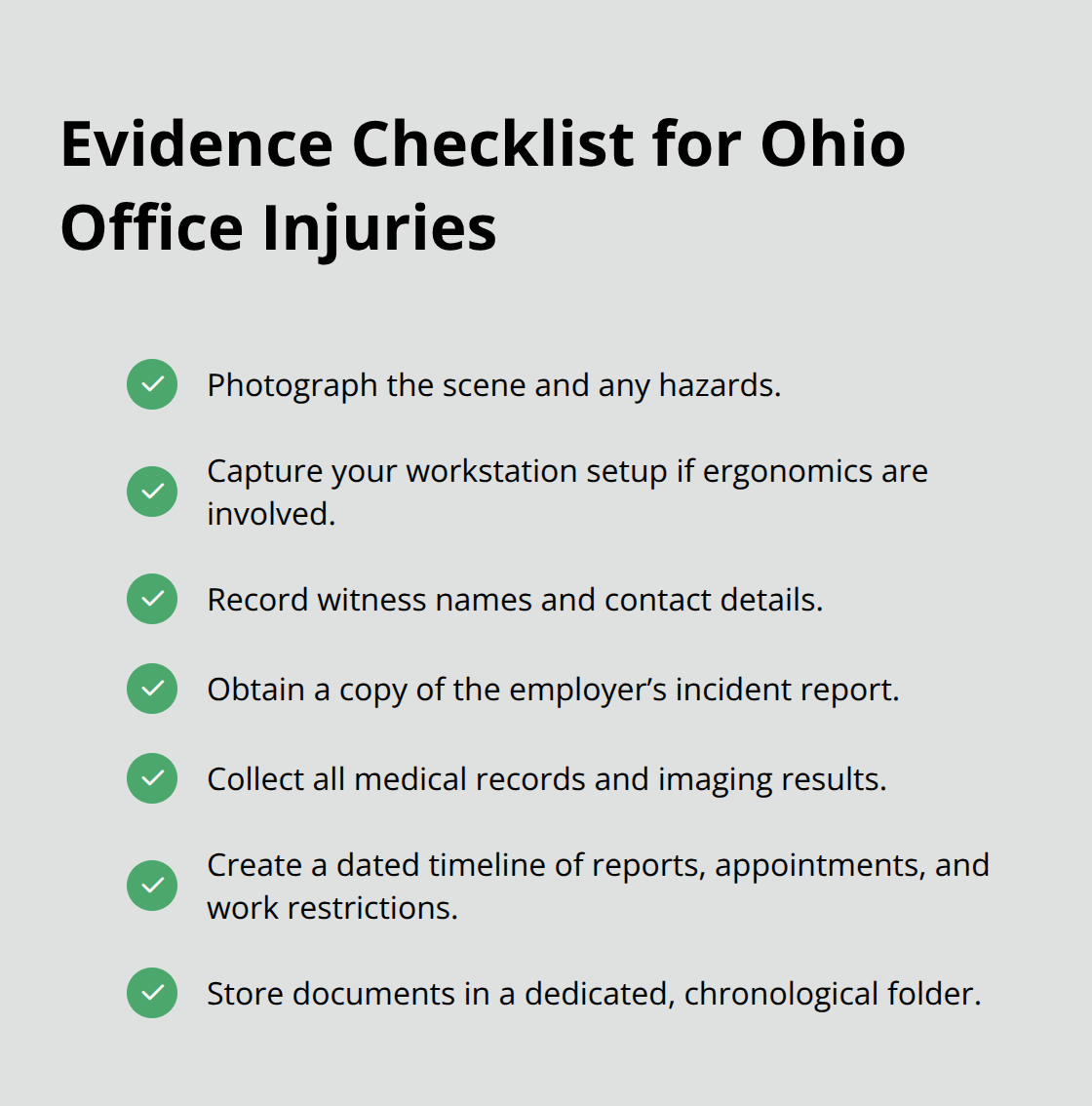
Request the incident report from your employer and keep a personal copy separate from company files. Medical records form your most powerful evidence, so obtain copies of every document from your first visit onward (including imaging results, lab work, and detailed physician notes). Create a timeline document listing the injury date, when you reported it, each medical appointment, and any work restrictions your doctor imposed. Store all documents in a dedicated folder organized by date.
Organize Your Documentation for the BWC
The Ohio Bureau of Workers’ Compensation will request your records during their review, and having them immediately available prevents delays that can stretch your claim decision from weeks into months. Organize medical records chronologically so the BWC can track your treatment progression. Include copies of all prescriptions, physical therapy sessions, and specialist consultations. If your employer disputes the injury or questions whether it arose from work, comprehensive documentation becomes your strongest defense. The BWC reviews thousands of claims annually, and well-organized files move through their system faster than disorganized submissions.
Consult an Attorney Before Denial Arrives
Many office workers delay seeking legal representation until after the BWC denies their claim, which is a critical mistake. An attorney should review your case as soon as you realize the injury will prevent you from working or requires ongoing treatment. If your employer disputes the injury, if the BWC questions whether it arose from work, or if your employer fails to report your injury to the insurance carrier within 10 days, contact an attorney immediately (the 14-day deadline to appeal a denial is absolute and unforgiving).
At Robin J Peterson Company, LLC, we have seen injured workers lose valid claims because they missed this deadline by a single day. Do not wait for a denial letter to arrive before consulting legal counsel. If you file your claim and hear nothing for more than a month, or if the BWC requests additional medical records, these are signs you need professional guidance.
How Legal Representation Protects Your Position
An attorney can identify weak spots in your documentation before they become reasons for denial, can push back against unreasonable delays, and can file appeals within the strict timelines the Industrial Commission enforces. The cost of early legal representation is far less than losing benefits you earned through a workplace injury. Your attorney handles communication with the BWC, ensuring nothing falls through the cracks and that deadlines never slip past unnoticed.
Final Thoughts
Office worker compensation rights protect you when workplace injuries occur, but only if you act decisively and document everything from the start. Report your injury to your employer immediately, seek medical treatment without delay, and gather evidence before the BWC requests it. Missing even one critical step can result in a denied claim that becomes nearly impossible to overturn.
The Ohio Bureau of Workers’ Compensation processes thousands of claims annually, and the system moves fastest for workers who submit complete, well-organized documentation. The Industrial Commission of Ohio enforces strict deadlines for appeals, and missing these deadlines by even one day eliminates your right to challenge a denial. This is not a system where second chances exist.
If your claim faces denial or if you need guidance filing your initial claim, contact our firm to discuss your situation. We represent injured office workers throughout the Cleveland, Akron, and Canton areas and know which documentation the BWC prioritizes and which arguments succeed on appeal. The cost of early legal representation is minimal compared to losing benefits you earned through a workplace injury.