
Filing a workers’ compensation claim in Ohio can feel overwhelming, especially when you’re dealing with an injury and uncertain about next steps. We at Robin J Peterson Company, LLC understand that navigating the BWC system requires more than just paperwork-it requires access to the right local Ohio BWC resources and expert guidance.
This guide walks you through the support services, district offices, and legal options available to you across Ohio.
How the Ohio BWC Reviews and Decides Your Claim
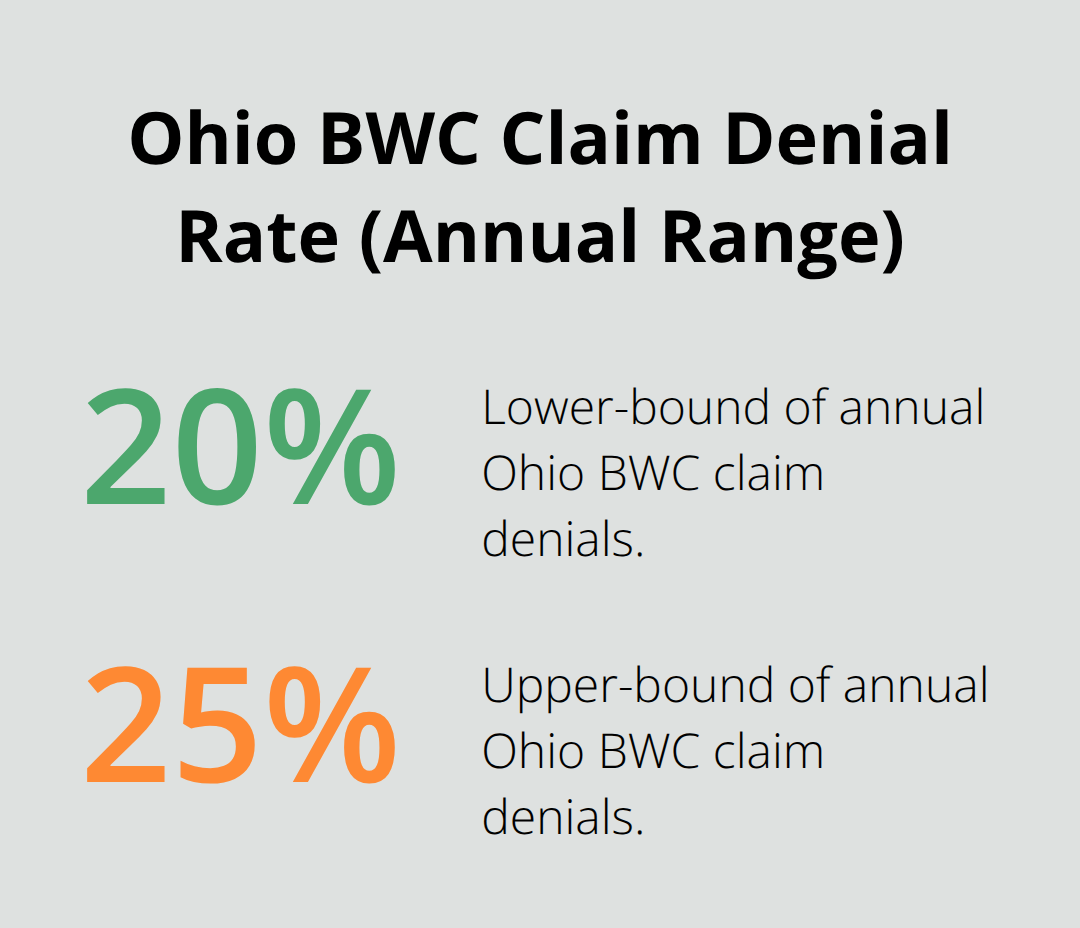
The Ohio Bureau of Workers’ Compensation processes claims through a structured review system that examines medical evidence, wage records, and employer documentation before making a determination. When you file a claim, the BWC assigns it to a claims administrator who verifies that your injury occurred during work and meets Ohio’s compensability standards. The BWC requires objective medical evidence to support your claim, meaning statements from your treating physician about the work-related nature of your injury carry significant weight. Claims administrators typically spend 10 to 30 days conducting an initial review, though complex cases involving multiple injuries or disputed causation take longer. The BWC denies roughly 20 to 25 percent of claims filed in Ohio annually, and most denials stem from insufficient medical documentation linking your injury directly to your job duties or from the employer disputing that the injury happened at work. If the BWC initially approves your claim, you’ll receive a Notice of Allowance; if denied, you receive a Notice of Denial that explains the specific reason for rejection.
Why Claims Get Denied and How to Prevent It
The most common reason for denial is inadequate medical evidence connecting your injury to work activities. Many injured workers file claims without having their doctor explicitly state that the injury is work-related, which creates ambiguity that the BWC interprets against the claimant. Another frequent cause of denial involves missed reporting deadlines-Ohio law requires employers to be notified of injuries promptly, and delays can jeopardize your claim. Pre-existing conditions also trigger denials when the BWC determines that your injury resulted from a pre-existing problem rather than a workplace incident, though aggravation of a pre-existing condition can still qualify for benefits if documented properly. Some claims are denied because the employer disputes the injury occurred, which shifts the burden to you to provide corroborating evidence such as witness statements, incident reports, or surveillance. An attorney from the start strengthens your claim substantially because legal representatives ensure proper documentation, timely filing, and persuasive presentation of medical evidence to the BWC.
Understanding Appeal Timelines and Your Options
If your claim is denied, you have 14 days from the date of the Notice of Denial to request a hearing before the Industrial Commission of Ohio. Missing this deadline eliminates your right to appeal, so you must treat it as non-negotiable. The Industrial Commission typically schedules hearings 60 to 120 days after your request, which gives you time to gather additional medical evidence or legal representation. At the hearing, an administrative judge reviews the case and makes a decision within 30 to 45 days.
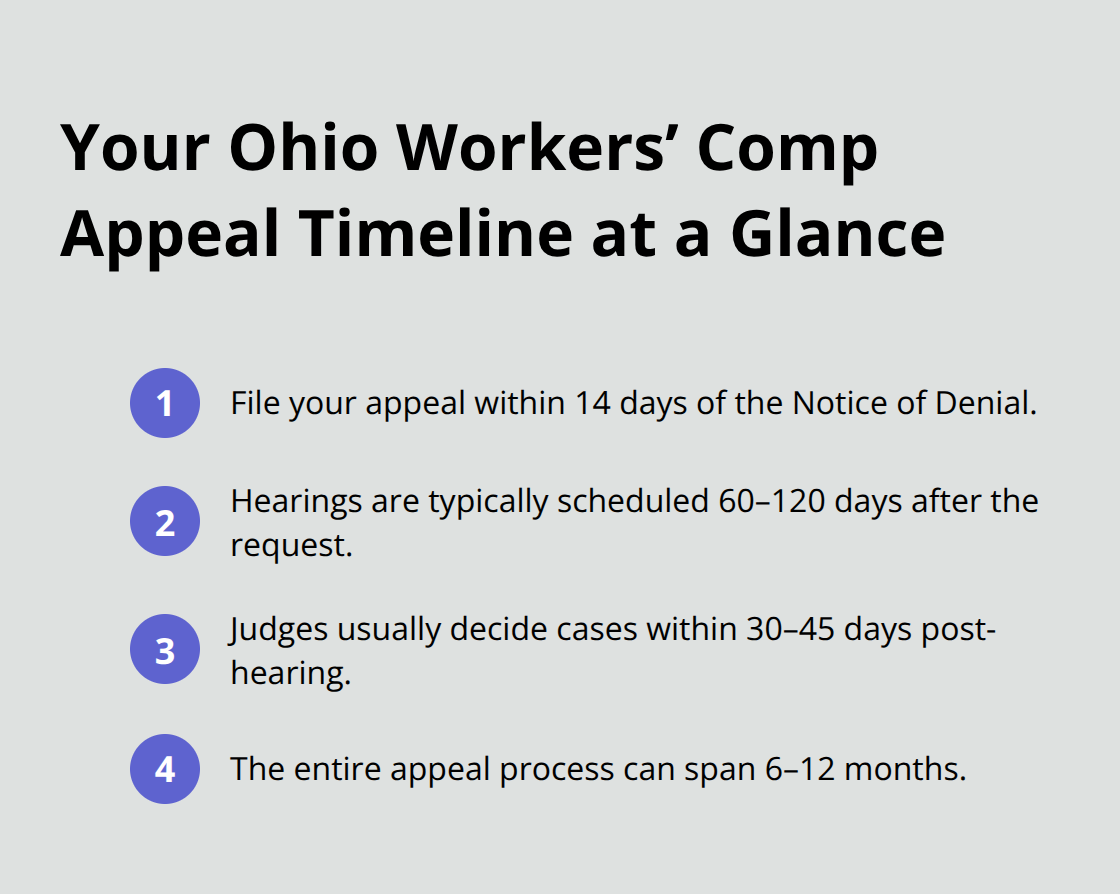
If you disagree with the Industrial Commission’s decision, you can appeal to the state court system, though this step requires legal expertise and costs. The entire appeal process from initial denial to final decision can extend 6 to 12 months, during which time you may struggle financially without wage replacement benefits. This timeline underscores why proper documentation and legal representation from the beginning matter far more than attempting to fix problems after denial. The next section explores the district offices and support services available across Ohio to help you navigate these processes.
Where to Find Help with Your Ohio Workers’ Compensation Claim
Local BWC Service Offices in Your Area
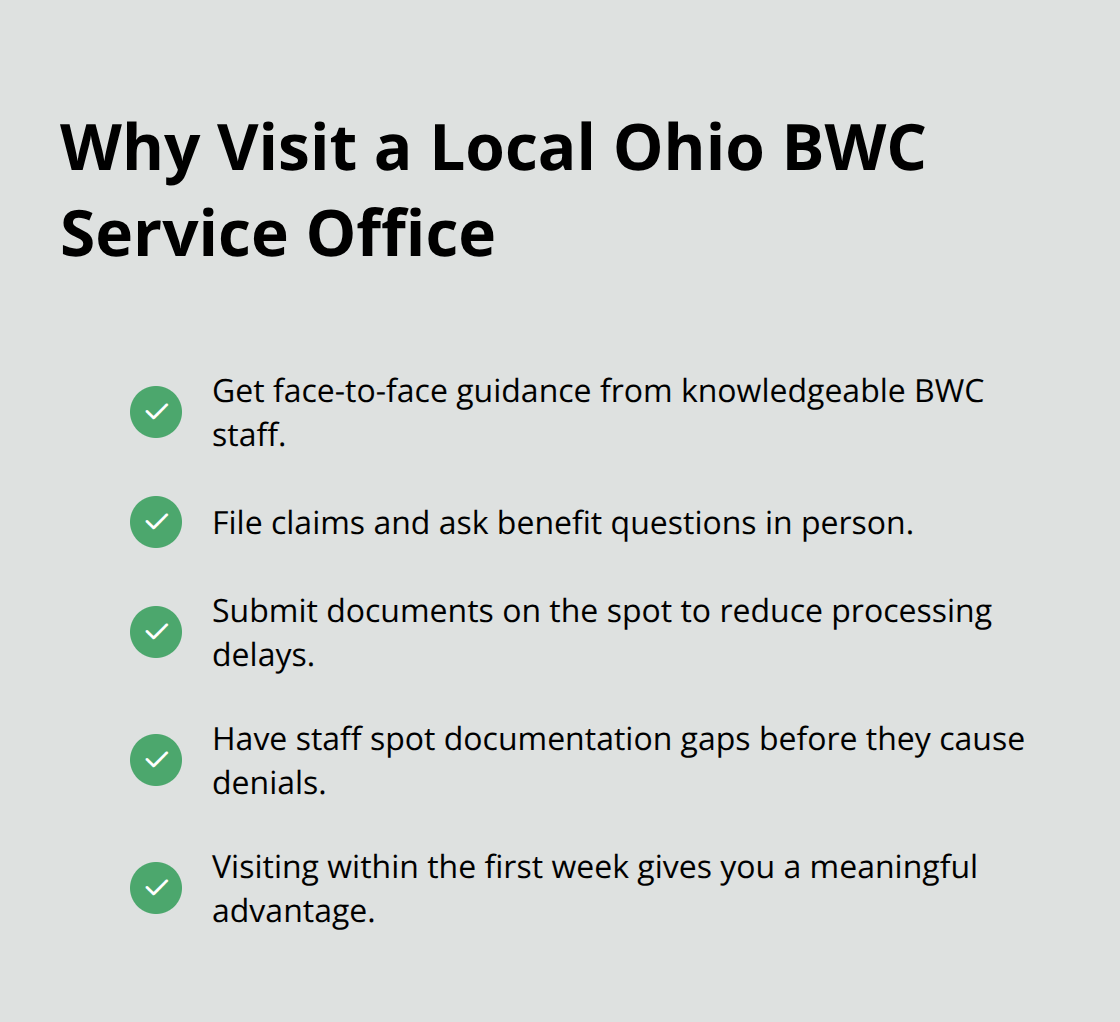
The Ohio Bureau of Workers’ Compensation operates service offices throughout the state, and knowing which one serves your area saves time when you need immediate guidance. The main BWC headquarters sits at 30 W. Spring St., Columbus, OH 43215-2256, but you don’t need to travel there for most issues. Cleveland, Akron, and Canton each have dedicated service offices where staff can help you file claims, answer questions about your benefits, and provide forms you need. Walking into a local office beats calling because you get face-to-face assistance and can submit documents on the spot, reducing delays in processing. The BWC’s Help Center on their website lists all service office locations and hours, allowing you to plan your visit.
Staff at these offices handle hundreds of claims monthly, so they understand common problems and can spot documentation gaps before they cause denials. Many workers skip this step and file online alone, missing the chance to catch errors that would later trigger a denial notice. If you live near Cleveland, Akron, or Canton, visiting your local service office within the first week of your injury gives you a significant advantage over those who file remotely without guidance.
Independent Support Through the Ombuds Office
Beyond the BWC itself, Ohio offers independent support through the Industrial Commission Ombuds Office, which operates separately from claims staff and provides neutral assistance when disputes arise. This office resolves disagreements about claim decisions without charging fees, making it a practical first stop if the BWC denies your claim or you disagree with a rating. The Ombuds Office staff work for you, not the BWC, which means they advocate for your interests when the system creates confusion or unfair outcomes.
Non-Profit Organizations and Community Resources
Non-profit organizations across Ohio support injured workers through free case management, benefit navigation, and advocacy, though these groups focus primarily on workers with serious or catastrophic injuries. These organizations fill gaps that government agencies cannot address alone, offering emotional support and practical help during recovery. Contact your local health department or social services office to identify non-profits in your region that match your specific injury situation.
Workers’ Compensation Attorneys and Legal Representation
Workers’ compensation attorneys in Ohio operate on contingency, meaning you pay no fees unless your case succeeds, which removes financial barriers to legal representation. Many attorneys offer free initial consultations where you discuss your claim and learn whether hiring a lawyer strengthens your position. Ohio Supreme Court certified workers’ compensation specialists have passed rigorous exams proving advanced expertise in this field, and seeking out a certified specialist increases your odds of favorable outcomes.
Attorneys handle the heavy lifting-filing appeals, gathering medical evidence, negotiating with the BWC, and representing you at hearings-while you focus on recovery. In the Cleveland, Akron, and Canton areas, firms like Robin J Peterson Company, LLC bring deep experience in Ohio workers’ compensation law and understand the local hearing venues and decision-makers. The next section explores how to navigate the appeal process when the BWC denies your claim or you disagree with a decision.
How to Fight a Denied Claim in Ohio
Act Within the 14-Day Appeal Window
The 14-day window after you receive a Notice of Denial is your only chance to appeal, and wasting even a few days costs you the right to challenge the decision. You must file your appeal request immediately upon receiving the denial notice rather than waiting to gather additional evidence or consult an attorney, because missing the deadline makes further action impossible regardless of the strength of your case. The Industrial Commission of Ohio processes appeals through a formal hearing system where an administrative judge reviews all evidence and testimony before issuing a written decision. You can request this hearing online through the BWC portal or submit a written request to the Industrial Commission, but online filing moves faster and creates a time-stamped record that protects your deadline compliance.
Prepare Your Case During the Waiting Period
Most hearings occur 60 to 120 days after your request, which gives you roughly two months to prepare your case and gather documentation. During this preparation period, you should contact your treating physician and request that they submit a detailed written statement explaining how your injury is work-related, because medical evidence carries the most weight with administrative judges. If the initial evidence was weak, this is your moment to strengthen it with clearer documentation that directly connects your injury to your job duties.
Leverage Attorney Representation for Better Outcomes
A workers’ compensation attorney fundamentally changes your appeal odds because attorneys know which evidence persuades judges and how to present it effectively. An attorney files the appeal correctly, meets all procedural requirements, and handles communication with the Industrial Commission so you avoid procedural mistakes that could derail your case. Many workers attempt appeals alone and lose because they lack knowledge of what evidence matters most or how to organize it for maximum impact. Attorneys also negotiate with the BWC during the appeal process and sometimes resolve disputes without a hearing, saving you time and stress.
Since Ohio attorneys work on contingency, you pay nothing unless you win, which means financial barriers do not prevent you from accessing legal representation. At the hearing itself, your attorney questions witnesses, presents medical evidence, and argues why the BWC’s denial was incorrect, while you provide testimony about your injury and work duties (this combination of legal expertise and your firsthand account creates a compelling case).
Navigate the Hearing and Post-Hearing Process
The administrative judge typically issues a decision 30 to 45 days after the hearing, and if you disagree with that decision, you can appeal to the state court system, though this step requires even more legal expertise and is rarely successful without an experienced attorney. The court appeal process demands knowledge of procedural rules and appellate strategy that most injured workers lack, making professional representation essential at this stage.
Final Thoughts
Filing a workers’ compensation claim in Ohio demands more than hope-it requires action, documentation, and often professional guidance. The local Ohio BWC resources available across Cleveland, Akron, Canton, and beyond exist specifically to help injured workers navigate a system that denies roughly one in four claims. Workers who file alone without proper medical documentation or legal representation lose claims that should have been approved, while those who act early with professional support dramatically improve their chances of approval and fair benefits.
The 14-day appeal deadline after denial is absolute and unforgiving-missing it eliminates your right to challenge the decision regardless of how strong your case might be. An attorney ensures you meet every deadline, gather evidence that persuades administrative judges, and navigate procedural requirements that most injured workers misunderstand. This single fact makes early legal consultation invaluable because the cost of mistakes far exceeds the cost of hiring representation on contingency.
Contact a workers’ compensation attorney in your area for a free consultation and discuss whether your claim needs strengthening or whether an appeal is necessary. If you are in the Cleveland, Akron, or Canton region, reach out to Robin J Peterson Company, LLC to learn how we can help you secure the benefits you earned through your injury. Do not wait-every day that passes without proper legal guidance increases the risk that procedural mistakes or weak documentation will cost you compensation you deserve.