
Workplace injuries in Ohio can leave you confused about what happens next. At Robin J Peterson Company, LLC, we know that understanding your industrial claims Ohio rights is the first step toward protecting yourself.
This guide walks you through the workers’ compensation system, your legal protections, and the obstacles you might face. You’ll learn exactly what benefits you’re entitled to and how to navigate the claims process.
How Ohio’s Workers’ Compensation System Actually Works
The Ohio Bureau of Workers’ Compensation operates differently than most people expect. Unlike private insurance models, Ohio’s system is a state-funded program that handles all workplace injury claims. When you get injured at work, your employer doesn’t file the claim-you do, or your employer files it on your behalf within 14 days of the incident. This distinction matters because it means you’re not waiting for an insurance company to decide whether to cover you. Instead, you’re working within a government system designed specifically for workers. The BWC processed over 2 million claims in the last decade, so the system handles massive volume regularly. Your claim receives a claim number, and from that point forward, all communication and documentation flows through the BWC’s system.
What Benefits Actually Cover
Ohio’s workers’ compensation provides four main categories of benefits for injured workers. Medical treatment covers all necessary care related to your injury, from emergency room visits to ongoing physical therapy and medications. Wage loss benefits replace a portion of your income if your injury prevents you from working-typically 66.67 percent of your average weekly wage, up to a maximum set by the BWC each year. If your injury results in permanent disability, you receive additional compensation based on the severity and body part affected.
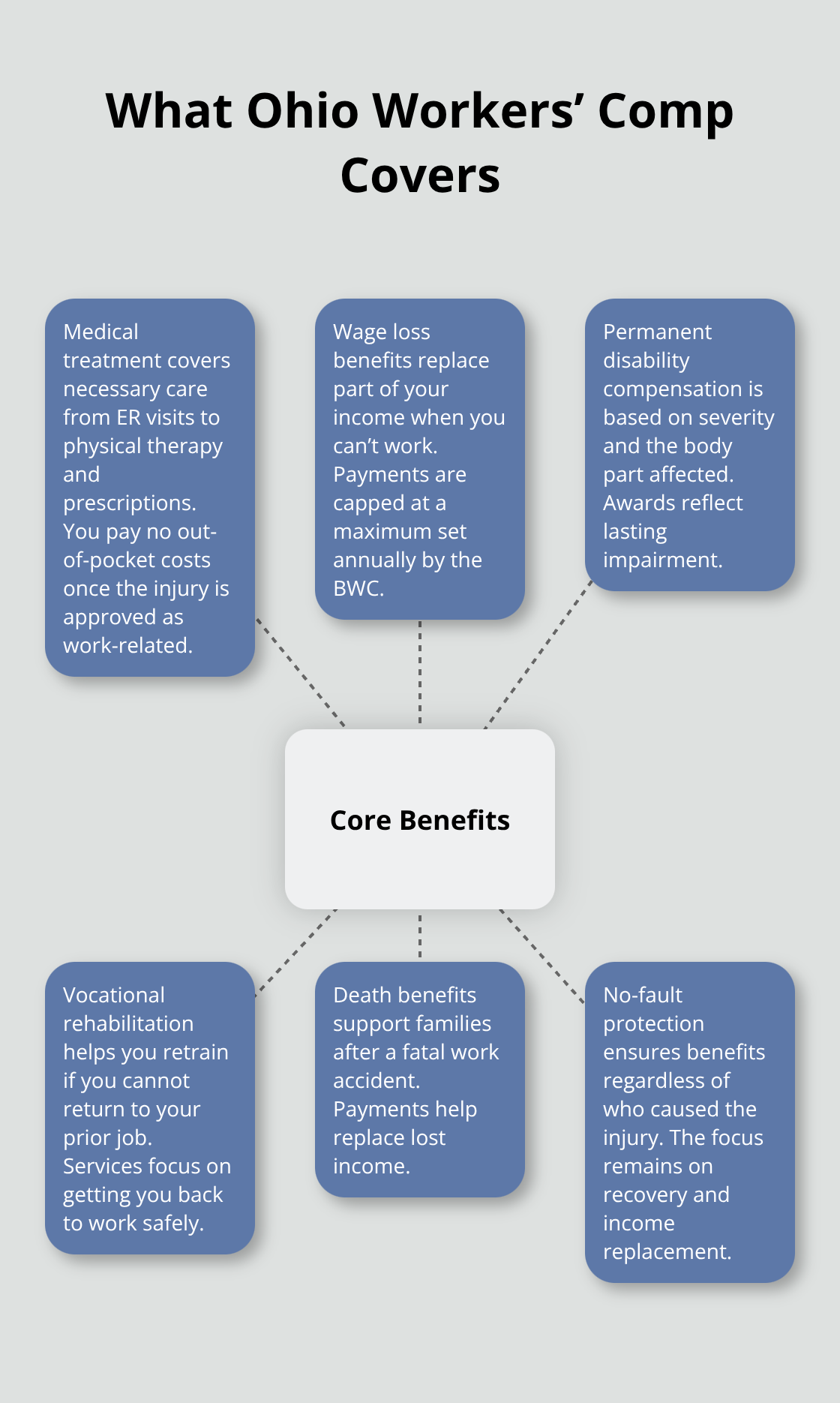
Vocational rehabilitation services help you retrain for different work if you can’t return to your previous job. The system also covers death benefits for workers’ families in fatal accidents. These benefits exist regardless of who caused the injury, which is the fundamental principle of Ohio’s no-fault system.
Getting Your Claim Started Quickly
You have specific timeframes that matter for your claim. You must report your injury to your employer immediately-ideally within 24 hours, though Ohio law allows up to one year from the date of injury to file a formal claim. However, waiting longer creates problems with documentation and witness memory. Your employer must file Form C-91 with the BWC within 14 days of learning about your injury. Once the BWC receives this form, they have 28 days to approve or deny your claim.
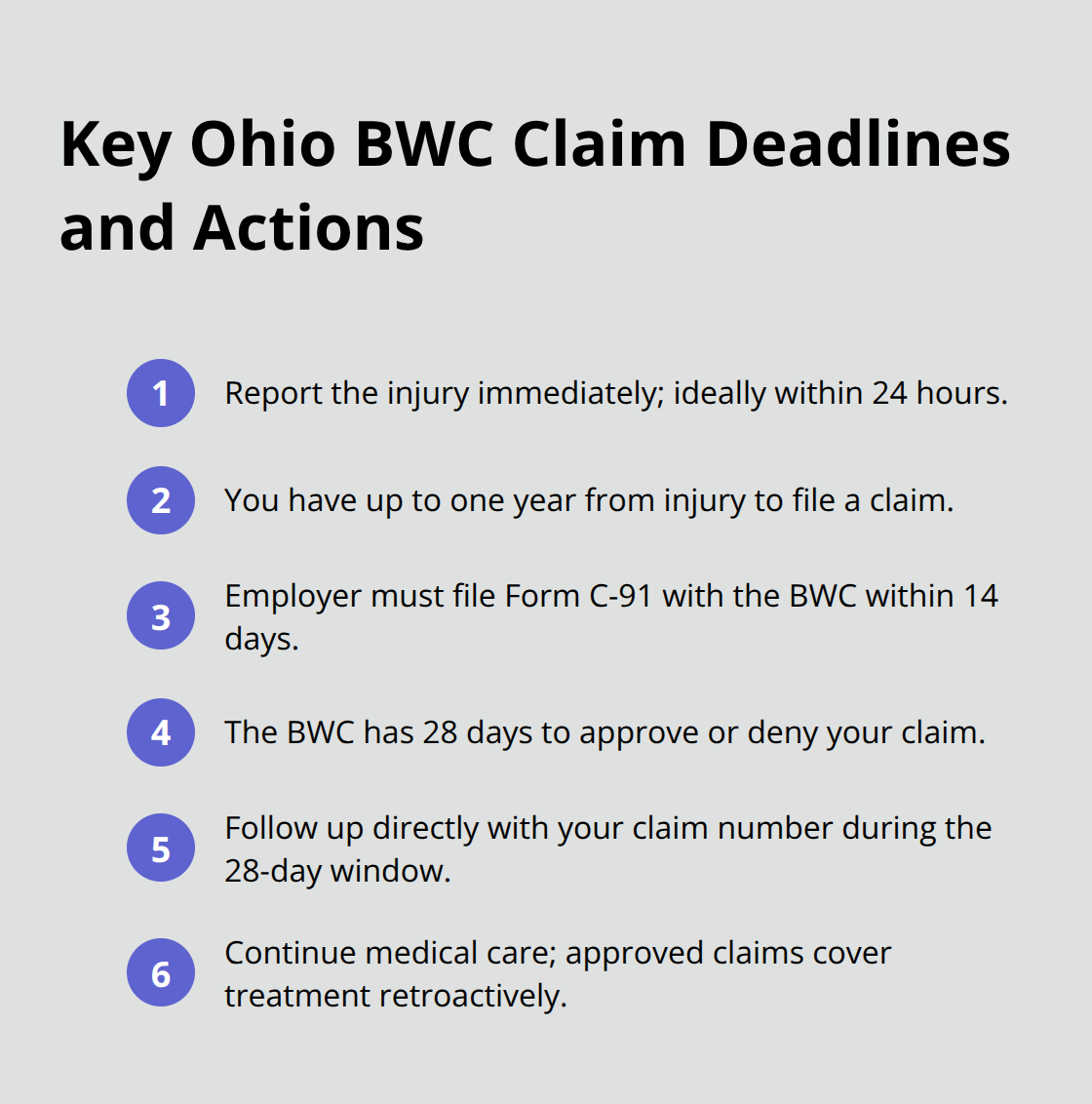
During this waiting period, you can still receive medical treatment, and those expenses will be covered retroactively if your claim gets approved. Many injured workers fail to follow up during this 28-day window. Contact the BWC directly using your claim number to check status rather than relying on your employer to update you. The faster you move through these initial steps, the faster your benefits begin.
What Happens When the BWC Makes a Decision
The BWC either approves or denies your claim within that 28-day window. An approval means the system recognizes your injury as work-related and begins processing your benefits immediately. A denial, however, doesn’t end your options-you can file an appeal with the Industrial Commission of Ohio and present additional evidence to support your case. Understanding your rights as an injured worker becomes critical at this point, especially if you face obstacles in the claims process.
Your Rights as an Injured Worker in Ohio
Protection Against Employer Retaliation
Ohio law explicitly prohibits employer retaliation against workers who file compensation claims, and this protection applies the moment you report your injury. If your employer fires you, demotes you, reduces your hours, or cuts your pay in response to your claim, that action violates Ohio Revised Code Section 4123.90. The challenge lies in proving the retaliation happened because of your claim rather than some other reason your employer might claim.
Document everything from the day you report your injury: keep records of performance reviews, emails, scheduling changes, and any negative comments from management. If retaliation occurs within 30 days of filing your claim, the law presumes it was motivated by your claim unless your employer proves otherwise. After 30 days, you must provide evidence showing the timing and circumstances suggest retaliation. File a retaliation complaint with the Ohio Bureau of Workers’ Compensation if you experience adverse employment actions, and this complaint can proceed simultaneously with your workers’ compensation claim.
Right to Medical Treatment and Care
Your right to medical treatment stands separate from any disputes about your claim status or benefits amount. Once the BWC approves your injury as work-related, all necessary medical expenses receive coverage without your out-of-pocket costs, including doctor visits, surgery, hospitalization, prescription medications, and physical therapy. You can select your own physician rather than being assigned one, though your employer might have a preferred provider list.
If your doctor recommends treatment and the BWC denies it as unnecessary, you can appeal that specific decision independently from your overall claim. This separation means you maintain access to care even while fighting other aspects of your case.
Wage Loss Benefits and Compensation Coverage
Regarding wage loss benefits, Ohio replaces two-thirds of your average weekly wage up to the current maximum, which the BWC adjusts annually based on statewide wage data. These benefits continue for the duration of your disability, whether temporary or permanent. If your injury leaves you with permanent impairment, you receive a lump sum based on the body part affected and severity rating assigned by the BWC’s medical evaluation process.
The system covers all these benefits regardless of fault because Ohio operates under a no-fault workers’ compensation model (meaning your employer’s negligence or your own mistake doesn’t eliminate your eligibility). This no-fault structure removes the burden of proving someone caused your injury-the focus stays on your recovery and income replacement. When obstacles arise in accessing these benefits, knowing your specific rights becomes essential for moving forward.
Common Obstacles in the Claims Process
When the BWC Says No
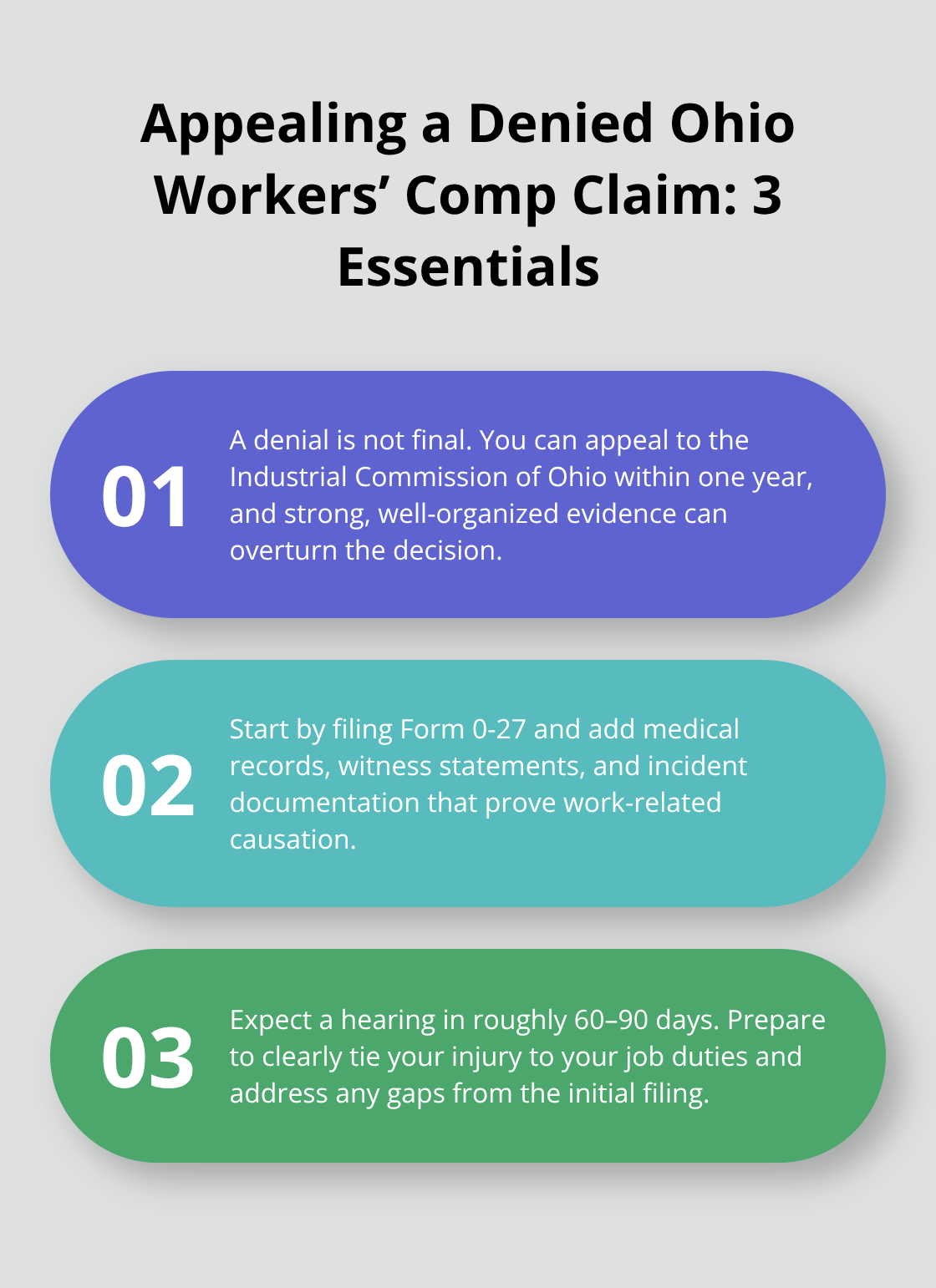
The moment the BWC denies your claim, most injured workers assume their benefits are gone. That assumption is wrong. A denial is a setback, not a final decision. You have the right to appeal to the Industrial Commission of Ohio within one year of the denial date, and this appeal process gives you a genuine opportunity to overturn the decision with proper evidence. The Industrial Commission receives thousands of appeals annually, and a significant portion succeed when workers present solid documentation. Start your appeal by filing Form 0-27 with the Industrial Commission and gather any additional medical records, witness statements, or incident documentation that strengthens your case.
Many denials happen because the initial claim lacked sufficient detail about how the injury occurred or its connection to work duties.
If your employer reported incomplete information on Form C-91, you can submit corrected details during the appeal. The appeal process typically takes 60 to 90 days for a hearing date, giving you time to prepare thoroughly.
Handling Delayed Claim Decisions
Delayed claim decisions present a different problem than outright denials. The BWC has 28 days to make an initial decision, but if they miss that deadline without approval or denial, your medical treatment continues to receive coverage during the delay. Document every day the decision remains pending because this creates pressure on the BWC to resolve your case. Contact the BWC’s customer service line directly with your claim number and request a specific decision date rather than waiting passively. If delays stretch beyond 45 days, file a complaint with the Ohio Department of Commerce, which oversees the BWC. These complaints trigger internal investigations and often accelerate decision-making.
Disputes with the Industrial Commission
Disputes with the Industrial Commission arise when you disagree with a hearing officer’s decision on your appeal. You can request a second hearing before a different officer, though this rarely reverses the first decision unless you present entirely new evidence. The real problem most workers face is navigating the documentation requirements that bog down the entire process.
Managing Complex Documentation Requirements
The BWC requires specific forms completed in exact formats, medical reports with particular information fields, and employer statements that often contain errors or omissions. Missing or incomplete documentation is the primary reason claims get delayed or denied. Before submitting anything to the BWC, verify that every form includes your claim number, the date of injury, and your signature where required. Medical providers frequently submit reports missing critical details about causation or functional limitations, so request copies of what your doctor submits and review them for accuracy.
If documentation is rejected, the BWC provides a specific reason, and you have 30 days to resubmit corrected versions. Many workers miss this 30-day window simply because they don’t track deadlines carefully. Create a spreadsheet listing every document you’ve submitted, the date submitted, and the deadline for any required responses. This prevents the common mistake of assuming everything is handled when the BWC actually requires your action. Workers who maintain meticulous documentation records move through the appeals process faster and face fewer obstacles when disputes arise. The system rewards organization and persistence far more than it rewards hoping things work out.
Final Thoughts
Understanding your industrial claims Ohio rights protects you from the moment you report a workplace injury. The Ohio workers’ compensation system provides real benefits-medical coverage, wage replacement, and disability compensation-but only if you navigate the process correctly. You now know that the BWC operates on strict timelines, that denials aren’t final decisions, and that documentation errors cause most claim delays.
The claims process rewards workers who stay organized and informed. Track your deadlines, maintain copies of every submission, and follow up directly with the BWC rather than waiting for updates from your employer. When obstacles arise, appeals exist for denied claims and retaliation protections shield you from employer punishment.
If your claim becomes complicated or you face denial, Robin J. Peterson Company, LLC represents injured workers throughout Ohio’s workers’ compensation system. The firm fights to secure the benefits you’re entitled to, and taking action now protects your interests and your recovery.