
A workplace injury in Cleveland can turn your life upside down fast. Medical bills pile up, lost wages add stress, and you’re left wondering what happens next.
We at Robin J Peterson Company, LLC know that building a strong case requires more than hope. It takes solid documentation, knowledge of Ohio’s workers’ compensation system, and smart legal strategy.
What Evidence Matters Most in Your Workers’ Compensation Claim
Medical Records Form Your Case Foundation
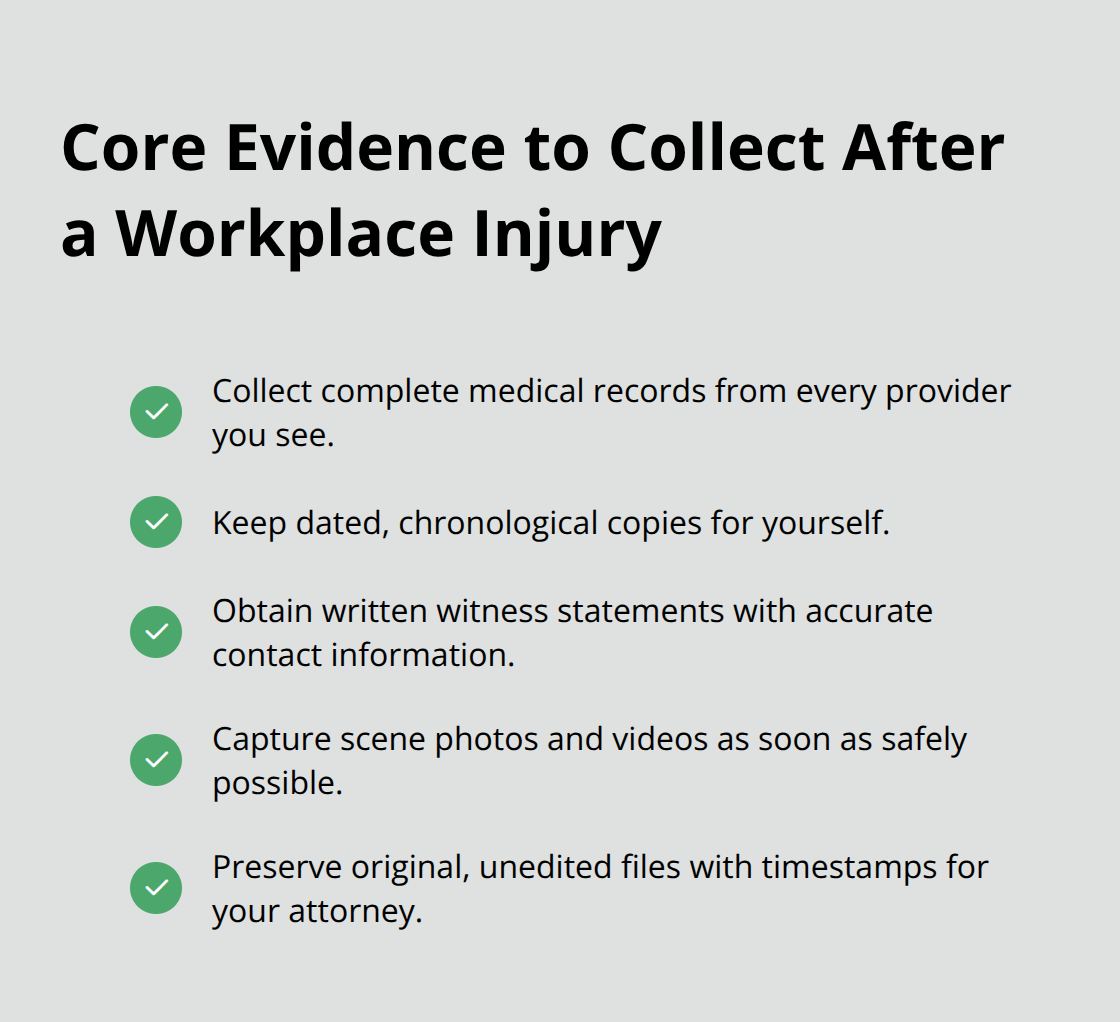
The difference between a claim that gets approved and one that gets denied often comes down to documentation. Medical records form the backbone of any workers’ compensation case in Ohio. Start collecting these immediately after your injury, and continue collecting them throughout your treatment. Request copies from every healthcare provider you see-emergency room visits, follow-up appointments, physical therapy sessions, and specialist consultations. The Ohio Bureau of Workers’ Compensation requires detailed medical evidence that links your injury directly to your workplace incident. Don’t rely on your employer or their insurance company to gather this for you. You need copies for yourself, dated and organized chronologically. If your treatment spans months or years, missing records create gaps that insurers exploit to deny benefits. Medical documentation should include the provider’s assessment of how the injury affects your ability to work.
Witness Statements Provide Independent Verification
Witness statements carry significant weight because they provide independent verification of what actually happened. Track down coworkers, supervisors, customers, or anyone present at the time of your injury and obtain their contact information within days of the incident. Written statements work better than verbal promises to help later. Ask witnesses to describe exactly what they saw, heard, and observed about how your injury occurred.
Ohio courts value contemporaneous accounts (meaning statements given soon after the incident hold more credibility than recollections months later). The sooner you collect these accounts, the stronger your documentation becomes.
Scene Documentation Captures Critical Details
Scene documentation through photos and videos should happen as soon as safely possible. Photograph the exact location where your injury occurred, showing hazards, equipment involved, weather conditions, and any factors that contributed to the accident. Take multiple angles and include wide shots that show context alongside close-ups of specific details. If your injury happened due to equipment malfunction, defective conditions, or unsafe practices, visual evidence proves this far more effectively than descriptions alone. Keep all original files with timestamps intact, and don’t edit or filter images before providing them to your attorney. This raw documentation becomes critical if your case proceeds to a hearing before the Industrial Commission of Ohio (where judges evaluate the strength of your evidence).
Your documentation strategy directly impacts what happens next in your claim process.
Understanding Ohio Workers’ Compensation Laws
Ohio’s workers’ compensation system operates under state law, which means your claim follows different rules than federal workers’ compensation programs. Most workplace injuries in Cleveland fall under Ohio’s system, governed by the Ohio Bureau of Workers’ Compensation. However, if you work for a federal employer, on federal property, or in specific industries like maritime work, federal law applies instead. The distinction matters because federal claims offer different benefit structures, different appeal processes, and different timelines. State claims in Ohio typically move faster through initial approval, while federal claims involve more complex procedural requirements. Understanding which system covers your injury prevents costly delays and missed deadlines.
Key Differences Between State and Federal Claims
State workers’ compensation claims in Ohio provide faster initial processing but offer more limited appeal options. Federal claims involve longer timelines but grant broader appeal rights and sometimes higher benefit caps. The Ohio Bureau of Workers’ Compensation administers state claims through a streamlined process designed to move cases quickly. Federal claims go through the Department of Labor or other federal agencies, depending on your employer type. If you work for the federal government, a federal contractor, or in maritime industries, federal law likely applies to your situation. State law covers most private employers and public employers in Ohio. Misidentifying which system governs your claim can cost you months of delays or lost benefits.
Filing Deadlines That Actually Impact Your Claim
Ohio imposes strict filing deadlines that many injured workers miss. You must report your workplace injury to your employer within 30 days, though reporting immediately is far smarter since delays create documentation problems.
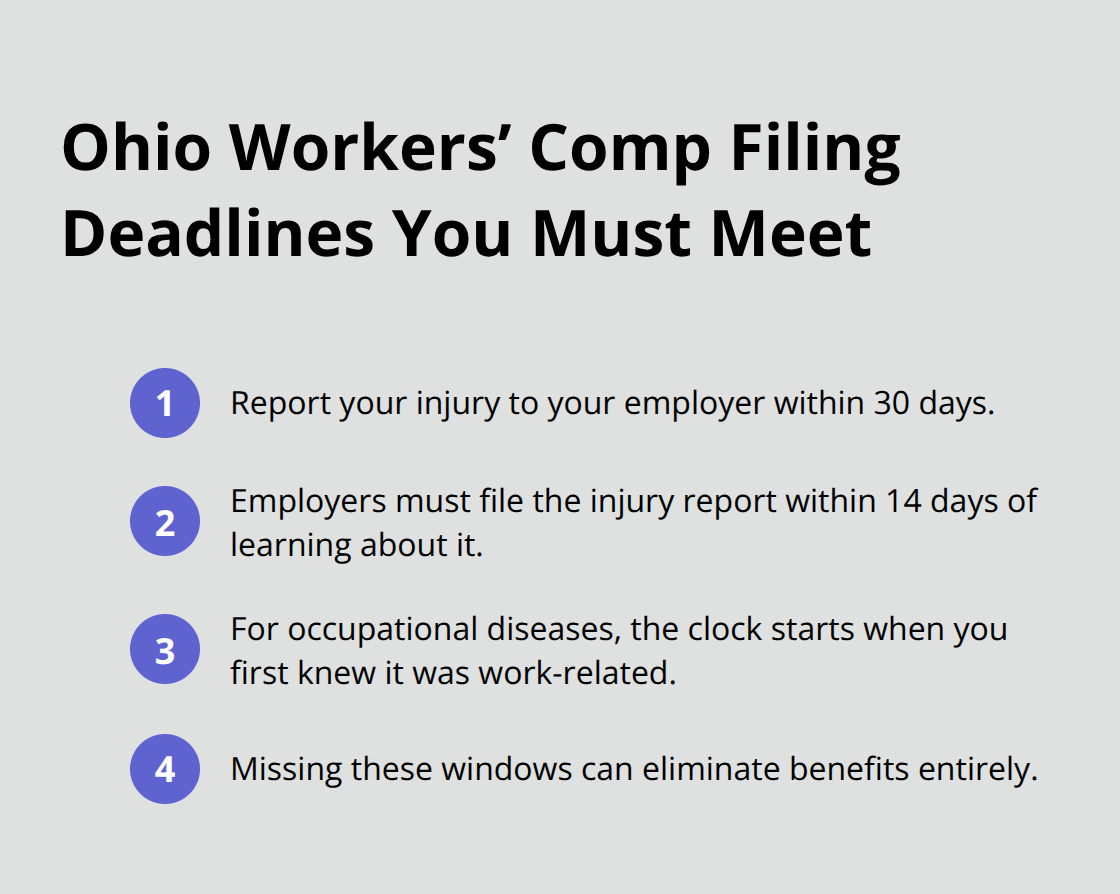
The Ohio Bureau of Workers’ Compensation requires employers to file the injury report within 14 days of learning about it. If you fail to report within 30 days and your employer claims they had no knowledge of the injury, the BWC can deny your entire claim retroactively. For specific types of injuries like occupational diseases, the timeline starts from when you first knew the injury was work-related, not from the date of the incident. Missing these windows doesn’t just delay benefits-it can eliminate them entirely.
What the Ohio Bureau of Workers’ Compensation Actually Covers
The Ohio Bureau of Workers’ Compensation covers medical treatment, temporary disability benefits, permanent disability compensation, and vocational rehabilitation for injured workers. Medical coverage includes all treatment reasonably necessary to treat your work injury, from emergency care to ongoing physical therapy and surgeries. Temporary disability replaces roughly two-thirds of your lost wages while you’re unable to work, calculated on your average weekly wage at the time of injury. Permanent partial disability payments apply when your injury causes lasting impairment but you can still work. The BWC does not cover injuries from gross negligence on your part, injuries from intoxication, or injuries you intentionally cause to yourself. Coverage limits apply to temporary benefits-Ohio currently pays up to 72 weeks of temporary disability for most injuries. Understanding these boundaries helps you plan for gaps in coverage and identify whether supplemental claims or third-party liability actions might apply to your situation.
These coverage rules and timelines form the foundation of your claim, but navigating disputes and appeals requires a different skill set entirely.
Building Your Legal Strategy
Handling a workers’ compensation claim alone puts you at a serious disadvantage. The BWC denies valid claims regularly, and injured workers who navigate the system without legal guidance accept settlements far below what they deserve. An experienced workers’ compensation attorney levels the playing field by understanding how the Industrial Commission of Ohio evaluates evidence, knowing which arguments succeed before judges, and recognizing when the BWC misapplies coverage rules. Robin J Peterson Company, LLC represents injured workers throughout the Cleveland, Akron, and Canton areas and understands the specific patterns and tendencies of local claims processors and hearing officers. Your attorney should immediately request your entire claim file from the BWC, review every document the insurance company submitted, and identify inconsistencies or misstatements about your injury. Many denials stem from incomplete medical documentation or witness statements that don’t clearly establish the work connection-problems your attorney catches before the case reaches a hearing.
Why Attorney Representation Changes Your Outcome
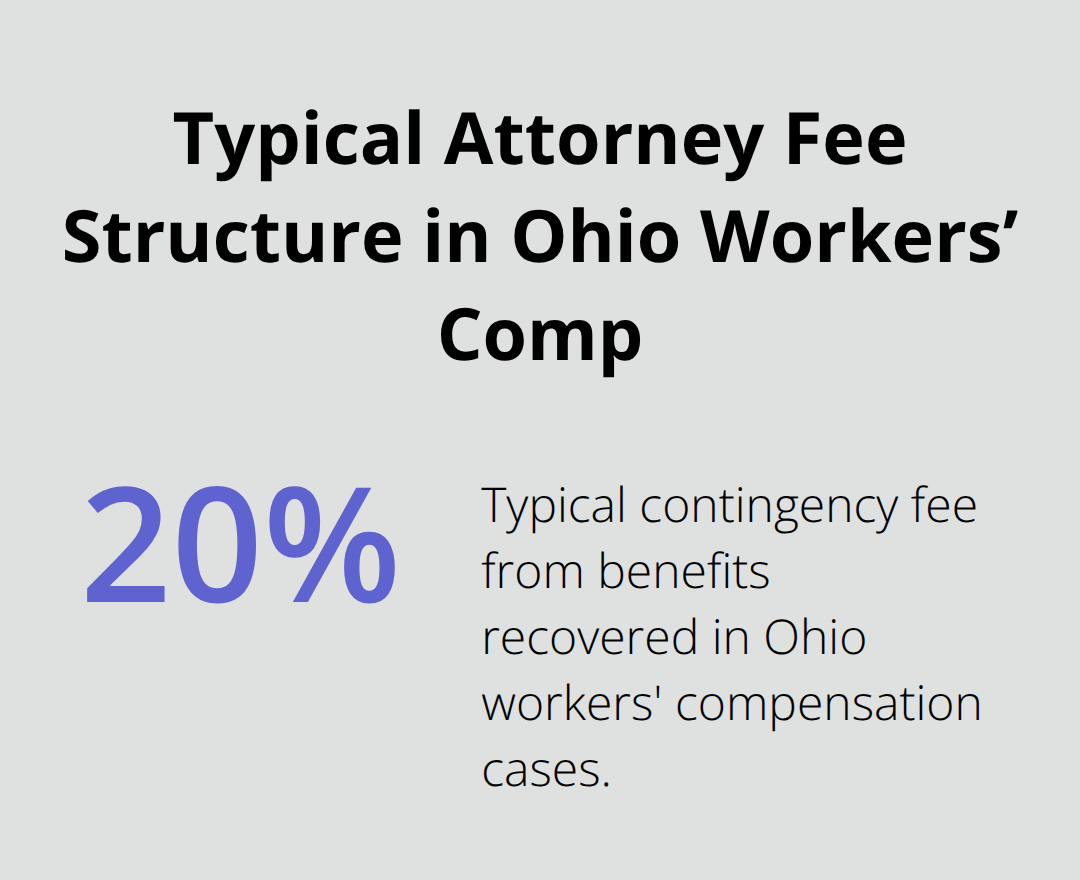
The attorney handles communication with the BWC and employer’s insurance company, preventing statements you make from being twisted against you later. Most workers’ compensation attorneys in Ohio work on contingency, meaning you pay nothing upfront and the attorney’s fee comes from your settlement or award (typically around 20 percent of benefits recovered).
This structure removes financial barriers that prevent injured workers from obtaining quality legal representation.
How Judges Evaluate Your Case at Industrial Commission Hearings
Preparing for an Industrial Commission hearing requires understanding exactly how judges evaluate your case. The hearing officer receives your medical records, witness statements, scene documentation, and testimony from you and potentially medical experts or vocational specialists. Judges prioritize medical evidence showing clear causation between your workplace incident and your injury, along with credible witness accounts describing what actually happened. You should expect the employer’s insurance company to present their own medical evidence attempting to minimize your injury or claim it predates your employment.
Preparing for Cross-Examination and Testimony
Your attorney prepares you for cross-examination by the insurance company’s lawyer, coaching you on how to answer questions clearly without volunteering information beyond what was asked. The Industrial Commission publishes hearing statistics showing that represented claimants succeed at significantly higher rates than unrepresented workers, with approved benefits typically exceeding what injured workers accept in initial settlements.
What Happens After an Initial Denial
If the Industrial Commission denies your claim, your attorney files a motion for reconsideration within 14 days, challenging factual errors or misapplications of law. Appeals to the Ohio Supreme Court remain available for cases involving significant legal questions, though these require specialized expertise most general practitioners lack.
Final Thoughts
Injured workers who handle claims alone accept significantly lower settlements than those with legal representation. The insurance company has lawyers, adjusters, and strategies designed to minimize what they pay. A Cleveland area injury lawyer brings specific advantages to your case by knowing how local hearing officers evaluate evidence, understanding the patterns in how the BWC processes claims in your area, and recognizing when the system misapplies coverage rules.
Your attorney handles all communication with the insurance company, preventing statements you make from being twisted against you later. They request your complete claim file, identify documentation gaps before they become problems, and prepare you for cross-examination. Most workers’ compensation attorneys work on contingency, meaning you pay nothing upfront and the attorney’s fee comes from your settlement or award.
If you’ve suffered a workplace injury in Cleveland, Akron, or Canton, contact Robin J. Peterson Company, LLC to discuss your case. The firm represents injured workers throughout these areas and understands the complexities of Ohio’s workers’ compensation system. Your next step is a conversation with an experienced attorney who can evaluate your specific situation and explain what your claim is actually worth.