
Workers’ compensation claims in Ohio can feel overwhelming, especially when you’re dealing with injuries and recovery. The Bureau of Workers’ Compensation system has specific rules and timelines that many Canton workers don’t fully understand.
At Robin J Peterson Company, LLC, we help injured workers navigate these complexities and fight for the benefits they deserve. Whether your claim was denied, delayed, or you’re unsure about next steps, we provide the Canton BWC help you need.
How Ohio’s Workers’ Compensation System Actually Works
Ohio operates a state-run workers’ compensation system through the Bureau of Workers’ Compensation, which is fundamentally different from the federal system used in other states. The BWC is a state fund that insures most private employers in Ohio, meaning injured workers file claims directly with the state rather than with private insurance companies. This matters because state systems have different rules, appeal processes, and timelines than federal workers’ compensation programs. If you work for the federal government, railroads, or longshore workers, you fall under federal programs with separate procedures entirely. For Canton workers in private employment, understanding that you’re dealing with Ohio’s state system is your first step toward getting results.
What the BWC Timeline Actually Means
The Bureau of Workers’ Compensation enforces specific deadlines that directly affect your claim. You have one year from the date of injury to file a claim, though filing immediately works far better than waiting. Once you file, the BWC has 28 days to approve, deny, or request more information about your claim. If they need additional medical records or clarification, that 28-day clock stops until you provide what they request. Most claims receive a decision within 60 days total, but denied claims trigger a separate appeal timeline where you have 10 days to request a hearing before the Industrial Commission of Ohio.
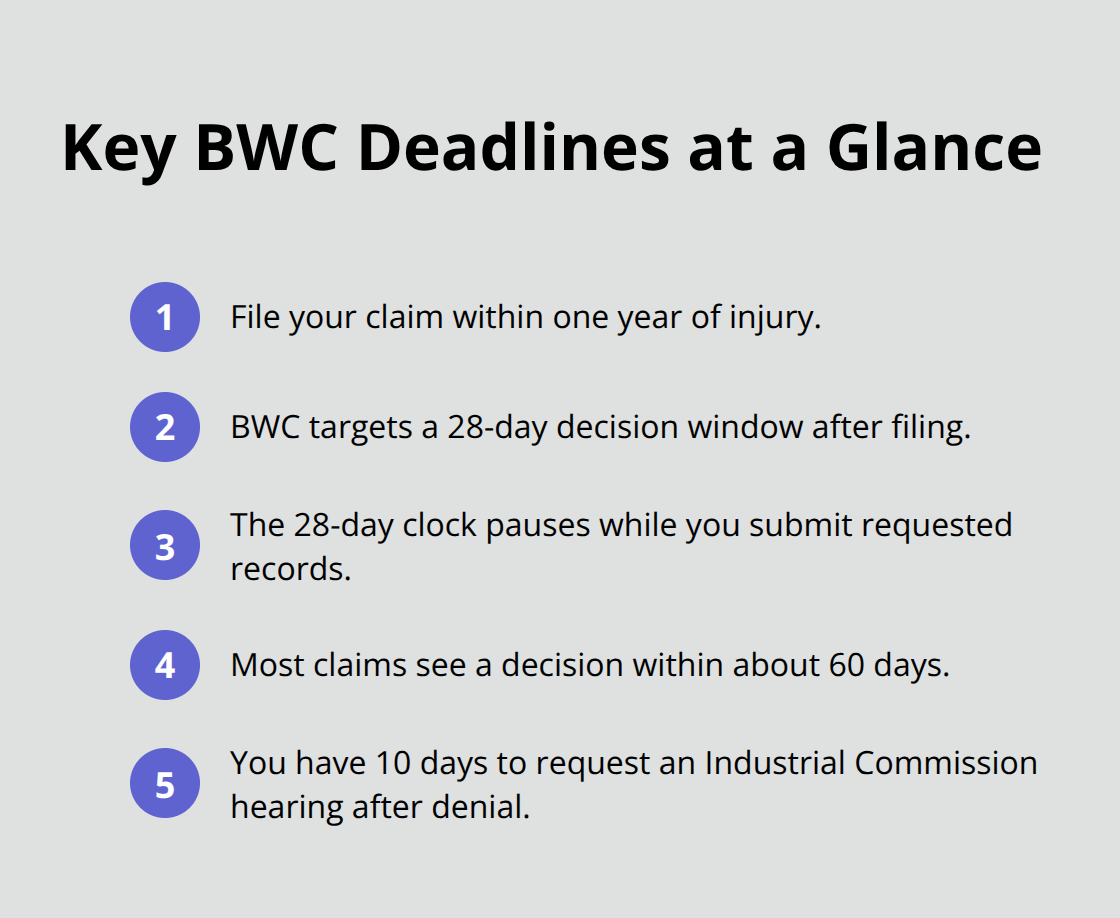
Missing these windows costs you your rights, which is why many Canton workers benefit from having someone track these deadlines on their behalf. The processing speed matters less than understanding that delays often happen when medical documentation is incomplete or when the BWC questions whether your injury is work-related.
Why State Systems Differ From Federal Coverage
State workers’ compensation in Ohio covers most private employers with three or more employees, while federal systems cover specific industries and government workers. Ohio’s state fund is self-administered, meaning the BWC both processes your claim and pays benefits (which creates a conflict of interest that federal systems don’t have). Federal programs like the Federal Employees’ Compensation Act have different benefit calculations, appeal rights, and medical provider networks. If you’re a Canton worker at a private company, you’re almost certainly in the state system, but confirming this with your employer matters before filing. The differences affect how long appeals take, what evidence the Industrial Commission considers, and how much your benefits might be. Many injured workers waste months pursuing the wrong appeal process because they didn’t understand which system covered them.
How Denied Claims and Disputes Start
The BWC denies claims for specific reasons, and understanding these reasons helps you prepare your response.
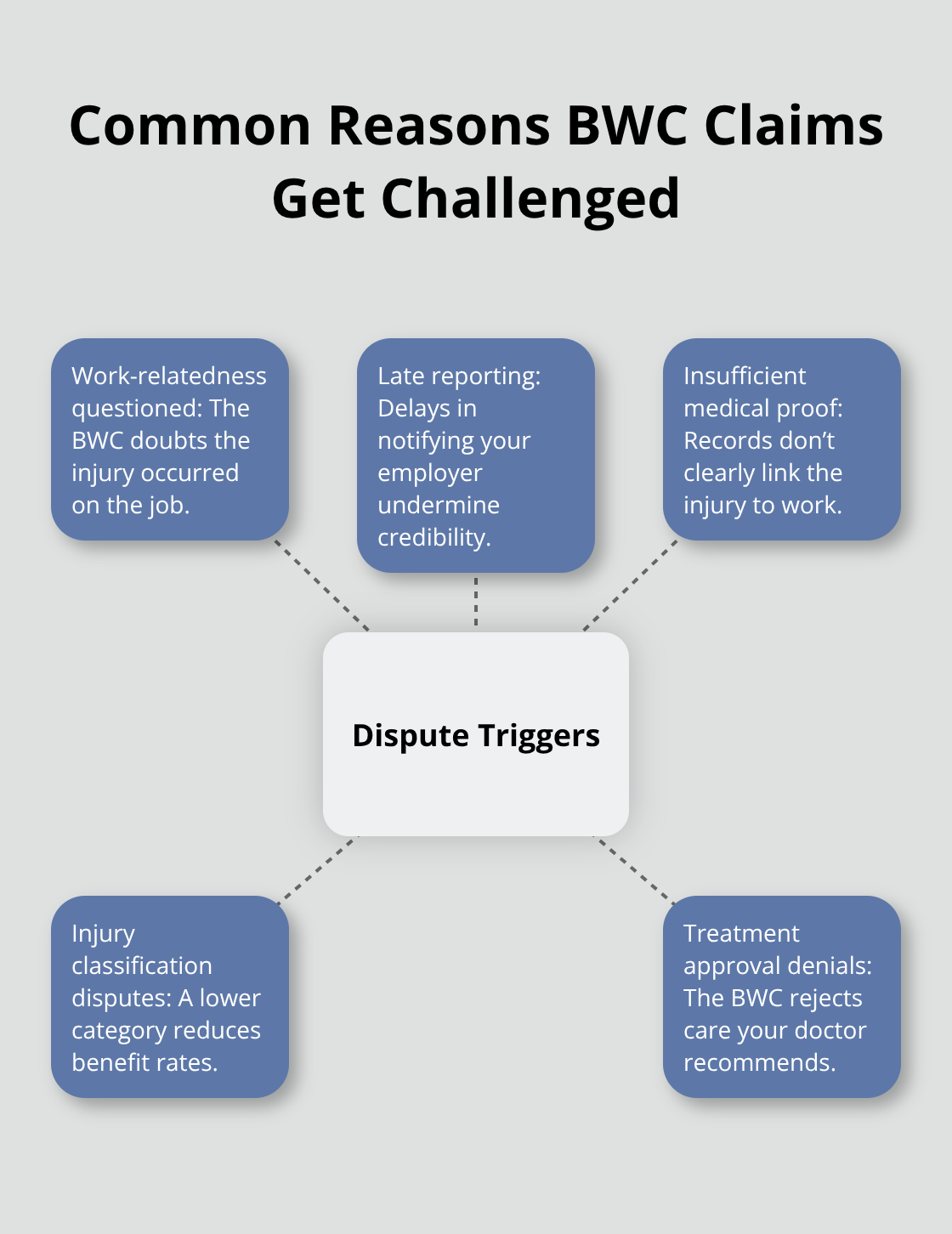
The agency questions whether your injury actually happened at work, whether you reported it within the required timeframe, or whether your medical evidence supports your claim. Disputes over injury classification also arise when the BWC assigns your injury to a category that affects your benefit rate. Medical treatment approval becomes another common friction point-the BWC may approve certain treatments but deny others, leaving you stuck between your doctor’s recommendations and the state’s coverage decisions. These challenges don’t mean your claim is lost; they mean you need to gather stronger evidence and present your case more effectively to the Industrial Commission of Ohio.
Moving Forward With Your Claim
Understanding Ohio’s system puts you in a stronger position to handle what comes next. The rules, timelines, and classification systems all work in specific ways, and knowing these details helps you avoid costly mistakes. When your claim faces denial, delay, or disputes over treatment approval, you need to know exactly how to respond and what evidence matters most to the Industrial Commission.
What Actually Stops Canton Workers From Getting BWC Benefits
Why the BWC Rejects Claims
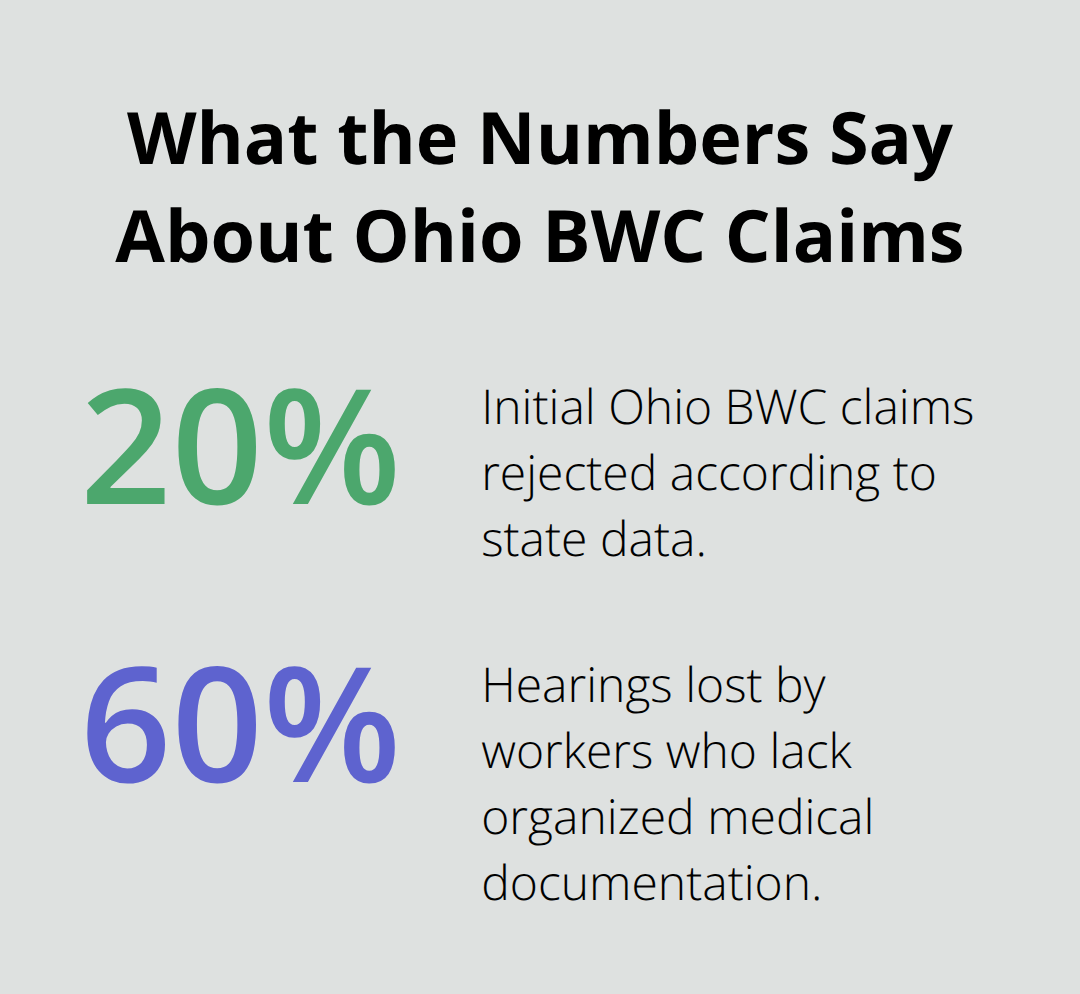
The BWC rejects roughly 20% of initial claims filed in Ohio according to state data, and Canton workers often don’t understand why their claim landed in that rejection pile. The most common reason is insufficient medical evidence linking your injury to work activities. The BWC requires specific documentation from your treating physician stating that your injury arose out of and in the course of employment, not just a general diagnosis.
Many workers file claims without this critical piece, then watch the agency deny them within the 28-day window.
Another frequent rejection point happens when workers delay reporting their injury. Ohio law requires you to notify your employer within a reasonable time, and the BWC interprets this strictly. If you wait weeks or months to report an on-the-job injury, the agency questions whether the injury actually occurred at work or happened elsewhere. Getting denied doesn’t mean your claim is finished, but it does mean you’re now fighting an uphill battle in the appeal process.
How the Industrial Commission Handles Appeals
The Industrial Commission of Ohio receives thousands of appeals annually, and workers without proper documentation lose most of these hearings. The commission won’t give you a second chance to gather evidence you should have collected initially. This is where having someone track your medical records and build a complete case file becomes invaluable. At Robin J Peterson Company, LLC, we help Canton workers prepare appeals by organizing medical documentation and presenting evidence effectively to the commission.
Medical Treatment Approval Delays
Delayed benefits create a different problem than outright denials. The BWC sometimes approves your claim but takes longer than 28 days to process it, leaving you without income while recovering from injury. Medical treatment approval delays happen when your doctor requests authorization for physical therapy, imaging studies, or specialist visits that the BWC questions. The agency has 10 days to approve or deny treatment requests, but disputes over whether treatment is medically necessary or reasonably required for your condition can stretch timelines significantly.
Injury Classification and Benefit Rates
Injury classification disputes affect your benefit rate directly. The BWC assigns your injury to a classification code that determines your weekly benefit amount and how long you receive payments. If they classify a back injury as a minor strain when it’s actually a significant disc herniation, your benefits reflect the lower classification. Challenging this classification requires medical evidence showing the injury is more severe than the initial assessment indicated.
Canton workers often accept the first classification without questioning whether it accurately reflects their condition. The Industrial Commission will reconsider your classification if you provide updated medical documentation, but you must request this review within specific timeframes or lose your right to challenge it. These classification disputes and the evidence required to overturn them form a critical part of your appeal strategy moving forward.
How We Help Canton Workers Win Their Cases
Building Cases That Counter BWC Denials
We at Robin J Peterson Company, LLC represent injured workers before the Industrial Commission of Ohio by constructing cases that directly counter the BWC’s denials and disputes. The Industrial Commission receives roughly 15,000 appeals annually according to state data, and workers who show up without organized medical documentation lose approximately 60% of their hearings. Our approach focuses on three specific actions that shift the odds in your favor: we collect every piece of medical evidence your treating physician created, we identify exactly why the BWC denied or delayed your claim, and we present this evidence to the Industrial Commission in the format they actually require for approval.
The commission doesn’t care about your story or how much the injury has affected your life-they care about whether your medical records prove your injury arose from work activities and whether the BWC followed proper procedures. We organize your medical file chronologically, highlight the specific statements from your doctors that support your claim, and identify gaps where additional documentation strengthens your case.
Gathering Medical Evidence and Documentation
Canton workers often assume the Industrial Commission will review their initial claim denial and automatically overturn it if they disagree. That assumption loses cases. The commission reviews only the evidence presented during the appeal hearing, and if your original claim lacked medical documentation linking your injury to work, you need new medical evidence or testimony to change the outcome.
We obtain statements from your treating physicians explaining why your injury required their treatment and why it resulted from workplace activities. We also obtain your employment records, accident reports, and witness statements that establish your injury occurred at work. This evidence collection happens immediately after you contact us, not months later when memories fade and records become harder to locate.
Challenging the Specific Reasons for Denial
The second critical action involves challenging the specific reason the BWC rejected your claim. If they denied your claim because they questioned whether your injury happened at work, we obtain medical records from your first treatment visit showing you reported a workplace injury. If they delayed your claim because medical documentation was incomplete, we request updated records from your healthcare providers that address the BWC’s specific concerns.
If they classified your injury incorrectly (reducing your benefit rate), we gather medical evidence showing the injury’s actual severity and request the Industrial Commission reclassify it. The BWC often makes procedural errors-approving treatment requests late, missing the 28-day decision deadline, or denying claims without proper investigation-and these errors become grounds for appeal. We review your entire claim file to identify these procedural failures and present them to the Industrial Commission as separate reasons your claim should be approved or reconsidered.
Addressing Medical Treatment Approval Disputes
Medical treatment approval disputes require a different strategy. When the BWC denies your doctor’s request for physical therapy or specialist care, we submit medical literature showing the treatment is medically necessary for your injury type. We obtain statements from your treating physician explaining why the proposed treatment represents standard care for your condition.
We also research what the BWC typically approves for similar injuries in your classification, then show the commission why denying your treatment request contradicts their own precedent. Canton workers frequently accept the BWC’s treatment denial and stop pursuing necessary care, which worsens their recovery and weakens any future appeal. Challenging the denial through the appeal process often results in approval, especially when your physician’s documentation clearly supports the treatment need.
Final Thoughts
Canton BWC help becomes essential when the system denies your claim, delays your benefits, or disputes your injury classification. The Industrial Commission of Ohio receives thousands of appeals annually, and workers who navigate this process alone lose most of their cases. Having someone represent your interests before the commission changes the outcome significantly because the commission only considers evidence presented during your hearing, not assumptions or incomplete documentation.
Local legal support matters because Ohio’s workers’ compensation system has specific rules, timelines, and procedures that differ from federal programs and other states. Canton workers benefit from representation that understands these local procedures and knows exactly what evidence the Industrial Commission requires for approval. The difference between a denied claim and an approved one often comes down to whether your medical documentation was organized properly, whether your physician’s statements directly addressed the BWC’s specific concerns, and whether procedural errors were identified and challenged.
We at Robin J Peterson Company, LLC represent injured workers throughout the Cleveland, Akron, and Canton metropolitan areas by building cases that counter BWC denials and disputes. Our focus is securing the benefits you’re entitled to by gathering complete medical documentation, identifying why your claim was rejected, and presenting evidence effectively to the Industrial Commission. If your claim was denied, delayed, or disputed, contact us for a consultation-visit our website to learn more about how we help injured workers in your area.