
Work injuries happen fast, but filing a BWC claim doesn’t have to be complicated. We at Robin J Peterson Company, LLC know that understanding the filing BWC claim basics can make the difference between getting benefits quickly and facing unnecessary delays.
This guide walks you through each step of the process, from reporting your injury to submitting your claim to Ohio’s Bureau of Workers’ Compensation.
Understanding Ohio’s BWC System
Ohio’s Bureau of Workers’ Compensation operates as a state-run insurance system that handles workplace injury claims differently than traditional lawsuits. The BWC covers medical expenses, rehabilitation costs, and wage replacement benefits when workers suffer job-related injuries or illnesses. Unlike filing a personal injury lawsuit against your employer, a BWC claim follows a specific administrative process governed by Ohio law. The system prioritizes speed over maximum compensation, but only if you meet strict filing requirements and deadlines.
How BWC Claims Differ From Lawsuits
Filing a BWC claim means you cannot sue your employer for the injury, even if negligence caused it. This trade-off exists because the BWC provides no-fault benefits-you don’t need to prove your employer was responsible. However, you sacrifice the potential for larger damage awards you might receive in a lawsuit. If your employer is uninsured or violated safety laws grossly, you may have limited legal options outside the BWC system. Understanding these boundaries matters immediately after your injury occurs, since your decision to file a claim affects your legal rights going forward.
Reporting Deadlines That Shape Your Claim
Ohio law requires you to report your work injury to your employer within a specific window, though the exact deadline depends on whether the injury was sudden or developed gradually. For acute injuries, you must notify your employer as soon as practicable-most employers expect notification within 24 to 48 hours. The BWC itself has a one-year filing deadline from the date of injury, but waiting that long significantly weakens your claim’s strength and creates documentation problems.
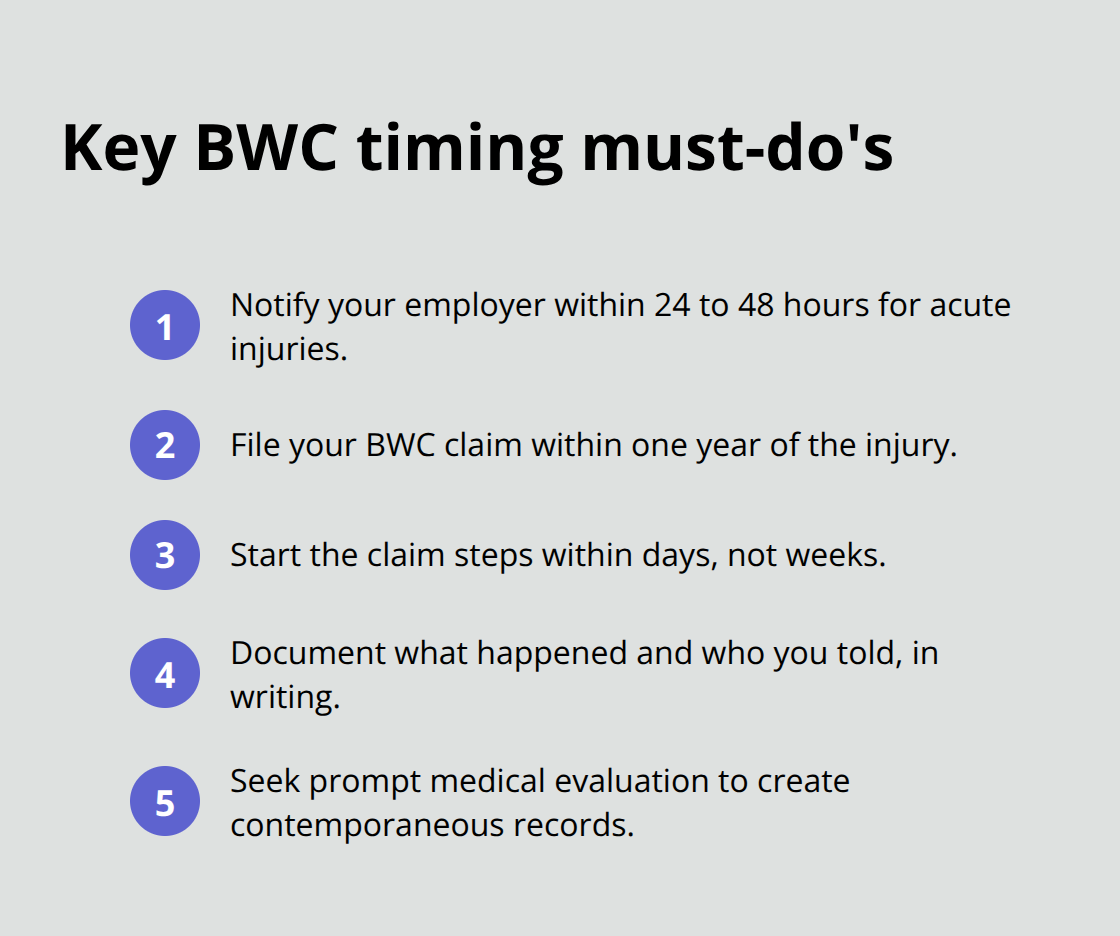
Medical records grow stale, witness memories fade, and employers may dispute injury details if months pass before filing. Starting the process within days, not weeks, gives your claim the strongest foundation. Fresh medical evidence and timely documentation support your case far better than delayed filings ever will.
What Happens Next in the Filing Process
After you understand the system’s structure and your reporting obligations, the actual filing process begins with notifying your employer and gathering the right documentation. Each step requires attention to detail and adherence to specific procedures that the BWC enforces strictly.
Steps to File Your BWC Claim
Start the filing process the moment you report your injury to your employer. Your employer has specific obligations under Ohio law, and you need to document that notification immediately. Write down the date, time, and names of everyone you told about the injury. If you reported it verbally, follow up with an email or written message to your supervisor confirming what happened and when. This creates a paper trail that protects you if your employer later claims they never received notification. Many workers assume a verbal report is enough, but written documentation prevents disputes that can delay your claim approval by weeks or months.
Report Your Injury to Your Employer Immediately
Your employer must receive notification as soon as practicable after your injury occurs. The faster you report, the stronger your claim becomes. Document every detail of your report in writing, even if you spoke to your supervisor in person first. Send a follow-up email that states the date, time, location, and nature of your injury. Include the names of any witnesses who saw what happened. This written record protects you from employer disputes and establishes a clear timeline that the BWC can verify.
Gather Medical Documentation and Evidence
Seek medical attention within the first few days of your injury, even if symptoms seem minor. The medical provider will create contemporaneous records that carry far more weight than memories or descriptions written down later. Request copies of all medical reports, imaging results, lab work, and provider notes immediately after each appointment. Keep these documents organized in a single folder or digital file.
When you submit your claim to the BWC, incomplete medical records are one of the top reasons claims face denials or delays. The BWC requires specific information from your healthcare provider, including the date of injury, a description of how the injury occurred, and the diagnosis. If your provider’s initial documentation lacks these details, contact their office and request amended records that include this information. Many medical offices are unfamiliar with BWC requirements, so you may need to explain what information is necessary.
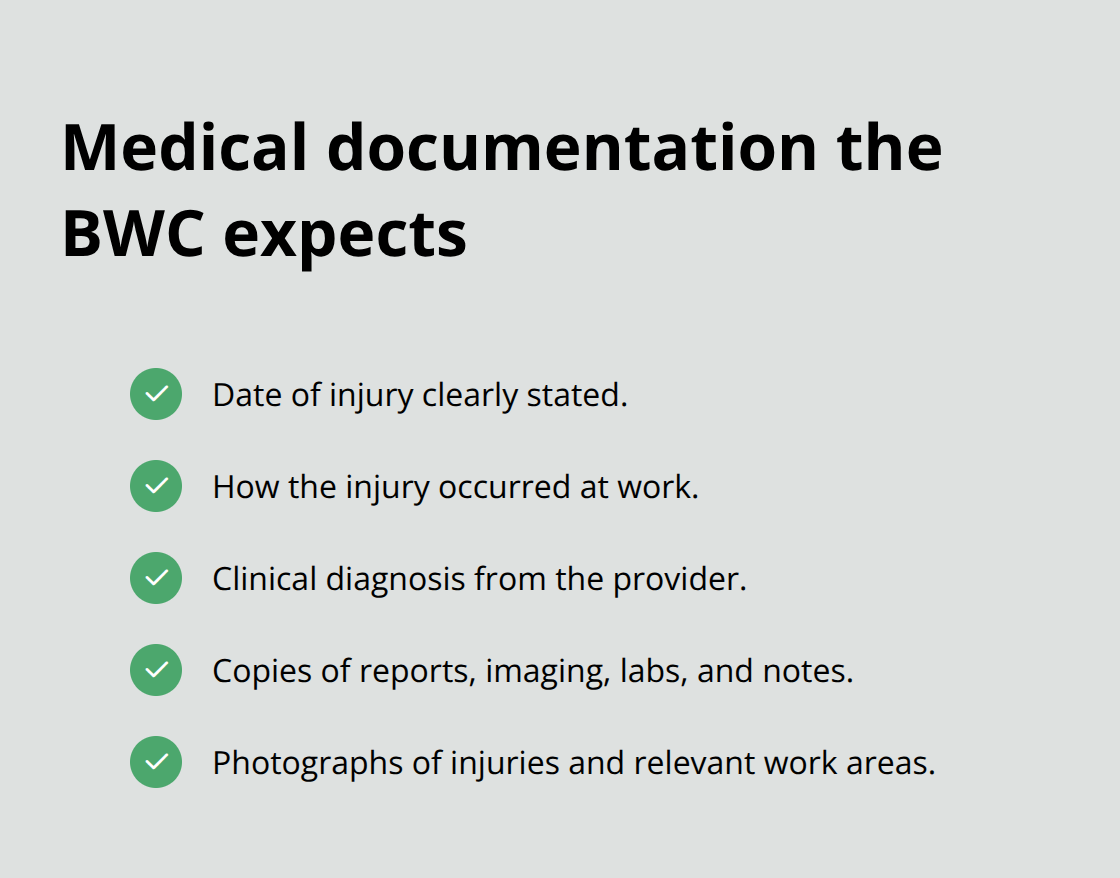
Photograph any visible injuries and document your work environment if it contributed to what happened. These visual records support your claim narrative when combined with medical evidence.
Submit Your Claim to the BWC
Once you have gathered your medical documentation and written proof of your employer notification, you are ready to submit your claim to the BWC. The submission process requires accuracy and completeness (missing information triggers delays or denials). Include all medical records, your written injury report, witness statements if available, and any photographs or environmental documentation you collected. The BWC reviews each submission carefully, and incomplete applications send your claim back for revisions.
Your next move involves understanding the common mistakes that derail claims at this stage.
Common Mistakes to Avoid When Filing
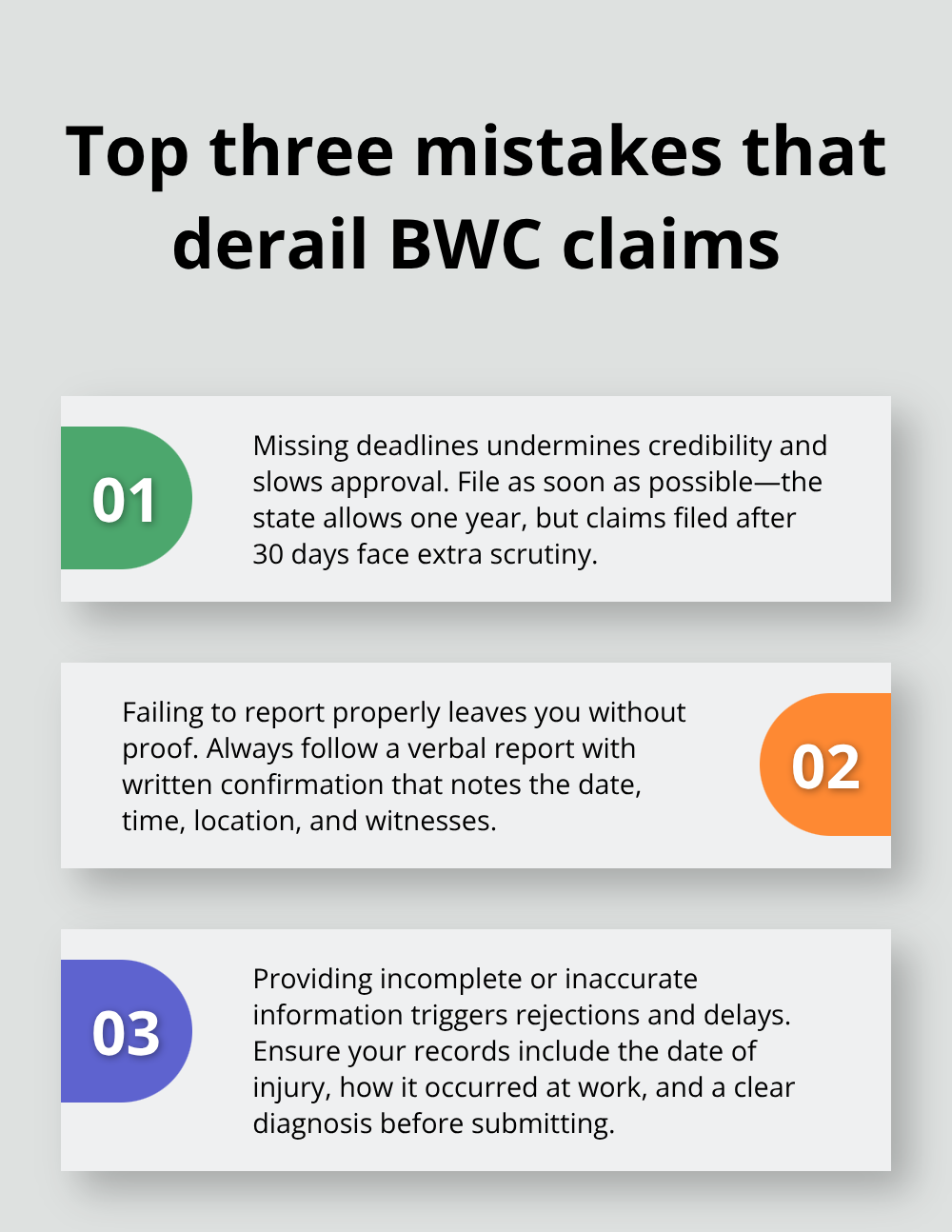
The difference between a claim that gets approved quickly and one that gets denied often comes down to three specific errors that workers make during the filing process. Most of these mistakes happen because workers don’t understand what the BWC actually requires, not because they’re careless. Understanding these pitfalls protects your claim from preventable rejections.
Missing Deadlines and Filing Too Late
Ohio law gives you one year from the date of injury to file, but the BWC treats claims filed after 30 days with skepticism. Data from the Ohio Industrial Commission shows that claims filed within two weeks of injury approve at significantly higher rates than those filed after 60 days. When you wait, medical records become fragmented across multiple providers, witness accounts grow fuzzy, and your employer has time to create their own narrative about what happened.
Failing to Report the Injury Properly
Many workers tell their supervisor verbally and assume that’s enough. It isn’t. If your employer later denies receiving notification, you have no proof. You need written confirmation from your employer acknowledging receipt of your injury report, whether that comes through email, a signed form, or a documented conversation. This written record protects you from disputes that can delay approval by weeks or months.
Providing Incomplete or Inaccurate Information
The BWC requires specific information from your healthcare provider: the exact date you sought treatment, how the injury occurred at work, and the clinical diagnosis. If your medical records lack these details, the BWC will reject your claim and send it back for corrections. This creates delays that stretch weeks or months. Your healthcare provider may not understand BWC requirements, so contact them directly and specify what information must appear in your records before you submit anything to the state.
Small errors like getting the time of injury wrong or misidentifying which body part was injured can trigger investigations that delay approval. Review every detail on your claim multiple times before submission. If you’re unsure about any information, contact your employer or medical provider to verify rather than guessing.
Overlooking Supporting Evidence and Follow-Up
Witness statements matter significantly. If coworkers saw your injury happen, collect their written statements with contact information before they forget the details or leave the company. Photographs of the injury, the work area, or equipment involved provide visual documentation that descriptions alone cannot match. Keep every medical receipt, bill, and appointment confirmation, even if you think the information is redundant.
Workers also fail to follow up after submitting their claim. The BWC may request additional information, and missing their deadline for providing it results in automatic denial. Check your mail regularly for BWC correspondence and respond to any requests within the timeframe specified (typically 10 to 14 days). If you believe your claim was wrongly denied, you have the right to appeal, but appealing requires filing within strict deadlines.
Final Thoughts
Filing BWC claim basics correctly from the start prevents delays and denials that plague workers who miss deadlines or submit incomplete records. The process moves faster when you follow each step with attention to detail, from reporting your injury promptly to gathering complete medical documentation to submitting accurate information to the state. Legal representation matters more than many workers realize, especially when employers have their own counsel reviewing claims and the BWC system favors those who understand its administrative requirements.
Monitor your mail for any BWC correspondence requesting additional information, and respond immediately within the specified timeframe (typically 10 to 14 days). If the BWC denies your claim, you have the right to appeal, but appeals require filing within strict deadlines that the state enforces without exception. An attorney can review your denial letter, identify the specific reason for rejection, and build a stronger appeal that addresses the BWC’s concerns directly.
Contact Robin J Peterson Company, LLC today if your claim has been denied or if you need guidance navigating the filing process. We help injured workers throughout Ohio’s Cleveland, Akron, and Canton areas understand their rights and fight for the compensation they deserve.