
Construction injuries happen fast, but your response to them matters even more. At Robin J Peterson Company, LLC, we’ve helped countless Ohio workers navigate their rights after getting hurt on the job.
Understanding construction injury rights in Ohio isn’t optional-it’s how you protect your paycheck and your future. This guide walks you through exactly what you need to know.
What Ohio’s Workers’ Compensation System Actually Covers
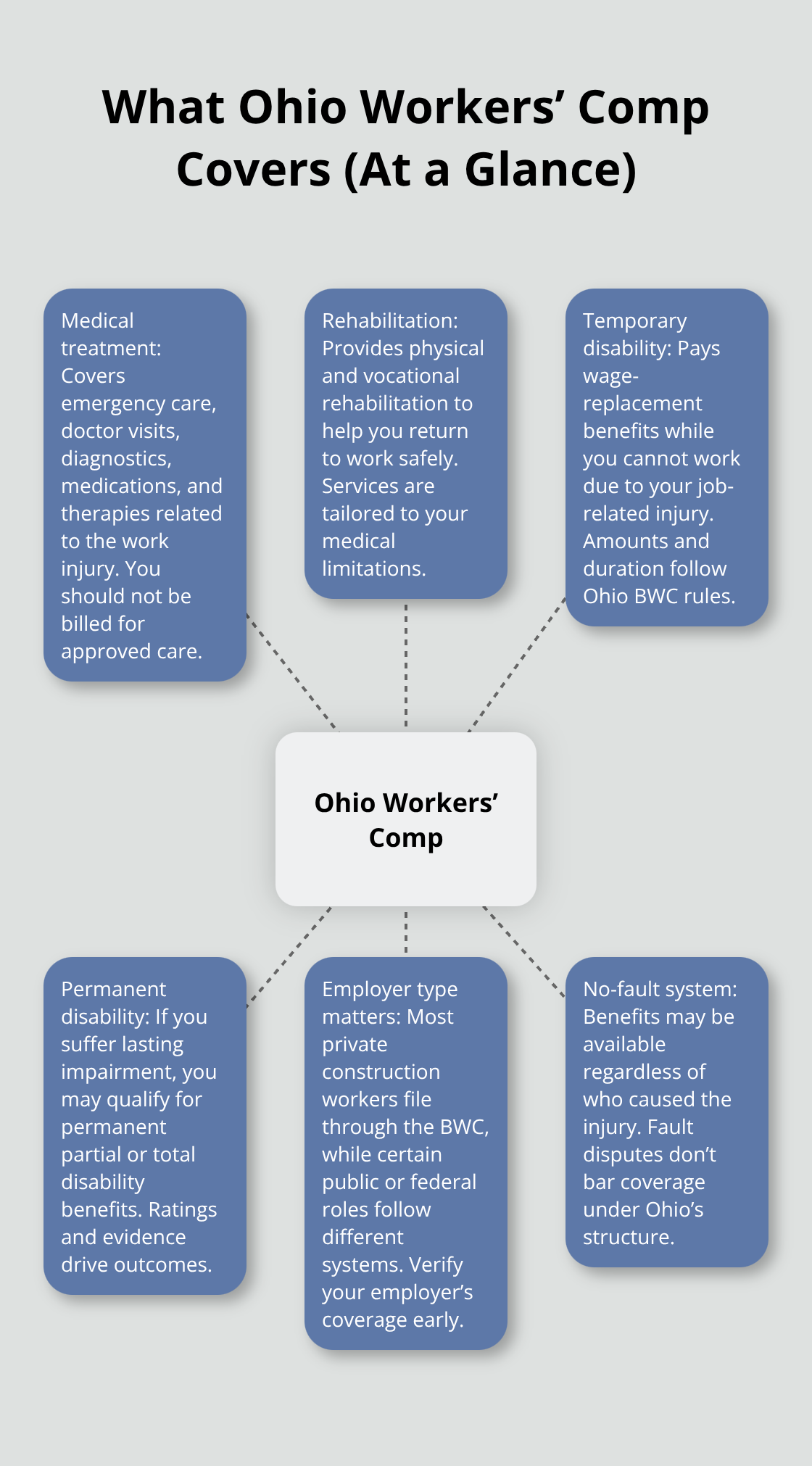
Ohio operates a no-fault workers’ compensation system, which means you receive benefits regardless of who caused your injury. The Ohio Bureau of Workers’ Compensation handles claims for most private-sector workers, while public employees and some federal contractors fall under different systems. This distinction matters because your filing process depends on your employer type. If you work for a private construction firm in Ohio, the BWC becomes your primary avenue. The system covers medical treatment, rehabilitation, temporary disability payments while you recover, and permanent disability benefits if your injury causes lasting harm. Ohio’s construction sector employs a significant portion of the state’s 5.08 million workers, and construction remains one of the most hazardous industries nationally-in 2019, roughly 1,061 fatalities occurred in private-sector construction according to OSHA data, with falls accounting for 366 of 971 total deaths according to the U.S. Bureau of Labor Statistics. This reality underscores why understanding what coverage actually applies to your situation matters.
Injuries That Qualify Under Ohio Law
Construction injuries covered by Ohio’s system include acute traumatic incidents like falls from scaffolding, electrocution, struck-by accidents, and trench cave-ins. The law also covers injuries resulting from exposure to hazardous conditions on site. Your injury must arise out of and occur during your employment-meaning the injury happened because of your job duties and during work hours or work-related activities. Ohio’s geographic and climate challenges create specific hazards; the state experiences humid continental weather with Lake Erie Snowbelt effects, and record temperatures have reached 113°F and -39°F, creating thermal stress risks for outdoor construction work. You should document the exact circumstances of your injury immediately, including the date, time, location, what you were doing, and any witnesses present. This documentation becomes critical if questions arise about whether your injury qualifies for coverage.
Filing Deadlines You Cannot Ignore
Ohio law requires you to report your injury to your employer immediately or as soon as practicable after it occurs. Failing to report promptly can jeopardize your claim. You have one year from the date of injury to file a claim with the Bureau of Workers’ Compensation, though waiting that long is unwise-early filing protects your rights and ensures medical treatment begins without delay. The BWC then investigates and decides your claim within specific timeframes. If your employer carries private insurance instead of using the state fund, different procedural rules apply, so you should verify your employer’s coverage type within days of your injury. Construction workers in the Cleveland, Akron, and Canton areas should not assume their employer has informed them of all deadlines or procedures; verifying this information independently prevents costly mistakes later.
The next section walks you through the exact steps you must take once an injury occurs, starting with what you tell your supervisor and how you file your initial claim.
How to File Your Claim and What Happens Next
Report Your Injury Clearly to Your Supervisor
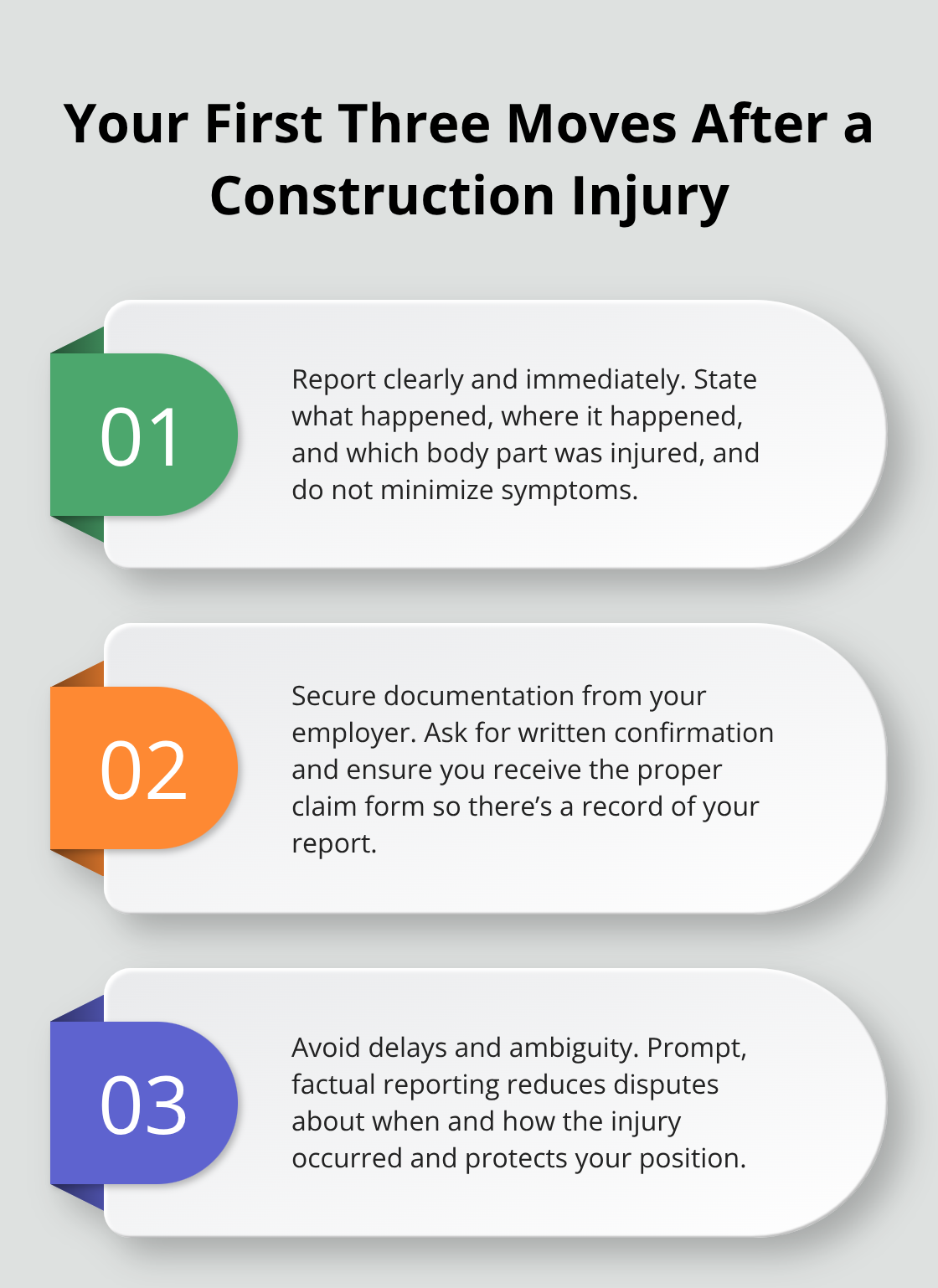
The moment you report an injury to your supervisor, the clock starts ticking on several critical deadlines. You should communicate the injury clearly and factually, stating exactly what happened, where it happened, and which body part was injured. Do not downplay your symptoms or suggest you might continue working if you are not able to. Many Ohio construction workers make the mistake of telling their supervisor they will monitor the injury and report later, but this delay weakens your position and creates disputes about when the injury actually occurred.
Your employer is legally required to provide you with a claim form (typically the Ohio Form C-91) within a specific timeframe after you report the injury. If your supervisor seems dismissive or reluctant to document your injury, that is a red flag. Request written confirmation of your report by email or text message, or ask for a witness to confirm you reported it. This documentation protects you if your employer later claims they never knew about the injury.
File Directly with the Ohio Bureau of Workers’ Compensation
Once you have reported to your employer, you need to file a claim with the Ohio Bureau of Workers’ Compensation directly. You do not have to wait for your employer to submit paperwork on your behalf, and you should not. Filing independently ensures the BWC has your account of events from the start and prevents delays caused by employer inaction.
The BWC will investigate your claim by reviewing medical records, interviewing you and potentially your employer, and examining whether your injury meets the legal standard of arising out of and occurring during your employment. This investigation typically takes weeks to months, and the BWC will notify you of their decision in writing.
What Happens During Investigation and Review
If the BWC approves your claim, medical treatment begins and you may receive temporary disability payments if you cannot work. If the BWC denies your claim, you have the right to request a hearing before the Industrial Commission of Ohio. At this stage, many injured workers benefit from legal representation.
The investigation process is not neutral despite the no-fault system’s reputation. The BWC operates under budget pressures and often scrutinizes claims closely, particularly for injuries that occurred in high-risk trades like roofing, ironworking, or demolition. Workers in the Cleveland, Akron, and Canton areas who face claim denials should understand that challenging a BWC decision requires knowledge of Ohio’s workers’ compensation law and the hearing process. Robin J Peterson Company, LLC represents injured workers throughout Ohio and has extensive experience challenging BWC denials and securing benefits that workers are entitled to.
Understanding what the BWC looks for during investigation helps you prepare stronger documentation and anticipate questions they may raise about your injury.
Where Construction Workers Lose Their Claims
The gap between getting hurt and protecting your claim spans days, not weeks. Most Ohio construction workers who lose their workers’ compensation benefits fail to act quickly and deliberately in the first 72 hours after their injury. The BWC will not penalize you for reporting promptly, but it absolutely uses delays against you when deciding whether your injury qualifies for coverage. If your supervisor tells you to wait and see how you feel before reporting, that advice will cost you. If you work through pain for a few days before mentioning the injury to anyone, you have handed the BWC a reason to question whether the injury actually happened at work.
The Cost of Delayed Reporting
Construction sites in Ohio run under tight schedules and budget pressures, which means your employer has financial incentive to minimize or delay injury reports. The moment you are hurt, you should report it verbally to your supervisor or a manager, then request written documentation of that report. If your employer resists providing the Ohio Form C-91 within the required timeframe, contact the BWC directly and file independently. Your employer will not handle the paperwork correctly or in your interest if left to their own devices.
The timing of your report creates a permanent record. A report made on the day of injury carries far more weight than one made a week later. Medical providers will note the injury date in their records, and any gap between the actual injury and your report raises questions the BWC will exploit. Construction workers who delay reporting often cite financial pressure (fear of losing hours or facing retaliation) or uncertainty about injury severity. These concerns are understandable, but they do not protect your claim. Report the injury immediately, regardless of how minor it seems.
Documentation That Protects Your Claim
Documentation failures destroy claims as effectively as delayed reporting. After you report an injury, you should maintain a personal log that includes the date and time of injury, exact location on the job site, what you were doing, which body parts were affected, names of any witnesses, and detailed notes from every medical appointment. Many Ohio construction workers keep this information scattered across text messages, photos, or memory, then discover months later that critical details have vanished.
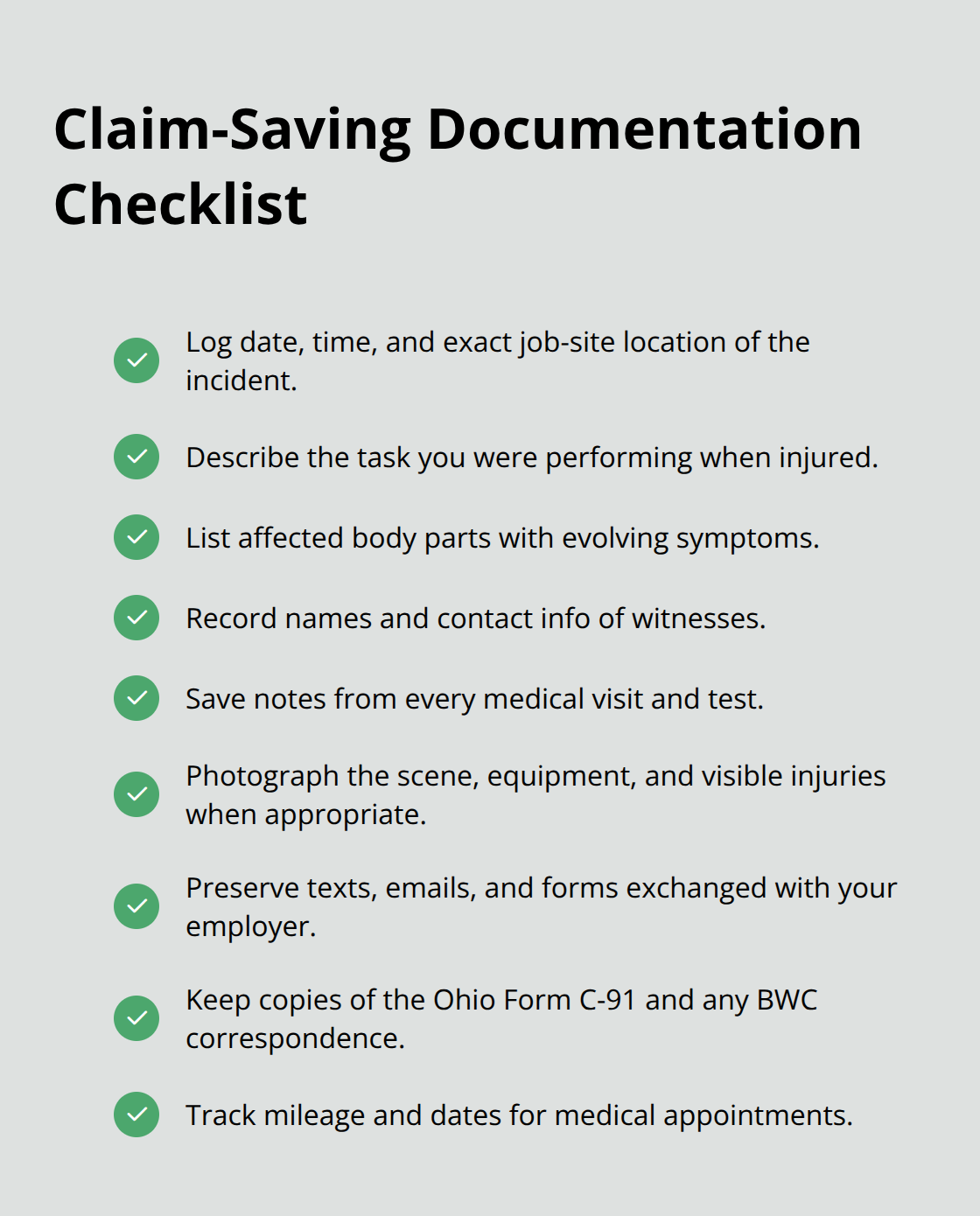
Medical records alone are insufficient because they do not capture the circumstances of your injury or establish the work connection clearly. If you wait weeks to seek medical treatment, the BWC will question whether the injury truly arose from your job. Photographs of the injury site, equipment involved, or your physical condition (if appropriate) strengthen your documentation. Written statements from coworkers who witnessed the incident provide independent corroboration that the BWC cannot easily dismiss.
Settlement Offers and What You Lose
If you accept a settlement offer from your employer or the BWC without legal review, you may forfeit your right to future medical treatment or additional benefits related to the same injury. Settlement agreements often contain language that permanently closes your claim, meaning if your condition worsens or complications develop, you cannot reopen the case. Construction workers in Cleveland, Akron, and Canton frequently accept modest settlement offers because they face financial pressure and lack understanding of their full entitlements.
Before signing anything, you should consult with an attorney who specializes in Ohio workers’ compensation law to understand what you are giving up. An attorney can review the settlement terms, explain how they affect your future rights, and advise whether the offer reflects your actual entitlements. The cost of legal consultation is minimal compared to the permanent loss of benefits that a poorly negotiated settlement can cause.
Final Thoughts
Construction injury rights in Ohio depend on your actions in the first hours and days after you get hurt. Report your injury immediately to your supervisor, file independently with the Ohio Bureau of Workers’ Compensation if needed, and maintain detailed records of everything that happens afterward. Do not let financial pressure or fear of retaliation silence you, because your employer has no incentive to protect your claim.
Legal representation becomes necessary when the BWC denies your claim, when you face a hearing before the Industrial Commission of Ohio, or when you receive a settlement offer. An attorney who understands Ohio workers’ compensation law can challenge BWC decisions, prepare you for hearings, and negotiate settlements that reflect your actual entitlements. We at Robin J Peterson Company, LLC represent injured construction workers throughout Cleveland, Akron, and Canton, fighting for the benefits you are entitled to-contact our firm for a consultation if you face a claim denial or need guidance on your construction injury rights in Ohio.
The Ohio Bureau of Workers’ Compensation website provides claim forms, filing instructions, and appeal procedures, while OSHA offers safety resources and hazard reporting guidance. Your union representative, if you belong to one, can also advise on claim procedures and connect you with legal resources.