
A denied workers’ compensation claim can feel like a dead end, but it’s not. At Robin J Peterson Company, LLC, we’ve helped many workers navigate denied medical benefits and recover the coverage they deserve.
The good news is that Ohio’s system gives you clear options to fight back. Understanding your rights and taking action quickly makes all the difference.
Why Medical Benefits Get Denied
Insurance Carriers Deny Claims for Specific Reasons
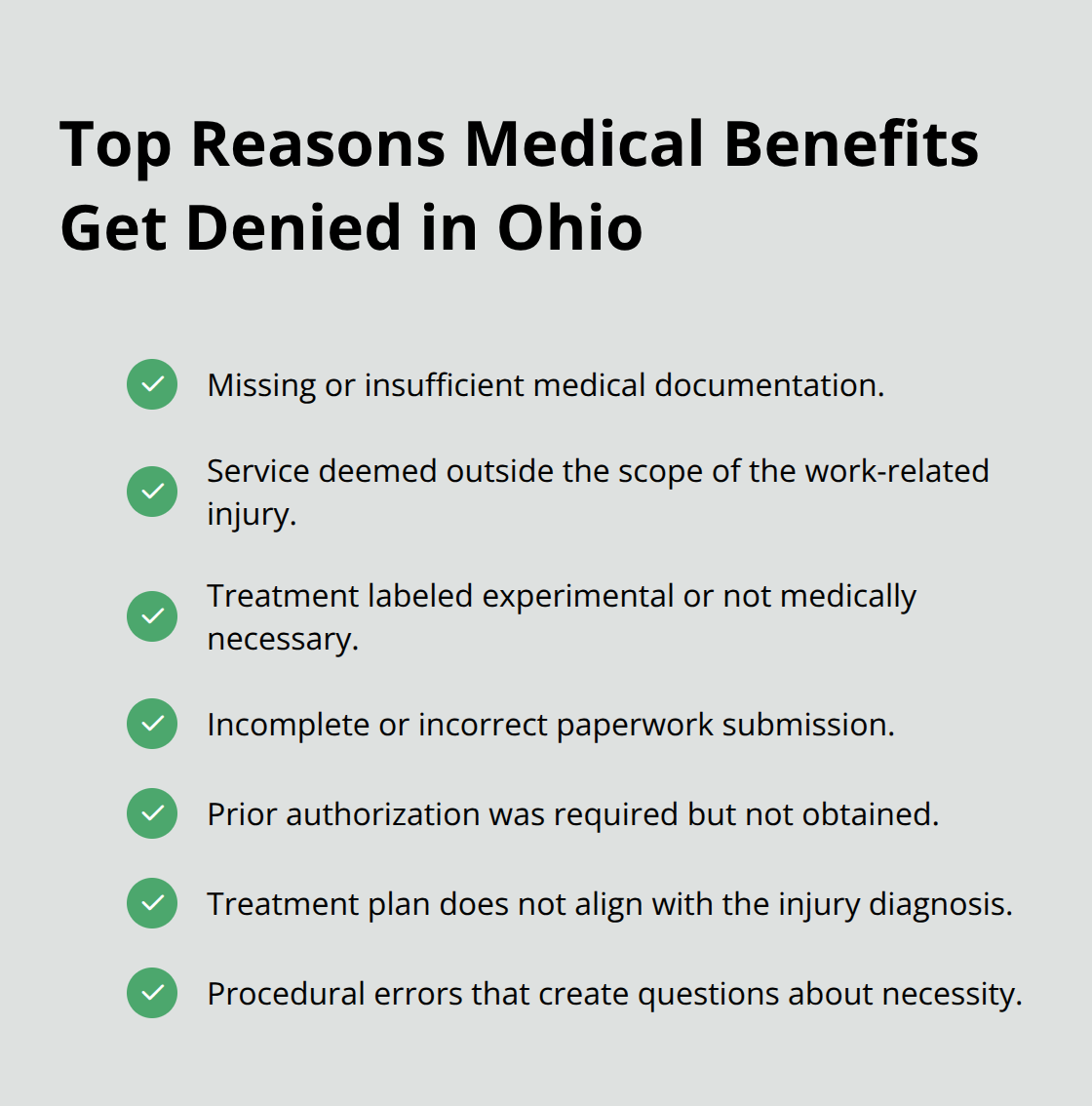
Insurance carriers in Ohio workers’ compensation cases deny medical benefits for specific, identifiable reasons. Understanding these reasons is your first step toward fighting back. The most common denials stem from claims that lack proper medical documentation, services deemed outside the scope of the work-related injury, or treatment deemed experimental or unnecessary by the carrier’s medical reviewer.
Ohio’s Bureau of Workers’ Compensation processes thousands of claims annually. Carriers routinely deny benefits when paperwork is incomplete, when prior authorization wasn’t obtained, or when the treatment doesn’t align with the injury diagnosis. Many denials happen not because your treatment is genuinely unwarranted but because the carrier found a procedural gap or a reason to question medical necessity.
How Carriers Make Denial Decisions
Carriers employ medical reviewers who examine claims from a distance, often without examining you in person. These reviewers have financial incentives to reduce payouts. Your employer’s insurance carrier makes the initial decision to deny, but the Bureau of Workers’ Compensation oversees the system and enforces compliance.
When you receive a denial letter, it must specify the exact reason: whether the service falls outside coverage, whether prior authorization was required, whether the treatment is considered experimental, or whether the carrier disputes that your injury caused the need for that specific treatment.
Your Denial Letter Is a Roadmap for Response
Your denial letter is not just bad news; it’s a roadmap for your response. Ohio law requires the denial letter to state the precise reason for the denial, the coverage provision being applied, and your right to appeal. Read this letter carefully and identify whether the denial rests on a medical judgment, a procedural mistake, or a coverage interpretation.
Many denials involve simple errors: a procedure code was entered incorrectly, prior authorization was required but not requested, or the carrier misread your treatment notes. These errors are fixable with a phone call or a corrected submission. Other denials claim the treatment is experimental or not medically necessary; these require a stronger response, typically a letter from your doctor explaining why the treatment is standard care for your injury and why it’s necessary to your recovery.
Building Your Response with Documentation
The Industrial Commission of Ohio handles appeals, and carriers uphold roughly half of all internal appeals when workers provide clear medical documentation and cite their policy language accurately. Document everything from the moment you receive the denial: keep copies of the letter, note the deadline for appeal (typically 14 to 30 days depending on the claim type), and gather all medical records, imaging, and physician statements that support the necessity of the denied treatment.
Your next move depends on the specific reason the carrier cited. If the denial rests on a procedural error or missing paperwork, you can correct it quickly. If the carrier questions medical necessity, your physician’s detailed explanation becomes your strongest tool. Either way, the appeal process at the Industrial Commission of Ohio gives you a formal opportunity to present your case and challenge the carrier’s decision.
How to Appeal a Denied Claim in Ohio
Your Right to Challenge the Carrier’s Decision
When the carrier denies your claim, Ohio law gives you the explicit right to challenge that decision through the Industrial Commission of Ohio. The appeal process is your formal opportunity to present evidence, correct errors, and argue why the denial was wrong. Workers win appeals regularly when they understand the mechanics of this process and prepare their cases properly. The key is acting fast and gathering the right documentation before you submit.
Act Within Ohio’s Strict Deadlines
Ohio’s system operates on strict deadlines, and missing them can forfeit your right to appeal entirely. You have 14 days from the date of the denial to file an appeal with the Industrial Commission of Ohio, though certain circumstances can extend this window. The Industrial Commission accepts appeals in writing, and you can file through mail, email, or in person at their office.
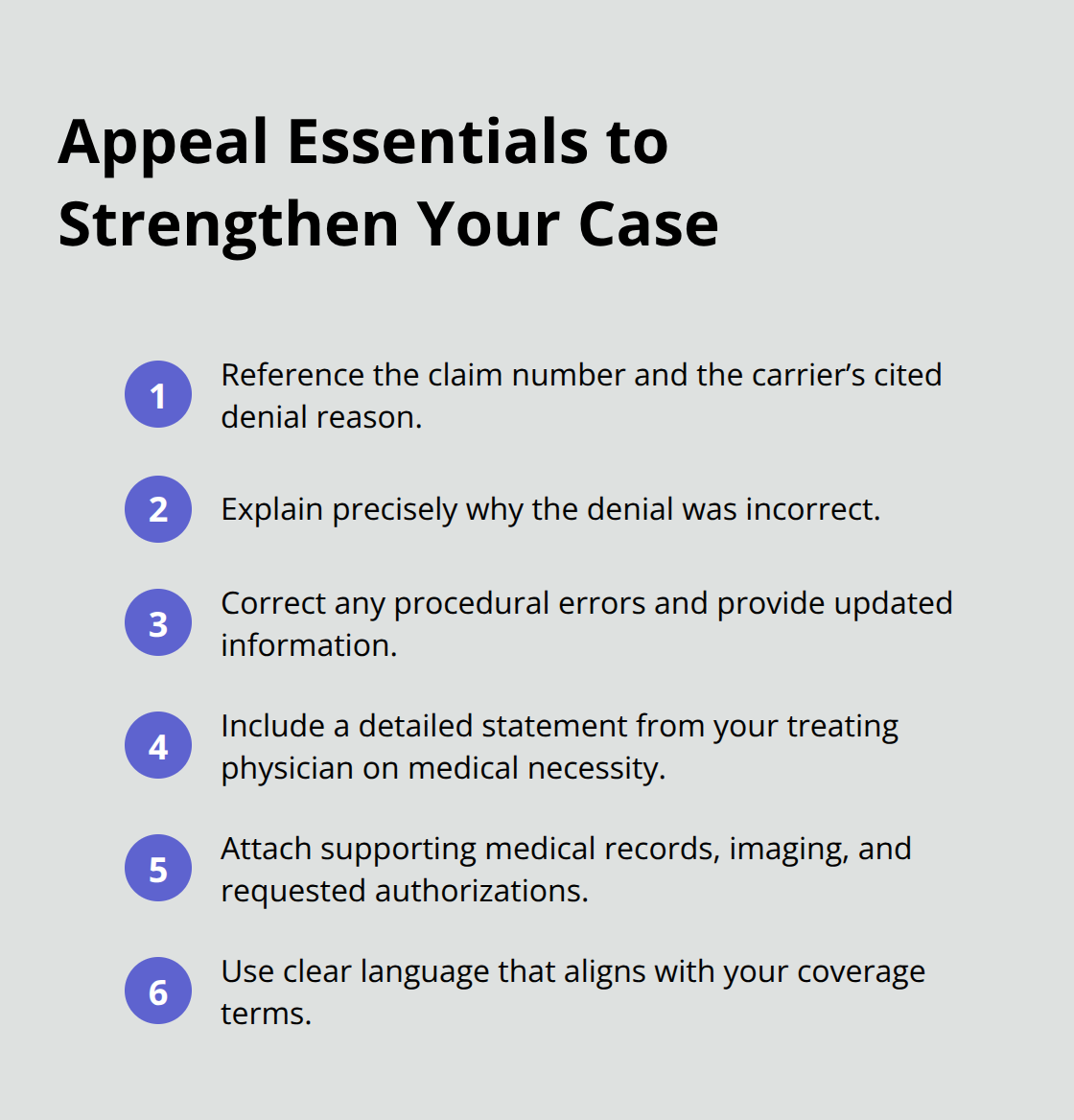
Your appeal letter must reference the specific claim number, identify the denial reason cited in the carrier’s letter, and explain clearly why the carrier’s decision was incorrect. If the denial rested on a procedural error, explain how the error occurred and provide corrected information. If the carrier disputed medical necessity, include a detailed statement from your treating physician explaining why the treatment is standard care for your injury type and why it is medically necessary to your recovery.
Compile Documentation That Supports Your Case
Solid documentation makes the difference between a winning appeal and a rejected one. Collect your original denial letter, all medical records related to the denied treatment, imaging studies or lab results, your physician’s clinical notes, and any prior authorizations or referrals the carrier requested. Include a detailed letter from your doctor that addresses the specific denial reason and explains the medical necessity using language that aligns with your policy coverage terms.
If the denial claimed the treatment was experimental or outside standard care, your physician’s letter should explain why it is, in fact, standard treatment for your diagnosis. If the denial cited a missing prior authorization, gather evidence showing whether prior authorization was actually required under your plan and whether the provider or carrier failed to obtain it. Document every conversation you had with the carrier about this claim, including the names of representatives you spoke with, the dates, and what they told you. Keep copies of everything you submit to the Industrial Commission and maintain a record of the submission date and method.
Understand When You May Need Legal Representation
Many workers assume they need an attorney immediately, but many straightforward appeals succeed without legal representation if the documentation is solid and the argument is clear. However, if the carrier continues to deny your appeal or fails to respond within the required timeline, you have the right to appeal and present additional evidence to support your case. This second-level review can overturn unfounded denials and gives you another formal opportunity to challenge the carrier’s position.
The Industrial Commission’s decision on appeal is binding on the carrier, and if you win, the carrier must pay the denied benefits and any applicable interest. When the appeal process becomes complex-particularly if the carrier disputes medical necessity or raises coverage interpretation issues-legal representation from a firm experienced in Ohio workers’ compensation law can strengthen your position significantly. An attorney can identify weaknesses in the carrier’s reasoning, present medical evidence more effectively, and navigate procedural requirements that might otherwise trip up your case.
When Should You Hire a Workers’ Compensation Attorney
The Cost of Waiting Too Long
Most workers wait until a carrier denies their appeal at the first level before considering legal representation, but this approach wastes time and weakens your position. An experienced workers’ compensation attorney identifies fatal weaknesses in your case before you submit your initial appeal, spots procedural errors the carrier made, and gathers medical evidence that addresses the carrier’s specific objections. Workers win appeals they initially thought were lost when they bring in legal representation that knows how to challenge the carrier’s reasoning and present medical necessity arguments aligned with Ohio’s standards for coverage.
The real value of an attorney appears early: during the appeal preparation phase, when you can still correct documentation gaps, obtain stronger physician statements, and frame your argument in language that resonates with the Industrial Commission of Ohio. If your denial involves a complex medical question, a coverage interpretation dispute, or a carrier with a history of denying similar claims, legal representation from the start prevents costly delays and increases your odds of success.
What an Attorney Does During the Appeals Process
Your attorney submits the formal appeal on your behalf, ensuring it meets all procedural requirements and deadlines so no technicality can derail your case. An attorney coordinates with your treating physician to obtain detailed medical justification letters that directly address the carrier’s stated denial reason, ensuring the physician’s response uses language that demonstrates medical necessity under Ohio workers’ compensation standards.
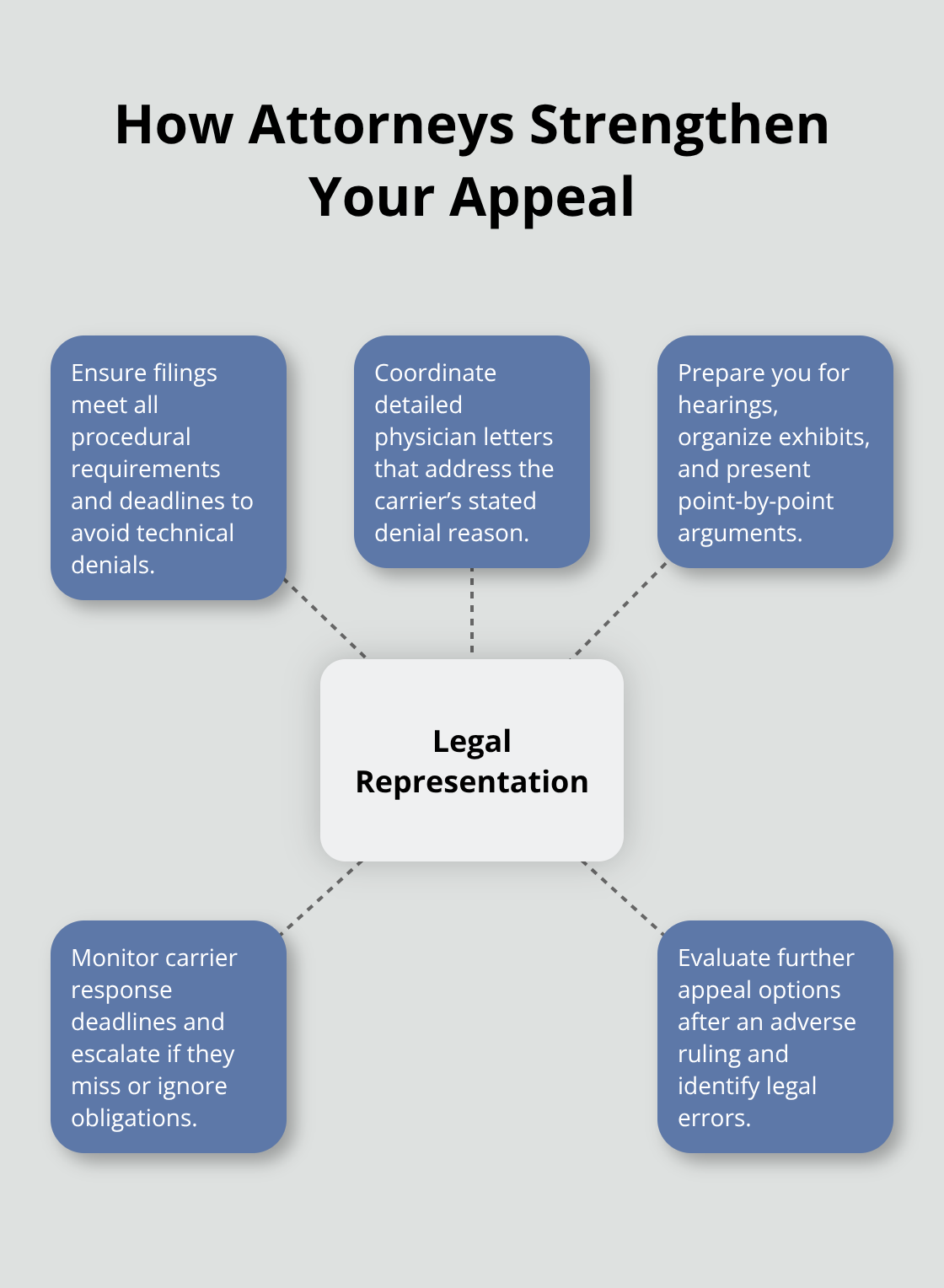
If the Industrial Commission requests additional evidence or schedules a hearing, your attorney prepares you for testimony, organizes exhibits, and presents arguments that challenge the carrier’s position point by point. The attorney also monitors the carrier’s response deadlines and escalates the case if the carrier violates response timelines or fails to comply with Industrial Commission orders.
How Carriers Respond to Legal Representation
Many workers don’t realize that carriers sometimes ignore appeals or miss deadlines themselves; an attorney catches these violations and uses them to strengthen your case. The appeals process moves faster and more decisively with representation because the carrier knows you have legal backing and will pursue every available remedy.
If the Industrial Commission rules against you, an attorney evaluates whether further appeal options exist or whether the decision rested on an error that justifies continued legal challenge. Legal representation transforms the appeal from a one-sided process into a formal dispute where both sides present evidence and arguments to a neutral decision-maker.
Final Thoughts
A denied workers’ compensation claim in Ohio is not final. You have concrete legal rights, clear deadlines, and proven pathways to recover the benefits you deserve. The Industrial Commission of Ohio exists specifically to review carrier denials and overturn decisions that lack proper justification. Workers win appeals regularly when they act quickly and present solid documentation.
Your first move after receiving a denial is to read the letter carefully and identify the exact reason the carrier cited. Call the carrier immediately to clarify whether the denial stems from a procedural error, missing paperwork, or a medical judgment. Many denials reverse with a single corrected submission or a phone call that clears up a misunderstanding. If the carrier stands firm, you have 14 days to file a formal appeal with the Industrial Commission.
If the appeal process becomes complicated or the carrier continues to deny your claim, legal representation makes a measurable difference. An attorney experienced in Ohio workers’ compensation law identifies weaknesses in the carrier’s reasoning, obtains stronger medical evidence, and presents your case to the Industrial Commission with the force of legal backing. Contact Robin J Peterson Company, LLC if your denied medical benefits require guidance on your next steps.