
A workplace injury in Ohio can feel overwhelming, especially when you’re navigating the BWC claim process for the first time. Understanding the BWC claim steps in Ohio-from your initial report through final resolution-makes the journey significantly less stressful.
Here at Robin J Peterson Company, LLC, we’ve guided countless injured workers through this system. This guide breaks down each phase so you know exactly what to expect and how to protect your rights.
Reporting Your Workplace Injury to the BWC
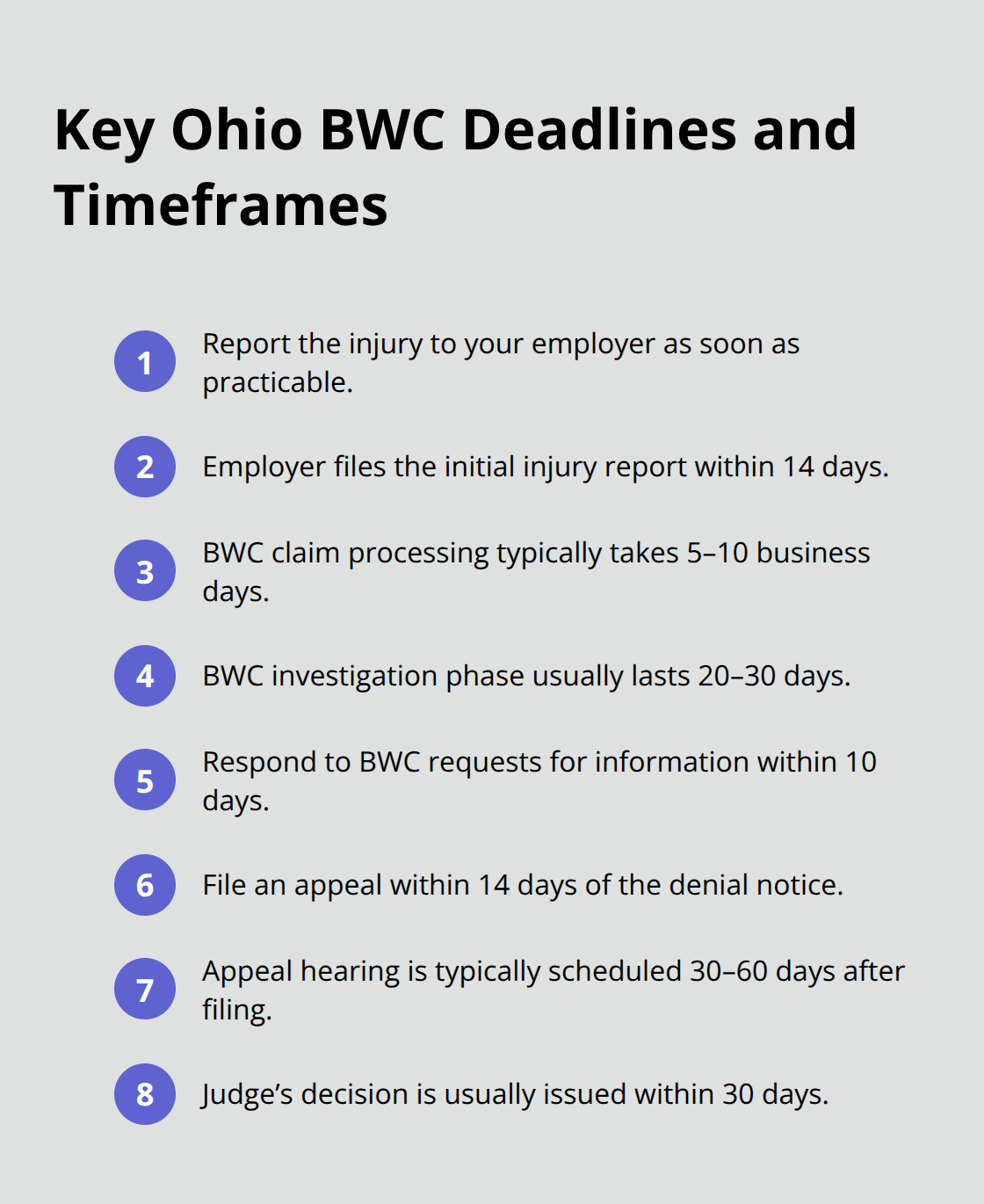
The first 30 days after your workplace injury matter more than most injured workers realize. Ohio law requires you to report your injury to your employer as soon as practicable, and this isn’t just a formality-it’s the foundation of your entire BWC claim. Most employers have specific procedures for injury reporting, so your first step is to find out exactly how your workplace handles these situations. Contact your supervisor or HR department to learn their injury reporting process. Some companies use paper forms, others have online portals, and a few still rely on verbal reports followed by documentation. Don’t assume you know the process; confirm it directly.
Provide Specific Details About Your Injury
When you report your injury, provide the exact date, time, and location where it happened, plus a clear description of what you were doing when the injury occurred. Include details about any equipment involved, any witnesses present, and exactly which body part was injured. Vague descriptions like “back pain from work” won’t cut it; instead, say something like “acute lower back strain from lifting a 50-pound box on the packaging line at 2:15 PM on October 3rd, 2026, with two coworkers present.” This specificity matters because the BWC uses your initial report to establish whether your injury is work-related, and gaps in your account create opportunities for denial.
Document Medical Treatment Immediately
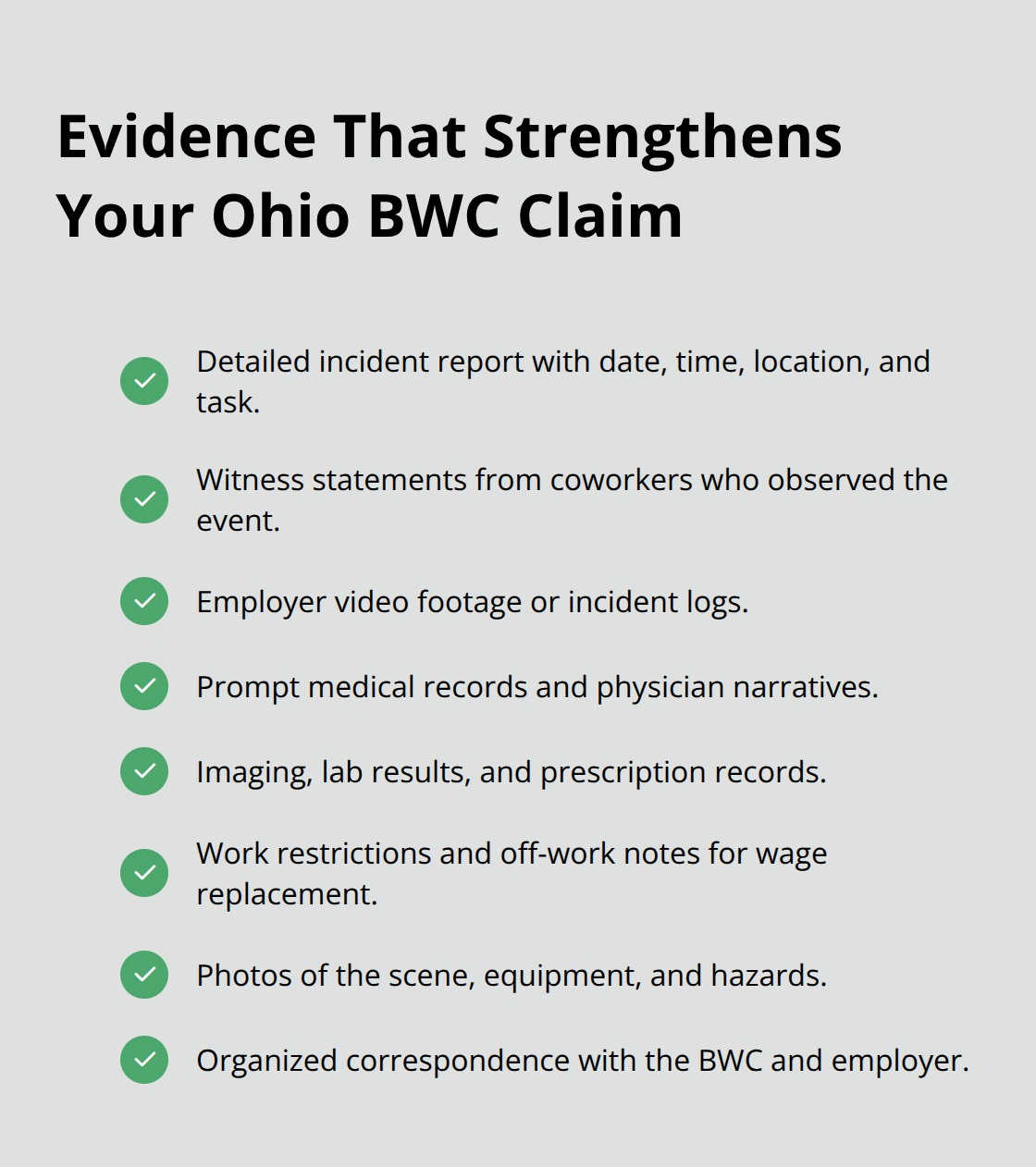
After reporting your injury to your employer, seek medical treatment without delay. Don’t wait to see if the pain goes away or try to tough it out. The medical records you generate in those first days become evidence that supports your claim’s credibility. When you see a doctor, tell them exactly when and how the injury happened, and make sure they document this in their medical report. If your employer has a preferred medical provider, you may be required to see them first, but you have the right to switch to your own doctor after that initial visit. Keep copies of every medical document-visit summaries, test results, prescriptions, and imaging reports-and organize them in a dedicated folder. You’ll need these later. Additionally, if your injury prevents you from working, get written documentation from your doctor stating when you cannot work and when you might be able to return. This wage replacement documentation is critical for your claim.
File Your Formal Claim with the BWC
After you report your injury to your employer and receive medical treatment, you or your employer must file the formal claim with the BWC. In Ohio, employers are required to file the Initial Injury Report within 14 days of learning about the injury. If your employer fails to do this, you can file it yourself by submitting Form OHIOBWC-1, the Application for Workers’ Compensation Benefits, directly to the BWC. You can file online through the BWC website, by mail to the BWC office, or in person. Filing online is fastest and creates a timestamped record, so that’s the preferred method.
When you complete your application, be thorough and accurate. Include your employer’s information, your job title, the injury date, a detailed description of how the injury occurred, and a list of all medical treatment you’ve received so far. Incomplete applications cause delays, and delays cost you money in lost wages. After you submit your claim, the BWC typically processes it within 5 to 10 business days and sends you a notice of filing. This notice confirms your claim number and outlines your rights and responsibilities moving forward. Once the BWC receives your formal claim, the agency begins its review and investigation process to determine whether your injury qualifies for benefits.
If you need guidance through this process, contact us to discuss your case.
The BWC Review and Investigation Process
After you submit your formal claim, the BWC enters an investigation phase that typically lasts 20 to 30 days, though complex cases extend longer. During this window, a BWC claims administrator is assigned to your file and begins reviewing everything you submitted alongside any additional information your employer provides. The BWC does not simply accept your word that the injury is work-related; they verify the facts independently. They contact your employer to confirm you were working that day, request medical records from your doctor, and cross-check your injury description against your job duties. If you filed your claim with missing documentation, the BWC will send you a request for additional information, and you typically have 10 days to respond. Missing this deadline can result in claim denial, so set phone reminders and track any correspondence from the BWC carefully.
How the BWC Evaluates Your Evidence
The BWC focuses on three core questions when reviewing your claim. First, was there an accident or occupational disease that occurred during employment? Second, do your medical records support that the injury happened as you described?
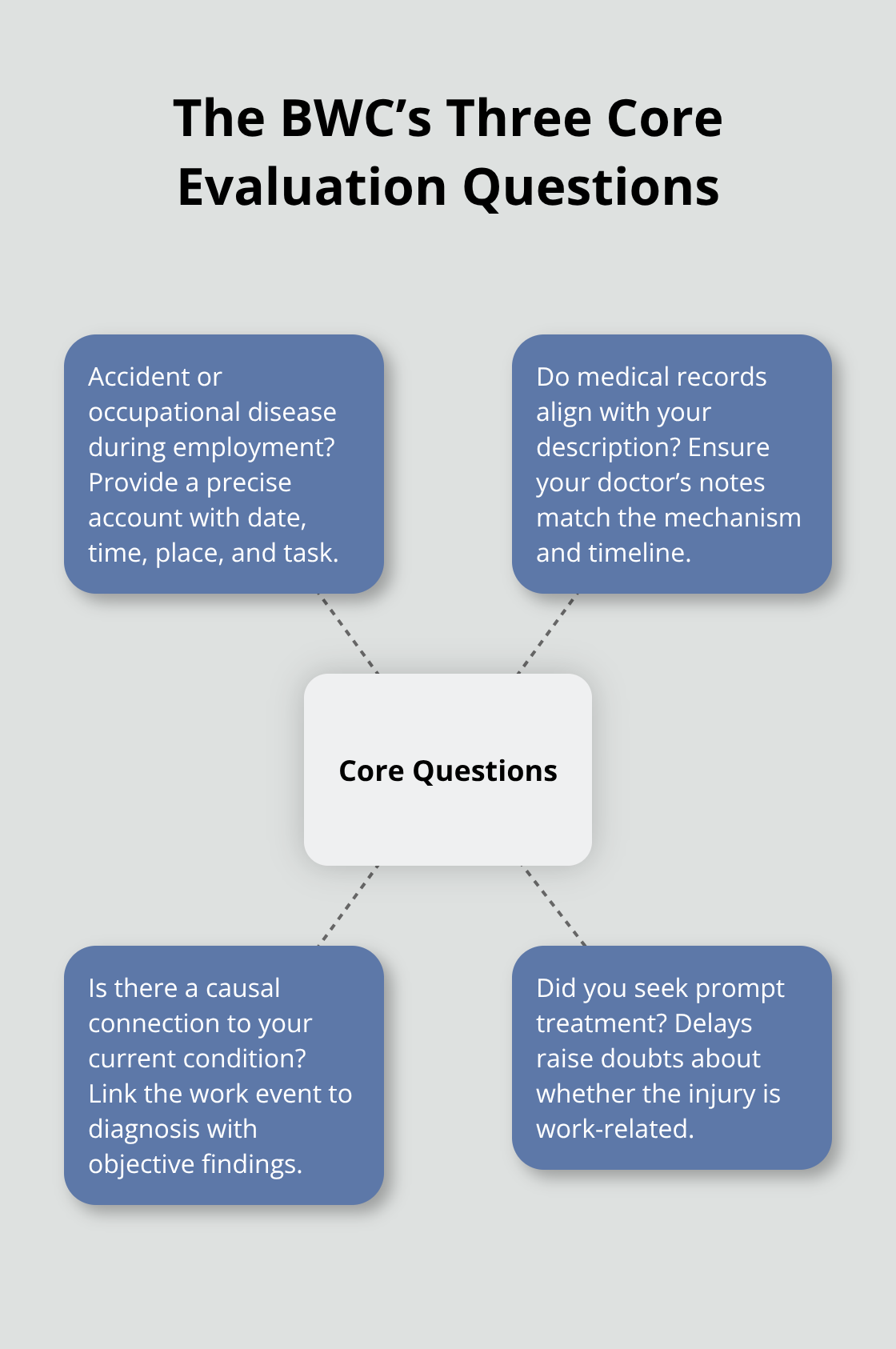
Third, is there a causal connection between the work-related event and your current medical condition? Your initial injury report receives heavy scrutiny here, which is why specificity matters tremendously. If you said you injured your back lifting a box but your medical records describe a gradual strain with no acute event, the inconsistency creates doubt. The BWC’s medical reviewer will examine whether your doctor’s assessment aligns with your reported injury mechanism. They also verify that you sought treatment promptly; waiting weeks after the injury to see a doctor raises red flags about whether the injury is truly work-related.
Supporting Evidence That Strengthens Your Claim
Witness statements from coworkers who saw the incident carry substantial weight because they corroborate your narrative independently. Include those accounts in your claim file. If your employer has video footage of the incident or incident reports from other employees, request copies and submit them to the BWC as supporting evidence. Documentation from multiple sources creates a stronger case than your account alone. The more evidence you provide, the faster the BWC can make a determination.
Why Claims Face Denial
The most common reason the BWC denies claims is insufficient evidence that the injury is work-related. This happens when your injury description is vague, your medical records do not clearly connect to your reported incident, or a significant time gap exists between the injury and your first medical visit. A second frequent reason is failure to report the injury within the required timeframe. Ohio law expects prompt reporting, and delays suggest you did not view the injury as serious or work-related at the time. A third reason is providing inconsistent information across your initial report, your medical records, and your formal claim application. If you tell your employer the injury happened one way but tell your doctor it happened differently, the BWC interprets this inconsistency as lack of credibility. Some claims are also denied because the applicant failed to provide necessary documentation, such as medical records or wage statements proving employment status.
Understanding Your Denial Notice
If the BWC denies your claim, they send a notice explaining their reasoning. Read this notice carefully, as it identifies exactly what evidence they found insufficient. This information guides your appeal strategy. The denial notice also outlines your right to challenge the decision and provides deadlines for filing an appeal. Missing these deadlines eliminates your ability to contest the denial, so act quickly once you receive the notice. Your next step involves understanding the appeals process and preparing your response to the specific reasons the BWC cited for denial.
Appealing a Denied BWC Claim
A BWC denial is not the end of your case. Ohio law gives you a clear path to challenge the decision, and the Industrial Commission of Ohio serves as the appeals body that reviews denials. You have 14 days from the date you receive the denial notice to file an appeal, and this deadline is absolute. Missing it forfeits your right to contest the decision entirely.
Filing Your Appeal with the Industrial Commission of Ohio
The Industrial Commission of Ohio operates independently from the BWC, meaning your appeal goes to a different agency staffed by administrative law judges who review the case fresh. This is your opportunity to address the specific reasons the BWC cited for denial and present additional evidence they may have overlooked.
Start your appeal by filing Form OHIOBWC-12, the Application for Hearing, directly with the Industrial Commission of Ohio. You can file online, by mail, or in person at their Columbus office. Online filing is fastest and creates an electronic timestamp proving you met the 14-day deadline. Include your claim number, a clear statement that you disagree with the BWC denial, and a brief explanation of why you believe your injury is work-related.
Attach copies of all supporting evidence: medical records, witness statements, photos of the incident location, employer communications, and anything else that strengthens your position. Do not assume the Industrial Commission has access to documents already in your BWC file; submit everything you want them to consider.
Preparing for Your Appeal Hearing
The appeal hearing typically occurs 30 to 60 days after you file your application, though scheduling varies. You have the right to testify, present witnesses, and question the BWC representative who handled your claim.
Prepare thoroughly by reviewing the denial notice multiple times and identifying exactly which facts or evidence the BWC found insufficient. If your initial report lacked specificity, gather detailed information now: the exact time of injury, names and contact information for witnesses, documentation of your job duties that day, and any additional medical evidence that clarifies the injury mechanism.
Bring the original denial notice to your hearing along with organized copies of all evidence. If your medical records contain conflicting information that contributed to the denial, bring a written explanation clarifying the discrepancy. Witness testimony carries significant weight; if coworkers can describe what they saw, bring them to the hearing or submit written statements from them beforehand.
Presenting Your Case at the Hearing
The Industrial Commission hears hundreds of cases, so judges respond well to organized, specific evidence presented clearly. At the hearing, testify in your own words about exactly what happened, when it happened, and how it affected your ability to work. Stick to facts and avoid emotional arguments. Answer the judge’s questions directly and admit when you do not know something rather than guessing.
The judge will also question the BWC representative about why they denied your claim, giving you insight into their reasoning and an opportunity to address those concerns directly. After the hearing, the judge issues a decision typically within 30 days.
Understanding Further Appeal Options
If you still disagree with that decision, you can appeal further to the BWC Industrial Commission Board, though this step requires demonstrating that the administrative law judge made a legal error rather than simply disagreeing with their factual findings. At this stage, having an attorney from a firm experienced in Ohio workers’ compensation law becomes increasingly valuable, as appeals to the board involve complex procedural rules and legal arguments. An attorney can help you navigate these advanced stages and protect your rights throughout the process.
Final Thoughts
The BWC claim steps in Ohio demand precision, documentation, and persistence from start to finish. Every action you take-from your initial injury report through the appeals process-either strengthens or weakens your position. The most successful claimants treat their injury documentation like a legal case by gathering specific facts, preserving evidence immediately, and responding promptly to every BWC request. Vague descriptions, delayed medical treatment, and incomplete applications create the conditions for denial, while detailed incident reports, organized medical records, and thorough claim applications move your case forward efficiently.
You now understand what the BWC investigates, why claims face denial, and how to challenge those denials through the Industrial Commission of Ohio. You know the critical deadlines that govern your rights and the types of evidence that carry the most weight in your BWC claim steps Ohio. This knowledge positions you to navigate the system effectively and protect your interests throughout the process.
However, the BWC claims process involves complex legal standards and procedural rules that trip up many injured workers. If your claim was denied, if your employer disputes your injury, or if you face pressure to accept a settlement that seems inadequate, contact us at Robin J Peterson Company, LLC to discuss your options. Our firm represents injured workers throughout the Cleveland, Akron, and Canton areas who fight for the benefits they deserve.