
Hand injuries at work can happen in seconds, but the recovery and claims process takes much longer. At Robin J Peterson Company, LLC, we help injured workers understand their rights and navigate the hand injury Ohio claim process with confidence.
This guide walks you through filing a workers’ compensation claim, what happens during review, and how to move forward with your recovery.
Hand Injuries at Work: What Happens and What You Must Do
Common Hand Injuries in Ohio Workplaces
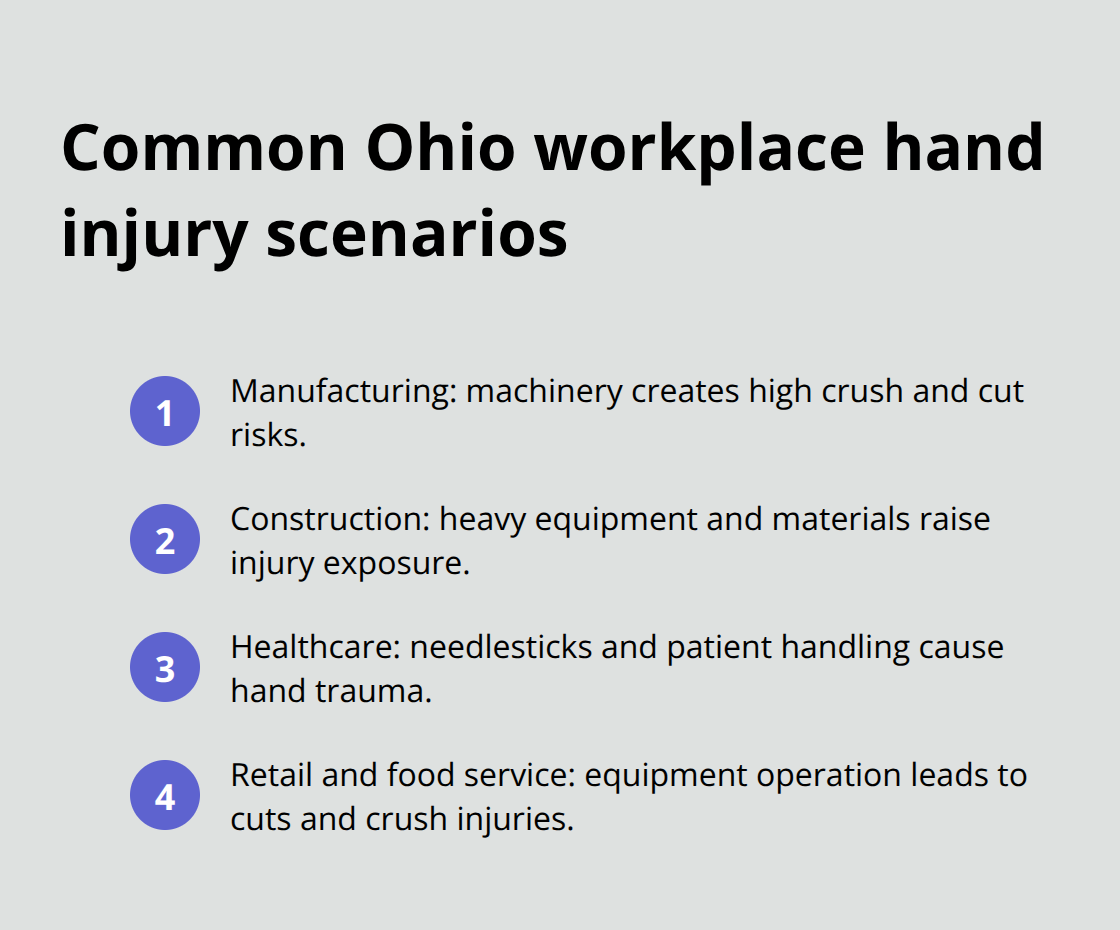
Hand injuries dominate Ohio workplace incidents across manufacturing, construction, healthcare, and retail sectors. Crushing injuries from machinery, lacerations from sharp tools, fractures from falls or impacts, and burns from chemical or thermal exposure represent the most common scenarios. Manufacturing workers face the highest risk, with approximately 110,000 hand injuries occurring annually in U.S. factories alone, according to the National Safety Council. Construction sites follow closely, where workers handle heavy equipment and materials daily. Healthcare workers experience hand injuries from needlesticks and patient handling, while retail and food service employees suffer cuts and crush injuries from equipment operation.
Your Immediate Response Matters
The moment an injury happens, your instinct might be to downplay it or continue working. This is a critical mistake. Stop what you are doing immediately and move to a safe location away from the hazard. Wash the wound with clean water if possible, apply pressure with a clean cloth to control bleeding, and immobilize the injured hand to prevent further damage. Seek medical attention without delay, even if the injury seems minor. Some hand injuries worsen significantly within hours as swelling increases and nerve damage becomes apparent.
Report and Document Everything
Report the injury to your supervisor or manager right away, providing specific details about what happened, when it occurred, and any witnesses present. Document everything yourself as well, taking photos of the injury and the equipment or conditions that caused it. Keep these records separate from any employer documentation. Request a written incident report from your employer and obtain a copy for your records. Medical professionals will assess your injury, but your contemporaneous documentation becomes invaluable later.
Why Timing and Evidence Protect Your Claim
Many injured workers wait too long before reporting, hoping the injury resolves independently, only to face claim denials based on delayed reporting. Ohio law requires employers to report work injuries to the Bureau of Workers’ Compensation within specific timeframes, but your personal documentation protects you if your employer fails to comply. Gather contact information from anyone who witnessed the incident, as their statements strengthen your claim significantly. Do not sign any settlement agreements or releases from your employer before consulting with a workers’ compensation attorney.
Understanding what happens immediately after your injury sets the foundation for everything that follows. The next step involves navigating Ohio’s workers’ compensation system and filing your formal claim with the Bureau of Workers’ Compensation.
Filing Your Ohio Workers’ Compensation Claim
Your Employer’s Legal Obligations
The moment you report your hand injury to your employer, the clock starts ticking on multiple deadlines that determine whether you receive benefits. Your employer must report the injury to the Ohio Bureau of Workers’ Compensation within one week if it results in lost time from work or medical treatment beyond first aid. This report takes the form of a Form C-1, the official injury report. You should request a copy of this form immediately and verify that all details match what actually happened. If your employer misses this deadline, the claim becomes more difficult to process, but it does not eliminate your right to benefits.
Filing Your Claim Directly with the Ohio BWC
You must also report the injury yourself directly to the Ohio BWC if your employer fails to do so within two weeks. The Ohio BWC operates as a state fund that handles most workplace injury claims in Ohio, replacing the traditional insurance model used in other states. This system means claims go through a government agency rather than a private insurance company, which changes how evidence is evaluated and how decisions are made. File your claim with the Ohio BWC by submitting Form C-2, the claim form for injured workers, along with supporting medical documentation from your healthcare provider.
Medical Evidence That Proves Your Claim
Medical evidence proving the injury occurred at work and caused your condition is non-negotiable. Your physician must document the mechanism of injury, the date it happened, and how it affects your ability to work. Without this connection between the workplace incident and your medical condition, the Ohio BWC will deny your claim outright. Gather your medical records, witness statements, photos of the injury site, and any communications with your employer about the incident. The Ohio BWC requires proof that you sought medical treatment and that the treatment was necessary because of your work injury.
Critical Deadlines and Documentation Requirements
Documentation deadlines in Ohio are strict, and missing them can result in permanent loss of benefits. You have up to two years from the date of injury to file your claim with the Ohio BWC, but do not wait this long. File within weeks, not months or years.
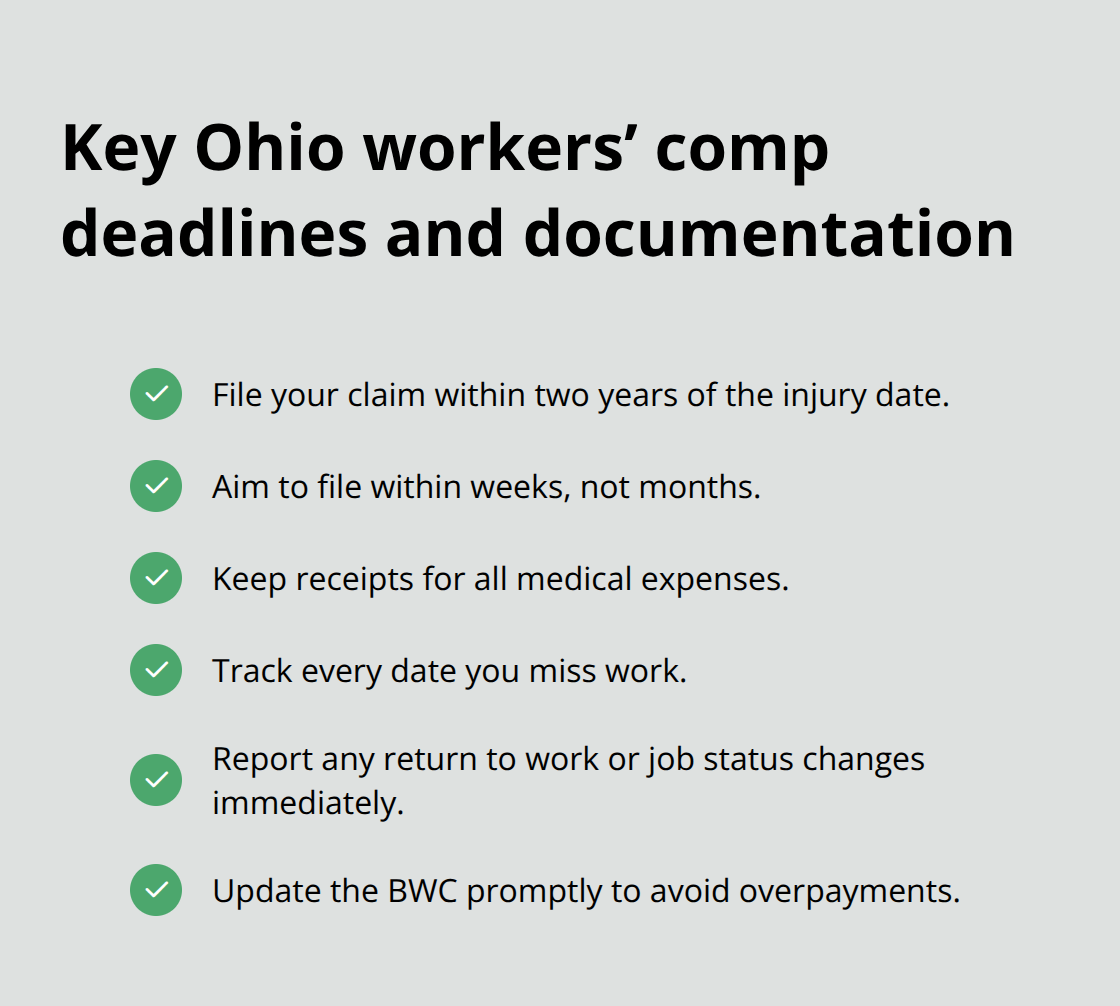
Keep receipts for any medical expenses you incur and maintain detailed records of dates you missed work. If you receive workers’ compensation benefits, you must report any return to work or changes in your employment status immediately, as continuing to collect benefits while working can result in overpayment claims.
What Happens During the Initial Review
The initial claim review typically takes 15 to 30 days, during which the Ohio BWC verifies employer information, reviews medical documentation, and determines whether your injury qualifies for benefits. Many claims face initial denials or requests for additional information during this period. If the Ohio BWC denies your claim or disputes the severity of your injury, you have the right to appeal through the Industrial Commission of Ohio. An attorney experienced in Ohio workers’ compensation law can strengthen your appeal and help you understand whether you should pursue it further.
Understanding the filing process and meeting every deadline positions you to move forward. The next phase involves what actually happens once the Ohio BWC receives your claim and begins its evaluation.
What Happens After You File
The Initial Claim Review Process
The Ohio BWC typically processes your claim over 15 to 30 days, but this timeline varies significantly depending on the completeness of your documentation and whether the agency requests additional information. During this period, the BWC examines your employer’s injury report, your medical records, and witness statements to determine if your hand injury qualifies as a compensable work injury. Incomplete submissions extend this review considerably, so submit everything at once rather than piecemeal. The BWC will contact you if it needs clarification on medical details or workplace circumstances, and responding promptly prevents unnecessary delays.
Understanding Approval and Denial Decisions
Once the BWC makes an initial determination, you receive written notice of either approval or denial. An approval means you gain access to medical treatment at BWC-approved providers and wage loss benefits if you cannot work. A denial does not end your claim, however. You have 14 days to request reconsideration or file an appeal with the Industrial Commission of Ohio, and this is where having an experienced workers’ compensation attorney becomes invaluable. Workers injured in Ohio often benefit from legal representation during appeals, as many cases result in benefits being awarded after the first decision is overturned.
Accessing Medical Care Through the BWC System
Your medical care during the claims process follows strict protocols that differ significantly from standard health insurance. Once your claim is approved, you must receive treatment from BWC-certified providers, and the BWC covers reasonable and necessary medical expenses related to your hand injury. This includes emergency care, surgery, physical therapy, and ongoing follow-up visits. You cannot simply choose any physician; the provider must participate in the Ohio BWC system.
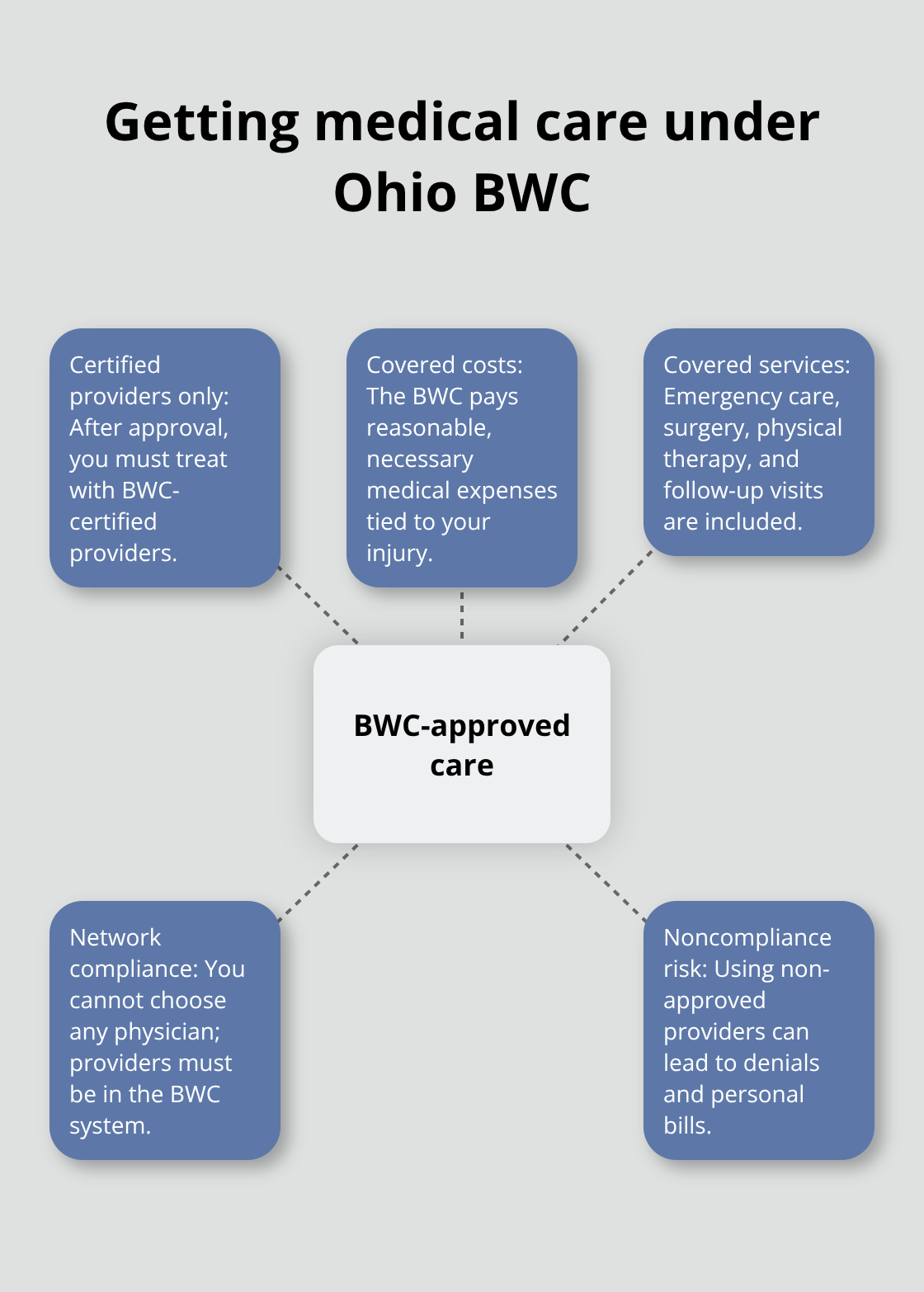
Failure to use approved providers can result in denial of coverage for those services, leaving you responsible for the bills.
Managing Your Medical Records and Provider Communications
Keep detailed records of all appointments, treatment dates, and provider communications, as this documentation supports your ongoing benefits if complications arise. Track which providers you visit and confirm their BWC certification before scheduling appointments. Request copies of all medical reports and test results from your healthcare providers, and maintain these records in an organized system (digital or physical) that you can access quickly if the BWC requests additional information.
Wage Loss Benefits and Employment Status Changes
If your injury prevents you from working, you become eligible for wage loss benefits, which typically replace two-thirds of your average weekly wage up to the state maximum. These benefits begin after a waiting period of seven days and continue for the duration of your recovery or until you return to work. Report any changes in your employment status, return-to-work arrangements, or medical condition to the BWC immediately, as failing to do so can trigger overpayment investigations and benefit suspensions.
Final Thoughts
Filing a hand injury Ohio claim requires immediate action, thorough documentation, and persistence through a system designed to protect workers but often resistant to approving benefits. The steps you take in the first hours and days after your injury determine whether you receive the support you need during recovery. Report to your employer immediately, seek medical attention without delay, document everything yourself, and file your claim with the Ohio BWC within weeks rather than months.
The claims process tests your patience, and initial denials happen frequently, but they are not final decisions. Many injured workers receive benefits after appealing through the Industrial Commission of Ohio, particularly when they have experienced legal representation guiding them through the process. Your medical records, witness statements, and contemporaneous documentation become your strongest evidence when the BWC questions whether your injury qualifies for compensation.
At Robin J Peterson Company, LLC, we represent injured workers throughout Ohio’s workers’ compensation system, fighting for the benefits you are entitled to receive. Whether you face a claim denial, need help with an appeal, or want guidance from the beginning, visit our website to learn how we support injured workers in Cleveland, Akron, and Canton.