
Workplace injuries can derail your career plans, but Ohio’s workers’ compensation system exists to support your recovery and return to work. We at Robin J Peterson Company, LLC understand that navigating benefits, rehabilitation options, and potential disputes feels overwhelming when you’re injured.
This guide walks you through each step of the process, from filing your initial claim to exploring job retraining services. You’ll learn what to expect and how to protect your rights along the way.
Understanding Ohio Workers’ Compensation Benefits
What Benefits Does Ohio Workers’ Compensation Actually Cover?
Ohio’s workers’ compensation system provides four main types of benefits to injured workers, and understanding what you qualify for makes a real difference in your recovery plan. Temporary total disability payments replace your lost wages while you cannot work, typically at two-thirds of your average weekly wage. Permanent partial disability compensates you if you suffer lasting impairment from your injury, with payments calculated based on the specific body part affected and the degree of loss. Medical benefits cover all treatment necessary to heal your injury, from emergency care to ongoing therapy and medications.
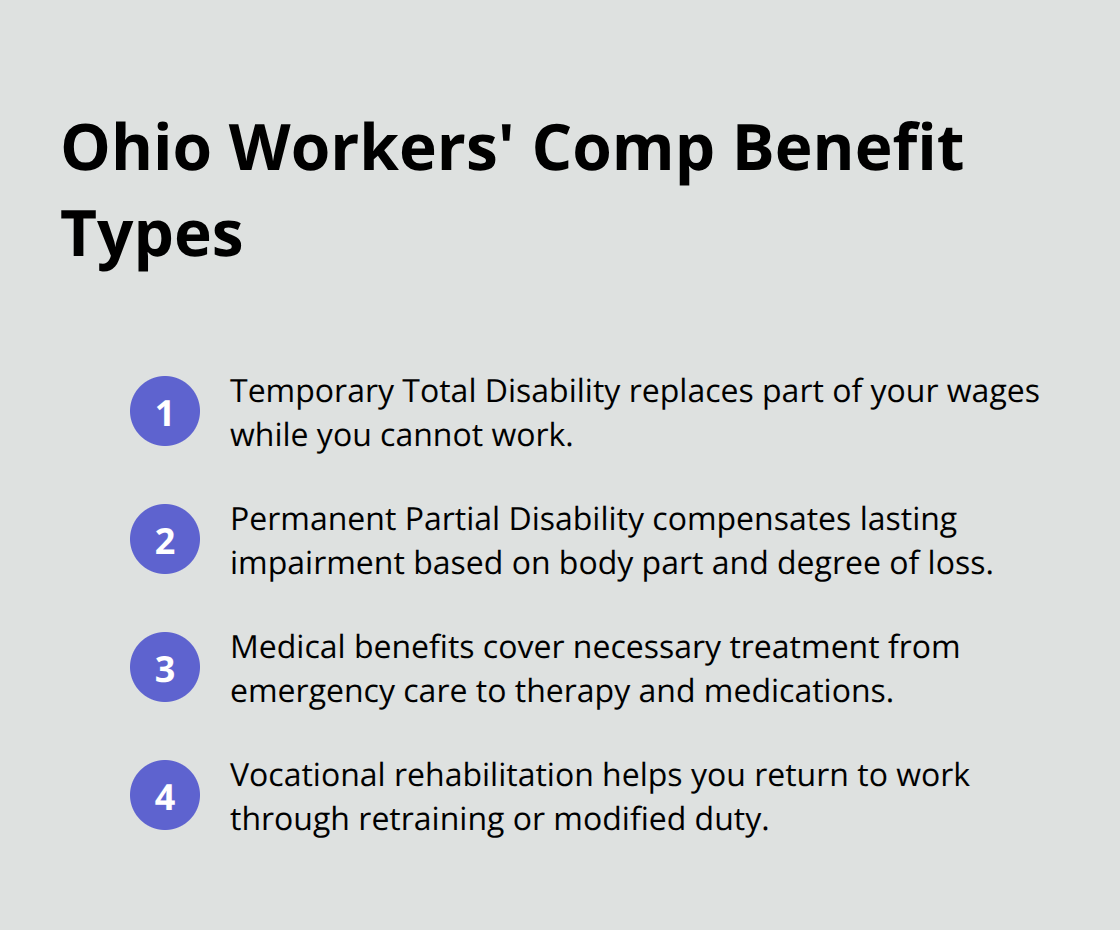
Vocational rehabilitation services help you return to work through job retraining or modified duty placements if you cannot resume your previous position.
How Ohio Processes Your Claim
The Ohio Bureau of Workers’ Compensation receives your employer’s report within 14 days of your injury, then contacts you with claim information and benefit eligibility details. This initial contact typically arrives within three to five business days. You must report your injury to your employer immediately, as delayed notification can complicate your claim. Once the BWC receives the employer’s report, they conduct a preliminary review to verify the injury occurred at work and meets coverage requirements. Most straightforward claims move through initial approval within two to three weeks, though more complex injuries may require additional investigation. The BWC uses a database tracking system that shows your claim status online, allowing you to monitor progress without constant phone calls.
When You Actually Receive Your First Payment
Your first benefit payment typically arrives four to six weeks after the BWC approves your claim, not immediately after filing. The delay occurs because the BWC must verify medical documentation, calculate your wage replacement amount, and process payment through their system. If your claim faces any questions or requires additional medical records, this timeline extends significantly. Many injured workers make the mistake of assuming payment starts on their injury date rather than approval date, leaving them financially unprepared. Start your own documentation immediately after injury (medical visits, injury reports, and employer communications) to help expedite processing. These records support faster claim resolution and protect you if disputes arise later, which is why understanding your next steps matters so much.
Getting Back to Work After Injury
How Rehabilitation Services Support Your Recovery
Rehabilitation in Ohio isn’t a one-size-fits-all process, and the services available depend heavily on your specific injury and recovery timeline. The Ohio Bureau of Workers’ Compensation funds rehabilitation services for workers who cannot return to their previous job, and these services start as soon as your claim receives approval. Your rehabilitation counselor assesses your physical capabilities, identifies suitable job options, and creates a realistic return-to-work plan with you. The BWC expects you to participate actively in rehabilitation if they determine you need it. Workers who begin rehabilitation within the first eight weeks of injury show significantly higher rates of returning to employment compared to those who delay, according to data from the National Institute for Occupational Safety and Health.
Job Retraining and Vocational Services in Ohio
Vocational services in Ohio include classroom-based retraining, on-the-job training, and apprenticeships, with the BWC covering tuition and related expenses for approved programs. If you worked in manufacturing or physical labor before your injury, your counselor might recommend healthcare support roles, administrative positions, or skilled trades that accommodate your limitations. Your counselor can recommend entirely new career paths depending on your medical restrictions and job market conditions in Ohio. The key difference between successful rehabilitation and prolonged recovery often comes down to starting early and engaging with available resources.
Communicating with Your Employer During Recovery
Contact your supervisor or HR department regularly during your recovery phase-not to pressure yourself back to work prematurely, but to discuss modified duty options that exist within your company. Many Ohio employers have light-duty positions or administrative roles that can bridge your recovery period, allowing you to maintain income and employment continuity while you heal. Employers who participate actively in rehabilitation planning see faster return-to-work outcomes, which benefits everyone involved. If your employer resists accommodation or your rehabilitation counselor faces obstacles, Robin J. Peterson Company, LLC can help advocate for your rights and ensure the BWC provides the services you’re entitled to receive.
When disputes arise during your rehabilitation process or your employer fails to cooperate with your recovery plan, understanding your options becomes essential.
Navigating Disputes and Appeals
Why the BWC Denies Claims
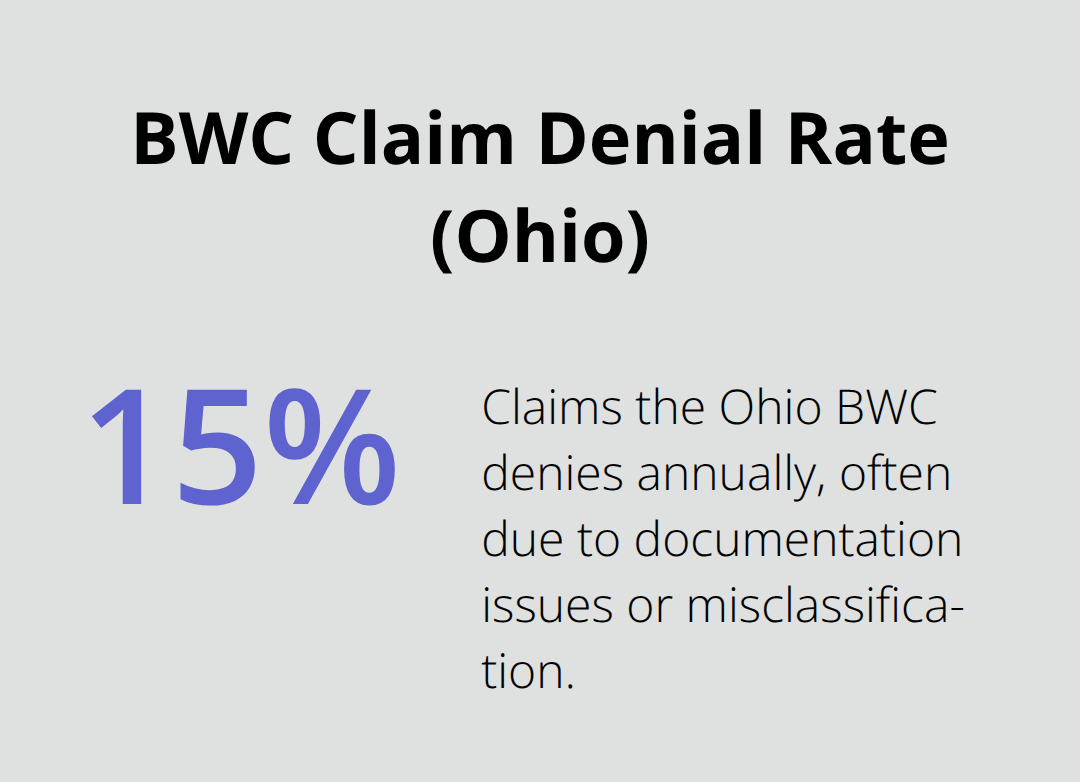
Claim denials and delays happen far too often in Ohio’s workers’ compensation system, and most injured workers don’t realize they have powerful options to fight back. The Ohio Bureau of Workers’ Compensation denies roughly 15% of claims annually, according to their own administrative data, and many of these denials stem from incomplete documentation or misclassification of the injury rather than legitimate ineligibility.
If the BWC denies your claim, they must send written notice explaining the specific reason within a defined timeframe. Common denial reasons include the employer’s failure to report the injury properly, disputes over whether the injury truly occurred at work, pre-existing condition arguments, or claims filed after the statute of limitations expires.
Acting Quickly After a Denial
You have a critical advantage if you act quickly: Ohio law gives you one year from the date of injury to file your claim, but filing within 90 days strengthens your position significantly because medical evidence remains fresher and witness memories are sharper. When the BWC delays your payments beyond the normal four-to-six-week timeline without clear explanation, request a status update in writing and document every communication. Delays often signal that additional investigation is underway, and written requests create a paper trail that protects you if you later need to appeal.
Filing Your Appeal with the Industrial Commission
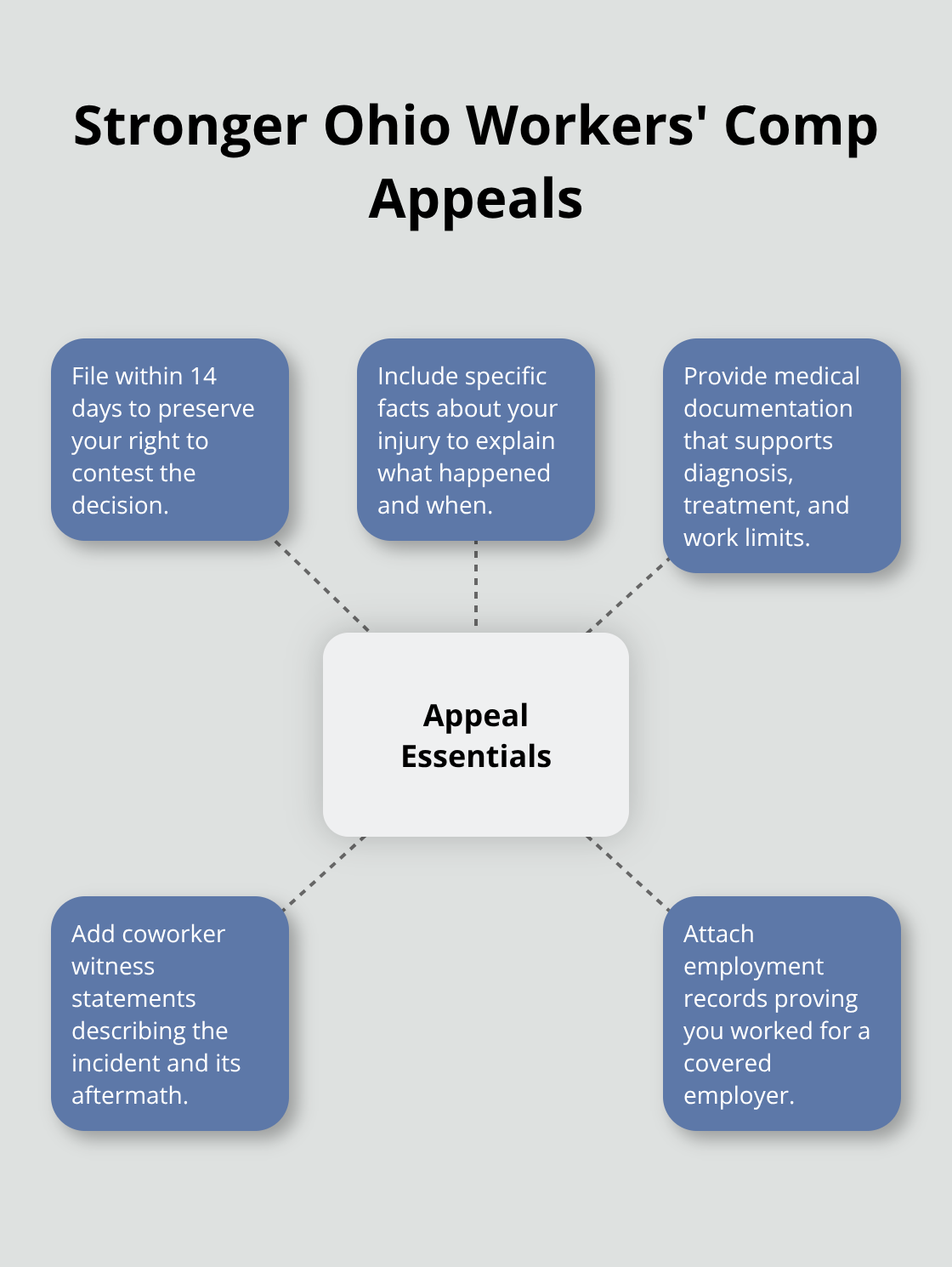
The Industrial Commission of Ohio handles all appeals of BWC decisions, and the process moves faster than most people expect if you prepare properly. File your appeal within 14 days of receiving the denial or delay notice, as missing this deadline eliminates your right to contest the decision at all. Your appeal should include specific facts about your injury, medical documentation supporting your claim, witness statements from coworkers who saw the accident, and any employment records proving you worked for a covered employer. Many injured workers lose appeals simply because they submit vague or incomplete information rather than detailed evidence.
When to Seek Legal Representation
An attorney can identify weaknesses in the BWC’s reasoning, present evidence in the most persuasive format, and handle procedural requirements that trip up unrepresented workers. If the Industrial Commission upholds the denial or you face complex disputes involving permanent disability calculations or vocational rehabilitation disputes, that’s when legal representation becomes genuinely important rather than optional. Robin J. Peterson Company, LLC represents injured workers throughout Ohio in these appeals, helping clients navigate the Industrial Commission of Ohio and fight for the benefits they deserve.
Final Thoughts
Returning to work in Ohio after a workplace injury requires you to document everything from day one, file your claim within 90 days, and monitor your status through the BWC’s online system. Request written updates if payments delay beyond six weeks, as this creates a paper trail that protects you if disputes arise later. Engage actively with your rehabilitation counselor if the BWC assigns one, since workers who start vocational services early show significantly higher employment rates than those who wait.
If the BWC denies your claim or delays payments without explanation, file your appeal within 14 days and include specific facts about your injury, medical documentation, witness statements, and employment records. The Industrial Commission of Ohio handles these appeals, and the process moves faster when you submit complete, detailed information. Discuss modified duty options with your employer as well, since many Ohio companies can accommodate injured workers in light-duty roles that maintain your income during recovery.
When disputes become complex or the BWC resists your legitimate claim, Robin J. Peterson Company, LLC represents injured workers throughout Ohio in appeals and fights for the benefits you deserve. The firm serves the Cleveland, Akron, and Canton areas with dedicated focus on workers’ compensation law.