
A denied workers’ compensation claim can feel like a setback, but it’s not the end of the road. At Robin J Peterson Company, LLC, we’ve helped countless workers understand that denials are often reversible with the right approach.
An attorney for denied claims knows exactly how to challenge the decision and present your case effectively. The appeals process has specific rules and deadlines, but you don’t have to navigate it alone.
Why Workers’ Compensation Claims Get Denied
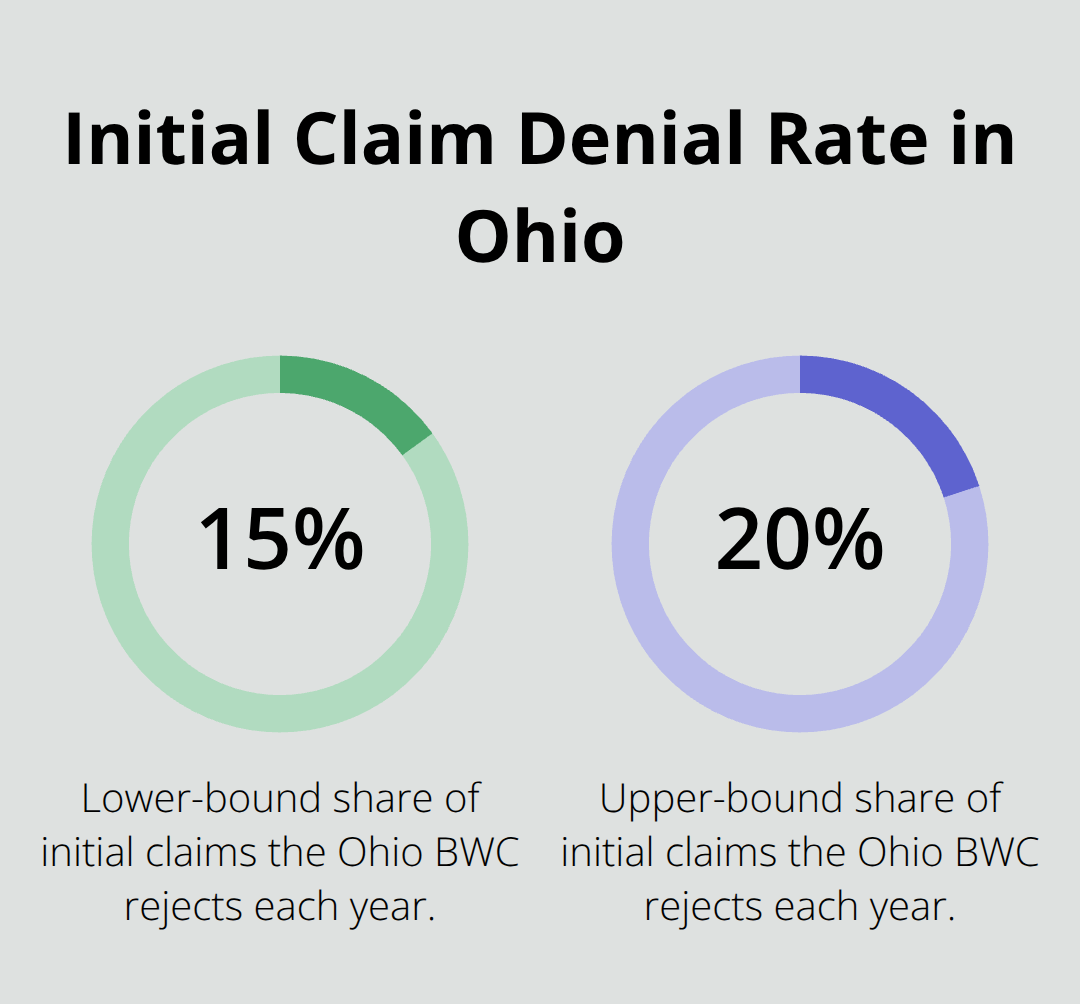
The Ohio Bureau of Workers’ Compensation rejects roughly 15-20% of initial claims filed each year, and most workers don’t understand why until it’s too late. The denial letter from the BWC often contains vague language about what went wrong, leaving you confused about your next move. We see the same patterns repeatedly: claims get denied not because your injury isn’t real or your case isn’t valid, but because of procedural failures, missing paperwork, or timing mistakes that could have been avoided. The good news is that understanding these specific reasons gives you the information you need to mount an effective appeal.
Documentation gaps create the biggest hurdle
The BWC requires specific medical evidence to approve a claim, and incomplete medical records are the leading cause of denials. Your initial report of injury form must match the medical provider’s documentation about when and how the injury occurred. If your doctor’s notes say the injury happened on a different date than what you reported, or if the mechanism of injury differs between documents, the BWC will deny the claim outright.
Missing diagnostic test results like X-rays or MRI scans for claims involving significant injury also trigger automatic denials. Additionally, if your treating physician hasn’t clearly documented that your injury is work-related and not a pre-existing condition, the BWC will request clarification. If you don’t respond within their timeframe, they deny the claim.
Timing mistakes and procedural failures close the door
Ohio law gives you specific deadlines to file your workers’ compensation claim, and missing these windows means a permanent denial with almost no opportunity for recovery. You must report your injury to your employer within a reasonable time, typically interpreted as within 24-48 hours for obvious injuries. Your employer then has 10 days to file the claim with the BWC, but many don’t meet this deadline.
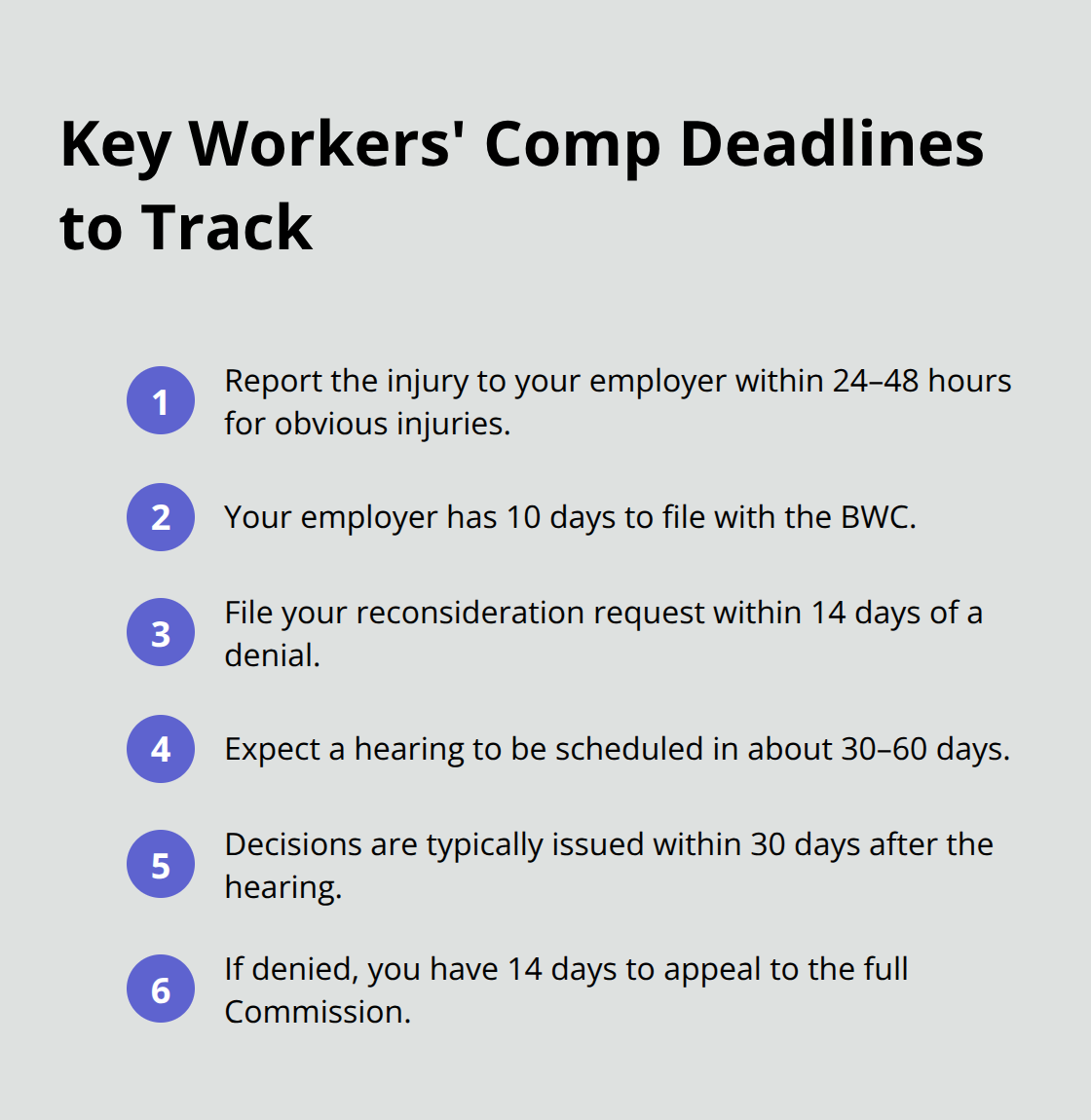
If you wait months to file your own claim after an employer fails to file, the BWC will likely deny it based on late filing. The appeals process has equally strict deadlines-you typically have 14 days to file a request for reconsideration after a denial, and missing this deadline bars you from proceeding. Many workers lose their right to appeal simply because they didn’t know these timeframes existed or thought they had more time to act.
How an attorney identifies what went wrong
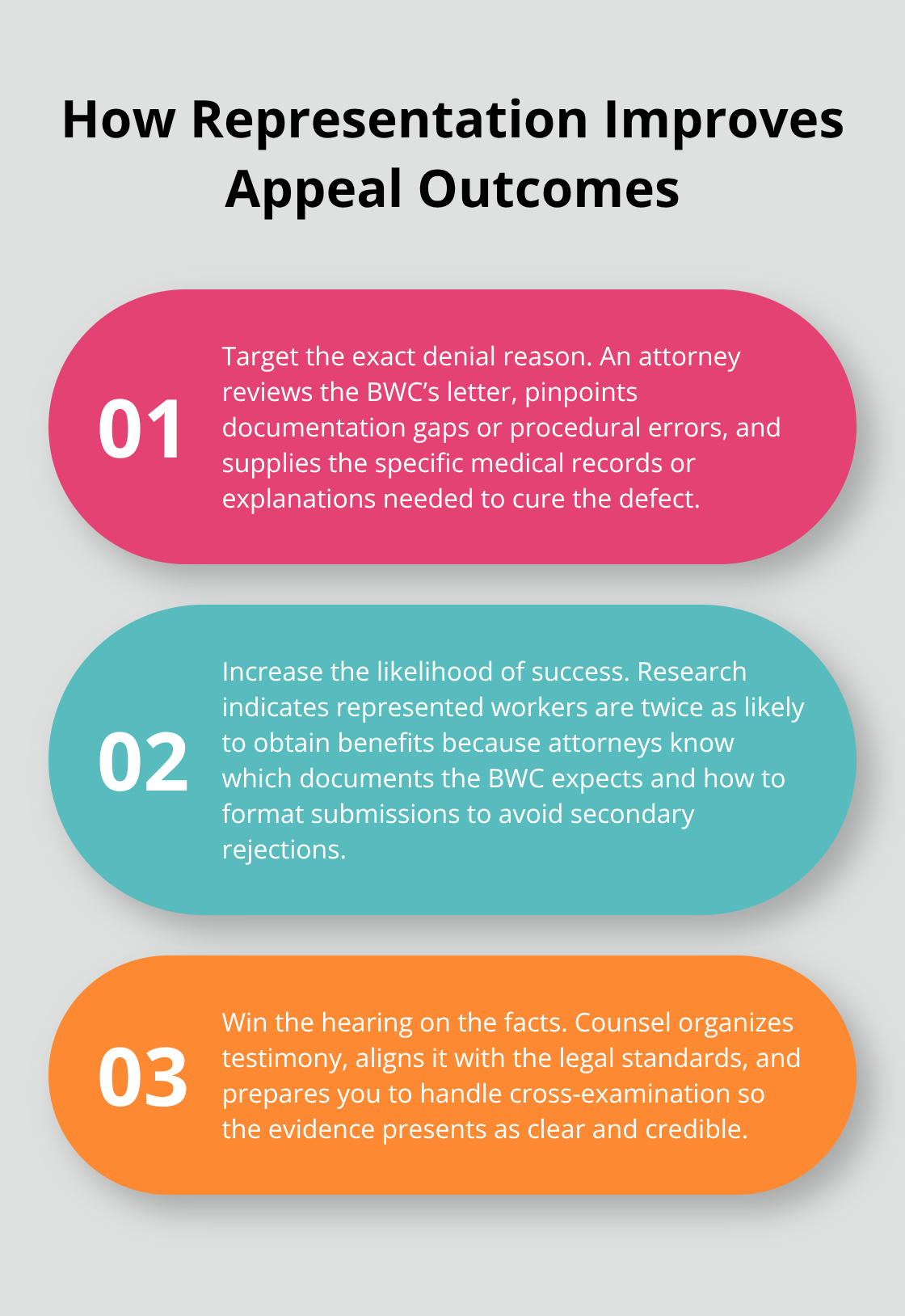
An experienced workers’ compensation attorney reviews your denial letter and identifies the exact reason the BWC rejected your claim. Whether the problem stems from documentation gaps, missed deadlines, or procedural errors, an attorney knows how to address each issue systematically. This targeted approach sets the stage for a stronger appeal and positions you to challenge the decision effectively before the Industrial Commission of Ohio.
How an Attorney Can Challenge a Denied Claim
File a Request for Reconsideration Within 14 Days
The 14-day window after a BWC denial represents your critical opportunity to act, and most workers waste it by waiting or assuming the denial is final. An attorney files a request for reconsideration that addresses the exact deficiency cited in your denial letter. If the problem was missing medical documentation, your attorney contacts your physician directly and requests the specific records the BWC rejected. If the issue involves a procedural error or missed deadline, your attorney presents evidence showing why the delay occurred and argues for an exception to the strict filing rules. The Industrial Commission of Ohio recognizes that workers often don’t understand the technical requirements, and a detailed reconsideration request with supporting documentation dramatically improves your chances of reversal.
Research from the Ohio Academy of Trial Lawyers shows that workers represented by counsel during the initial appeal stage are twice as likely to obtain benefits than unrepresented claimants, primarily because attorneys know exactly which documents the BWC needs and how to format the submission to avoid secondary rejections.
Gather Evidence That Directly Counters the Denial Reason
Building your case means collecting evidence that directly counters the denial reason, not just submitting more paperwork. If your claim was denied for lack of medical causation, your attorney obtains a detailed statement from your treating physician confirming the injury is work-related and requests any additional testing that clarifies the connection between your job duties and your condition. If the denial involved a timeline discrepancy, your attorney collects witness statements from coworkers who observed the injury, employer communications documenting when you reported the incident, and any contemporaneous records like emails or text messages that establish the actual date.
This systematic approach transforms scattered information into a coherent narrative that the Industrial Commission can evaluate objectively.
Present Your Case Before the Industrial Commission of Ohio
When you appear before the Industrial Commission of Ohio, your attorney presents this evidence systematically, asking you specific questions that help you explain what happened in clear, credible language. The hearing officer evaluates not just what you say but how well your evidence supports your account, and an experienced attorney knows how to structure testimony so the facts align logically. Most workers lose at the hearing stage because they become emotional or disorganized, while an attorney keeps the focus on concrete evidence and the specific legal standards the Industrial Commission must apply when reviewing your case.
Understanding what happens during the actual hearing process-from initial procedures to how decisions get made-helps you prepare mentally and strategically for this pivotal moment.
What to Expect During the Appeals Process
The Industrial Commission of Ohio schedules your hearing typically within 30-60 days after you file your request for reconsideration, though this timeline varies based on the Commission’s current caseload. You’ll receive a notice stating the exact date, time, and location of your hearing, and this document is not optional-missing your scheduled hearing results in an automatic dismissal of your appeal. The hearing officer assigned to your case will have already reviewed your file, including the original denial letter, your reconsideration request, and any medical records submitted.
How to Prepare Your Testimony
The hearing officer enters the room with preexisting knowledge of your case, so your job is to clarify confusing points and present live testimony that brings credibility to your written evidence. Your testimony should focus on concrete details rather than emotional appeals. When the hearing officer asks how your injury occurred, describe the exact sequence of events, the specific body part involved, and what you were doing at that precise moment. If your back gave out while lifting boxes, explain the weight you were lifting, how many times you’d lifted that day, and whether you felt pain immediately or later.
Gather Physical Evidence and Documentation
Bring any physical objects, photographs, or written records that support your account-a photo of your workstation, your employment contract showing your job duties, or contemporaneous text messages to family members describing the injury. These tangible items transform abstract claims into verifiable facts that the hearing officer can evaluate objectively. The more specific and documented your evidence, the harder it becomes for the other side to challenge your credibility.
Navigate Cross-Examination Effectively
The BWC representative will attempt to poke holes in your story, suggesting the injury happened outside work or that you exaggerate the severity. An experienced attorney deflects these attacks by asking you follow-up questions that reinforce your credibility and prevent the other side from controlling the narrative. You sit across from this representative during the hearing, and the hearing officer moderates this exchange and decides whether to grant your appeal based on what unfolds during the hearing itself.
Understand Post-Hearing Timelines and Options
After the hearing concludes, the hearing officer typically issues a decision within 30 days, either reversing the denial and awarding benefits or upholding it. If the decision goes against you, you have 14 days to appeal to the full Industrial Commission, though this process focuses on legal errors rather than new evidence. The first hearing represents your most critical opportunity to influence the outcome, making thorough preparation and strong evidence presentation essential to your success.
Final Thoughts
A denied workers’ compensation claim forces you to make a choice: accept the decision or fight back with evidence and strategy. The appeals process isn’t designed to be easy, but it’s absolutely winnable when you understand what went wrong and how to fix it. Most denials stem from correctable problems like missing documentation, procedural errors, or timing mistakes that an attorney for denied claims can systematically address.
Legal representation changes the outcome dramatically. Workers represented by counsel during appeals are twice as likely to obtain benefits than those navigating the process alone, according to research from the Ohio Academy of Trial Lawyers. An experienced attorney knows exactly which documents the Industrial Commission of Ohio requires, how to present evidence that counters the specific denial reason, and how to prepare you for testimony that holds up under cross-examination (the hearing officer evaluates not just what you say but how credibly you say it).
Contact Robin J Peterson Company, LLC to discuss your denied claim and learn how we can help you rebuild your case and recover the benefits you deserve.