
Returning to work after an injury feels overwhelming, but you don’t have to navigate it alone. A structured job reintegration plan in Ohio gives you a clear roadmap for getting back to what you do best.
At Robin J Peterson Company, LLC, we’ve helped countless injured workers rebuild their careers through practical strategies and real support. This guide walks you through every step of your return-to-work journey.
What Job Reintegration Actually Means in Ohio
Job reintegration in Ohio isn’t about forcing yourself back into your old role immediately. It’s a structured process where you, your employer, and the Ohio Bureau of Workers’ Compensation work together to move you into work that matches your current abilities. The goal is simple: get you earning again without re-injuring yourself. Ohio’s workers’ compensation system recognizes that most injured workers can return to productive work, but it takes planning. The BWC data shows that workers who follow a structured reintegration plan return to full productivity faster than those who attempt an abrupt return. Your reintegration plan identifies what you can realistically do right now, what barriers exist, and how to overcome them over the coming months.
How Ohio’s System Supports Your Return
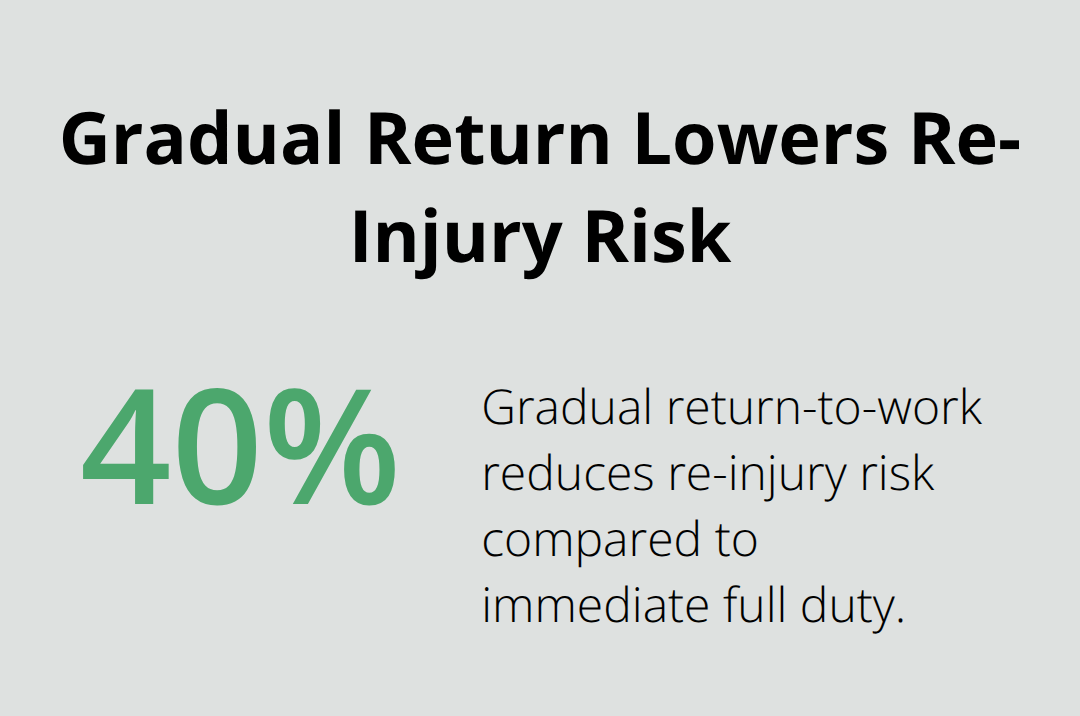
Ohio’s workers’ compensation framework provides you with specific protections during reintegration. The BWC requires employers to offer modified or light-duty work when available, which means you won’t jump directly back to your pre-injury job. This matters because returning to work gradually reduces the risk of re-injury by roughly 40 percent compared to immediate full-duty return, according to occupational health research. Your employer must work with you and the BWC to identify what tasks you can safely perform given your current limitations. If your employer lacks suitable light-duty work, the BWC can connect you with vocational rehabilitation services to explore alternative employment paths.
These services include job coaching, skills assessments, and connections to training programs across Ohio. The system isn’t perfect, but it moves you forward rather than leaving you stalled.
What You Must Do
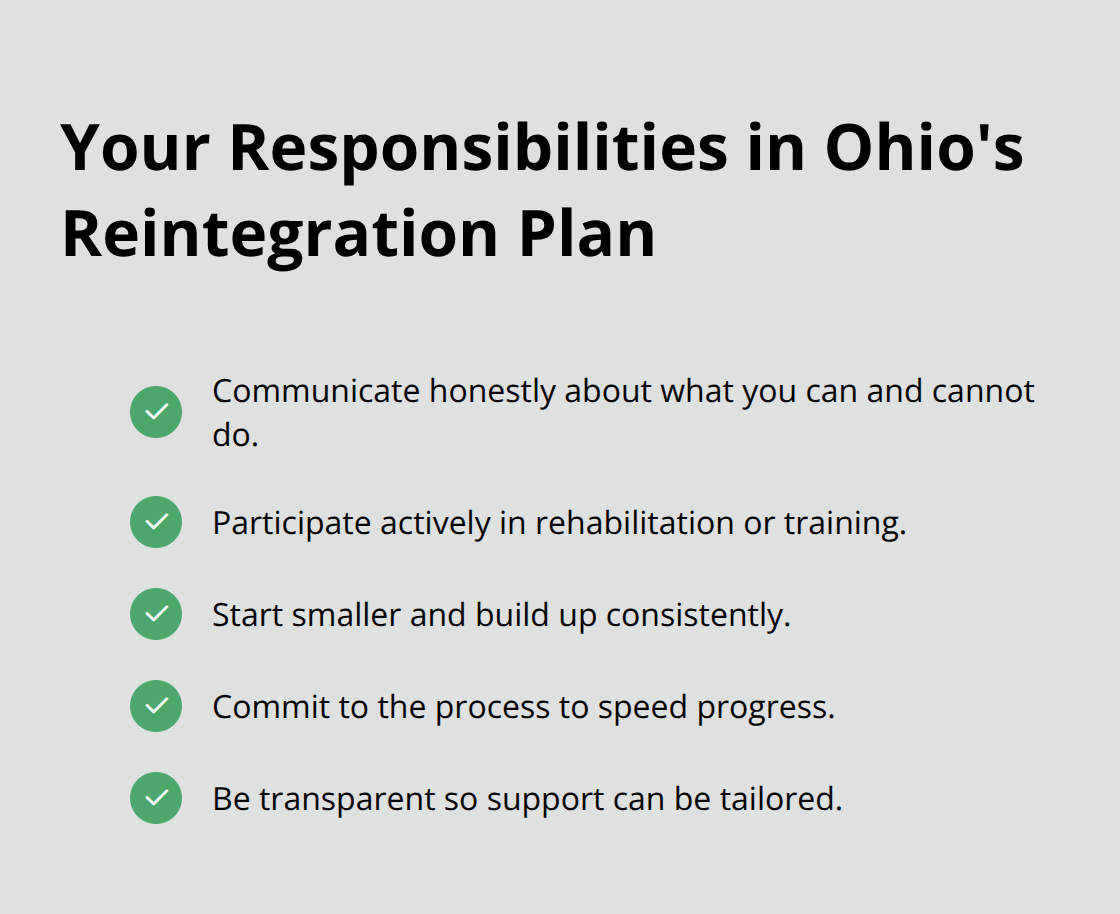
You hold responsibility for honest communication about what you can and cannot do, active participation in any rehabilitation or training, and willingness to start smaller and build up. Your commitment to the process directly affects how quickly you progress. Transparency about your capabilities prevents setbacks and helps your employer and the BWC tailor the right support for you.
What Your Employer Must Do
Employers in Ohio face legal requirements to maintain contact with you during recovery, accommodate reasonable work modifications, and report your progress to the BWC. These obligations exist to protect you and create accountability throughout the reintegration process. When disputes arise about what work is appropriate for you, workers’ compensation attorneys can help you navigate those conversations and ensure the BWC enforces your rights.
Making the Partnership Work
The partnership works best when all parties act in good faith and focus on the shared goal of getting you back to sustainable employment. Your employer benefits from your return to productivity, you benefit from regaining your income and independence, and the BWC benefits from a successful outcome. This alignment of interests creates the foundation for moving forward-and that’s exactly what happens in the next phase, where you’ll assess your actual work capacity and identify the specific opportunities that fit your situation.
Developing Your Personalized Job Reintegration Plan
Your work capacity isn’t static after an injury-it changes week to week as you heal. The first step in developing your personalized reintegration plan is getting a clear, honest assessment of what you can do right now, not what you hope to do in three months. This assessment forms the foundation for everything that follows.
Assess Your Physical Capacity Honestly
Start by documenting your physical limitations in specific terms: can you stand for two hours continuously, or do you need to alternate between sitting and standing every thirty minutes? Can you lift ten pounds repeatedly, or only occasionally? How does your pain or fatigue change throughout the day? The Ohio Bureau of Workers’ Compensation expects this level of detail because vague limitations lead to failed placements and re-injuries.
Your doctor provides medical information, but you provide the practical reality of how your body performs in actual work conditions. Many injured workers underestimate what they can do out of fear, while others overestimate their capacity hoping to speed recovery. Neither serves you well.
A functional capacity evaluation, sometimes called an FCE, objectively measures your abilities through standardized tests administered by rehabilitation professionals. These evaluations typically cost several hundred to a few thousand dollars, but the BWC often covers the expense when your employer or vocational rehabilitation specialist requests one. The evaluation produces a detailed report that lists exactly what physical demands you can safely meet-your lifting capacity, walking tolerance, sitting tolerance, and ability to perform repetitive tasks. This document becomes your baseline and guides every job opportunity you consider moving forward.
Match Your Skills to Real Ohio Jobs
Once you know your physical capacity, identify jobs that actually exist in Ohio’s labor market and match both your limitations and your background. This isn’t theoretical-you need concrete job titles and employers actively hiring. The Ohio Department of Job and Family Services maintains current job listings and labor market data showing which positions are in demand across different regions.
Manufacturing, healthcare, building services, and administrative roles frequently offer modified-duty positions because they contain tasks of varying physical demands. If you worked in manufacturing before your injury, you might transition from floor assembly to quality control or equipment monitoring-roles that exist in real Ohio plants right now. Your rehabilitation specialist should connect you with specific employers rather than generic job categories. This matters because a rehabilitation specialist who knows local employers can identify positions before they’re publicly posted and advocate for accommodations specific to your situation.
The Bureau of Vocational Rehabilitation, part of Ohio’s Department of Rehabilitation and Correction, offers free services to eligible individuals, including job development and placement support. Their specialists understand both your limitations and what employers in your area actually need filled.
Build Your Support Team
Your employer’s human resources or safety department should assign a specific contact person who understands your case and communicates regularly with you and any rehabilitation specialists involved. This person becomes your primary advocate within the company and should have authority to discuss modified-duty options without delays.
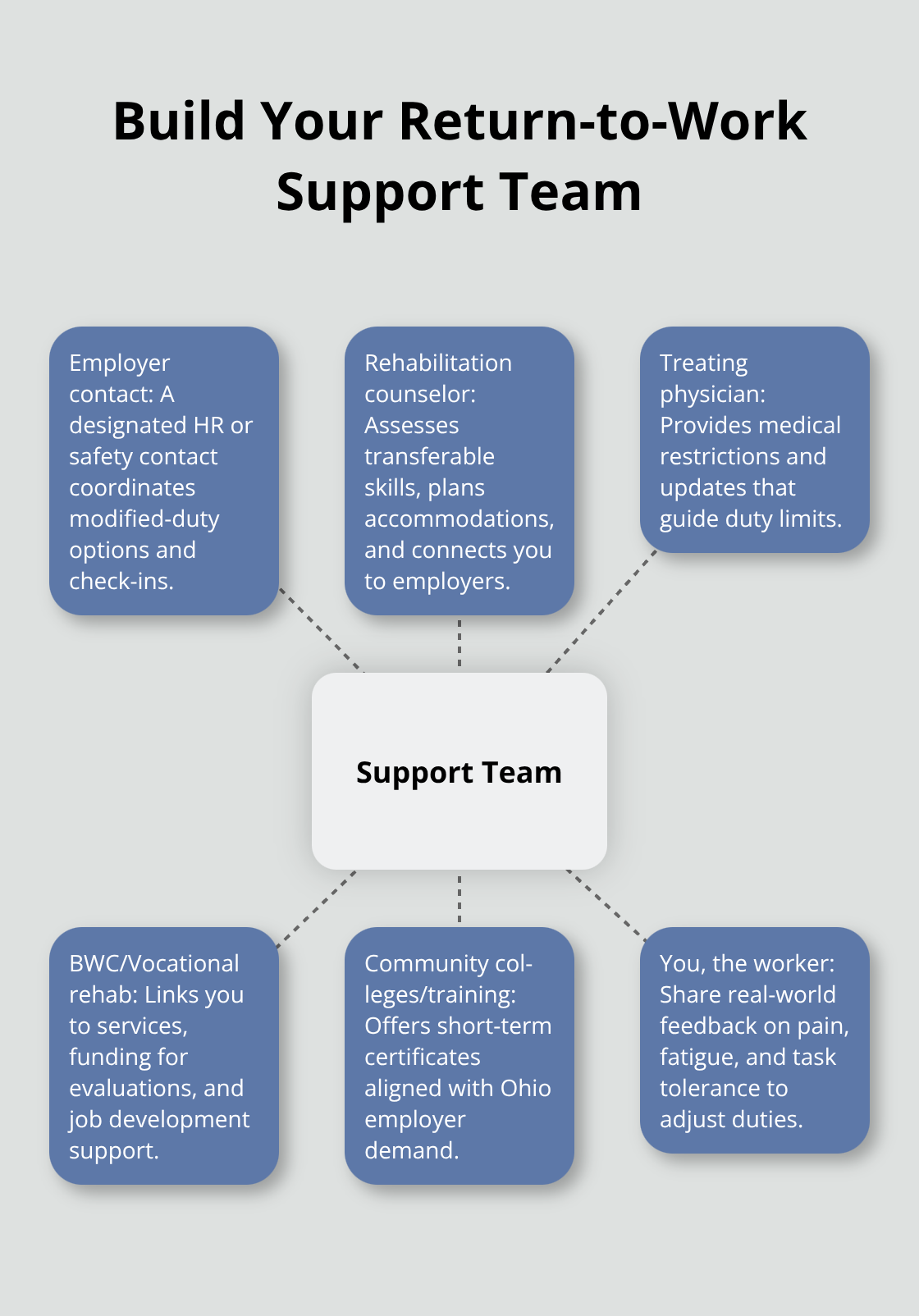
When your employer lacks in-house rehabilitation expertise, a vocational rehabilitation counselor steps in to bridge that gap. These professionals assess your transferable skills-abilities you developed in previous work that apply to new roles-and identify training gaps you need to address. If your injury prevents you from returning to your pre-injury occupation, Ohio offers several training pathways. Community colleges across the state provide short-term certificate programs in high-demand fields, many of which qualify for BWC-funded vocational rehabilitation training.
The key is starting training quickly after your injury; research from the Journal of Occupational Rehabilitation shows that workers who begin vocational services within six months of injury have significantly higher successful return-to-work rates than those who delay. Your rehabilitation specialist can help you evaluate which training programs align with both the local job market and realistic timelines for your recovery.
Know When to Seek Legal Guidance
Situations arise where employers or the BWC resist appropriate accommodations or deny necessary rehabilitation services. When this happens, legal guidance helps protect your rights to proper assessment and job placement support. An attorney experienced in Ohio workers’ compensation law can advocate for you and ensure the system works as intended.
With your work capacity assessed, your skills matched to real opportunities, and your support team in place, you’re ready to move into the actual return-to-work phase-where modified duty and gradual responsibility increases transform your plan into daily action.
Practical Steps to Successfully Return to Work
Define Your Modified-Duty Role With Precision
Modified duty isn’t a temporary holding pattern-it’s your actual job for the next several months, and treating it that way determines whether you succeed or fail. When you start modified duty, your employer assigns you tasks that stay within your documented physical limitations while keeping you productive and earning. The Ohio Bureau of Workers’ Compensation tracks return-to-work outcomes closely, and workers who treat modified duty seriously show significantly higher rates of progressing to full-duty work within twelve months compared to those who view it as beneath them or temporary.
Your modified-duty role might involve inspection work instead of assembly, data entry instead of customer service, or equipment monitoring instead of physical installation. These aren’t lesser jobs-they’re strategic transitions that keep your income flowing while your body heals. Start by working with your employer to define exactly what modified duty looks like in your specific role: which tasks you’ll handle, which equipment you can safely use, how many hours per day you’ll work, and what happens if symptoms worsen during your shift.
Many injured workers accept vague modified-duty assignments, then struggle because expectations aren’t clear. Get specifics in writing. Your supervisor should understand your limitations and have authority to adjust your tasks if you experience pain or fatigue that exceeds what was anticipated.
Monitor Your Response During the First Weeks
The first two weeks of modified duty reveal whether the assignment actually fits your capacity. If you’re consistently exhausted by day three or experiencing increased pain, that’s critical feedback to share with your employer and rehabilitation specialist immediately rather than pushing through and risking re-injury. Research from the Journal of Occupational Medicine shows that workers who communicate honestly about difficulty during the first month of modified duty have substantially better long-term outcomes than those who suffer silently, because adjustments happen while you’re still healing properly.
Your employer should check in with you regularly during this initial phase. These conversations help identify problems early and prevent weeks of struggling in an unsuitable role.
Progress Your Responsibilities Deliberately
After four to six weeks in modified duty, if you’re handling your current tasks without increased symptoms, your rehabilitation specialist and employer should collaboratively identify one or two additional responsibilities you can safely add. This might mean increasing your hours from six to seven per day, taking on slightly heavier tasks, or expanding the variety of work you perform. The progression should feel manageable-you shouldn’t leave each shift exhausted or in pain.
The Ohio Department of Job and Family Services offers free training programs through community colleges and technical schools across the state, and many injured workers pursue relevant training while working modified duty simultaneously. If your injury prevents return to your pre-injury occupation, vocational training becomes essential, and starting it early matters significantly. Workers who enroll in training within six months of injury complete programs faster and find suitable employment sooner than those who delay, according to research tracking outcomes through Ohio’s vocational rehabilitation system.
Coordinate Training With Your Work Schedule
Your employer may allow you to attend classes during work hours if the training directly supports your return to full productivity, though this requires advance coordination. Some injured workers attend evening or weekend classes while maintaining their modified-duty job, which accelerates their readiness for advancement. The Ohio Bureau of Workers’ Compensation covers approved vocational training costs when your injury prevents you from returning to your prior job, and your rehabilitation specialist identifies which programs qualify for funding.
Short-term certificate programs in healthcare support, building maintenance, administrative technology, and skilled trades typically take three to six months and align well with modified-duty timelines. These programs (offered at community colleges throughout Ohio) provide credentials that employers actively seek in your region.
Demonstrate Reliability and Capability
Your goal throughout this phase is demonstrating consistent reliability and capability-showing your employer that you can handle increasing responsibility and showing yourself that you’re genuinely healing and moving forward. Each week you successfully complete your modified duties builds evidence that progression is working. This evidence matters when you and your employer discuss the next step toward full-duty work.
Final Thoughts
Your job reintegration plan in Ohio succeeds when you treat it as a real process rather than a temporary setback. The Ohio Bureau of Workers’ Compensation funds vocational rehabilitation services, functional capacity evaluations, and training programs specifically designed to move injured workers back into sustainable employment. Community colleges throughout Ohio offer short-term certificate programs in high-demand fields, many of which you can pursue while maintaining your modified-duty role.
What matters most now is action. You’ve learned what a structured job reintegration plan in Ohio looks like and why each phase matters, and the next step involves working with your employer, your rehabilitation specialist, and the BWC to implement your specific plan. If your employer resists appropriate accommodations or the BWC denies necessary services, Robin J Peterson Company, LLC represents injured workers throughout Ohio and fights to protect your rights. The firm’s experience with workers’ compensation law in Ohio means they understand both your situation and the practical barriers you face.
Your return to work is possible, and thousands of Ohio workers follow this path every year to move from injury back to full productivity. Your commitment to honest assessment, realistic progression, and consistent effort determines your success. Start today.