
Returning to work after an injury involves navigating legal requirements, employer expectations, and your own recovery needs. At Robin J Peterson Company, LLC, we’ve helped countless workers understand their rights during this critical phase.
A return to work transition doesn’t have to be complicated when you know what protections Ohio law provides. This guide walks you through each step, from medical clearance to handling employer resistance.
What Ohio Law Actually Requires From Your Employer
Ohio’s workers’ compensation system imposes specific obligations on employers that go beyond vague promises of accommodation. The Ohio Bureau of Workers’ Compensation doesn’t just suggest employers work with injured employees-it requires it. When you receive medical clearance to return, your employer must comply with work restrictions documented by your treating physician. This isn’t optional. If your doctor states you cannot lift more than 25 pounds or must avoid repetitive gripping, your employer cannot reassign you to a role that violates these restrictions and then claim the job doesn’t exist. The BWC expects employers to maintain detailed records of return-to-work discussions, medical restrictions, and any accommodations provided. If your employer fails to document these interactions, you have stronger ground to challenge their claims about what was or wasn’t offered.
Your Job Protection Extends Further Than You Think
Ohio law protects you from retaliation when you assert your workers’ compensation rights. This means your employer cannot legally demote you, cut your hours, or terminate you because you filed a claim or requested accommodations for documented medical restrictions. Many workers believe they must accept any position their employer offers, but that’s false. You have the right to refuse work that violates your medical restrictions without penalty. If your employer pressures you to work beyond your restrictions and you suffer a setback, that subsequent injury may qualify as a new compensable claim.
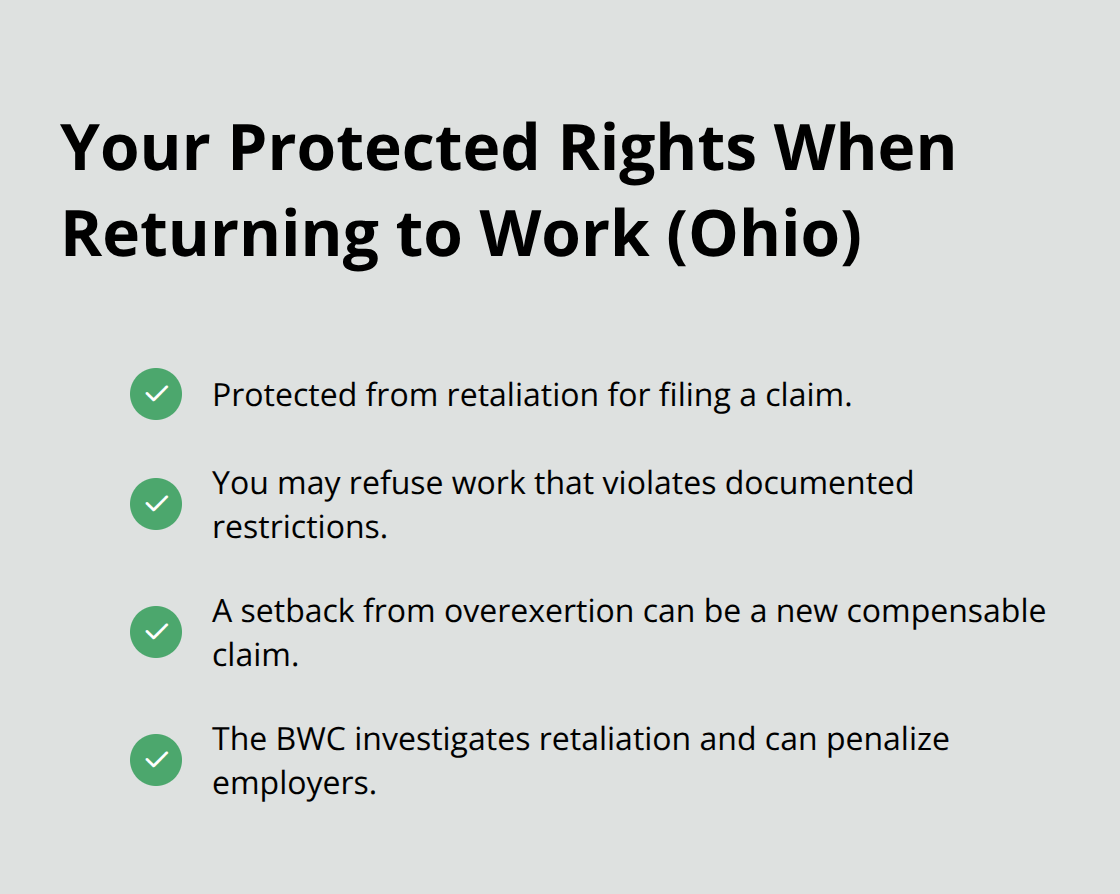
The BWC takes this seriously-they investigate employer retaliation complaints and can impose penalties on companies that punish workers for protecting their health.
Misconceptions That Cost Workers Their Rights
Too many injured workers assume they must accept the first job offered, even if it pays significantly less than their pre-injury position or doesn’t match their experience. Wrong. You’re entitled to work that’s reasonably compatible with your restrictions and your skill level. Another dangerous misconception is that employers can unilaterally decide your medical restrictions are invalid. Only your treating physician determines what you can and cannot do safely. If your employer disputes your restrictions, that dispute goes through the BWC or Industrial Commission of Ohio-not through your HR department. Finally, some workers believe accepting modified duty work means giving up their claim entirely. Modified duty is temporary by nature; it doesn’t eliminate your right to pursue permanent total disability benefits if your condition doesn’t improve as expected.
Moving Through Medical Clearance and Work Restrictions
Your treating physician controls the return-to-work timeline, not your employer’s preferences or production schedules. Medical clearance documents specific restrictions that your employer must honor from day one. These restrictions (whether they involve lifting limits, standing duration, or equipment operation) form the legal foundation for your job placement. Your employer cannot modify, ignore, or challenge these restrictions without formal dispute procedures through the BWC. Understanding exactly what your medical clearance permits and prohibits prevents misunderstandings that lead to workplace conflicts and potential re-injury.
Navigating Your Return to Work
Medical Clearance Forms Your Legal Foundation
Your treating physician documents specific work restrictions that form the legal foundation for your job placement, and these restrictions are non-negotiable. If your doctor states you cannot stand for more than four hours daily or must avoid overhead reaching, your employer cannot ignore these limitations and claim accommodation is impossible. The moment you receive clearance, you need a written copy of every restriction. Many workers make the mistake of relying on verbal conversations with their supervisor or HR department. That approach creates disputes. Request written documentation from your physician’s office listing each restriction with specific parameters. Your employer should acknowledge receipt of this documentation in writing. If they resist providing written confirmation, that resistance itself becomes evidence of non-compliance with BWC requirements.
Protect Your Documentation
Keep copies of all medical clearance documents separate from your employment file at home. The Ohio Bureau of Workers’ Compensation expects employers to maintain detailed records, but you need your own copies as backup. When your employer proposes a return to work position, evaluate it against your medical restrictions point by point. Does the job require lifting that exceeds your limit? Does it involve repetitive motions your physician prohibited? If the answer is yes to either question, the job violates your restrictions, and you have every right to refuse it without jeopardizing your workers’ compensation claim.
Your employer will want to move quickly, but rushing into unsuitable work causes setbacks that extend your recovery timeline and complicate your claim. Communication about your return needs to happen in writing whenever possible. Email your supervisor with a clear summary of your conversation, including what was discussed about your restrictions and what job duties were proposed. This creates a paper trail that protects you if disputes arise later.
Challenge Resistance With Evidence
Many employers resist accommodations by claiming they cannot modify positions or create temporary roles within your restrictions. That claim is often false. The Society for Human Resource Management found that most workplace accommodations cost under $500 to implement, making cost-based refusals particularly indefensible. If your employer claims a position cannot be modified, ask them to provide that denial in writing. Request specific details about why the modification is impossible. Then contact an attorney. Employers who refuse reasonable accommodations without legitimate operational justification violate Ohio workers’ compensation law.
Build Your Paper Trail
Documentation becomes your strongest weapon throughout this process. Create a simple log noting dates, times, and summaries of conversations about your return to work, the positions offered, your responses, and any accommodations discussed. Include names of everyone involved. When you attend meetings about your return, take notes and follow up with an email summarizing what was discussed. If your employer verbally offers a position, ask for the offer in writing before accepting.

This prevents them from later claiming the job duties were different than what was actually discussed.
As you move forward with your return-to-work plan and establish this documentation, obstacles will likely emerge. Your employer may resist specific accommodations, dispute your job placement, or take more serious action against your reinstatement.
What Happens When Your Employer Blocks Your Return
Recognizing False Claims About Accommodation Impossibility
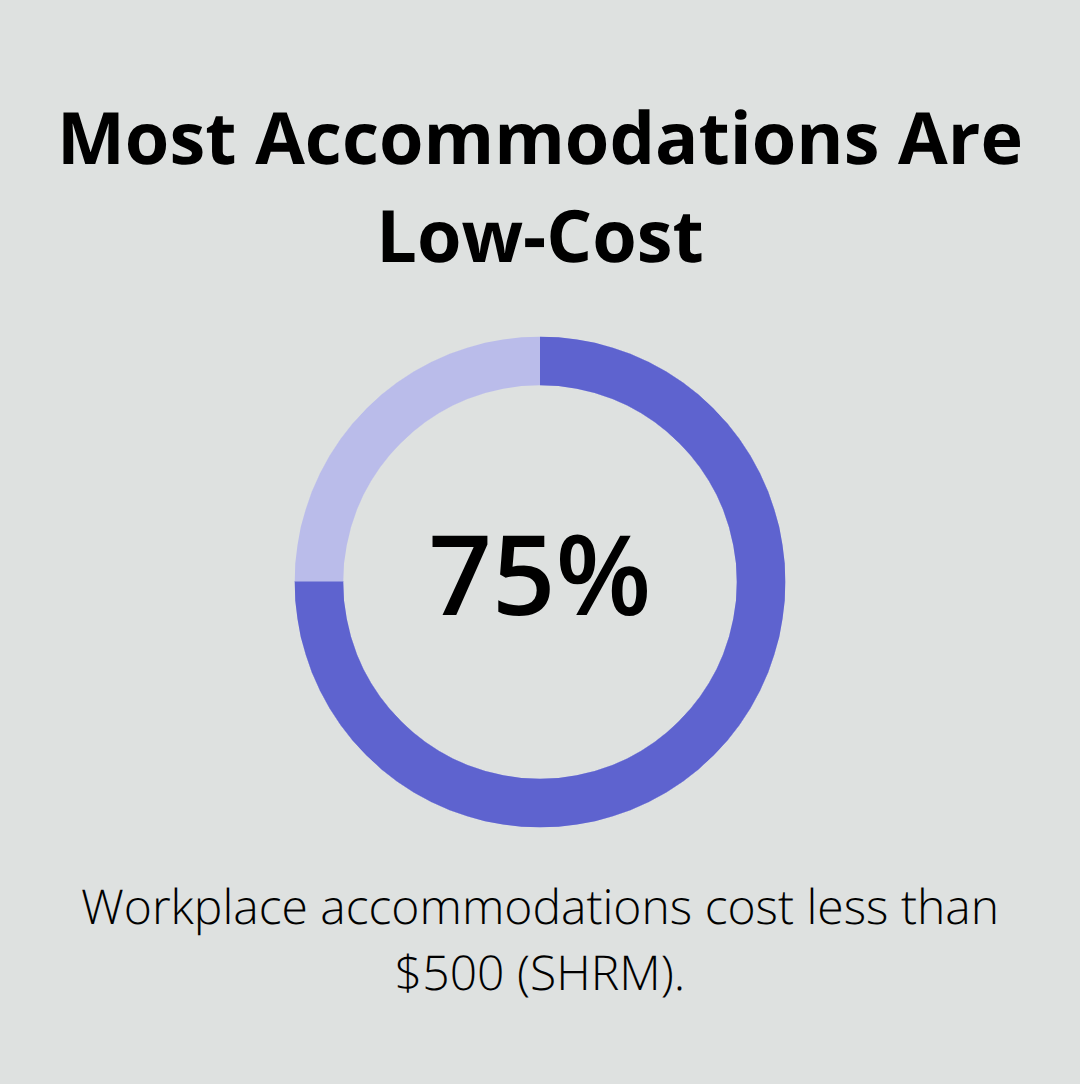
Employer resistance to accommodations follows predictable patterns that you can counter strategically. The most common tactic is the false claim that a position cannot be modified to fit your restrictions. Your employer states with certainty that the job requires full duty or nothing, leaving no middle ground. This claim is almost always negotiable. The Society for Human Resource Management reports that 75 percent of workplace accommodations cost less than $500, meaning financial constraints rarely justify refusal.
When your employer claims modification is impossible, demand the explanation in writing. Ask them to specify which tasks cannot be adjusted and why. Request documentation of any operational impact. In most cases, this written demand forces them to either identify legitimate constraints or admit the resistance is pretextual. If they cannot articulate specific, measurable reasons for refusing accommodation, their position collapses under scrutiny.
Evaluating Job Placement Offers Against Your Complete Restrictions
Job placement disputes emerge when your employer offers positions that technically fit some restrictions while violating others. Your doctor cleared you to return with a 20-pound lifting limit and no overhead reaching. Your employer offers a warehouse position that respects the lifting limit but requires frequent overhead reaching to access inventory bins. This is a violation, even though one restriction is honored.
You must evaluate every proposed position against your complete set of restrictions, not just the most obvious ones. If the employer insists the position fits your restrictions when it clearly does not, request written clarification about how they believe the job complies. Document their response. This written record becomes critical evidence if you need to escalate the dispute to the Ohio Bureau of Workers’ Compensation.
Identifying Retaliation When Your Employer Refuses Rehire
When your employer refuses to rehire you entirely, they typically cite business needs, position elimination, or performance issues unrelated to your injury. Ohio law prohibits retaliation for filing a workers’ compensation claim, but employers often disguise retaliation as legitimate business decisions. The key is timing and circumstance.
If your employer eliminated your position while you were injured but rehired similar roles after your return was denied, that pattern suggests retaliation. If they cite performance issues that never surfaced before your injury, that timing indicates pretextual reasoning. Gather evidence of job postings for similar positions, communications showing your position was viable before your injury, and statements from coworkers about their roles continuing unchanged. An attorney can evaluate whether your employer’s refusal constitutes unlawful retaliation under Ohio workers’ compensation law.
Final Thoughts
Your return to work transition succeeds when you understand your rights, document everything, and refuse to accept employer claims that contradict Ohio law. The patterns we’ve covered throughout this guide repeat across most workplace disputes: employers claim accommodations are impossible, they offer positions that violate your restrictions, or they refuse rehire while citing pretextual reasons. You now recognize these tactics and know how to counter them with written documentation and specific demands for evidence.
The foundation of your protection rests on three elements. Your medical restrictions are legally binding from the moment your physician issues them, and your employer cannot ignore, modify, or challenge these restrictions without formal dispute procedures. You have the right to refuse work that violates your restrictions without losing your workers’ compensation claim. Retaliation for asserting these rights is illegal, and employers who punish you for protecting your health face BWC penalties.
Many workers navigate their return to work transition successfully by maintaining clear written communication, keeping detailed records of all conversations and job offers, and refusing to accept unsuitable positions. When your employer resists reasonable accommodations or denies rehire without legitimate justification, that resistance often indicates a legal violation rather than a genuine operational constraint. Robin J Peterson Company, LLC represents injured workers throughout Ohio’s workers’ compensation system, fighting for the benefits and accommodations you’re entitled to receive.