
A work injury that prevents you from performing your job creates immediate financial stress. Temporary total disability in Ohio provides wage replacement and medical coverage during your recovery, but understanding how the system works is essential to protecting your benefits.
At Robin J Peterson Company, LLC, we help injured workers navigate these claims and secure the support they deserve. This guide explains what temporary total disability means, how it affects your income, and the steps you need to take.
What Temporary Total Disability Actually Covers in Ohio
The Core Definition and Purpose
Temporary total disability in Ohio is straightforward: it provides wage replacement and medical coverage when you cannot work because of a job injury. The Ohio Bureau of Workers’ Compensation defines it as temporary inability to return to your former position due to a work-related injury or illness. This is not a long-term disability program or a permanent benefit. TTD exists to bridge the gap between your injury date and the point where you can either return to work or your medical condition stabilizes.
Eligibility and Key Distinctions
Under Ohio law, you qualify for TTD when a treating physician certifies you cannot work and the Ohio Bureau of Workers’ Compensation accepts your claim. The key distinction is that TTD requires total inability to work, not partial or restricted work capacity. If you can work with limitations or part-time, you would qualify for Temporary Partial Disability instead, which has different payment rules. Many injured workers confuse these two categories, but the difference directly affects how much you receive and for how long.
How Wage Replacement Works
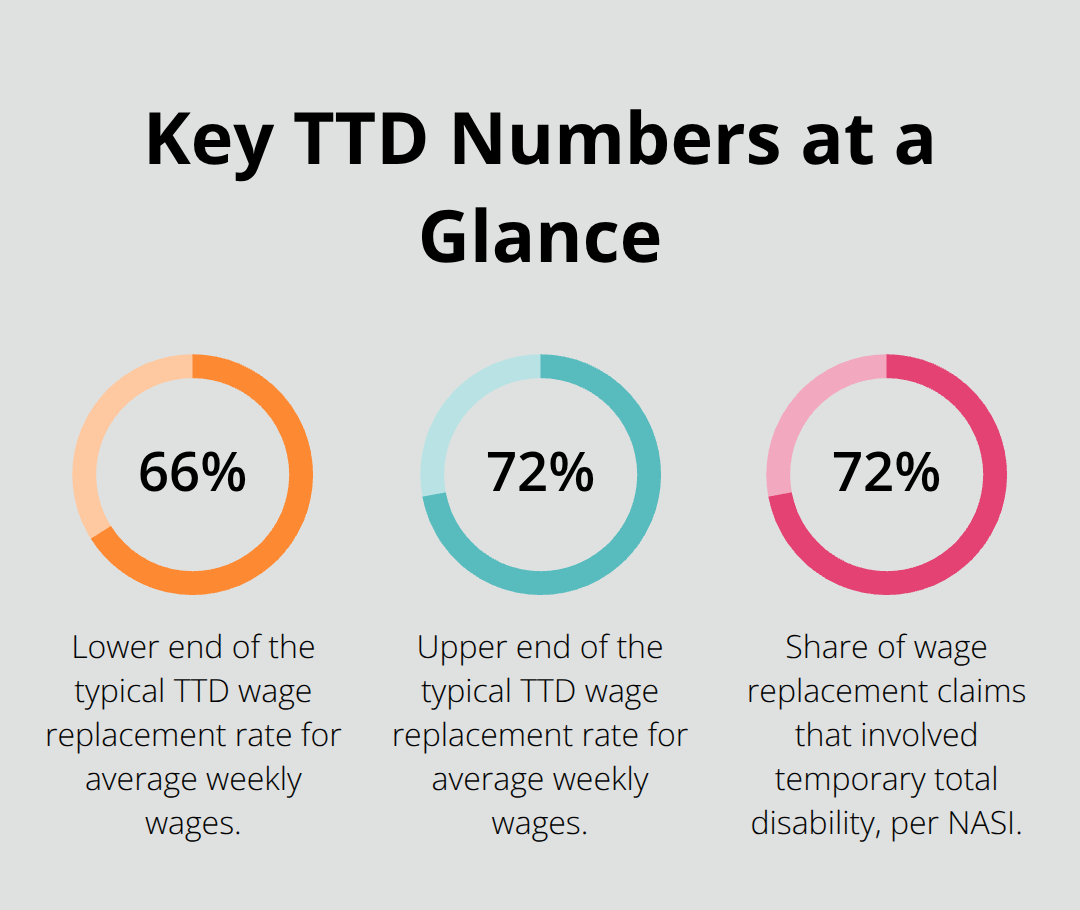
Your wages under TTD typically replace about two-thirds of your average weekly wage, subject to state maximums set by the Ohio Bureau of Workers’ Compensation. The wage replacement timeline depends on how many days you miss: if you miss seven or fewer days, you receive no wage compensation; for 8 to 14 days missed, compensation starts on the eighth day; for more than 14 days, compensation begins on the eighth day but also covers those first seven days. The National Academy of Social Insurance found that up to 72 percent of wage replacement claims involved temporary total disability, showing how common this benefit is for injured workers nationwide.
Medical Coverage and Treatment Expenses
Medical expenses tied to your work injury are covered separately and include hospital stays, surgery, medications, rehabilitation, and transportation costs. These benefits continue regardless of how many days you miss work. The Ohio Bureau of Workers’ Compensation pays for treatment provided by approved doctors and medical providers, ensuring you receive care without depleting your personal savings.
When TTD Ends and What Triggers Termination
Benefits continue until you return to work, reach maximum medical improvement, or other conditions apply such as working for another employer or being cleared to return. The Ohio Supreme Court’s decision in Dillon v. Industrial Commission clarified that TTD ends on the date you reach maximum medical improvement, not when a hearing decides it. This ruling tightened the timing and means overpayments can occur if benefits continue past your actual MMI date. Understanding these mechanics helps you track whether you are receiving the correct amount and for the appropriate duration. When disputes arise about your TTD benefits or the timing of when they should end, having proper legal representation becomes essential to protect your claim.
How Your Wages and Medical Benefits Work Under TTD
The Wage Replacement Timeline and Payment Structure
The wage replacement structure in Ohio TTD operates on a strict timeline tied to days missed, not hours or weeks. If you miss seven or fewer days, you receive nothing. At eight to fourteen days missed, compensation begins on day eight and covers only those missed days after day seven. Beyond fourteen days, compensation starts on day eight but retroactively covers those first seven days as well. This means a worker injured on a Monday who misses exactly seven days receives zero wage replacement, but one who misses eight days gets paid starting from day eight onward. The replacement rate itself hovers around 66 to 72 percent of your average weekly wage, capped by state maximums that the Ohio Bureau of Workers’ Compensation adjusts annually. This two-thirds replacement is intentional-it discourages prolonged absence while recognizing you cannot simply replace lost income dollar-for-dollar.
Medical Expenses and Treatment Coverage
Medical expenses operate on a completely separate track and require no waiting period. Hospital care, surgery, medications, rehabilitation, and transportation to medical appointments all receive coverage through the workers’ compensation system regardless of whether you have missed any work days. The Ohio Bureau of Workers’ Compensation pays approved providers directly in most cases, meaning you should not face bills for work-related treatment. If you receive bills, that signals a problem with claim acceptance or provider authorization that requires immediate attention.
Maximum Medical Improvement and Benefit Duration
Benefits continue until you return to work, reach maximum medical improvement, or meet other termination conditions like employment elsewhere or incarceration. The critical shift came from the Ohio Supreme Court’s Dillon v. Industrial Commission decision, which ruled that TTD ends on the date you actually reach maximum medical improvement, not the date a hearing later confirms it. This distinction creates real risk: if your doctor determines MMI on June 1st but a hearing does not occur until August, any TTD paid between June and August becomes an overpayment subject to recoupment. The Kurtz v. Industrial Commission case added another layer by limiting recoupment in certain procedural situations, but relying on these nuances is risky.
Protecting Your Claim Through Documentation
Track your medical appointments and communicate directly with your treating physician about MMI status. Request written confirmation of any MMI determination and share it immediately with the Ohio Bureau of Workers’ Compensation and your employer. Do not assume benefits will continue automatically during administrative delays. Your safest approach involves maintaining wage records before and after injury, staying in contact with your medical provider about your functional capacity, and documenting every medical visit and expected recovery timeline. When disputes arise about benefit amounts, payment timing, or termination decisions, the claims process becomes more complex and requires careful navigation to protect what you have earned.
Navigating the TTD Claims Process
Report Your Injury Quickly to the Ohio Bureau of Workers’ Compensation
Speed matters when you file a TTD claim with the Ohio Bureau of Workers’ Compensation. You or your employer must report the injury within specific timeframes, and delays significantly weaken your position. The BWC will assign your claim a number and designate a claims administrator who reviews your case. Your responsibility is to ensure medical documentation flows consistently to the BWC from your treating physician. Your doctor must complete the Initial Injury Report form and regularly submit progress notes that confirm your inability to work. Do not assume the BWC automatically receives these documents from your medical provider-call your doctor’s office directly and confirm that all reports have been submitted to the BWC with your claim number included.
Maintain Complete Medical and Wage Documentation
Missing or incomplete medical documentation is the single largest reason TTD claims face delays or denials. The Ohio Industrial Commission Ombuds Office reports that workers who maintain direct contact with their medical providers and the BWC throughout treatment experience faster benefit processing and fewer disputes. Maintain a personal file containing your pre-injury wage statements, your employment contract or job description showing your former position, all medical appointment confirmations, and copies of every treatment record and test result. This documentation becomes your defense against benefit interruptions and overpayment disputes.
Secure Written Confirmation of Maximum Medical Improvement
When your treating physician determines maximum medical improvement, request written confirmation immediately and send it directly to the BWC and your employer’s workers’ compensation representative. This creates a clear record of the MMI date and protects you from recoupment claims based on overpayments that occurred after MMI. The Ohio Supreme Court’s decision in Dillon v. Industrial Commission established that overpayments after MMI are subject to mandatory recoupment, making this documentation critical.
Challenge Denials and Unexpected Terminations Through Formal Hearings
If your claim is denied or benefits terminate unexpectedly, the Ohio Industrial Commission provides a formal hearing process where you can present evidence and challenge the decision. At this stage, having organized documentation and legal representation dramatically improves your outcome. Workers who bring complete documentation and attorney support to hearings secure significantly better results than those attempting to navigate these proceedings alone. An attorney experienced in Ohio workers’ compensation law can identify procedural errors, challenge medical determinations, and advocate for your rights before the Industrial Commission.
Final Thoughts
Temporary total disability in Ohio protects your income and medical care when a work injury prevents you from performing your job. The system provides wage replacement at roughly two-thirds of your average weekly wage and covers all medical expenses related to your injury, but only if you understand the rules and act decisively. TTD operates on strict timelines and procedural requirements that demand your active participation throughout the claims process.
Report your injury immediately, maintain complete wage and medical documentation, and request written confirmation of maximum medical improvement from your treating physician. The wage replacement timeline depends on days missed, and benefits terminate on the date you reach maximum medical improvement, not when a hearing later confirms it. This distinction matters because overpayments after maximum medical improvement trigger mandatory recoupment, so you cannot assume the system will automatically process your claim correctly or that administrative delays will work in your favor.
If your claim faces delays, denials, or disputes, contact Robin J Peterson Company, LLC to protect the benefits you have earned. Workers who bring organized documentation and legal representation to hearings with the Ohio Industrial Commission consistently achieve better outcomes than those navigating the process alone. We at Robin J Peterson Company, LLC represent injured workers throughout Ohio and understand how to navigate the Ohio Bureau of Workers’ Compensation and the Industrial Commission.